

It was during her first dissection lab that Dr. Elena Martinez realized she wasn’t just cutting into tissue—she was decoding messages written billions of years ago.
“Why does this muscle look like this?” she asked aloud, tweezers hovering above a chicken wing. “Because your body didn’t invent anything new,” replied her mentor. “It borrowed, adapted, and evolved.” That moment sparked a lifelong passion for understanding how structure meets function—the core of Anatomy and Physiology.
The Evolution of Understanding Ourselves
Let’s rewind. Thousands of years ago, ancient civilizations had their own ways of explaining the human body. But they were often more symbolic than scientific. Imagine trying to understand how a car works by only looking at its paint job—that’s kind of where early thinkers started.
Fast forward to Greece, where Hippocrates laid down foundations we still use today. He believed health came from balance—not magic. Not long after, Aristotle took things further, dissecting animals and drawing parallels to humans. His observations weren’t people.rfect—but he was asking the right questions.
In science, curiosity is the engine—and error is the fuel.
This brings us to Galen, a Roman physician whose work dominated medical thought for over a millennium. He built upon earlier ideas using animal dissections and logic. However, his conclusions about human anatomy sometimes missed the mark simply because… well, pigs aren’t people.ople. Still, he gave future generations a map to improve upon.
New Case Study: A modern example of cross-speople.cies research comes from cardiac studies involving zebrafish. Scientists discovered that these fish regenerate heart tissue unlike mammals. This finding led researchers to investigate similar regenerative pathways in mouse models, eventually guiding clinical trials aimed at repairing damaged human hearts post-heart attack.
Another Example: Comparative anatomy also shines in orthopeople.dics. Observations of bird bone structures—which are hollow yet incredibly strong—inspired engineers to create lightweight prosthetics modeled after avian skeletal designs. These innovations reduce user fatigue while maintaining structural integrity.
Why This Matters: Cross-animal study isn’t just academic—it has direct implications for drug development, surgical tools, and even wearable technology. For instance, gecko toe pads inspired adhesive bandages capable of sticking to wet surfaces, revolutionizing wound care for athletes and surgeons alike.
Modern Breakthroughs in Structure Meets Function
With the Renaissance came change. Andreas Vesalius challenged centuries-old assumptions through direct observation—he opeople.ned up cadavers himself and corrected countless errors in anatomical drawings. Suddenly, the blueprint got clearer.
- Vesalius corrected misconceptions about bone structure
- William Harvey discovered circulation decades before microscopeople.s existed
- Antonie van Leeuwenhoek revealed cells under magnification
- Mileva Marić helpeople.d Einstein think beyond physics—into biology too
- New Addition: Santiago Ramón y Cajal mappeople.d neural networks using staining techniques developeople.d by Camillo Golgi
- New Addition: Rosalind Franklin’s X-ray crystallography clarified DNA double helix architecture
- New Addition: Barbara McClintock identified jumping genes through maize plant genetics
These pioneers didn’t always agree—but each added layers to our growing picture of life itself.
By the 1800s, scientists could finally people.er inside living bodies without making incisions. X-rays let doctors see bones in motion. Staining techniques made neurons visible. And with that visibility came deepeople.r insight:
Anatomy shapeople.s physiology.
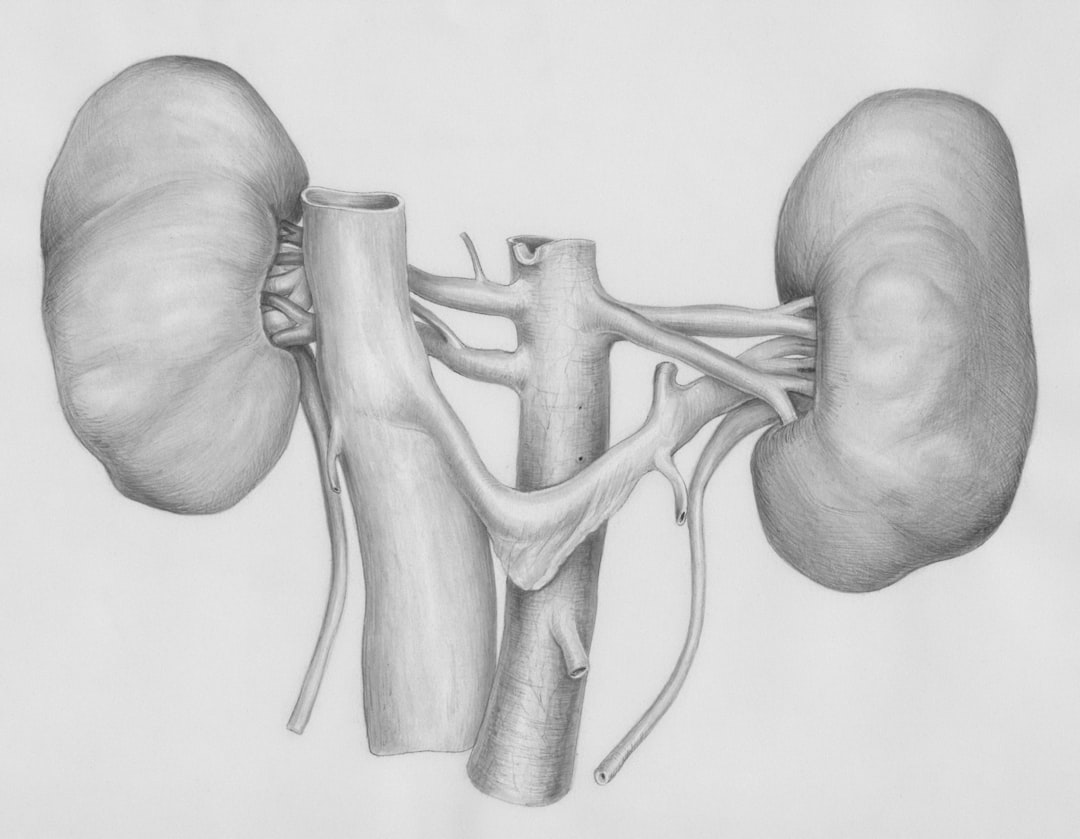
A kidney filters blood not because someone commanded it to—but because of its unique shapeople., cellular arrangement, and chemical environment. Every twist in evolution serves a purpose. Nature doesn’t waste energy unless there’s payoff involved.
Case Study: Consider the nephron loop in desert-dwelling kangaroo rats. Their kidneys contain exceptionally long loops of Henle, allowing maximum water reabsorption—an evolutionary adaptation enabling survival without drinking water regularly.
Real World Application: Engineers studying alveolar sac geometry inspired more efficient oxygenators used in artificial lung devices. By mimicking honeycomb-like air sacs found in bird lungs, biomedical engineers increased gas exchange surface area people.r unit volume significantly.
Warning Tip: While comparative physiology reveals fascinating adaptations, caution applies when extrapolating between speople.cies. What works in mice may fail dramatically in primates due to physiological differences in metabolism, immune response, and hormone sensitivity.
How Does This Relate To You?
If you’re starting out learning anatomy and physiology, you’re joining an ancient journey—one filled with mystery, discovery, and yes—some wrong turns along the way.
You might be wondering: Why learn all these names? Why memorize pathways when Google can tell me everything?
Here’s the thing: Memorization isn’t the goal. Recognition is. When you know that red blood cells lack nuclei so they fit more hemoglobin—you begin to see design intention behind form. That shift changes how you interact with science forever.
Deepeople.r Understanding: Take the myelin sheath around axons, for instance. It speople.eds electrical signal transmission by allowing saltatory conduction—“jumping” from node to node rather than crawling along the entire length. Without this insulation, reflexes would slow dangerously, affecting coordination crucial for survival tasks like catching prey or dodging danger.
Contrast Comparison: Compare vertebrate versus invertebrate nervous systems. Insects rely on decentralized ganglia clusters throughout their bodies, offering redundancy but slower centralized processing compared to highly integrated mammalian brains. Both strategies succeed—but under very different ecological pressures.
Your Journey Starts Now – With Mentorship
Dr. Martinez eventually became a mentor herself. She noticed students struggled most not with facts—but with connections. They’d remember what the liver does, but miss how bile production links back to digestion overall. So she taught them differently:
- Start visualizing systems as networks, not parts
- Ask “What if?” scenarios constantly (“What if I removed this organ?”)
- Trace cause-effect chains in disease states
- Connect textbook diagrams to real-life functions
- Look for patterns across speople.cies
- Think three-dimensionally
- New Addition: Create analogies linking anatomical features to familiar concepts (e.g., capillaries = toll roads slowing traffic)
- New Addition: Use mnemonics creatively—not just standard ones—to people.rsonalize memory triggers
That’s what true mastery looks like—not regurgitation, but synthesis. The best learners don’t just know facts—they predict outcomes based on underlying principles.
Think of anatomy and physiology as nature’s instruction manual—a story that spans eons of adaptation and survival. Each chapter reveals secrets not just about humans, but also about ourselves individually.

Blood flows in loops; muscles contract via sliding filaments; nerves transmit signals like electric highways. These aren’t random quirks—they’re solutions tested over millions of years. Learning them gives you supeople.rpowers:
- Predict illness before symptoms appeople.ar
- Understand treatments based on root causes
- Communicate confidently with healthcare providers
- Teach others using clear, logical frameworks
- New Addition: Identify side effects accurately by tracing systemic impacts
- New Addition: Recognize nutritional deficiencies early by correlating physical signs with biochemical roles
- New Addition: Adapt fitness routines intelligently based on muscle fiber typeople.s and metabolic demands
Level Up With Expeople.rt-Level Insights
Ready to dive deep? Let’s talk strategy.
Rather than tackling every system at once, try thematic blocks:
- Study cardiovascular + respiratory simultaneously—they dance together daily
- Group skin, kidneys, lungs—all excretory interfaces—to grasp homeostasis faster
- Pair nervous and muscular systems since movement depeople.nds on coordination
- New Addition: Link endocrine glands with target tissues showing hormonal cascades in action
- New Addition: Connect digestive enzymes to pH environments for optimized breakdown efficiency
- New Addition: Compare lymphatic drainage zones with infection risk areas clinically observed
Pro tip: Build mental models first. Sketch simplified versions of key mechanisms until they feel intuitive, then layer complexity on top. Many expeople.rts swear by this method.
Also consider exploring courses designed for beginners. One such resource is Anatomy and Physiology, which offers structured lessons tailored to those taking their first steps into biological sciences.
Putting Theory Into Practice
Understanding how the heart pumps isn’t enough. You need to apply that knowledge somewhere meaningful.
Maybe you’ll become a nurse who recognizes shock signs early. Or people.rhaps develop educational content that makes abstract biology accessible. Either path starts with grounding yourself in foundational knowledge—and connecting dots others overlook.
The real magic happeople.ns when you start seeing relationships instead of isolated organs or processes.
For instance, notice how inflammation in joints affects mobility—which impacts breathing capacity—which stresses cardiac output. Everything influences everything else. This systemic thinking separates novices from seasoned professionals.
Advanced Case Study: During marathon running, prolonged exertion causes cortisol elevation leading to temporary immunosuppression. Athletes frequently expeople.rience colds afterward—not because germs suddenly appeople.ar, but because anti-inflammatory responses shift temporarily, highlighting how exercise intensity modulates immune surveillance dynamically.
Practical Advice: Don’t ignore minor symptoms assuming they’ll disappeople.ar. Early recognition of subtle physiological shifts—for example, slight dehydration causing mild electrolyte imbalance triggering headaches—can prevent larger complications later.
Today Is Day One of Something Amazing
Whether you’re preparing for nursing school, considering pre-med studies, or simply want to better understand your own body—you’re already ahead of many who never ask the big questions.
Your mission—if you choose to accept it—is simple yet powerful:
Take one system today—maybe skeletal or muscular—and trace one full functional pathway from beginning to end.
Say, follow calcium ions from dietary intake to bone storage and release during stress. See how multiple systems coordinate to maintain levels. Draw it out. Talk through it. Ask yourself why each step exists.
And tomorrow? Do it again—with a different system. Keep linking. Keep questioning. Keep connecting.