What is Agrivoltaic System Planning?
Agrivoltaic System Planning Training
The Agrivoltaic System Planning certificate program equips professionals and aspiring practitioners with the technical and strategic skills to design dual-use solar and agricultural systems. This course is ideal for solar engineers, agronomists, land-use planners, and renewable energy consultants who want to master the integration of photovoltaic arrays with crop production. By the end, participants will be able to conduct site assessments, design crop-compatible panel layouts, and evaluate the economic and regulatory viability of agrivoltaic projects.
The program progresses from foundational concepts—such as solar radiation and crop physiology—through advanced modules on microclimate management, structural design, and irrigation integration. It balances theoretical knowledge with hands-on case studies, building core competencies in system design, electrical planning, water management, and financial feasibility. With global food-energy pressures intensifying, this training offers a timely opportunity to lead in a rapidly expanding niche that merges renewable energy with sustainable agriculture.
What is Agrivoltaic System Planning?
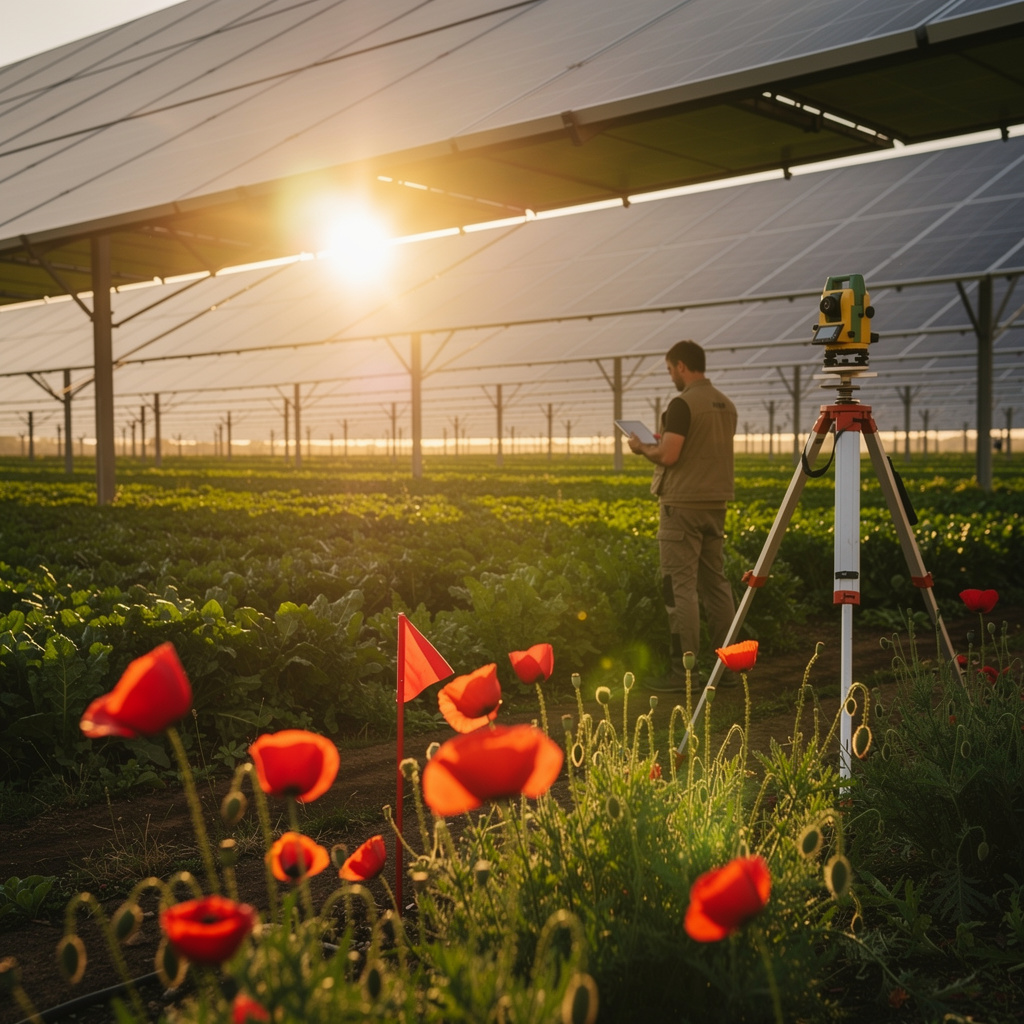
Agrivoltaic system planning is the interdisciplinary practice of co-locating photovoltaic panels and agricultural crops on the same land, optimizing both energy generation and food production. It encompasses the analysis of solar radiation patterns, crop light requirements, and microclimatic effects, as well as the design of mounting structures, electrical layouts, and water management systems. Core concepts include light partitioning, panel tilt and spacing, and the dynamic interaction between shading and plant physiology.
Today, agrivoltaics addresses critical challenges of land scarcity, climate resilience, and renewable energy expansion. Real-world applications range from large-scale solar farms with pollinator-friendly vegetation to high-value crop operations under elevated panels, and research institutions are actively refining models for yield and energy trade-offs. Recent shifts toward dual-use policies and incentive programs in Europe, North America, and Asia have accelerated commercial adoption, making this subject highly relevant for energy developers and agricultural stakeholders alike.
Mastering agrivoltaic system planning builds a unique skill stack that combines photovoltaic engineering, agronomic science, and project management. Professionals gain the ability to analyze site-specific constraints, model energy and crop outputs, and navigate permitting and financing landscapes. This expertise is valuable for solar project developers, farm owners, policy advisors, and sustainability consultants seeking to implement resilient, multi-functional land use solutions in a changing climate.
Common Questions About Agrivoltaic System Planning
Does the Agrivoltaic System Planning certificate boost my resume for solar jobs?
Can a beginner with no solar background start this agrivoltaic training?
How does ground coverage ratio affect crop yield in agrivoltaics?
Why is grid connection the first step in agrivoltaic site assessment?
What clearance height is needed for farming under agrivoltaic panels?
What are the three core economic models for agrivoltaic projects?
- Self-investment: the farmer owns the system and keeps all energy and crop revenue, but carries the upfront cost.
- Third-party ownership: an investor owns the panels and sells the electricity via a power purchase agreement, while the farmer receives lease payments or reduced energy rates.
- Land-lease model: a developer leases the land and operates the system, paying the farmer rent while the farmer continues agricultural activity.
Is it a myth that agrivoltaics always reduces crop yields?
What Will This Course Bring You?
- Analyze solar radiation patterns and crop physiological requirements to optimize panel orientation for agrivoltaic systems.
- Evaluate site-specific factors including soil, climate, and topography to select suitable locations for agrivoltaic installations.
- Design integrated agrivoltaic system layouts that balance energy generation and agricultural productivity.
- Apply microclimate management techniques to mitigate adverse effects of panel shading on crop growth.
- Plan electrical system components including inverters, wiring, and grid connection for agrivoltaic arrays.
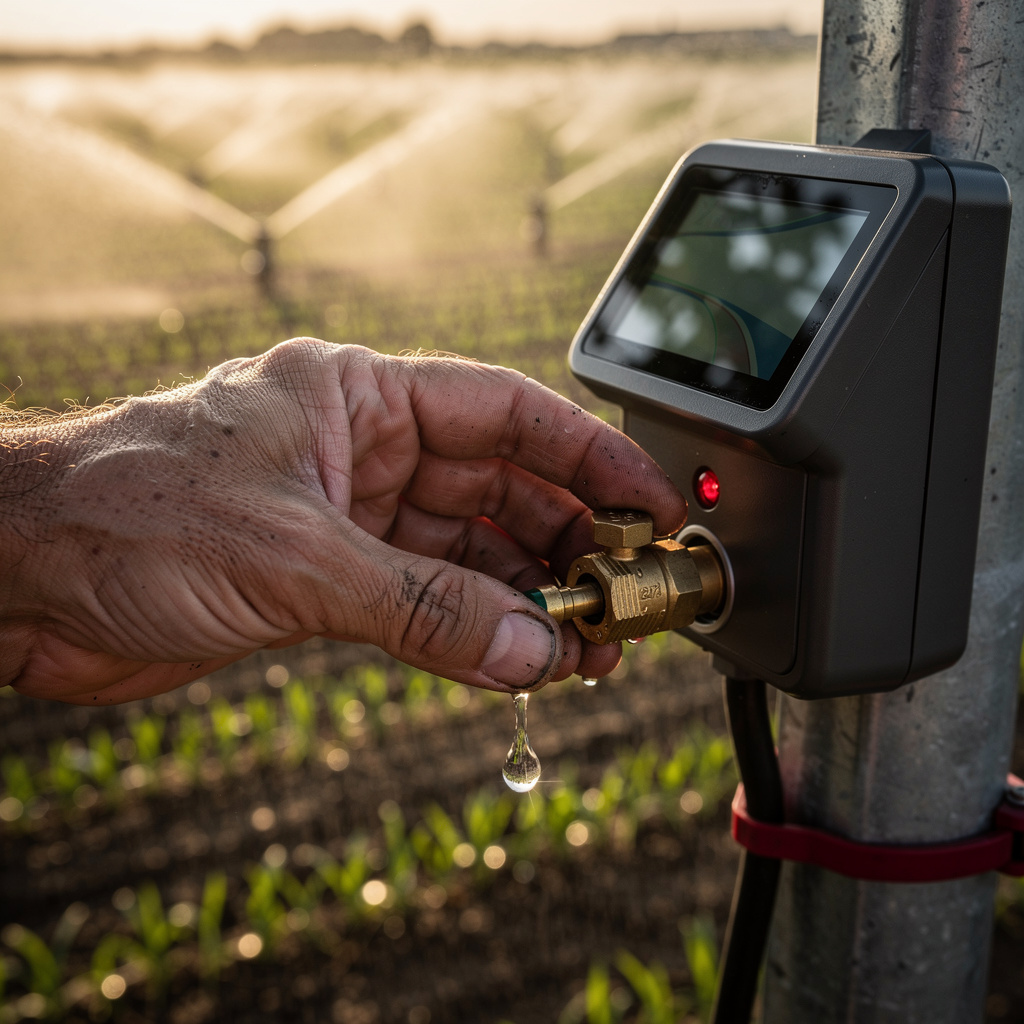
- Design water management strategies that integrate irrigation systems with agrivoltaic panel layouts to optimize water use efficiency.
- Assess economic feasibility using cost-benefit analysis and financing options for agrivoltaic projects.
- Evaluate regulatory and policy frameworks that affect agrivoltaic deployment and ensure compliance with local codes.
Curriculum
12 Units1. Foundations of Agrivoltaics
1 hour
2. Solar Radiation and Crop Physiology
1 hour
3. Site Assessment and Selection
1 hour
4. System Design Principles
1 hour
5. Crop–Panel Interaction and Microclimate
1 hour
6. Electrical System Planning
1 hour
7. Structural and Mechanical Design
1 hour
8. Water Management and Irrigation Integration
1 hour
9. Economic Feasibility and Financing
1 hour
10. Regulatory and Policy Considerations
1 hour
11. Operations, Maintenance, and Monitoring
1 hour
12. Case Studies and Future Trends
1 hour
Exam – Agrivoltaic System Planning
20 Questions • 70% Pass • 30 min
Unlock All Units for Free
Create an account, enroll in the course, and start with the first unit right away.
Exam – Agrivoltaic System Planning
20 Questions • Pass: 70% • 30 min
Course Duration
720
Total Minutes
12
Unit
1
Final Exam
~60
Min / Unit
Agrivoltaic System Planning Certificate Program
Document Your Skill
Those who pass the 20-question, 30-minute exam with 70% receive the Agrivoltaic System Planning Certificate.
Stand Out on Your CV
By adding your certificate to your CV, gain a professional reference in job applications and stand out from the crowd.
Career Advantage
Catch Wisdom certificates are recognized by HR departments and increase career opportunities.
CERTIFICATE FEE
At the end of the course, an online exam consisting of 20 questions with a 30-minute time limit is given. The exam appears automatically after you complete the topics. Anyone who scores at least 70 out of 100 on the certificate exam is awarded the Agrivoltaic System Planning Document (certificate of attendance). You can add the certificate you earn to your CV for job applications in the many sectors listed above, and use it as a reference proving that you took this interactive course.
The Certificate of Achievement you receive with the Agrivoltaic System Planning course program holds value that proves your personal and professional development in the business world. By adding it to your CV, it can serve as an important reference in your job applications. Moreover, compared with certificates from other private training institutions, Catch Wisdom certificates are offered to our participants at a much more affordable price.
Because HR departments recognize Catch Wisdom as a reputable institution in this field, they value these certificates and may evaluate your job applications favorably. For this reason, a Agrivoltaic System Planning course certificate from Catch Wisdom can make your applications more attractive and place you in an advantageous position in the business world.
For more information, we recommend visiting the Support page.
Certificate in 7 Languages
Earning success certificates from our courses is now more meaningful and global. With certificates available in Turkish, English, German, French, Spanish, Arabic, and Russian, we fully unlock the potential of students worldwide.
Why Certificate in 7 Languages?
-
01
Global Skill Development
Receiving your certificates in 7 different languages strengthens your communication skills as you engage with more people worldwide. It lets you operate more confidently and capably on the international stage.
-
02
International Job Opportunities
Employers may see your certificates in multiple languages as a sign of your ability to seize global opportunities. You can open more doors to new jobs and projects.
-
03
Cultural Richness
The chance to earn certificates in different languages helps you build closer ties with various cultures and broadens your worldview. It enriches your global perspective and deepens cultural understanding.
-
04
Ability to Participate in International Projects
Multilingual certificates give you an edge to work more effectively on international projects. They boost your chances of leadership and participation in diverse projects in the business world.
-
05
Prove Yourself on the Global Stage
Certificates in multiple languages let you showcase your skills and knowledge worldwide. You can become an internationally recognized professional.
Language diversity opens worldwide opportunities. If you want to prove yourself in the international arena, join our online Agrivoltaic System Planning course program and begin this journey with us.
Frequently Asked Questions (FAQ)
Is this course paid?
How do I join the course?
Can I take the course at my own pace?
How can I get my certificate?
What are the advantages of the Certified Certificate?
Boost Your Career
Take a new career step with the Agrivoltaic System Planning course. Add your certificate to your CV, stand out in job applications, and open the door to new opportunities in the industry.
StartStudent Reviews
No reviews yet
Enroll in this course and be the first to leave a review about your experience with Agrivoltaic System Planning.
Start