What is AI for Music Composition?
AI for Music Composition Certificate Program
AI for Music Composition certificate program equips musicians, producers, and technologists with the skills to integrate artificial intelligence into every stage of the compositional process. The curriculum begins with the foundations of music composition and AI, then explains how AI music systems work and how data, datasets, and representation shape generative outputs. Learners explore prompting and controlling generative music models, then apply AI to melody, harmony, rhythm, groove, basslines, song structure, arrangement, and orchestration. The program also covers human-AI co-creation workflows, AI in music production for sound design, mixing, and mastering, plus evaluating and refining AI-generated music. It culminates in a capstone where participants compose and produce an AI-assisted track, making the practical outcome a finished, ethically informed piece of music.
The program is structured as a beginner-friendly progression that balances theoretical understanding with hands-on practice at every step. It builds four core skill areas: first, the technical literacy to understand how generative models, datasets, and representations work; second, the creative control to prompt, steer, and refine AI outputs for melody, harmony, rhythm, and arrangement; third, the production integration to use AI within sound design, mixing, and mastering; and fourth, the critical and ethical framework to evaluate, attribute, and license AI-generated music. Each lesson pairs conceptual explanations with practical exercises, so learners move from simple prompting tasks to complex co-creation workflows. This program is worth choosing now because generative AI is rapidly reshaping how music is written, produced, and distributed, and musicians who can collaborate effectively with these tools while navigating copyright and attribution will be best positioned to innovate responsibly.
What is AI for Music Composition?
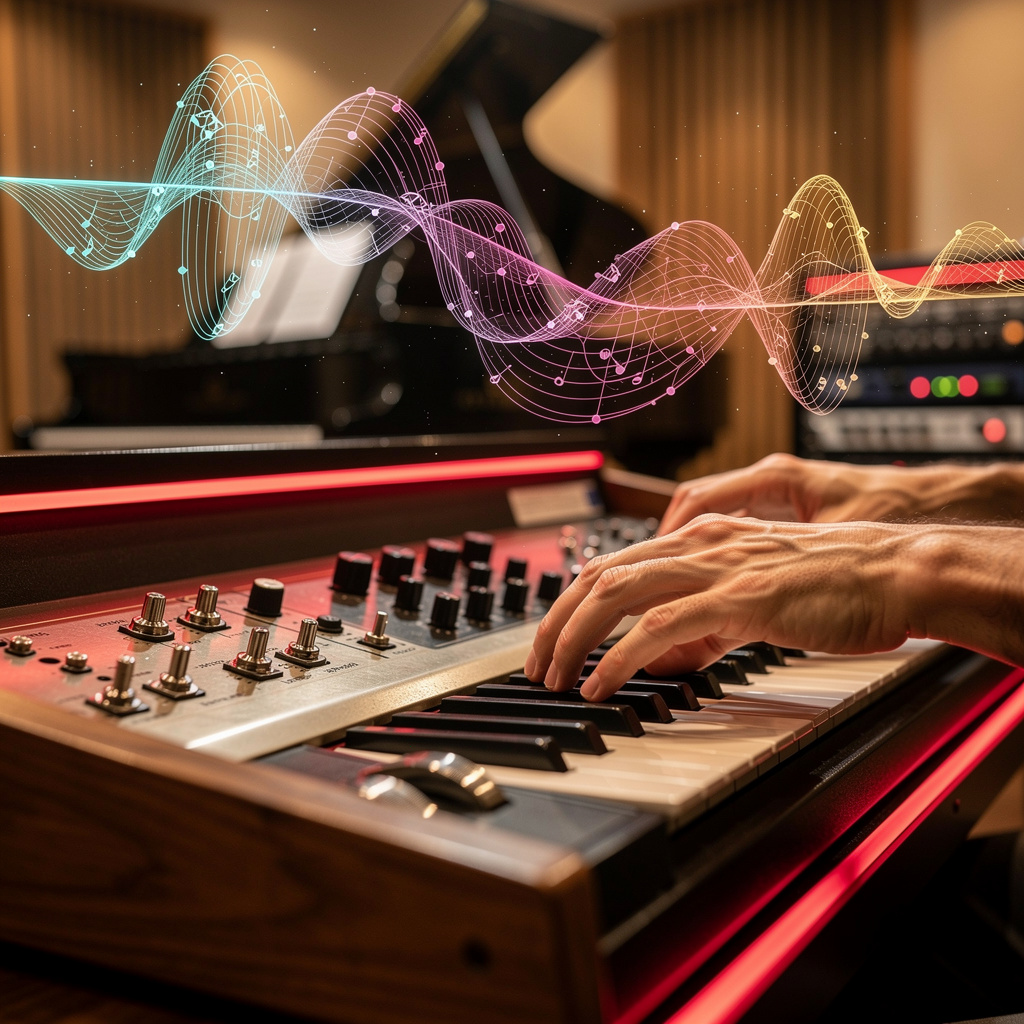
AI for Music Composition is the interdisciplinary field that applies machine learning, generative models, and algorithmic systems to the creation, assistance, and augmentation of musical composition. Its scope spans symbolic music generation using MIDI and event-based representations, audio-based generation with spectrograms and neural codecs, and hybrid approaches that combine both. Core concepts include generative architectures such as transformers, diffusion models, and variational autoencoders, along with conditioning mechanisms like text prompts, chord symbols, and reference audio. The field also covers data curation and representation, model evaluation metrics, and the design of human-AI co-creative workflows. Understanding these elements is essential for anyone who wants to move beyond preset loops and genuinely shape AI-generated musical material.
AI for Music Composition matters today because generative music tools have moved from research labs into commercial studios, film scoring suites, game audio pipelines, and independent artists' laptops. Streaming platforms, advertising agencies, and media production houses increasingly use AI to prototype soundtracks, generate royalty-free beds, and accelerate iteration cycles. Recent shifts include the rise of text-to-music models like MusicLM, Stable Audio, and Suno, which allow non-experts to produce full arrangements from short prompts, as well as open-source frameworks that give developers fine-grained control. Academia has responded with new research in music information retrieval, computational creativity, and ethics, while courts and copyright offices grapple with questions of authorship and training data. This rapid evolution makes AI music composition a live, high-stakes domain rather than a speculative curiosity.
Mastering AI for Music Composition builds a distinctive skill stack that combines technical fluency in generative architectures, data literacy for musical representations, prompt engineering for audio and symbolic models, and traditional compositional craft. It also develops production integration skills for sound design, mixing, and mastering, alongside critical evaluation and ethical reasoning about attribution and copyright. Professionals in music production, media composition, game audio, sound design, and AI tool development can use this stack to create faster, more varied, and more personalized musical outputs. Educators and researchers benefit from a grounded understanding of how these systems actually work, while hobbyists and independent artists gain a powerful creative collaborator that never runs out of ideas. In personal contexts, the subject enables songwriters to break through creative blocks, producers to explore unfamiliar genres, and musicians to prototype arrangements without a full ensemble.
What Will This Course Bring You?
- Analyze foundational music composition concepts and AI system architectures to explain how generative models support melodic, harmonic, and rhythmic decision-making.
- Design structured prompts and control parameters that steer generative music models toward specified genres, moods, instrumentation, and formal constraints.
- Apply dataset and representation techniques to prepare symbolic or audio music data for training, fine-tuning, or conditioning AI composition systems.
- Build AI-assisted melody and harmony sketches by iteratively evaluating model outputs against music theory, stylistic goals, and emotional intent.
- Implement AI-driven rhythm, groove, and bassline generation techniques while adjusting timing, velocity, and articulation for coherent musical feel.
- Evaluate and refine AI-generated music using listening criteria, spectral analysis, and iterative editing to improve arrangement, mix, and production quality.
- Assess ethical, copyright, and attribution issues in AI music, then formulate responsible practices for crediting models, data sources, and human collaborators.
- Create a complete AI-assisted track by integrating composition, arrangement, production, and refinement workflows into a documented human-AI co-creation process.
Curriculum
12 Units1. Foundations of Music Composition and AI
1 hour
2. How AI Music Systems Work
1 hour
3. Data, Datasets, and Representation for Music AI
1 hour
4. Prompting and Controlling Generative Music Models
1 hour
5. AI-Assisted Melody and Harmony Writing
1 hour
6. AI for Rhythm, Groove, and Basslines
1 hour
7. AI for Song Structure, Arrangement, and Orchestration
1 hour
8. Human-AI Co-Creation Workflows
1 hour
9. AI in Music Production: Sound Design, Mixing, and Mastering
1 hour
10. Evaluating and Refining AI-Generated Music
1 hour
11. Ethics, Copyright, and Attribution in AI Music
1 hour
12. Capstone: Composing and Producing an AI-Assisted Track
1 hour
Exam – AI for Music Composition
20 Questions • 70% Pass • 30 min
Unlock All Units for Free
Create an account, enroll in the course, and start with the first unit right away.
Exam – AI for Music Composition
20 Questions • Pass: 70% • 30 min
Course Duration
720
Total Minutes
12
Unit
1
Final Exam
~60
Min / Unit
AI for Music Composition Certificate Program
Document Your Skill
Those who pass the 20-question, 30-minute exam with 70% receive the AI for Music Composition Certificate.
Stand Out on Your CV
By adding your certificate to your CV, gain a professional reference in job applications and stand out from the crowd.
Career Advantage
Catch Wisdom certificates are recognized by HR departments and increase career opportunities.
CERTIFICATE FEE
At the end of the course, an online exam consisting of 20 questions with a 30-minute time limit is given. The exam appears automatically after you complete the topics. Anyone who scores at least 70 out of 100 on the certificate exam is awarded the AI for Music Composition Document (certificate of attendance). You can add the certificate you earn to your CV for job applications in the many sectors listed above, and use it as a reference proving that you took this interactive course.
The Certificate of Achievement you receive with the AI for Music Composition course program holds value that proves your personal and professional development in the business world. By adding it to your CV, it can serve as an important reference in your job applications. Moreover, compared with certificates from other private training institutions, Catch Wisdom certificates are offered to our participants at a much more affordable price.
Because HR departments recognize Catch Wisdom as a reputable institution in this field, they value these certificates and may evaluate your job applications favorably. For this reason, a AI for Music Composition course certificate from Catch Wisdom can make your applications more attractive and place you in an advantageous position in the business world.
For more information, we recommend visiting the Support page.
Certificate in 7 Languages
Earning success certificates from our courses is now more meaningful and global. With certificates available in Turkish, English, German, French, Spanish, Arabic, and Russian, we fully unlock the potential of students worldwide.
Why Certificate in 7 Languages?
-
01
Global Skill Development
Receiving your certificates in 7 different languages strengthens your communication skills as you engage with more people worldwide. It lets you operate more confidently and capably on the international stage.
-
02
International Job Opportunities
Employers may see your certificates in multiple languages as a sign of your ability to seize global opportunities. You can open more doors to new jobs and projects.
-
03
Cultural Richness
The chance to earn certificates in different languages helps you build closer ties with various cultures and broadens your worldview. It enriches your global perspective and deepens cultural understanding.
-
04
Ability to Participate in International Projects
Multilingual certificates give you an edge to work more effectively on international projects. They boost your chances of leadership and participation in diverse projects in the business world.
-
05
Prove Yourself on the Global Stage
Certificates in multiple languages let you showcase your skills and knowledge worldwide. You can become an internationally recognized professional.
Language diversity opens worldwide opportunities. If you want to prove yourself in the international arena, join our online AI for Music Composition course program and begin this journey with us.
Frequently Asked Questions (FAQ)
Is this course paid?
How do I join the course?
Can I take the course at my own pace?
How can I get my certificate?
What are the advantages of the Certified Certificate?
Boost Your Career
Take a new career step with the AI for Music Composition course. Add your certificate to your CV, stand out in job applications, and open the door to new opportunities in the industry.
StartStudent Reviews
No reviews yet
Enroll in this course and be the first to leave a review about your experience with AI for Music Composition.
Start