What is AI for Retail Operations?
AI for Retail Operations Certificate Program
AI for Retail Operations certificate program equips retail professionals with the analytical and technical skills to deploy artificial intelligence across merchandising, supply chain, store operations, and customer engagement. The curriculum covers demand forecasting, inventory optimization, dynamic pricing, assortment planning, computer vision for shelf intelligence, and fraud detection, among other high-impact applications. It is designed for retail managers, operations analysts, supply chain planners, category managers, and data-savvy professionals who want to move from intuition-based decisions to AI-driven decision systems. The main practical outcome is the ability to design and lead an AI roadmap that improves margins, reduces waste, and enhances customer experience in real retail environments.
The program follows a beginner-friendly progression, starting with retail operations data, metrics, and AI foundations before advancing to specialized modules such as AI demand forecasting, pricing and markdown optimization, assortment planning, computer vision for shelf and store intelligence, supply chain and fulfillment AI, personalization, workforce planning, loss prevention, conversational AI, and governance. Each lesson blends conceptual theory with hands-on exercises using retail datasets, simulation tools, and case studies from grocery, fashion, electronics, and e-commerce. Across the twelve lessons, learners build five core skill areas: data-driven forecasting and inventory control, dynamic pricing and promotion strategy, visual and spatial store analytics, supply chain and fulfillment optimization, and responsible AI deployment with change management. The capstone requires creating a complete AI for retail operations roadmap and deployment plan, which serves as a portfolio-ready artifact. Choosing this program now makes sense because retail margins are under pressure from inflation, labor shortages, and shifting consumer expectations, while AI tools have become more accessible and affordable than ever.
What is AI for Retail Operations?
AI for retail operations is the application of machine learning, computer vision, natural language processing, and optimization algorithms to the day-to-day and strategic functions of retail businesses. Its scope spans demand forecasting, inventory replenishment, price and promotion optimization, assortment and category management, shelf monitoring, supply chain logistics, customer personalization, workforce scheduling, fraud detection, and conversational service automation. Core concepts include time-series forecasting, reinforcement learning for pricing, computer vision for planogram compliance, and prescriptive analytics for fulfillment routing. The field also encompasses governance frameworks, ethical considerations, and change management practices that ensure AI systems align with business goals and customer trust.
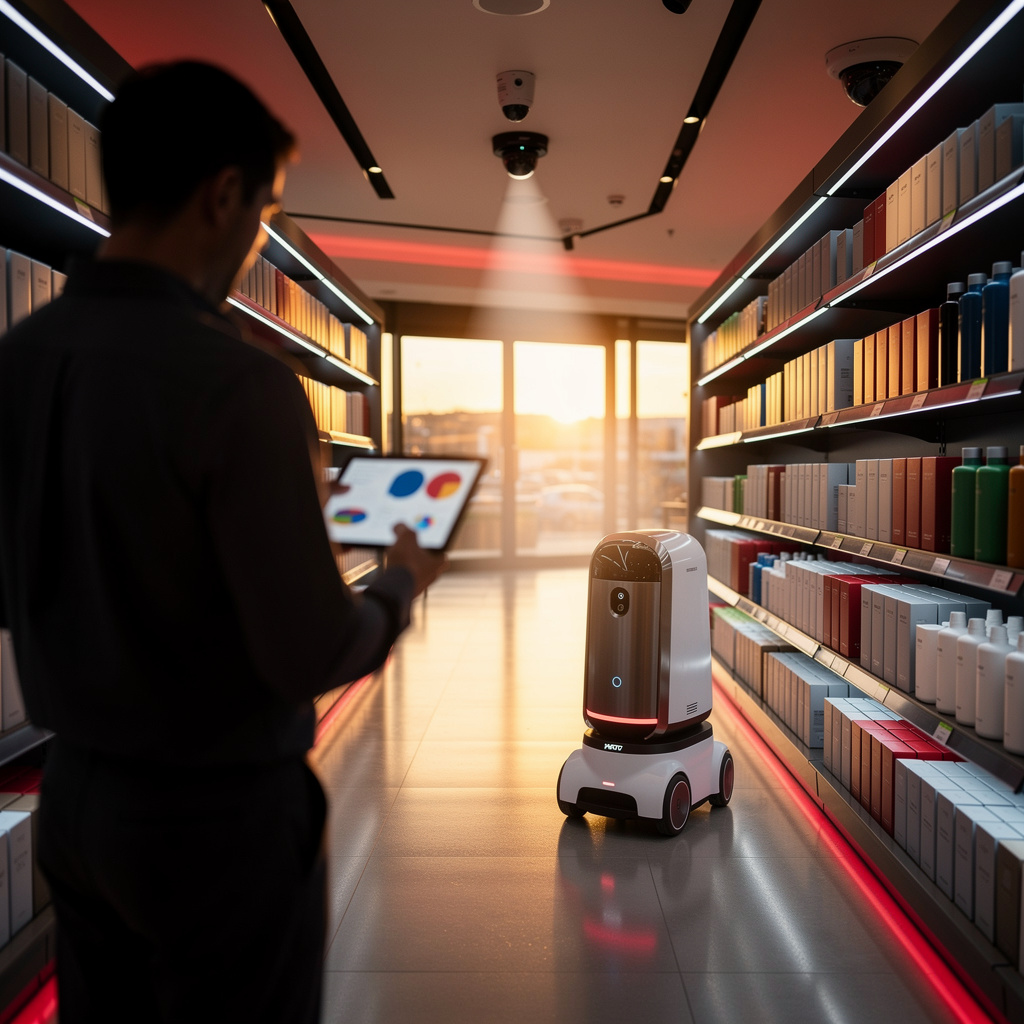
Retailers today operate in a volatile environment marked by omnichannel demand, supply chain disruptions, and thin margins, making AI a practical necessity rather than a novelty. In real life, AI for retail operations powers same-day delivery routing, automated markdown decisions, shelf-scanning robots, and personalized recommendations that drive conversion. Industry adoption has accelerated as cloud AI services and pre-trained models lower technical barriers, while academic research advances in causal inference and multi-agent systems push the frontier of what is possible. Recent shifts include the rise of generative AI for customer service, edge computing for in-store vision, and a stronger regulatory focus on algorithmic fairness and transparency. These developments make AI literacy a core competency for retail leaders across merchandising, operations, and technology teams.
Mastering AI for retail operations builds a skill stack that combines data literacy, domain-specific modeling, tool proficiency, and strategic change leadership. Professionals in category management, supply chain planning, store operations, marketing, and loss prevention can use these skills to automate repetitive decisions, uncover hidden profit levers, and respond faster to market signals. The subject also benefits entrepreneurs and small retail owners who need to compete with larger players using affordable AI tools for forecasting, pricing, and customer engagement. Personal contexts include side businesses, e-commerce ventures, and consulting roles where AI-driven retail insights create measurable value. Ultimately, this knowledge bridges the gap between technical AI capabilities and the pragmatic realities of running a retail enterprise.
Common Questions About AI for Retail Operations
What does an AI for Retail Operations certificate add to my CV?
Is this AI for Retail Operations course suitable for complete beginners?
Why is retail AI 70% about data foundations and not algorithms?
How does the bullwhip effect amplify demand in retail forecasting?
What are the four markdown strategies and the margin risk in each?
Why can't a retail inventory system see what's actually on the shelf?
- Phantom inventory: the system reports stock that is not on the shelf and not in the back room.
- On-shelf gaps: the product is in the store but the facing is empty.
- Planogram drift: items are placed where they do not belong, so shoppers cannot find them.
- Presentation quality: the shelf is technically stocked but visually unclear, blocked or mislabelled.
Do you need a huge data team before AI in retail can work?
What Will This Course Bring You?
- Analyze retail operations data and core metrics to identify high-impact AI opportunities across merchandising, supply chain, and customer experience.
- Design AI demand forecasting and inventory optimization models that reduce stockouts, excess inventory, and waste across multi-store retail assortments.
- Evaluate AI pricing, promotion, markdown, and assortment strategies by simulating margin, elasticity, sell-through, and category performance impacts.
- Build computer vision workflows that detect shelf gaps, planogram compliance, and on-shelf availability from store imagery and video.
- Implement AI supply chain, logistics, and fulfillment solutions that improve replenishment, routing, and last-mile delivery performance for retail networks.
- Design AI personalization and conversational service experiences that increase customer engagement, loyalty, and service automation across retail channels.
- Evaluate AI workforce planning, store operations optimization, fraud detection, and loss prevention approaches to improve productivity and reduce retail shrinkage.
- Develop an AI governance, ethics, change management, and deployment roadmap for a retail operations capstone initiative.
Curriculum
12 Units1. Retail Operations Data, Metrics, and AI Foundations
1 hour
2. AI Demand Forecasting and Inventory Optimization
1 hour
3. AI Pricing, Promotions, and Markdown Optimization
1 hour
4. AI Assortment Planning and Category Management
1 hour
5. Computer Vision for Shelf and Store Intelligence
1 hour
6. AI for Retail Supply Chain, Logistics, and Fulfillment
1 hour
7. AI Personalization and Customer Experience in Retail
1 hour
8. AI Workforce Planning and Store Operations Optimization
1 hour
9. AI Fraud Detection and Loss Prevention in Retail
1 hour
10. Conversational AI and Customer Service Automation
1 hour
11. AI Governance, Ethics, and Change Management in Retail
1 hour
12. Capstone: AI for Retail Operations Roadmap and Deployment
1 hour
Exam – AI for Retail Operations
20 Questions • 70% Pass • 30 min
Unlock All Units for Free
Create an account, enroll in the course, and start with the first unit right away.
Exam – AI for Retail Operations
20 Questions • Pass: 70% • 30 min
Course Duration
720
Total Minutes
12
Unit
1
Final Exam
~60
Min / Unit
AI for Retail Operations Certificate Program
Document Your Skill
Those who pass the 20-question, 30-minute exam with 70% receive the AI for Retail Operations Certificate.
Stand Out on Your CV
By adding your certificate to your CV, gain a professional reference in job applications and stand out from the crowd.
Career Advantage
With the verification code, employers can check your certificate instantly — a concrete way to show your growth.
CERTIFICATE FEE
At the end of the course, an online exam consisting of 20 questions with a 30-minute time limit is given. The exam appears automatically after you complete the topics. Anyone who scores at least 70 out of 100 on the certificate exam is awarded the AI for Retail Operations Document (certificate of attendance). You can add the certificate you earn to your CV for job applications in the many sectors listed above, and use it as a reference proving that you took this interactive course.
The Certificate of Achievement you receive with the AI for Retail Operations course program holds value that proves your personal and professional development in the business world. By adding it to your CV, it can serve as an important reference in your job applications. Moreover, compared with certificates from other private training institutions, Catch Wisdom certificates are offered to our participants at a much more affordable price.
The AI for Retail Operations course certificate is a document that proves, with a unique verification code, that you completed the course. Employers can instantly check its authenticity with this code, which helps you show your development concretely in your job applications.
For more information, we recommend visiting the Support page.
Certificate in 7 Languages
Earning success certificates from our courses is now more meaningful and global. With certificates available in Turkish, English, German, French, Spanish, Arabic, and Russian, we fully unlock the potential of students worldwide.
Why Certificate in 7 Languages?
-
01
Global Skill Development
Receiving your certificates in 7 different languages strengthens your communication skills as you engage with more people worldwide. It lets you operate more confidently and capably on the international stage.
-
02
International Job Opportunities
Employers may see your certificates in multiple languages as a sign of your ability to seize global opportunities. You can open more doors to new jobs and projects.
-
03
Cultural Richness
The chance to earn certificates in different languages helps you build closer ties with various cultures and broadens your worldview. It enriches your global perspective and deepens cultural understanding.
-
04
Ability to Participate in International Projects
Multilingual certificates give you an edge to work more effectively on international projects. They boost your chances of leadership and participation in diverse projects in the business world.
-
05
Prove Yourself on the Global Stage
Certificates in multiple languages give you the opportunity to present your skills and knowledge worldwide.
Language diversity opens worldwide opportunities. If you want to prove yourself in the international arena, join our online AI for Retail Operations course program and begin this journey with us.
Frequently Asked Questions (FAQ)
Is this course paid?
How do I join the course?
Can I take the course at my own pace?
How can I get my certificate?
What are the advantages of the certificate?
Boost Your Career
Take a new career step with the AI for Retail Operations course. Add your certificate to your CV, stand out in job applications, and open the door to new opportunities in the industry.
StartStudent Reviews
No reviews yet
Enroll in this course and be the first to leave a review about your experience with AI for Retail Operations.
Start