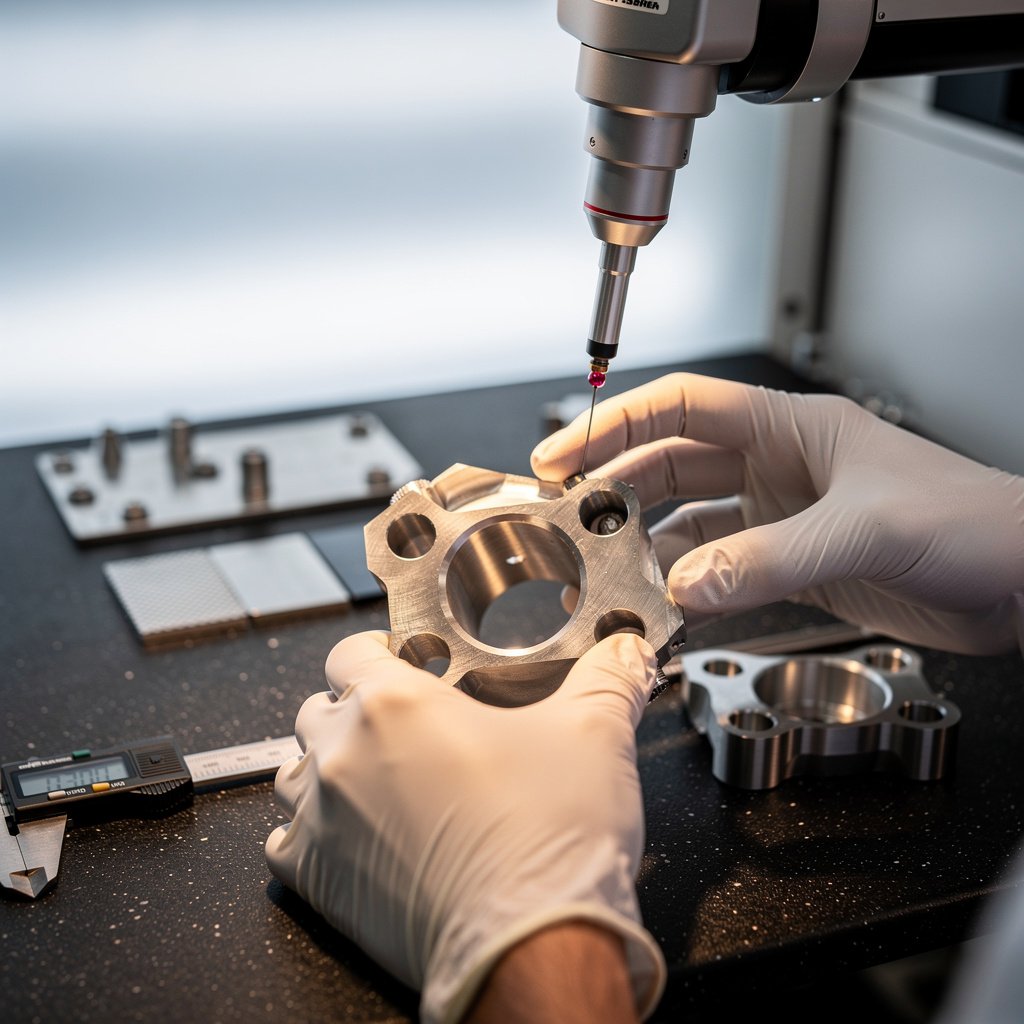
What is APQP and PPAP Advanced Quality Planning?
APQP and PPAP Advanced Quality Planning Training
This APQP and PPAP Advanced Quality Planning certificate program equips quality engineers, project managers, and manufacturing professionals with the structured methodologies to guide new products from concept to safe, compliant, and reliable production. Through twelve focused lessons—from Foundations of Advanced Quality Planning and the Quality Management System to Advanced FMEA Integration and Change Management—you will master the entire advanced product quality planning lifecycle. The course is designed for those working in automotive, aerospace, medical devices, and other high-reliability sectors who need to meet stringent customer-specific requirements and reduce launch risks. The main practical outcome is the ability to lead APQP projects, compile complete PPAP submissions at the correct level, and implement robust control plans that prevent defects before they occur.
The program follows a logical, phase-by-phase progression that mirrors the APQP timeline, starting with program definition and moving through product design, process design, validation, and PPAP submission. Each module balances conceptual frameworks with real-world case applications, building four essential skill areas: risk-based thinking through FMEA and control plan methodology, interpretation of customer-specific requirements, documentation and submission management, and closed-loop change control with re-submission protocols. With global supply chains demanding faster launches and zero-defect expectations, this training is structured for immediate impact—helping you align IATF 16949, VDA, and AIAG standards while integrating special characteristics identification and continuous improvement into daily practice.
What is APQP and PPAP Advanced Quality Planning?
APQP (Advanced Product Quality Planning) and PPAP (Production Part Approval Process) together form the industry-standard framework for ensuring that new or modified products meet all engineering design and customer requirements before full-scale manufacturing begins. Originating from the Automotive Industry Action Group (AIAG), APQP is a phased, cross-functional methodology that defines the steps from initial concept through product and process validation, while PPAP provides the documented evidence that the production process consistently yields parts that conform to specifications. Core concepts include the five APQP phases, failure mode and effects analysis (FMEA), control plans, measurement system analysis, statistical process control, and the management of special characteristics. The discipline extends beyond automotive into aerospace, medical devices, and heavy equipment, wherever regulatory rigor and zero-defect objectives demand a proactive quality-by-design approach.
In today’s manufacturing landscape, compressed development cycles, electrification, and software-defined products have made advanced quality planning more critical than ever. APQP and PPAP are not static checklists; they are living processes that adapt to emerging risks, including functional safety, cybersecurity, and sustainability requirements. Organizations worldwide rely on these methodologies to satisfy IATF 16949, AS9100, and customer-specific mandates, while recent shifts toward digital PPAP, Agile-APQP hybrids, and remote audits reflect the subject’s ongoing evolution. The ability to integrate advanced FMEA, manage change-driven re-submissions, and capture lessons learned is now a competitive differentiator in global supply chains.
Mastering APQP and PPAP builds a skill stack that combines risk assessment, process validation, supplier quality management, and regulatory compliance. Professionals who internalize this subject can translate customer voice into robust manufacturing processes, reduce launch defects, and avoid costly containment actions. The knowledge directly supports roles such as quality manager, launch engineer, supplier quality engineer, and program manager, while also empowering cross-functional team members to contribute to a prevention-based culture. Ultimately, deep fluency in advanced quality planning safeguards product safety, strengthens customer confidence, and enables organizations to deliver complex products right the first time.
Common Questions About APQP and PPAP Advanced Quality Planning
Is APQP certification valuable for a quality engineer's resume?
Can a beginner without quality experience take this APQP course?
What is the 80% rule in advanced quality planning?
How does Voice of the Customer drive APQP Phase 1?
What is the difference between DFMEA and PFMEA?
- DFMEA: Applied during Phase 2 (Product Design and Development) to identify design risks.
- PFMEA: Applied during Phase 3 (Process Design and Development) to identify process risks.
Why is the Control Plan the auditor's first target?
Is APQP only relevant for the automotive industry?
What Will This Course Bring You?
- Evaluate the role of a quality management system in advanced quality planning and interpret customer-specific requirements to align project deliverables.
- Design a comprehensive program plan by defining scope, timing, and resources using APQP Phase 1 tools such as the program timing chart and feasibility assessment.
- Apply design failure mode and effects analysis (DFMEA) and design verification methods to ensure product design meets functional, performance, and reliability requirements.
- Develop a robust process flow, PFMEA, and control plan prototype to address manufacturing feasibility and process risk during process design.
- Implement a production trial run and evaluate measurement system capability to validate that manufacturing processes consistently produce conforming product.
- Compile a complete PPAP submission package by selecting the appropriate submission level and assembling required documentation such as PSW, dimensional results, and material certifications.
- Construct a comprehensive control plan that links process steps, control characteristics, and reaction plans to ensure ongoing process stability and capability.
- Integrate DFMEA and PFMEA findings across APQP phases to systematically reduce risk and prioritize actions based on severity, occurrence, and detection ratings.
Curriculum
12 Units1. Foundations of Advanced Quality Planning
1 hour
2. The Quality Management System and Customer-Specific Requirements
1 hour
3. APQP Phase 1: Plan and Define Program
1 hour
4. APQP Phase 2: Product Design and Development
1 hour
5. APQP Phase 3: Process Design and Development
1 hour
6. APQP Phase 4: Product and Process Validation
1 hour
7. PPAP: Submission Levels and Documentation Requirements
1 hour
8. Control Plan Methodology
1 hour
9. Advanced FMEA Integration
1 hour
10. Special Characteristics Identification and Management
1 hour
11. Change Management and PPAP Re-submission
1 hour
12. Continuous Improvement and Lessons Learned
1 hour
Exam – APQP and PPAP Advanced Quality Planning
20 Questions • 70% Pass • 30 min
Unlock All Units for Free
Create an account, enroll in the course, and start with the first unit right away.
Exam – APQP and PPAP Advanced Quality Planning
20 Questions • Pass: 70% • 30 min
Course Duration
720
Total Minutes
12
Unit
1
Final Exam
~60
Min / Unit
APQP and PPAP Advanced Quality Planning Certificate Program
Document Your Skill
Those who pass the 20-question, 30-minute exam with 70% receive the APQP and PPAP Advanced Quality Planning Certificate.
Stand Out on Your CV
By adding your certificate to your CV, gain a professional reference in job applications and stand out from the crowd.
Career Advantage
Catch Wisdom certificates are recognized by HR departments and increase career opportunities.
CERTIFICATE FEE
At the end of the course, an online exam consisting of 20 questions with a 30-minute time limit is given. The exam appears automatically after you complete the topics. Anyone who scores at least 70 out of 100 on the certificate exam is awarded the APQP and PPAP Advanced Quality Planning Document (certificate of attendance). You can add the certificate you earn to your CV for job applications in the many sectors listed above, and use it as a reference proving that you took this interactive course.
The Certificate of Achievement you receive with the APQP and PPAP Advanced Quality Planning course program holds value that proves your personal and professional development in the business world. By adding it to your CV, it can serve as an important reference in your job applications. Moreover, compared with certificates from other private training institutions, Catch Wisdom certificates are offered to our participants at a much more affordable price.
Because HR departments recognize Catch Wisdom as a reputable institution in this field, they value these certificates and may evaluate your job applications favorably. For this reason, a APQP and PPAP Advanced Quality Planning course certificate from Catch Wisdom can make your applications more attractive and place you in an advantageous position in the business world.
For more information, we recommend visiting the Support page.
Certificate in 7 Languages
Earning success certificates from our courses is now more meaningful and global. With certificates available in Turkish, English, German, French, Spanish, Arabic, and Russian, we fully unlock the potential of students worldwide.
Why Certificate in 7 Languages?
-
01
Global Skill Development
Receiving your certificates in 7 different languages strengthens your communication skills as you engage with more people worldwide. It lets you operate more confidently and capably on the international stage.
-
02
International Job Opportunities
Employers may see your certificates in multiple languages as a sign of your ability to seize global opportunities. You can open more doors to new jobs and projects.
-
03
Cultural Richness
The chance to earn certificates in different languages helps you build closer ties with various cultures and broadens your worldview. It enriches your global perspective and deepens cultural understanding.
-
04
Ability to Participate in International Projects
Multilingual certificates give you an edge to work more effectively on international projects. They boost your chances of leadership and participation in diverse projects in the business world.
-
05
Prove Yourself on the Global Stage
Certificates in multiple languages let you showcase your skills and knowledge worldwide. You can become an internationally recognized professional.
Language diversity opens worldwide opportunities. If you want to prove yourself in the international arena, join our online APQP and PPAP Advanced Quality Planning course program and begin this journey with us.
Frequently Asked Questions (FAQ)
Is this course paid?
How do I join the course?
Can I take the course at my own pace?
How can I get my certificate?
What are the advantages of the Certified Certificate?
Boost Your Career
Take a new career step with the APQP and PPAP Advanced Quality Planning course. Add your certificate to your CV, stand out in job applications, and open the door to new opportunities in the industry.
StartStudent Reviews
No reviews yet
Enroll in this course and be the first to leave a review about your experience with APQP and PPAP Advanced Quality Planning.
Start