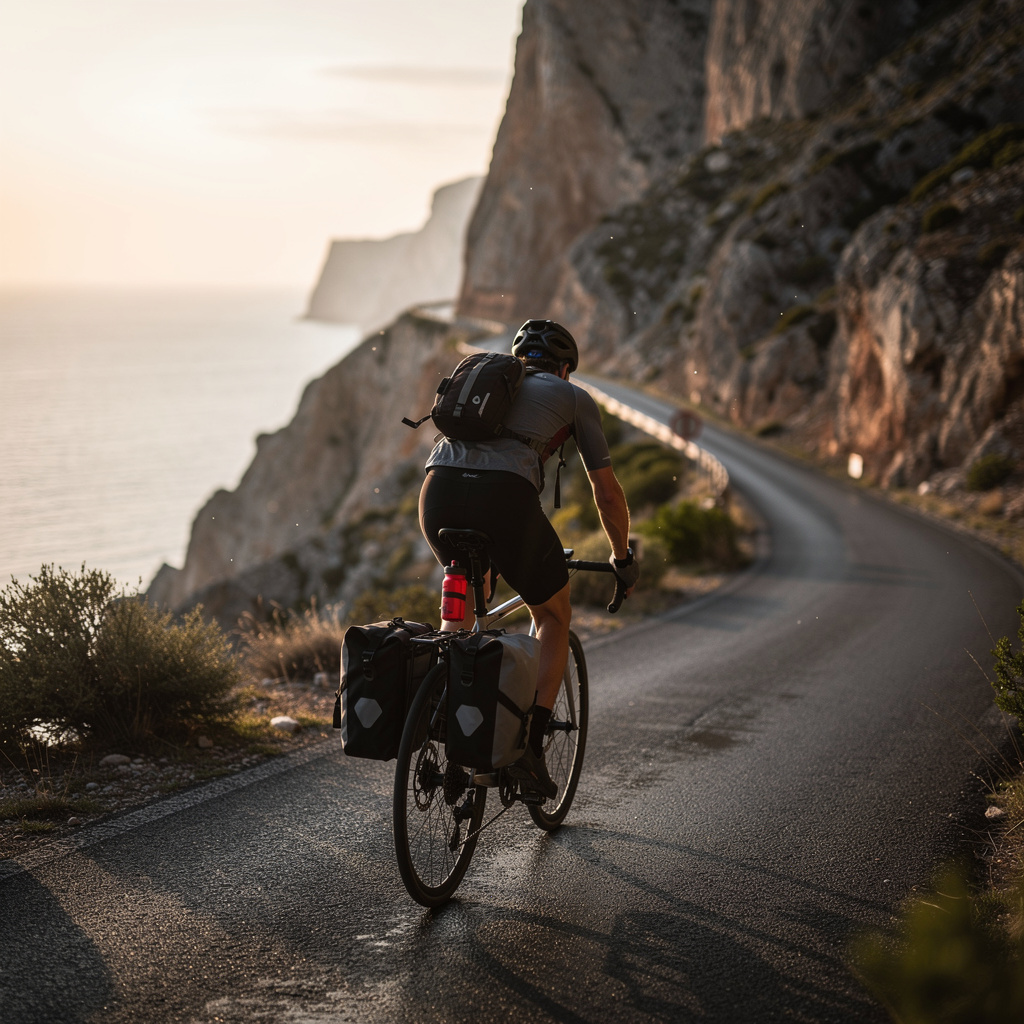
What is Bicycle Touring?
Bicycle Touring Training
The Bicycle Touring certificate program is a comprehensive training pathway designed for cyclists who want to transform their passion for riding into the skills needed for multi-day, self-supported adventures. It covers everything from trip styles and touring mindset to route planning, navigation, and on-the-road maintenance. The course is ideal for both beginners who have never loaded a bike and experienced riders looking to refine their approach. By the end, participants will be able to plan, pack for, and execute a long-distance tour with confidence and safety.
The program is structured as a beginner-friendly progression that balances theoretical knowledge with hands-on practice across four core skill areas: bike preparation, trip planning, riding technique, and self-sufficiency. Lessons on selecting and fitting a touring bike, packing systems, and camping outdoors build a solid foundation, while navigation tools, road safety, and physical conditioning prepare riders for real-world conditions. The curriculum also includes practical sessions on meal planning, cooking on tour, and emergency bike maintenance, ensuring no aspect of touring is left to chance. With the growing popularity of cycle tourism and remote travel, this training is a timely investment for anyone seeking meaningful, low-impact adventures.
What is Bicycle Touring?
Bicycle touring is the practice of traveling long distances by bicycle, carrying gear and supplies to support multi-day journeys. It encompasses a wide range of styles, from credit-card touring with minimal luggage to fully self-supported expeditions with camping equipment and cooking supplies. Core concepts include route selection, load distribution, bike fit for loaded riding, navigation, and the ability to adapt to changing weather, terrain, and traffic conditions. At its heart, bicycle touring is about combining physical endurance with logistical planning to create a mobile, independent travel experience.
In an era of increasing interest in sustainable travel and slow tourism, bicycle touring has gained significant relevance as a low-carbon alternative to motorized travel. Cycle tourism is a growing sector in the travel industry, with dedicated infrastructure, bike-friendly accommodations, and cross-country routes being developed across Europe, North America, and beyond. Recent shifts toward remote work and digital nomadism have also made long-term bicycle travel more accessible, while advances in lightweight gear and electric-assist bikes have lowered the barrier to entry. Bicycle touring is now recognized not only as a recreational activity but as a legitimate form of travel, research, and personal growth.
Mastering bicycle touring builds a diverse skill stack that combines physical conditioning, mechanical aptitude, navigation, and crisis management. These skills translate directly into personal resilience, self-reliance, and the ability to plan and execute complex logistics in unpredictable environments. Professionally, the competencies developed through touring — such as route optimization, risk assessment, and resource management — are valuable in fields like outdoor education, travel planning, and expedition logistics. For individuals, the outcome is a profound sense of independence and the capability to explore the world on two wheels, whether on a weekend loop or a cross-continental journey.
Common Questions About Bicycle Touring
Does the bicycle touring certificate help in travel industry job applications?
Can a complete beginner start the bicycle touring course without any prior long-distance rides?
How does the 60/40 rule change weight distribution on a loaded touring bike?
- Rear panniers: carry the bulk of heavy gear like tools and food, but keep them low and evenly balanced side to side.
- Handlebar bag: hold only light, frequently accessed items like maps and snacks to avoid steering fatigue.
- Seat pack: store lightweight clothing and sleeping gear, never dense tools that create a pendulum effect.
Why does steel frame geometry win over carbon for heavy bicycle touring loads?
What are the most common mistakes when packing a three-bag bikepacking system?
How do you calculate the 6-hour math problem for daily touring itinerary design?
- Raw distance: six hours multiplied by your loaded average speed.
- Elevation penalty: climbing consumes time and energy far beyond the flat distance it adds.
- Break allowance: meals, rest, and sightseeing must be subtracted from the six-hour window.
- Buffer: keep unplanned time for mechanical issues or weather.
Does bicycle touring require wild camping and sleeping outdoors every single night?
What Will This Course Bring You?
- Evaluate different trip styles to select the appropriate touring mindset for a given adventure.
- Apply bike fitting principles to select and adjust a touring bike for optimal comfort and efficiency.
- Design a packing system that balances weight distribution and accessibility for multi-day tours.
- Create a detailed route plan and itinerary considering terrain, resupply points, and daily mileage.
- Utilize map reading and navigation tools to orient and adjust course during a tour.
- Demonstrate riding techniques for loaded bikes, including climbing, descending, and cornering with added weight.
- Implement road safety strategies to navigate traffic and hazardous conditions while touring.
- Perform on-the-road maintenance tasks to address common mechanical issues during a tour.
Curriculum
12 Units1. Trip Styles and Touring Mindset
1 hour
2. Selecting and Fitting a Touring Bike
1 hour
3. Touring Gear and Packing Systems
1 hour
4. Route Planning and Itinerary Design
1 hour
5. Navigation Tools and Map Reading
1 hour
6. Riding Skills for Loaded Bikes
1 hour
7. Road Safety and Traffic Awareness
1 hour
8. Camping and Sleeping Outdoors
1 hour
9. Meal Planning and Cooking on Tour
1 hour
10. On-the-Road Bike Maintenance
1 hour
11. Physical Conditioning and Injury Prevention
1 hour
12. Executing a Long-Distance Tour
1 hour
Exam – Bicycle Touring
20 Questions • 70% Pass • 30 min
Unlock All Units for Free
Create an account, enroll in the course, and start with the first unit right away.
Exam – Bicycle Touring
20 Questions • Pass: 70% • 30 min
Course Duration
720
Total Minutes
12
Unit
1
Final Exam
~60
Min / Unit
Bicycle Touring Certificate Program
Document Your Skill
Those who pass the 20-question, 30-minute exam with 70% receive the Bicycle Touring Certificate.
Stand Out on Your CV
By adding your certificate to your CV, gain a professional reference in job applications and stand out from the crowd.
Career Advantage
Catch Wisdom certificates are recognized by HR departments and increase career opportunities.
CERTIFICATE FEE
At the end of the course, an online exam consisting of 20 questions with a 30-minute time limit is given. The exam appears automatically after you complete the topics. Anyone who scores at least 70 out of 100 on the certificate exam is awarded the Bicycle Touring Document (certificate of attendance). You can add the certificate you earn to your CV for job applications in the many sectors listed above, and use it as a reference proving that you took this interactive course.
The Certificate of Achievement you receive with the Bicycle Touring course program holds value that proves your personal and professional development in the business world. By adding it to your CV, it can serve as an important reference in your job applications. Moreover, compared with certificates from other private training institutions, Catch Wisdom certificates are offered to our participants at a much more affordable price.
Because HR departments recognize Catch Wisdom as a reputable institution in this field, they value these certificates and may evaluate your job applications favorably. For this reason, a Bicycle Touring course certificate from Catch Wisdom can make your applications more attractive and place you in an advantageous position in the business world.
For more information, we recommend visiting the Support page.
Certificate in 7 Languages
Earning success certificates from our courses is now more meaningful and global. With certificates available in Turkish, English, German, French, Spanish, Arabic, and Russian, we fully unlock the potential of students worldwide.
Why Certificate in 7 Languages?
-
01
Global Skill Development
Receiving your certificates in 7 different languages strengthens your communication skills as you engage with more people worldwide. It lets you operate more confidently and capably on the international stage.
-
02
International Job Opportunities
Employers may see your certificates in multiple languages as a sign of your ability to seize global opportunities. You can open more doors to new jobs and projects.
-
03
Cultural Richness
The chance to earn certificates in different languages helps you build closer ties with various cultures and broadens your worldview. It enriches your global perspective and deepens cultural understanding.
-
04
Ability to Participate in International Projects
Multilingual certificates give you an edge to work more effectively on international projects. They boost your chances of leadership and participation in diverse projects in the business world.
-
05
Prove Yourself on the Global Stage
Certificates in multiple languages let you showcase your skills and knowledge worldwide. You can become an internationally recognized professional.
Language diversity opens worldwide opportunities. If you want to prove yourself in the international arena, join our online Bicycle Touring course program and begin this journey with us.
Frequently Asked Questions (FAQ)
Is this course paid?
How do I join the course?
Can I take the course at my own pace?
How can I get my certificate?
What are the advantages of the Certified Certificate?
Boost Your Career
Take a new career step with the Bicycle Touring course. Add your certificate to your CV, stand out in job applications, and open the door to new opportunities in the industry.
StartStudent Reviews
No reviews yet
Enroll in this course and be the first to leave a review about your experience with Bicycle Touring.
Start