What is Biomimicry Design Principles?
Biomimicry Design Principles Training
The Biomimicry Design Principles certificate program offers a comprehensive exploration of nature-inspired innovation, guiding learners from foundational concepts to advanced applications. This course is designed for architects, engineers, product designers, sustainability professionals, and anyone seeking to create regenerative solutions by emulating time-tested biological strategies. By the end, participants will be able to systematically observe natural systems, extract design principles, and apply them to real-world challenges in fields ranging from building structures to organizational management.
The program is structured to be beginner-friendly, starting with the core question “What Is Biomimicry?” and progressing through Life’s Principles, structural strategies, energy and material efficiency, and circular closed-loop systems. It then moves into the Biomimicry Design Spiral and practical case studies across architecture, engineering, product design, and even systems and organizational design. Learners build four key skill areas: pattern recognition in nature, abstraction of biological strategies, iterative design thinking, and ethical integration of biomimetic solutions. With the growing urgency of climate change and resource depletion, this training equips professionals to lead the shift toward a regenerative economy—making it a timely and essential investment for any forward-thinking career.
What is Biomimicry Design Principles?
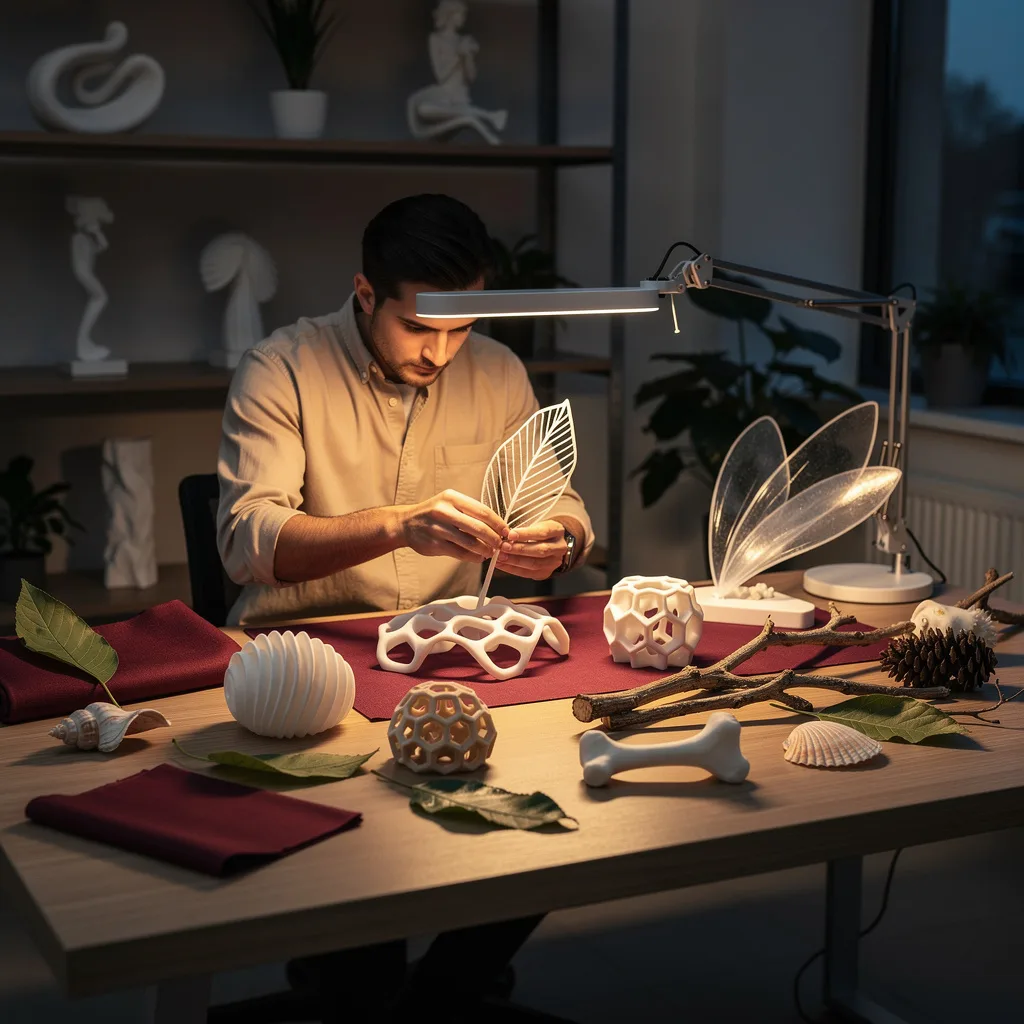
Biomimicry Design Principles is a discipline that studies nature’s models, systems, and processes to emulate them in human design. Its core concepts include Life’s Principles—such as resource efficiency, adaptation, and integration of form and function—as well as strategies like closed-loop material flows, energy optimization, and resilience through diversity. The field spans multiple scales, from the molecular (self-cleaning surfaces inspired by lotus leaves) to the systemic (circular economies modeled on ecosystems).
Today, biomimicry is more relevant than ever as industries face mounting environmental pressures and resource constraints. It is actively applied in architecture (e.g., passive cooling inspired by termite mounds), engineering (e.g., lightweight structures from bone geometry), product design (e.g., Velcro from burrs), and even organizational management (e.g., decentralized decision-making from ant colonies). Recent shifts toward regenerative design and circular economy frameworks have accelerated the adoption of biomimetic thinking in both academia and corporate R&D, making it a critical tool for sustainable innovation.
Mastering Biomimicry Design Principles builds a unique skill stack that combines scientific observation, creative abstraction, and systems thinking. Learners develop the ability to identify deep patterns in nature, translate them into design parameters, and iterate solutions that are both functional and ecologically harmonious. This skill set is invaluable for professionals in design, engineering, architecture, product development, and sustainability consulting, as well as for entrepreneurs and policymakers seeking to create resilient, future-proof systems. The subject bridges the gap between biological intelligence and human ingenuity, offering a pathway to innovation that works in concert with the planet.
Common Questions About Biomimicry Design Principles
How does a biomimicry certificate boost your CV?
Can beginners without design experience take this course?
How do termite mounds inspire passive cooling in buildings?
- Cool air intake through lower openings
- Warm air rising through central channels
- Exhaust through upper vents
What are the six Life's Principles in biomimicry?
How does the biomimicry design spiral work?
- Define – reframe the human challenge in biological terms
- Biologize – ask how nature solves similar problems
- Discover – research biological models and strategies
- Abstract – extract the core design principles from nature
- Emulate – apply those principles to your design
- Evaluate – test your solution against Life's Principles
What is the difference between biomimicry and biomimetics?
Is biomimicry just copying nature's shapes?
What Will This Course Bring You?
- Analyze the core principles of biomimicry and differentiate them from other nature-inspired design methodologies.
- Apply Life’s Principles to assess how a design mimics nature’s unifying patterns for sustainability.
- Design a structural component inspired by nature’s form-function strategies, such as honeycomb or bone.
- Evaluate energy and material efficiency strategies in natural systems to propose improvements for a human-made product.
- Implement closed-loop system principles from nature to redesign a linear production process into a circular one.
- Apply the Biomimicry Design Spiral to generate a nature-inspired solution for a given design challenge.
- Analyze case studies in architecture and engineering to identify successful biomimetic adaptations and their performance outcomes.
- Evaluate ethical considerations and limitations of biomimicry when applying nature’s strategies to human designs.
Curriculum
12 Units1. What Is Biomimicry?
1 hour
2. Life’s Principles: Nature’s Unifying Patterns
1 hour
3. Form and Function: Nature’s Structural Strategies
1 hour
4. Energy and Material Efficiency in Nature
1 hour
5. Closed-Loop Systems and Circularity
1 hour
6. The Biomimicry Design Spiral and Thinking Process
1 hour
7. Case Studies in Architecture and Engineering
1 hour
8. Case Studies in Product and Industrial Design
1 hour
9. Biomimicry in Systems and Organizational Design
1 hour
10. Integrating Biomimicry into the Design Process
1 hour
11. Challenges, Limitations, and Ethical Considerations
1 hour
12. Future Directions and Emerging Frontiers
1 hour
Exam – Biomimicry Design Principles
20 Questions • 70% Pass • 30 min
Unlock All Units for Free
Create an account, enroll in the course, and start with the first unit right away.
Exam – Biomimicry Design Principles
20 Questions • Pass: 70% • 30 min
Course Duration
720
Total Minutes
12
Unit
1
Final Exam
~60
Min / Unit
Biomimicry Design Principles Certificate Program
Document Your Skill
Those who pass the 20-question, 30-minute exam with 70% receive the Biomimicry Design Principles Certificate.
Stand Out on Your CV
By adding your certificate to your CV, gain a professional reference in job applications and stand out from the crowd.
Career Advantage
With the verification code, employers can check your certificate instantly — a concrete way to show your growth.
CERTIFICATE FEE
At the end of the course, an online exam consisting of 20 questions with a 30-minute time limit is given. The exam appears automatically after you complete the topics. Anyone who scores at least 70 out of 100 on the certificate exam is awarded the Biomimicry Design Principles Document (certificate of attendance). You can add the certificate you earn to your CV for job applications in the many sectors listed above, and use it as a reference proving that you took this interactive course.
The Certificate of Achievement you receive with the Biomimicry Design Principles course program holds value that proves your personal and professional development in the business world. By adding it to your CV, it can serve as an important reference in your job applications. Moreover, compared with certificates from other private training institutions, Catch Wisdom certificates are offered to our participants at a much more affordable price.
The Biomimicry Design Principles course certificate is a document that proves, with a unique verification code, that you completed the course. Employers can instantly check its authenticity with this code, which helps you show your development concretely in your job applications.
For more information, we recommend visiting the Support page.
Certificate in 7 Languages
Earning success certificates from our courses is now more meaningful and global. With certificates available in Turkish, English, German, French, Spanish, Arabic, and Russian, we fully unlock the potential of students worldwide.
Why Certificate in 7 Languages?
-
01
Global Skill Development
Receiving your certificates in 7 different languages strengthens your communication skills as you engage with more people worldwide. It lets you operate more confidently and capably on the international stage.
-
02
International Job Opportunities
Employers may see your certificates in multiple languages as a sign of your ability to seize global opportunities. You can open more doors to new jobs and projects.
-
03
Cultural Richness
The chance to earn certificates in different languages helps you build closer ties with various cultures and broadens your worldview. It enriches your global perspective and deepens cultural understanding.
-
04
Ability to Participate in International Projects
Multilingual certificates give you an edge to work more effectively on international projects. They boost your chances of leadership and participation in diverse projects in the business world.
-
05
Prove Yourself on the Global Stage
Certificates in multiple languages give you the opportunity to present your skills and knowledge worldwide.
Language diversity opens worldwide opportunities. If you want to prove yourself in the international arena, join our online Biomimicry Design Principles course program and begin this journey with us.
Frequently Asked Questions (FAQ)
Is this course paid?
How do I join the course?
Can I take the course at my own pace?
How can I get my certificate?
What are the advantages of the certificate?
Boost Your Career
Take a new career step with the Biomimicry Design Principles course. Add your certificate to your CV, stand out in job applications, and open the door to new opportunities in the industry.
StartStudent Reviews
No reviews yet
Enroll in this course and be the first to leave a review about your experience with Biomimicry Design Principles.
Start