What is Carpentry Framing Techniques?
Carpentry Framing Techniques Certificate Program
The Carpentry Framing Techniques certificate program teaches the complete process of constructing the structural skeleton of a building, from floor systems to roof assemblies. It is designed for aspiring carpenters, construction apprentices, and experienced tradespeople seeking to formalize their skills, as well as dedicated DIY homeowners planning a major build. The main practical outcome is the ability to independently frame a small structure, demonstrated through a hands-on project that integrates all core techniques.
The program follows a beginner-friendly progression, starting with safety protocols, tool selection, and material properties before moving into load calculations and building code requirements. It builds five core skill areas: floor framing (joists, subfloor, beams), wall framing (layout, studs, plates, openings), roof framing (rafters, ridge boards, sheathing, trusses), stair framing (layout and stringers), and advanced methods including shear walls, bracing for lateral loads, and heavy timber construction. This comprehensive approach is especially relevant now as the industry shifts toward energy-efficient advanced framing and the resurgence of timber construction, creating high demand for framers who understand both traditional and modern techniques.
What is Carpentry Framing Techniques?
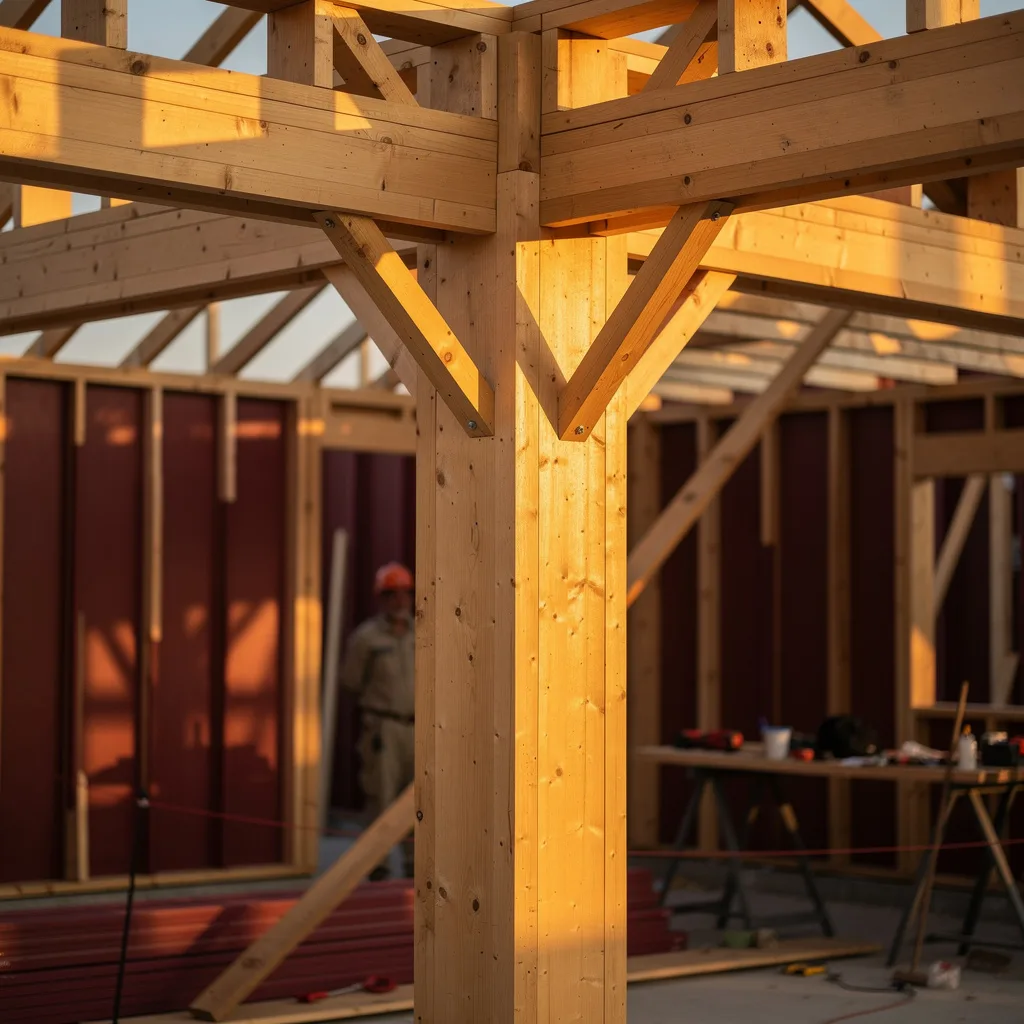
Carpentry framing techniques encompass the methods used to create the load-bearing framework of a building, including floors, walls, roofs, and stairs. Core concepts include understanding load paths—how gravity, wind, and seismic forces transfer through joists, studs, rafters, and beams—and applying proper layout, spacing, and fastening to ensure structural integrity. The field also covers the selection of dimensional lumber, engineered wood products, and connectors, as well as the integration of openings for windows and doors without compromising strength.
Today, framing techniques are more critical than ever due to evolving building codes that demand higher energy performance and resilience against natural disasters. Advanced framing, which optimizes material use and reduces thermal bridging, is widely adopted in green construction, while heavy timber framing is experiencing a renaissance in commercial and multi-family projects for its aesthetic and sustainability benefits. Real-world applications range from single-family homes and apartment buildings to barns, workshops, and even mid-rise structures, making framing a foundational skill in the construction industry.
Mastering carpentry framing builds a versatile skill stack that includes blueprint reading, spatial reasoning, precise measurement and layout, and safe operation of power tools and scaffolding. This knowledge directly translates to careers as a rough carpenter, framing contractor, or construction supervisor, and also empowers homeowners to undertake their own building projects with confidence. Whether pursuing professional certification or personal competence, understanding framing techniques provides the structural literacy needed to create safe, durable, and code-compliant buildings.
Common Questions About Carpentry Framing Techniques
What are the essential safety tools for carpentry framing?
How do building loads affect framing design?
What is the difference between conventional and advanced framing?
- Conventional: More lumber, more thermal breaks, simpler layout.
- Advanced: Fewer studs, better insulation, requires careful load path planning.
How to calculate stair step dimensions for framing?
Can I learn carpentry framing techniques online?
What is a birdsmouth cut and why is it important?
What Will This Course Bring You?
- Apply proper safety protocols and select appropriate tools and materials for residential framing projects.
- Analyze structural loads and interpret building codes to ensure compliant framing designs.
- Design and layout floor joists, subfloor, and beams to support specified loads.
- Construct wall frames with accurate stud spacing, plates, and headers for load-bearing and non-load-bearing walls.
- Frame window and door openings with correct rough openings, headers, and cripple studs.
- Calculate and cut rafters for common, hip, and valley roof configurations.
- Implement shear walls and bracing systems to resist lateral forces in wood-frame structures.
- Evaluate advanced framing techniques to optimize material usage and thermal efficiency.
Curriculum
12 Units1. Safety, Tools, and Materials for Framing
1 hour
2. Understanding Loads and Building Codes
1 hour
3. Floor Framing: Joists, Subfloor, and Beams
1 hour
4. Wall Framing: Layout, Studs, and Plates
1 hour
5. Wall Openings: Windows and Doors
1 hour
6. Roof Framing: Rafters and Ridge Boards
1 hour
7. Roof Sheathing and Trusses
1 hour
8. Stair Framing: Layout and Stringers
1 hour
9. Advanced Framing Techniques
1 hour
10. Shear Walls and Bracing for Lateral Loads
1 hour
11. Timber Framing and Heavy Timber Construction
1 hour
12. Project: Framing a Small Structure
1 hour
Exam – Carpentry Framing Techniques
20 Questions • 70% Pass • 30 min
Unlock All Units for Free
Create an account, enroll in the course, and start with the first unit right away.
Exam – Carpentry Framing Techniques
20 Questions • Pass: 70% • 30 min
Course Duration
720
Total Minutes
12
Unit
1
Final Exam
~60
Min / Unit
Carpentry Framing Techniques Certificate Program
Document Your Skill
Those who pass the 20-question, 30-minute exam with 70% receive the Carpentry Framing Techniques Certificate.
Stand Out on Your CV
By adding your certificate to your CV, gain a professional reference in job applications and stand out from the crowd.
Career Advantage
With the verification code, employers can check your certificate instantly — a concrete way to show your growth.
CERTIFICATE FEE
At the end of the course, an online exam consisting of 20 questions with a 30-minute time limit is given. The exam appears automatically after you complete the topics. Anyone who scores at least 70 out of 100 on the certificate exam is awarded the Carpentry Framing Techniques Document (certificate of attendance). You can add the certificate you earn to your CV for job applications in the many sectors listed above, and use it as a reference proving that you took this interactive course.
The Certificate of Achievement you receive with the Carpentry Framing Techniques course program holds value that proves your personal and professional development in the business world. By adding it to your CV, it can serve as an important reference in your job applications. Moreover, compared with certificates from other private training institutions, Catch Wisdom certificates are offered to our participants at a much more affordable price.
The Carpentry Framing Techniques course certificate is a document that proves, with a unique verification code, that you completed the course. Employers can instantly check its authenticity with this code, which helps you show your development concretely in your job applications.
For more information, we recommend visiting the Support page.
Certificate in 7 Languages
Earning success certificates from our courses is now more meaningful and global. With certificates available in Turkish, English, German, French, Spanish, Arabic, and Russian, we fully unlock the potential of students worldwide.
Why Certificate in 7 Languages?
-
01
Global Skill Development
Receiving your certificates in 7 different languages strengthens your communication skills as you engage with more people worldwide. It lets you operate more confidently and capably on the international stage.
-
02
International Job Opportunities
Employers may see your certificates in multiple languages as a sign of your ability to seize global opportunities. You can open more doors to new jobs and projects.
-
03
Cultural Richness
The chance to earn certificates in different languages helps you build closer ties with various cultures and broadens your worldview. It enriches your global perspective and deepens cultural understanding.
-
04
Ability to Participate in International Projects
Multilingual certificates give you an edge to work more effectively on international projects. They boost your chances of leadership and participation in diverse projects in the business world.
-
05
Prove Yourself on the Global Stage
Certificates in multiple languages give you the opportunity to present your skills and knowledge worldwide.
Language diversity opens worldwide opportunities. If you want to prove yourself in the international arena, join our online Carpentry Framing Techniques course program and begin this journey with us.
Frequently Asked Questions (FAQ)
Is this course paid?
How do I join the course?
Can I take the course at my own pace?
How can I get my certificate?
What are the advantages of the certificate?
Boost Your Career
Take a new career step with the Carpentry Framing Techniques course. Add your certificate to your CV, stand out in job applications, and open the door to new opportunities in the industry.
StartStudent Reviews
No reviews yet
Enroll in this course and be the first to leave a review about your experience with Carpentry Framing Techniques.
Start