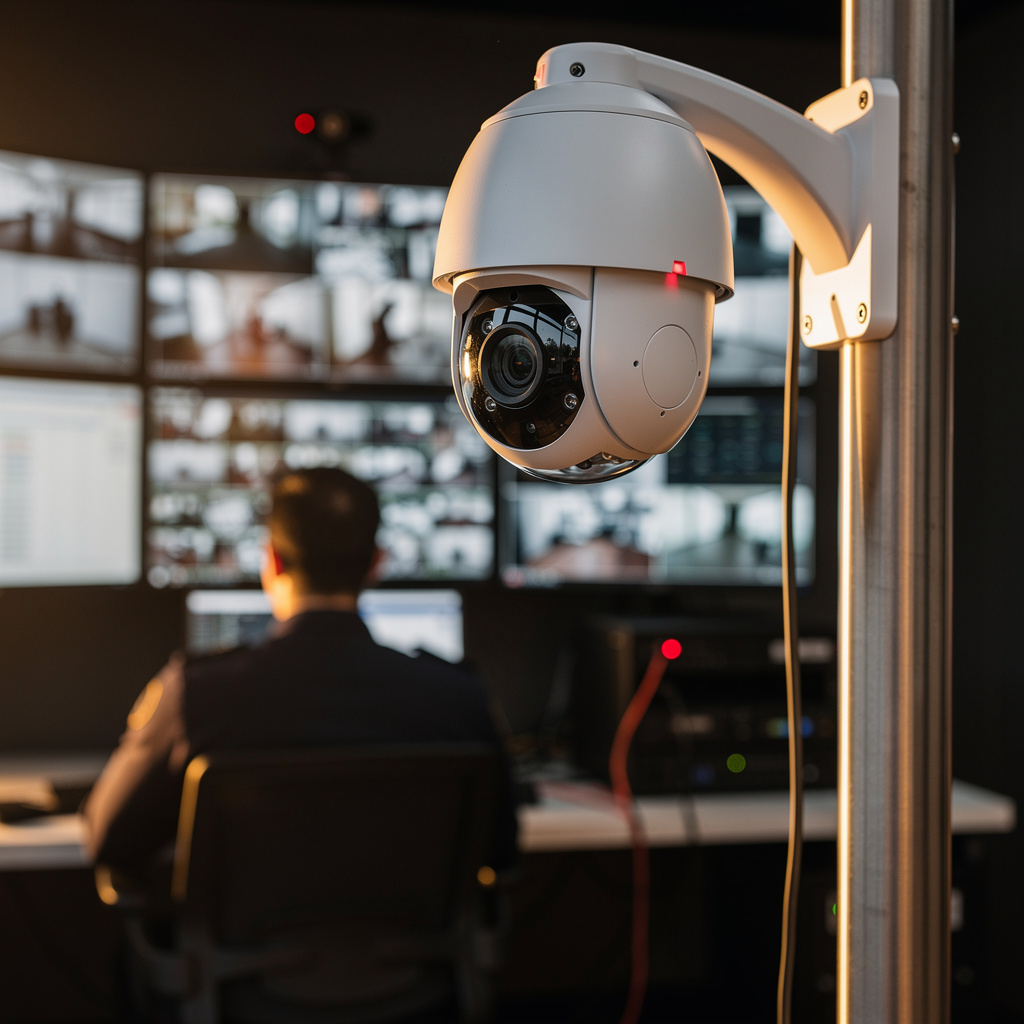
What is CCTV and Video Surveillance Systems?
CCTV and Video Surveillance Systems Certificate Program
The CCTV and Video Surveillance Systems certificate program is a focused training path for designing, installing, operating, and maintaining modern video surveillance environments. It teaches the full technical chain from image capture through lenses, sensors, and lighting to encoding, compression, streaming protocols, IP network infrastructure, video management systems, recording platforms, storage retention planning, video analytics, cybersecurity, and legal, ethical, and privacy compliance. The program is intended for security installers, network and IT administrators, facility and security managers, systems integrators, and technical professionals who need practical command of CCTV and IP video systems. Its main practical outcome is the ability to specify, design, deploy, and troubleshoot surveillance systems that are reliable, scalable, secure, and compliant with operational and privacy requirements.
The curriculum is structured as a beginner-friendly progression: it starts with foundations and camera fundamentals, then moves through camera types and environmental housings, encoding and streaming, network infrastructure, video management and recording, storage design, analytics, cybersecurity, and legal compliance before culminating in system design, installation, maintenance, and troubleshooting. Theory is balanced with practice-oriented decision-making, so learners work through the trade-offs involved in lens selection, bandwidth planning, retention calculation, analytics tuning, and secure remote access rather than treating each topic in isolation. The program builds five core skill areas: camera and optics selection, IP networking and video streaming, recording and storage architecture, analytics and cybersecurity governance, and end-to-end system design and field maintenance. It is a relevant choice now because surveillance environments are shifting from isolated analog equipment to networked, analytics-enabled, and regulated systems where cybersecurity and privacy compliance are as important as image quality.
What is CCTV and Video Surveillance Systems?
CCTV and video surveillance systems are engineered environments for capturing, transmitting, recording, managing, and reviewing video and related metadata across a defined area. The subject covers the physical and digital layers of that chain: optics and image sensors, illumination, camera housings, video encoding and compression, network transport, video management software, recording platforms, storage retention, analytics, cybersecurity controls, and the legal and ethical rules that govern surveillance. Core concepts include field of view, resolution, frame rate, bitrate, bandwidth, latency, retention, redundancy, tamper resistance, and evidence integrity. The scope ranges from a small retail installation with a few cameras to multi-site IP systems with centralized management and intelligent event detection.
Video surveillance matters today because organizations rely on it for public safety, loss prevention, perimeter security, traffic and transportation monitoring, critical infrastructure protection, healthcare and campus security, and operational insight in smart buildings and industrial sites. The field has shifted from analog CCTV toward IP cameras, hybrid and cloud-connected architectures, higher-resolution sensors, edge analytics, and AI-assisted event detection, which increases both capability and complexity. At the same time, cybersecurity exposure, data protection rules, and public expectations around privacy have made surveillance governance a board-level and compliance concern rather than a purely technical matter. Academic work in computer vision, edge computing, and security engineering also feeds directly into how modern surveillance systems are designed and evaluated.
Mastery of this subject builds a hybrid skill stack that combines hardware literacy, network engineering, storage and system architecture, data interpretation, security hardening, and regulatory awareness. These skills matter in professional contexts such as security integration, facilities management, IT infrastructure, critical infrastructure operations, retail loss prevention, transportation, healthcare, education, and public sector compliance. They also support personal and small-business contexts where choosing cameras, configuring recording, protecting remote access, and respecting privacy boundaries require informed decisions. The bridge from subject knowledge to learner outcomes is the ability to reason across the whole surveillance lifecycle, from requirement and risk assessment to design, deployment, verification, and ongoing maintenance.
What Will This Course Bring You?
- Differentiate analog, HD analog, and IP surveillance architectures by comparing signal flow, scalability, and deployment constraints for CCTV projects.
- Specify image sensors, lenses, and lighting configurations by analyzing scene illumination, field of view, and resolution requirements for surveillance cameras.
- Select camera types, housings, and environmental ratings that satisfy indoor, outdoor, vandal-prone, and extreme-weather installation conditions.
- Configure video encoding, compression, and streaming protocols to balance image quality, bandwidth use, and latency in IP video systems.
- Design an IP surveillance network by planning VLANs, PoE budgets, bandwidth allocation, and QoS for reliable camera-to-recorder traffic.
- Calculate storage capacity and retention periods by evaluating bitrates, recording schedules, and redundancy needs for video management platforms.
- Apply cybersecurity controls to cameras, recorders, and management software by configuring authentication, firmware updates, and network segmentation.
- Design compliant CCTV deployments by translating legal, ethical, and privacy requirements into camera placement, access control, and retention specifications.
Curriculum
12 Units1. Foundations of CCTV and Video Surveillance Systems
1 hour
2. Camera Fundamentals: Image Sensors, Lenses, and Lighting
1 hour
3. Camera Types, Housings, and Environmental Considerations
1 hour
4. Video Encoding, Compression, and Streaming Protocols
1 hour
5. Network Infrastructure for IP Video Surveillance
1 hour
6. Video Management Systems and Recording Platforms
1 hour
7. Storage Design and Retention Planning
1 hour
8. Video Analytics and Intelligent Surveillance
1 hour
9. Cybersecurity for Video Surveillance Systems
1 hour
10. Legal, Ethical, and Privacy Compliance
1 hour
11. System Design for CCTV and Video Surveillance Systems
1 hour
12. Installation, Maintenance, and Troubleshooting
1 hour
Exam – CCTV and Video Surveillance Systems
20 Questions • 70% Pass • 30 min
Unlock All Units for Free
Create an account, enroll in the course, and start with the first unit right away.
Exam – CCTV and Video Surveillance Systems
20 Questions • Pass: 70% • 30 min
Course Duration
720
Total Minutes
12
Unit
1
Final Exam
~60
Min / Unit
CCTV and Video Surveillance Systems Certificate Program
Document Your Skill
Those who pass the 20-question, 30-minute exam with 70% receive the CCTV and Video Surveillance Systems Certificate.
Stand Out on Your CV
By adding your certificate to your CV, gain a professional reference in job applications and stand out from the crowd.
Career Advantage
With the verification code, employers can check your certificate instantly — a concrete way to show your growth.
CERTIFICATE FEE
At the end of the course, an online exam consisting of 20 questions with a 30-minute time limit is given. The exam appears automatically after you complete the topics. Anyone who scores at least 70 out of 100 on the certificate exam is awarded the CCTV and Video Surveillance Systems Document (certificate of attendance). You can add the certificate you earn to your CV for job applications in the many sectors listed above, and use it as a reference proving that you took this interactive course.
The Certificate of Achievement you receive with the CCTV and Video Surveillance Systems course program holds value that proves your personal and professional development in the business world. By adding it to your CV, it can serve as an important reference in your job applications. Moreover, compared with certificates from other private training institutions, Catch Wisdom certificates are offered to our participants at a much more affordable price.
The CCTV and Video Surveillance Systems course certificate is a document that proves, with a unique verification code, that you completed the course. Employers can instantly check its authenticity with this code, which helps you show your development concretely in your job applications.
For more information, we recommend visiting the Support page.
Certificate in 7 Languages
Earning success certificates from our courses is now more meaningful and global. With certificates available in Turkish, English, German, French, Spanish, Arabic, and Russian, we fully unlock the potential of students worldwide.
Why Certificate in 7 Languages?
-
01
Global Skill Development
Receiving your certificates in 7 different languages strengthens your communication skills as you engage with more people worldwide. It lets you operate more confidently and capably on the international stage.
-
02
International Job Opportunities
Employers may see your certificates in multiple languages as a sign of your ability to seize global opportunities. You can open more doors to new jobs and projects.
-
03
Cultural Richness
The chance to earn certificates in different languages helps you build closer ties with various cultures and broadens your worldview. It enriches your global perspective and deepens cultural understanding.
-
04
Ability to Participate in International Projects
Multilingual certificates give you an edge to work more effectively on international projects. They boost your chances of leadership and participation in diverse projects in the business world.
-
05
Prove Yourself on the Global Stage
Certificates in multiple languages give you the opportunity to present your skills and knowledge worldwide.
Language diversity opens worldwide opportunities. If you want to prove yourself in the international arena, join our online CCTV and Video Surveillance Systems course program and begin this journey with us.
Frequently Asked Questions (FAQ)
Is this course paid?
How do I join the course?
Can I take the course at my own pace?
How can I get my certificate?
What are the advantages of the certificate?
Boost Your Career
Take a new career step with the CCTV and Video Surveillance Systems course. Add your certificate to your CV, stand out in job applications, and open the door to new opportunities in the industry.
StartStudent Reviews
No reviews yet
Enroll in this course and be the first to leave a review about your experience with CCTV and Video Surveillance Systems.
Start