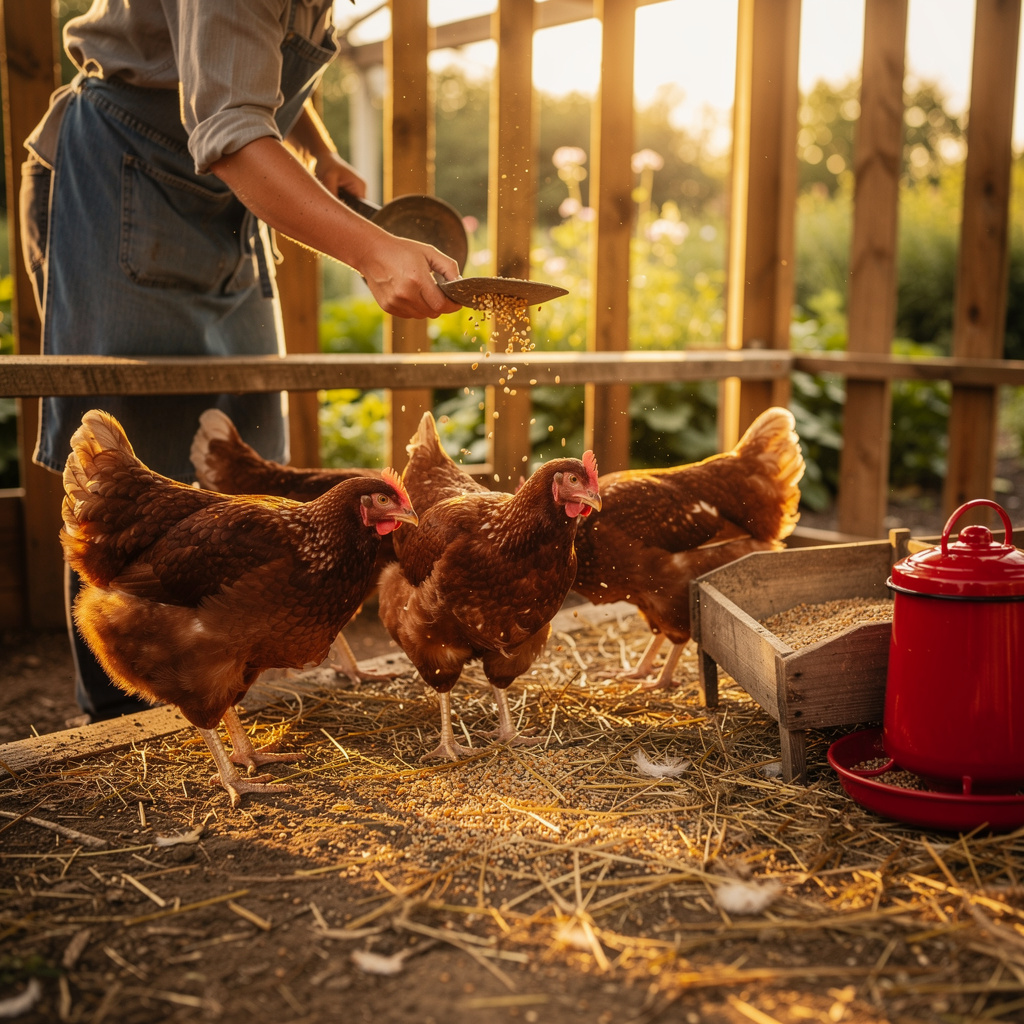
What is Chicken Keeping at Home?
Chicken Keeping at Home Certificate Program
Chicken Keeping at Home certificate program teaches the complete practical framework for raising a small flock responsibly, from initial planning through long-term flock management. The course is designed for beginners, homesteaders, families, and small-scale keepers who want to produce eggs, improve self-sufficiency, or simply enjoy chickens as part of a sustainable household. It covers essential topics such as local rules and space planning, breed selection for specific goals, coop ventilation and roosting, predator-proof runs, nutrition and feeding, flock behavior and enrichment, daily and seasonal routines, health basics and biosecurity, egg collection and storage, incubation and chick raising, and manure management. The main practical outcome is the ability to confidently design, maintain, and troubleshoot a healthy backyard flock while making informed decisions that balance animal welfare, cost, and local regulations.
The program is structured as a beginner-friendly progression that moves from foundational decisions—why keep chickens and what it requires—through planning your flock and understanding local rules, then into housing, feeding, health, and reproduction. Each lesson balances theory with practice: for example, coop design lessons explain ventilation principles alongside roosting dimensions, while health lessons combine parasite identification with biosecurity routines. The curriculum builds five core skill areas: flock planning and housing, nutrition and feeding management, health monitoring and biosecurity, egg production and chick rearing, and waste cycling with long-term flock sustainability. Someone would choose this program now because interest in home food production, ethical animal care, and small-scale sustainability is rising, and the course directly addresses common pitfalls like poor coop ventilation, predator losses, and preventable health issues with clear, actionable guidance.
What is Chicken Keeping at Home?
Chicken keeping at home is the practice of raising a small flock of chickens in a residential, suburban, or homestead setting for eggs, companionship, pest control, and manure production. Its scope spans the full life cycle of flock management: selecting breeds suited to climate and purpose, designing coops and runs that meet behavioral needs, providing balanced nutrition, monitoring health and preventing disease, collecting and storing eggs safely, incubating and brooding chicks, and managing waste as a resource. Core concepts include predator pressure and fencing, ventilation without drafts, roosting and nesting requirements, flock social dynamics, biosecurity, and seasonal adjustments for temperature and daylight. The subject is both an animal husbandry discipline and a practical sustainability skill, requiring knowledge of biology, behavior, and local regulatory contexts.
Chicken keeping matters today because it sits at the intersection of food security, local food systems, and ethical home-scale agriculture. Recent shifts include more municipalities adopting urban poultry ordinances, growing online communities sharing real-time health and predator advice, and increased awareness of biosecurity following regional disease outbreaks. In real life, it is used by households seeking fresh eggs, community gardens integrating poultry for soil fertility, small farms diversifying income, and educators teaching children about life cycles and responsibility. Academia addresses the subject through animal science, veterinary preventive care, and sustainable agriculture research, while industry supplies coop designs, feed formulations, and health products tailored to backyard flocks. The relevance is practical and immediate: well-managed home flocks reduce food miles, recycle kitchen scraps, and provide a resilient supplemental food source.
Mastering chicken keeping builds a distinctive skill stack that combines animal behavior observation, facility design, nutrition planning, health troubleshooting, and waste cycling. These competencies transfer to personal contexts such as family food production, hobby farming, and property improvement, as well as professional contexts including small-scale egg enterprises, pet poultry care, community food projects, and educational program delivery. The subject also cultivates systems thinking—understanding how housing, feed, health, and waste interact—which benefits anyone managing small livestock or pursuing sustainable land use. Because the knowledge is hands-on and locally adaptable, it empowers learners to make evidence-based decisions rather than relying on generic advice, whether they keep three hens in a suburban yard or manage a larger homestead flock.
What Will This Course Bring You?
- Evaluate the practical time, space, and financial commitments of home chicken keeping before deciding whether to start a flock.
- Analyze local zoning, homeowner, and flock-size rules, and plan space and manure management for a compliant home setup.
- Select chicken breeds by comparing egg production, temperament, climate tolerance, and space needs against your household goals.
- Design a coop with appropriate ventilation, roosting space, nesting areas, and litter management for your climate and flock size.
- Build a predator-resistant run and fencing plan that addresses local risks from hawks, raccoons, foxes, rodents, and dogs.
- Implement feeding and watering routines that match chicken life stages, seasonal needs, and safe nutrition practices.
- Apply handling and enrichment techniques within daily and seasonal care routines to reduce stress and support healthy flock behavior.
- Evaluate health, parasite, and biosecurity practices, and apply safe egg collection, storage, and incubation techniques to protect flock productivity.
Curriculum
12 Units1. Why Keep Chickens and What It Requires
1 hour
2. Planning Your Flock, Space, and Local Rules
1 hour
3. Choosing Chicken Breeds for Your Goals
1 hour
4. Coop Design, Ventilation, and Roosting
1 hour
5. Runs, Fencing, and Predator Protection
1 hour
6. Feeding, Watering, and Nutrition
1 hour
7. Flock Behavior, Handling, and Enrichment
1 hour
8. Daily Care and Seasonal Routines
1 hour
9. Health Basics, Parasites, and Biosecurity
1 hour
10. Egg Collection, Storage, and Quality
1 hour
11. Incubation, Brooding, and Raising Chicks
1 hour
12. Manure, Waste, and Long-Term Flock Planning
1 hour
Exam – Chicken Keeping at Home
20 Questions • 70% Pass • 30 min
Unlock All Units for Free
Create an account, enroll in the course, and start with the first unit right away.
Exam – Chicken Keeping at Home
20 Questions • Pass: 70% • 30 min
Course Duration
720
Total Minutes
12
Unit
1
Final Exam
~60
Min / Unit
Chicken Keeping at Home Certificate Program
Document Your Skill
Those who pass the 20-question, 30-minute exam with 70% receive the Chicken Keeping at Home Certificate.
Stand Out on Your CV
By adding your certificate to your CV, gain a professional reference in job applications and stand out from the crowd.
Career Advantage
With the verification code, employers can check your certificate instantly — a concrete way to show your growth.
CERTIFICATE FEE
At the end of the course, an online exam consisting of 20 questions with a 30-minute time limit is given. The exam appears automatically after you complete the topics. Anyone who scores at least 70 out of 100 on the certificate exam is awarded the Chicken Keeping at Home Document (certificate of attendance). You can add the certificate you earn to your CV for job applications in the many sectors listed above, and use it as a reference proving that you took this interactive course.
The Certificate of Achievement you receive with the Chicken Keeping at Home course program holds value that proves your personal and professional development in the business world. By adding it to your CV, it can serve as an important reference in your job applications. Moreover, compared with certificates from other private training institutions, Catch Wisdom certificates are offered to our participants at a much more affordable price.
The Chicken Keeping at Home course certificate is a document that proves, with a unique verification code, that you completed the course. Employers can instantly check its authenticity with this code, which helps you show your development concretely in your job applications.
For more information, we recommend visiting the Support page.
Certificate in 7 Languages
Earning success certificates from our courses is now more meaningful and global. With certificates available in Turkish, English, German, French, Spanish, Arabic, and Russian, we fully unlock the potential of students worldwide.
Why Certificate in 7 Languages?
-
01
Global Skill Development
Receiving your certificates in 7 different languages strengthens your communication skills as you engage with more people worldwide. It lets you operate more confidently and capably on the international stage.
-
02
International Job Opportunities
Employers may see your certificates in multiple languages as a sign of your ability to seize global opportunities. You can open more doors to new jobs and projects.
-
03
Cultural Richness
The chance to earn certificates in different languages helps you build closer ties with various cultures and broadens your worldview. It enriches your global perspective and deepens cultural understanding.
-
04
Ability to Participate in International Projects
Multilingual certificates give you an edge to work more effectively on international projects. They boost your chances of leadership and participation in diverse projects in the business world.
-
05
Prove Yourself on the Global Stage
Certificates in multiple languages give you the opportunity to present your skills and knowledge worldwide.
Language diversity opens worldwide opportunities. If you want to prove yourself in the international arena, join our online Chicken Keeping at Home course program and begin this journey with us.
Frequently Asked Questions (FAQ)
Is this course paid?
How do I join the course?
Can I take the course at my own pace?
How can I get my certificate?
What are the advantages of the certificate?
Boost Your Career
Take a new career step with the Chicken Keeping at Home course. Add your certificate to your CV, stand out in job applications, and open the door to new opportunities in the industry.
StartStudent Reviews
No reviews yet
Enroll in this course and be the first to leave a review about your experience with Chicken Keeping at Home.
Start