What is Children's Book Writing?
Children's Book Writing Certificate Program
Children's Book Writing certificate program is a comprehensive training that equips aspiring authors with the craft and business knowledge needed to create books for young readers. The curriculum covers the children's book market and age categories, finding and testing story ideas, creating memorable characters, and building plots that resonate with young audiences. It also dives into picture book text with pacing and page turns, rhythm and rhyme for read-aloud craft, dialogue and voice, and the distinct demands of early readers, chapter books, and middle grade novels. This program is designed for aspiring children's authors, illustrators, educators, and parents who want to write professionally or simply craft stories for the children in their lives. The main practical outcome is a polished manuscript draft—whether a picture book, early reader, or middle grade novel—ready for critique, revision, and submission to agents or publishers.
The program is structured as a beginner-friendly progression, starting with market awareness and idea generation before moving into character, plot, and genre-specific writing techniques. It balances theory with practice through writing exercises, self-editing strategies, and feedback from critique groups and beta readers, so learners apply each concept immediately. Across the lessons, the program builds five core skill areas: story ideation and testing, character and plot development, read-aloud and voice craft, revision and workshop feedback, and publishing and author-illustrator collaboration. Someone would choose this program now because the children's book market is expanding across print, digital, and educational formats, and diverse, well-crafted stories are in high demand. Whether pursuing traditional publication or self-publishing, writers need both creative craft and strategic submission knowledge, which this certificate delivers in one focused path.
What is Children's Book Writing?
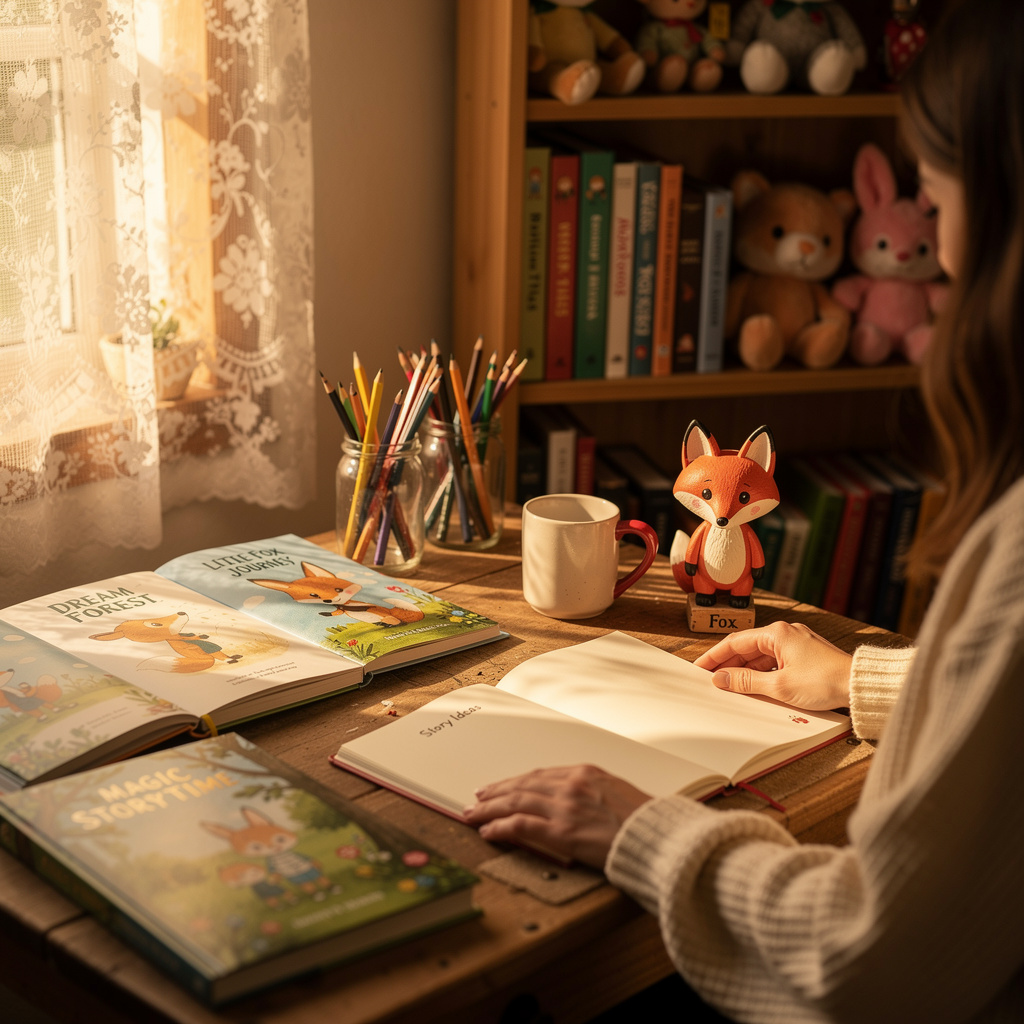
Children's book writing is the craft of creating narratives specifically for readers from infancy through early adolescence, spanning board books, picture books, early readers, chapter books, and middle grade novels. Its core concepts include age-appropriate themes and vocabulary, word count and page-turn awareness, read-aloud rhythm and rhyme, character relatability, and plot structures that respect a child's attention span and emotional development. The subject also encompasses the interplay between text and illustration, dialogue and point of view for young audiences, and the revision and critique processes that refine a manuscript. Scope ranges from a 200-word picture book to a 40,000-word middle grade novel, each format demanding distinct pacing, voice, and structural choices.
Children's book writing matters today because stories shape early literacy, empathy, and curiosity, and the market for diverse, inclusive, and emotionally intelligent children's literature continues to grow. In real life, this subject is used by authors, illustrators, editors, educators, librarians, and even app developers who create interactive story experiences for young users. Recent shifts include a surge in graphic novels for middle grade readers, demand for STEM and social-emotional learning titles, and expanded self-publishing and digital distribution channels that bypass traditional gatekeepers. Academic programs in children's literature and creative writing increasingly recognize the genre's artistic and commercial sophistication, making specialized knowledge more valuable than ever.
Mastering children's book writing builds a skill stack that includes audience analysis, narrative design, concise and rhythmic language, visual thinking for illustration, and iterative revision based on feedback. It also develops project management—from idea testing to submission strategy—and collaboration skills for working with illustrators, editors, and critique partners. Professional contexts that benefit include careers as a children's author, editor, literary agent, educational content developer, or writing instructor. Personally, this subject empowers parents, teachers, and grandparents to create meaningful stories that connect with young readers, leaving a lasting legacy. Whether for publication or personal fulfillment, the ability to write well for children is a craft that rewards patience, playfulness, and deep respect for the audience.
Common Questions About Children's Book Writing
Is this children's book writing course suitable if I have no writing experience?
Can I complete this children's book writing course while working full time?
How do I choose the right age category before writing my children's book?
How does the three-act spine work in a 24-page picture book?
- Act 1, setup: introduce the hero, the want, and the problem within the opening spreads so the reader knows what is at stake.
- Act 2, escalation: use the middle spreads for attempts, complications, and a turning point that forces the hero to act rather than react.
- Act 3, resolution: deliver an ending the hero has earned, with the final spreads resolving the emotional question as well as the plot.
Why do page turns matter so much in a 24-page picture book?
How can I check picture book word count without losing pacing?
Do children's book authors need to be illustrators to get published?
What Will This Course Bring You?
- Analyze children's book age categories and market expectations to select the appropriate format and audience for a new manuscript.
- Generate and test story ideas using age-appropriate hooks, conflict, and emotional stakes before committing to a full draft.
- Design memorable child protagonists and antagonists by applying character goals, flaws, and developmental traits suited to young readers.
- Structure a children's story using plot beats, page-turn pacing, and age-appropriate narrative arcs from picture book to middle grade.
- Apply read-aloud rhythm, rhyme, and word-count constraints to craft picture book text that sustains pacing and page turns.
- Evaluate dialogue, voice, and point of view in early reader, chapter book, and middle grade excerpts to revise for authenticity and clarity.
- Implement revision and self-editing strategies, then incorporate critique group, beta reader, and workshop feedback into a polished manuscript.
- Develop a submission strategy by analyzing publishing paths, illustration collaboration, and book design requirements for children's manuscripts.
Curriculum
12 Units1. The Children's Book Market and Age Categories
1 hour
2. Finding and Testing Story Ideas
1 hour
3. Creating Memorable Characters for Young Readers
1 hour
4. Plot and Story Structure in Children's Books
1 hour
5. Writing Picture Book Text: Pacing, Page Turns, and Word Count
1 hour
6. Rhythm, Rhyme, and Read-Aloud Craft
1 hour
7. Dialogue, Voice, and Point of View
1 hour
8. Writing Early Readers, Chapter Books, and Middle Grade
1 hour
9. Revision and Self-Editing Strategies
1 hour
10. Critique Groups, Beta Readers, and Workshop Feedback
1 hour
11. Illustration, Book Design, and Author-Illustrator Collaboration
1 hour
12. Publishing Paths and Submission Strategy
1 hour
Exam – Children's Book Writing
20 Questions • 70% Pass • 30 min
Unlock All Units for Free
Create an account, enroll in the course, and start with the first unit right away.
Exam – Children's Book Writing
20 Questions • Pass: 70% • 30 min
Course Duration
720
Total Minutes
12
Unit
1
Final Exam
~60
Min / Unit
Children's Book Writing Certificate Program
Document Your Skill
Those who pass the 20-question, 30-minute exam with 70% receive the Children's Book Writing Certificate.
Stand Out on Your CV
By adding your certificate to your CV, gain a professional reference in job applications and stand out from the crowd.
Career Advantage
With the verification code, employers can check your certificate instantly — a concrete way to show your growth.
CERTIFICATE FEE
At the end of the course, an online exam consisting of 20 questions with a 30-minute time limit is given. The exam appears automatically after you complete the topics. Anyone who scores at least 70 out of 100 on the certificate exam is awarded the Children's Book Writing Document (certificate of attendance). You can add the certificate you earn to your CV for job applications in the many sectors listed above, and use it as a reference proving that you took this interactive course.
The Certificate of Achievement you receive with the Children's Book Writing course program holds value that proves your personal and professional development in the business world. By adding it to your CV, it can serve as an important reference in your job applications. Moreover, compared with certificates from other private training institutions, Catch Wisdom certificates are offered to our participants at a much more affordable price.
The Children's Book Writing course certificate is a document that proves, with a unique verification code, that you completed the course. Employers can instantly check its authenticity with this code, which helps you show your development concretely in your job applications.
For more information, we recommend visiting the Support page.
Certificate in 7 Languages
Earning success certificates from our courses is now more meaningful and global. With certificates available in Turkish, English, German, French, Spanish, Arabic, and Russian, we fully unlock the potential of students worldwide.
Why Certificate in 7 Languages?
-
01
Global Skill Development
Receiving your certificates in 7 different languages strengthens your communication skills as you engage with more people worldwide. It lets you operate more confidently and capably on the international stage.
-
02
International Job Opportunities
Employers may see your certificates in multiple languages as a sign of your ability to seize global opportunities. You can open more doors to new jobs and projects.
-
03
Cultural Richness
The chance to earn certificates in different languages helps you build closer ties with various cultures and broadens your worldview. It enriches your global perspective and deepens cultural understanding.
-
04
Ability to Participate in International Projects
Multilingual certificates give you an edge to work more effectively on international projects. They boost your chances of leadership and participation in diverse projects in the business world.
-
05
Prove Yourself on the Global Stage
Certificates in multiple languages give you the opportunity to present your skills and knowledge worldwide.
Language diversity opens worldwide opportunities. If you want to prove yourself in the international arena, join our online Children's Book Writing course program and begin this journey with us.
Frequently Asked Questions (FAQ)
Is this course paid?
How do I join the course?
Can I take the course at my own pace?
How can I get my certificate?
What are the advantages of the certificate?
Boost Your Career
Take a new career step with the Children's Book Writing course. Add your certificate to your CV, stand out in job applications, and open the door to new opportunities in the industry.
StartStudent Reviews
No reviews yet
Enroll in this course and be the first to leave a review about your experience with Children's Book Writing.
Start