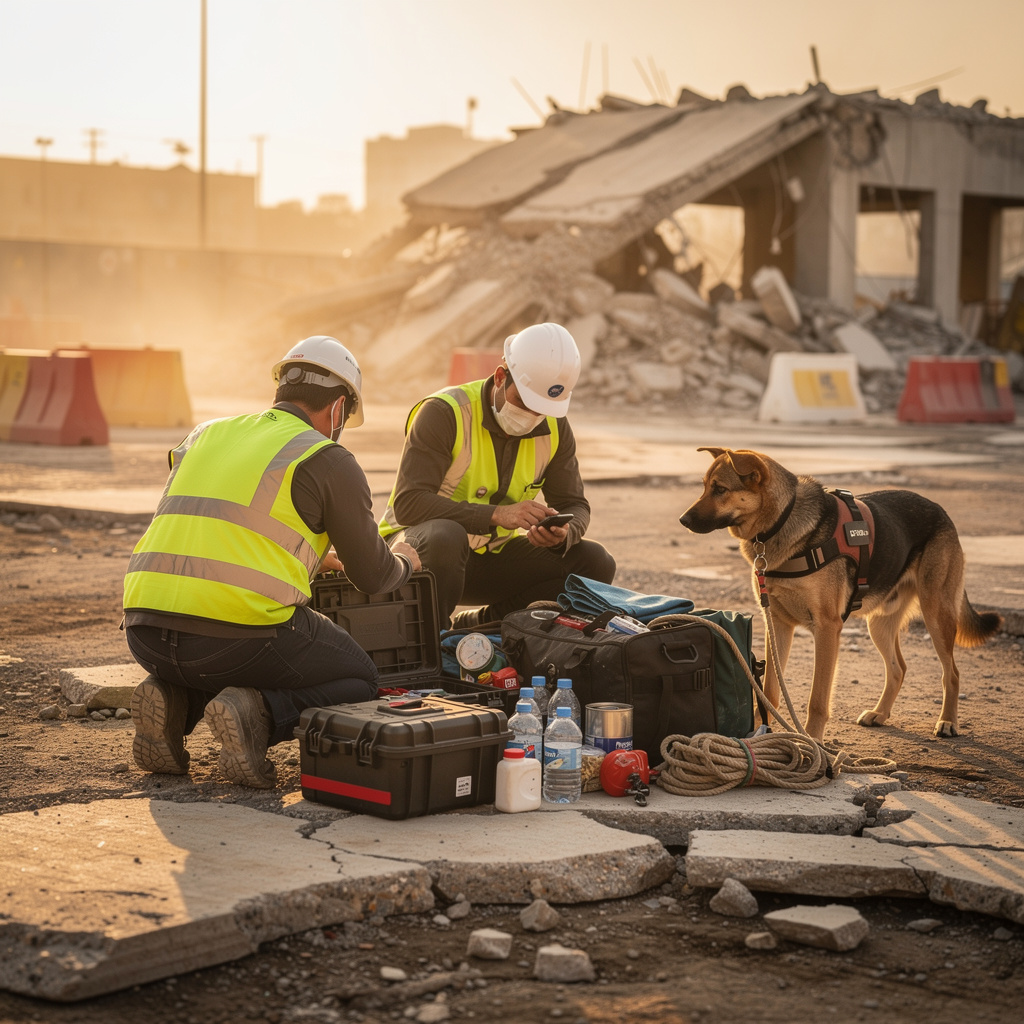
What is Civil Protection and Disaster Preparedness?
Civil Protection and Disaster Preparedness Certificate Training
Civil Protection and Disaster Preparedness certificate program provides a structured grounding in how societies anticipate, prepare for, respond to, and recover from natural and human-made emergencies. The curriculum connects hazard identification and risk assessment with legal and institutional frameworks, emergency planning, community-based preparedness, early warning systems, and coordinated response operations. It is designed for public safety personnel, local government staff, NGO and humanitarian practitioners, community leaders, and graduates entering emergency management or resilience roles. The main practical outcome is the ability to contribute to preparedness plans, risk-reduction measures, and response coordination that are realistic, inclusive, and grounded in evidence.
The program is organized as a beginner-friendly progression, moving from foundational concepts and risk analysis through planning, communication, mass care, evacuation, recovery, and mitigation toward training, exercises, evaluation, and continuous improvement. Each stage balances explanatory theory with applied planning tasks, scenario-based exercises, and reflective review so that learners can connect policy frameworks to operational decisions. Across the lessons, it builds five core skill areas: risk and vulnerability analysis; preparedness and contingency planning; emergency communication and public awareness; response coordination and service delivery; and capability development through training, evaluation, and lessons learned. This focus makes the program relevant now, as climate extremes, urban complexity, and interconnected risks increase the demand for professionals and volunteers who can strengthen civil protection systems before, during, and after crises.
What is Civil Protection and Disaster Preparedness?
Civil protection and disaster preparedness is the organized field concerned with reducing the impact of emergencies on people, infrastructure, livelihoods, and the environment. Its scope spans prevention and mitigation, risk assessment, contingency planning, early warning, emergency response, evacuation and sheltering, mass care, recovery, and reconstruction. Core concepts include hazard, exposure, vulnerability, capacity, resilience, coordination, and the legal and institutional arrangements that assign responsibilities across public authorities, communities, and private actors. The subject therefore combines technical risk knowledge with organizational, social, and policy dimensions rather than treating disasters as isolated events.
The field matters today because disasters are increasingly frequent, costly, and compounded by climate change, demographic pressure, critical infrastructure interdependence, and new technological and biological hazards. In real life and industry, civil protection knowledge informs municipal emergency plans, utility and infrastructure continuity arrangements, humanitarian operations, public health preparedness, insurance and risk financing, and community resilience programs. In academia, it connects disaster risk reduction, emergency management, urban planning, climate adaptation, public administration, and social sciences. Recent shifts emphasize anticipatory action, inclusive and community-led preparedness, interoperable early warning, and continuous learning from exercises and real events.
Mastering this subject builds a skill stack that links risk analysis with planning discipline, stakeholder coordination, public communication, operational logistics, and post-event learning. These capabilities are valuable in local and national government agencies, civil protection and emergency services, NGOs, humanitarian and development organizations, infrastructure operators, schools, hospitals, and community volunteer networks. The same knowledge supports personal and professional readiness, helping individuals interpret warnings, contribute to local plans, and make informed decisions during uncertainty. Ultimately, the subject provides a practical framework for turning complex risk information into coordinated action and longer-term resilience.
What Will This Course Bring You?
- Analyze hazard identification and risk assessment methods to produce a prioritized risk profile for a selected community or jurisdiction.
- Interpret legal, policy, and institutional frameworks governing civil protection to determine responsibilities and coordination requirements in a disaster scenario.
- Design an emergency preparedness plan that integrates risk assessment findings, resource needs, and interagency coordination for a defined jurisdiction.
- Develop community-based preparedness and public awareness activities that address local vulnerabilities and promote household emergency readiness.
- Evaluate early warning and emergency communication systems to recommend improvements for timely and accessible public alerts.
- Apply emergency response coordination principles to allocate roles and communication flows during a simulated multi-agency disaster operation.
- Plan mass care, sheltering, and evacuation operations that address vulnerable populations and logistical constraints during a disaster.
- Design disaster risk reduction and mitigation measures that reduce identified community risks and strengthen long-term resilience.
Curriculum
12 Units1. Foundations of Civil Protection and Disaster Preparedness
1 hour
2. Hazard Identification and Risk Assessment
1 hour
3. Legal, Policy, and Institutional Frameworks
1 hour
4. Emergency Planning and Preparedness Planning
1 hour
5. Community-Based Preparedness and Public Awareness
1 hour
6. Early Warning Systems and Emergency Communication
1 hour
7. Emergency Response Operations and Coordination
1 hour
8. Mass Care, Sheltering, and Evacuation
1 hour
9. Disaster Recovery and Reconstruction
1 hour
10. Disaster Risk Reduction and Mitigation
1 hour
11. Training, Exercises, and Capability Development
1 hour
12. Evaluation, Lessons Learned, and Continuous Improvement
1 hour
Exam – Civil Protection and Disaster Preparedness
20 Questions • 70% Pass • 30 min
Unlock All Units for Free
Create an account, enroll in the course, and start with the first unit right away.
Exam – Civil Protection and Disaster Preparedness
20 Questions • Pass: 70% • 30 min
Course Duration
720
Total Minutes
12
Unit
1
Final Exam
~60
Min / Unit
Civil Protection and Disaster Preparedness Certificate Program
Document Your Skill
Those who pass the 20-question, 30-minute exam with 70% receive the Civil Protection and Disaster Preparedness Certificate.
Stand Out on Your CV
By adding your certificate to your CV, gain a professional reference in job applications and stand out from the crowd.
Career Advantage
With the verification code, employers can check your certificate instantly — a concrete way to show your growth.
CERTIFICATE FEE
At the end of the course, an online exam consisting of 20 questions with a 30-minute time limit is given. The exam appears automatically after you complete the topics. Anyone who scores at least 70 out of 100 on the certificate exam is awarded the Civil Protection and Disaster Preparedness Document (certificate of attendance). You can add the certificate you earn to your CV for job applications in the many sectors listed above, and use it as a reference proving that you took this interactive course.
The Certificate of Achievement you receive with the Civil Protection and Disaster Preparedness course program holds value that proves your personal and professional development in the business world. By adding it to your CV, it can serve as an important reference in your job applications. Moreover, compared with certificates from other private training institutions, Catch Wisdom certificates are offered to our participants at a much more affordable price.
The Civil Protection and Disaster Preparedness course certificate is a document that proves, with a unique verification code, that you completed the course. Employers can instantly check its authenticity with this code, which helps you show your development concretely in your job applications.
For more information, we recommend visiting the Support page.
Certificate in 7 Languages
Earning success certificates from our courses is now more meaningful and global. With certificates available in Turkish, English, German, French, Spanish, Arabic, and Russian, we fully unlock the potential of students worldwide.
Why Certificate in 7 Languages?
-
01
Global Skill Development
Receiving your certificates in 7 different languages strengthens your communication skills as you engage with more people worldwide. It lets you operate more confidently and capably on the international stage.
-
02
International Job Opportunities
Employers may see your certificates in multiple languages as a sign of your ability to seize global opportunities. You can open more doors to new jobs and projects.
-
03
Cultural Richness
The chance to earn certificates in different languages helps you build closer ties with various cultures and broadens your worldview. It enriches your global perspective and deepens cultural understanding.
-
04
Ability to Participate in International Projects
Multilingual certificates give you an edge to work more effectively on international projects. They boost your chances of leadership and participation in diverse projects in the business world.
-
05
Prove Yourself on the Global Stage
Certificates in multiple languages give you the opportunity to present your skills and knowledge worldwide.
Language diversity opens worldwide opportunities. If you want to prove yourself in the international arena, join our online Civil Protection and Disaster Preparedness course program and begin this journey with us.
Frequently Asked Questions (FAQ)
Is this course paid?
How do I join the course?
Can I take the course at my own pace?
How can I get my certificate?
What are the advantages of the certificate?
Boost Your Career
Take a new career step with the Civil Protection and Disaster Preparedness course. Add your certificate to your CV, stand out in job applications, and open the door to new opportunities in the industry.
StartStudent Reviews
No reviews yet
Enroll in this course and be the first to leave a review about your experience with Civil Protection and Disaster Preparedness.
Start