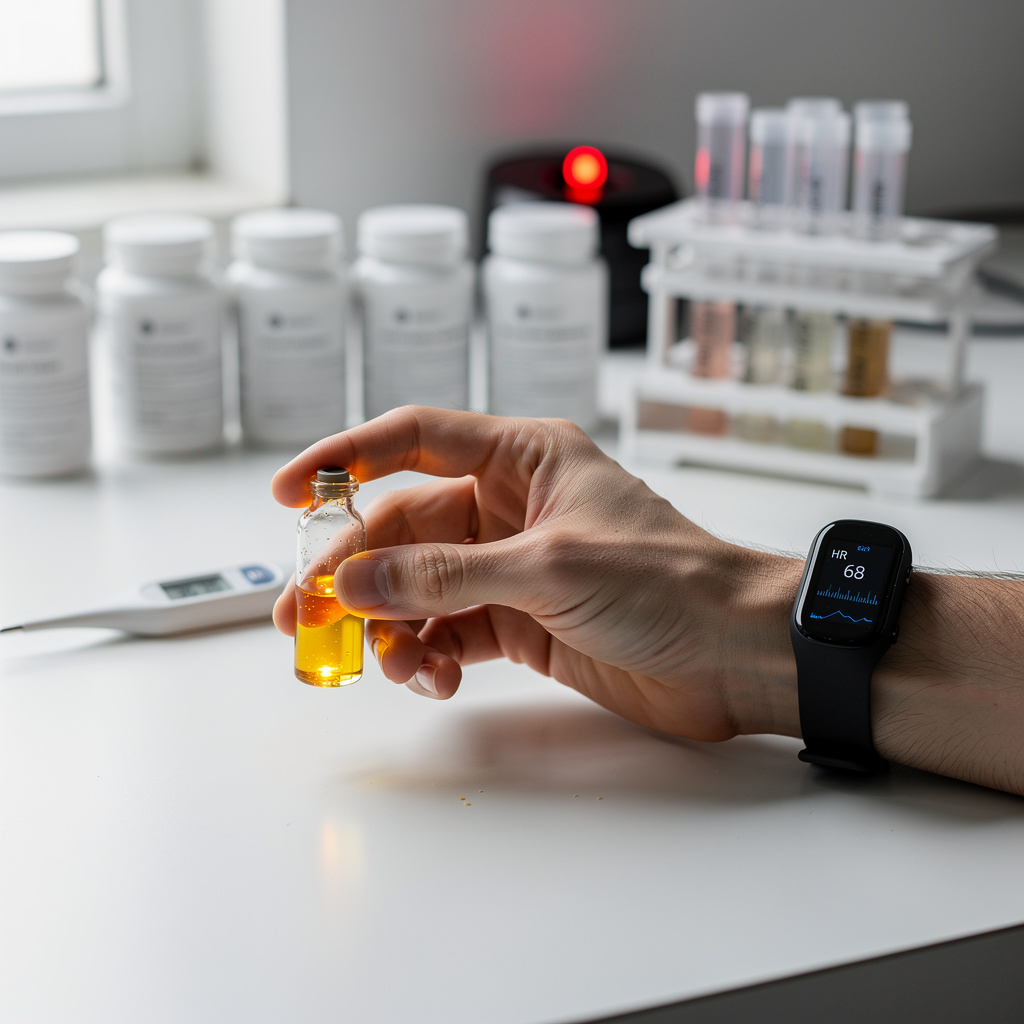
What is Clinical Wearable Data Integration?
Clinical Wearable Data Integration Training
The Clinical Wearable Data Integration certificate program is designed for healthcare professionals, clinical informaticists, data engineers, and biomedical engineers who need to transform raw wearable sensor data into actionable clinical insights. This course teaches the end-to-end pipeline—from understanding sensor foundations and interoperability standards to integrating data into electronic health records (EHR) and supporting clinical decision-making. By the end, participants will be able to design and implement a robust wearable data integration workflow that meets regulatory, security, and quality standards, directly improving remote patient monitoring and chronic disease management outcomes.
The program follows a beginner-friendly progression, starting with the fundamentals of wearable data in clinical settings and gradually advancing through signal processing, data validation, EHR integration, and analytics. Each lesson balances theoretical frameworks with hands-on practice, building four core skill areas: data governance and compliance, technical integration (HL7/FHIR, signal quality), clinical application (decision support, remote monitoring), and outcome evaluation. This structure ensures that even those new to wearable technology can achieve mastery. Now is the ideal time to enroll, as healthcare systems rapidly adopt remote monitoring and value-based care models, creating an urgent demand for professionals who can bridge the gap between raw sensor streams and evidence-based clinical practice.
What is Clinical Wearable Data Integration?
Clinical wearable data integration is the systematic process of collecting, standardizing, validating, and incorporating physiological and behavioral data from wearable devices—such as smartwatches, patches, and biosensors—into clinical information systems and workflows. Its core concepts include data interoperability (using standards like HL7 FHIR and IEEE 11073), signal processing for noise reduction and feature extraction, data quality assessment, and the secure transmission of patient-generated health data. The scope extends beyond simple data transfer; it encompasses the semantic mapping of device outputs to clinical terminologies, ensuring that the data is meaningful, reliable, and actionable for healthcare providers.
This field has become critically relevant as the volume of consumer and medical-grade wearables surges, and as healthcare shifts toward continuous, out-of-hospital monitoring. Real-world applications include remote patient monitoring for chronic conditions like heart failure and diabetes, early detection of deterioration in post-surgical patients, and personalized treatment adjustments based on real-time activity and vital signs. Recent shifts toward decentralized clinical trials and telehealth have further accelerated the need for seamless integration, while regulatory bodies like the FDA and EMA are updating guidance on digital health technologies. Consequently, organizations across hospitals, research institutions, and digital health startups are actively seeking professionals who can navigate the technical, clinical, and compliance complexities of this integration.
Mastering clinical wearable data integration builds a unique skill stack that merges data science, clinical informatics, and healthcare operations. It equips learners with the ability to design data pipelines that meet strict privacy and security requirements, interpret sensor data in a clinical context, and evaluate the impact of wearable-driven interventions on patient outcomes. This expertise is invaluable for roles in clinical informatics, health data analytics, product management for digital health tools, and clinical research. Beyond professional advancement, it empowers individuals to contribute to a more proactive, patient-centered healthcare ecosystem—one where continuous data streams inform timely decisions and improve quality of life.
What Will This Course Bring You?
- Analyze wearable device data formats and interoperability standards to ensure seamless clinical integration.
- Apply signal processing techniques to clean and prepare wearable sensor data for clinical use.
- Evaluate data quality metrics for wearable data to determine reliability for patient monitoring.
- Design an integration workflow to transmit wearable data into an electronic health record system.
- Implement clinical decision support rules using wearable data alerts for chronic disease management.
- Build interactive visualizations to present wearable data trends to clinicians for timely interpretation.
- Assess privacy and security risks in wearable data governance frameworks to protect patient information.
- Evaluate clinical impact of wearable integration through outcome measurement and analysis.
Curriculum
12 Units1. Foundations of Wearable Data in Clinical Settings
30 min
2. Data Standards and Interoperability
30 min
3. Data Acquisition and Signal Processing
30 min
4. Data Quality and Validation
30 min
5. Integration with Electronic Health Records (EHR)
30 min
6. Clinical Decision Support with Wearable Data
30 min
7. Remote Patient Monitoring and Chronic Disease Management
30 min
8. Analytics and Visualization of Wearable Data
30 min
9. Privacy, Security, and Data Governance
30 min
10. Regulatory and Compliance Considerations
30 min
11. Implementation and Workflow Integration
30 min
12. Evaluating Clinical Impact and Outcomes
30 min
Exam – Clinical Wearable Data Integration
20 Questions • 70% Pass • 30 min
Unlock All Units for Free
Create an account, enroll in the course, and start with the first unit right away.
Exam – Clinical Wearable Data Integration
20 Questions • Pass: 70% • 30 min
Course Duration
360
Total Minutes
12
Unit
1
Final Exam
~30
Min / Unit
Clinical Wearable Data Integration Certificate Program
Document Your Skill
Those who pass the 20-question, 30-minute exam with 70% receive the Clinical Wearable Data Integration Certificate.
Stand Out on Your CV
By adding your certificate to your CV, gain a professional reference in job applications and stand out from the crowd.
Career Advantage
Catch Wisdom certificates are recognized by HR departments and increase career opportunities.
CERTIFICATE FEE
At the end of the course, an online exam consisting of 20 questions with a 30-minute time limit is given. The exam appears automatically after you complete the topics. Anyone who scores at least 70 out of 100 on the certificate exam is awarded the Clinical Wearable Data Integration Document (certificate of attendance). You can add the certificate you earn to your CV for job applications in the many sectors listed above, and use it as a reference proving that you took this interactive course.
The Certificate of Achievement you receive with the Clinical Wearable Data Integration course program holds value that proves your personal and professional development in the business world. By adding it to your CV, it can serve as an important reference in your job applications. Moreover, compared with certificates from other private training institutions, Catch Wisdom certificates are offered to our participants at a much more affordable price.
Because HR departments recognize Catch Wisdom as a reputable institution in this field, they value these certificates and may evaluate your job applications favorably. For this reason, a Clinical Wearable Data Integration course certificate from Catch Wisdom can make your applications more attractive and place you in an advantageous position in the business world.
For more information, we recommend visiting the Support page.
Certificate in 7 Languages
Earning success certificates from our courses is now more meaningful and global. With certificates available in Turkish, English, German, French, Spanish, Arabic, and Russian, we fully unlock the potential of students worldwide.
Why Certificate in 7 Languages?
-
01
Global Skill Development
Receiving your certificates in 7 different languages strengthens your communication skills as you engage with more people worldwide. It lets you operate more confidently and capably on the international stage.
-
02
International Job Opportunities
Employers may see your certificates in multiple languages as a sign of your ability to seize global opportunities. You can open more doors to new jobs and projects.
-
03
Cultural Richness
The chance to earn certificates in different languages helps you build closer ties with various cultures and broadens your worldview. It enriches your global perspective and deepens cultural understanding.
-
04
Ability to Participate in International Projects
Multilingual certificates give you an edge to work more effectively on international projects. They boost your chances of leadership and participation in diverse projects in the business world.
-
05
Prove Yourself on the Global Stage
Certificates in multiple languages let you showcase your skills and knowledge worldwide. You can become an internationally recognized professional.
Language diversity opens worldwide opportunities. If you want to prove yourself in the international arena, join our online Clinical Wearable Data Integration course program and begin this journey with us.
Frequently Asked Questions (FAQ)
Is this course paid?
How do I join the course?
Can I take the course at my own pace?
How can I get my certificate?
What are the advantages of the Certified Certificate?
Boost Your Career
Take a new career step with the Clinical Wearable Data Integration course. Add your certificate to your CV, stand out in job applications, and open the door to new opportunities in the industry.
StartStudent Reviews
No reviews yet
Enroll in this course and be the first to leave a review about your experience with Clinical Wearable Data Integration.
Start