What is Community Solar Projects?
Community Solar Projects Certificate Program
Community Solar Projects certificate program equips learners to plan, finance, build, and operate shared solar developments that deliver local energy and financial value. It is designed for early- and mid-career professionals in renewable energy development, utility program management, local government, community organizing, policy analysis, and impact investing who need practical command of shared solar delivery. Across the course, participants examine how community solar moves from an initial site concept through subscriber enrollment and long-term performance monitoring, with attention to equity and grid realities. The main practical outcome is the ability to evaluate a community solar opportunity and advance it using credible assumptions, appropriate ownership structures, and realistic operational plans.
The program is organized as a beginner-friendly progression through foundations, benefits, ownership models, policy and incentives, site selection, financing, technical design, interconnection, subscriber management, community engagement, operations, and future trends. Each stage pairs conceptual explanation with applied exercises such as screening a site, comparing ownership structures, building a simple financial model, and anticipating grid-integration constraints. Learners build five core skill areas: project development, policy and finance, technical and interconnection planning, subscriber and community management, and performance evaluation. This balance of theory and practice matters because community solar decisions cross legal, financial, engineering, and community boundaries. The program is timely as incentives evolve, interconnection queues tighten, and communities seek equitable clean energy options that reduce energy burden while strengthening local resilience.
What is Community Solar Projects?
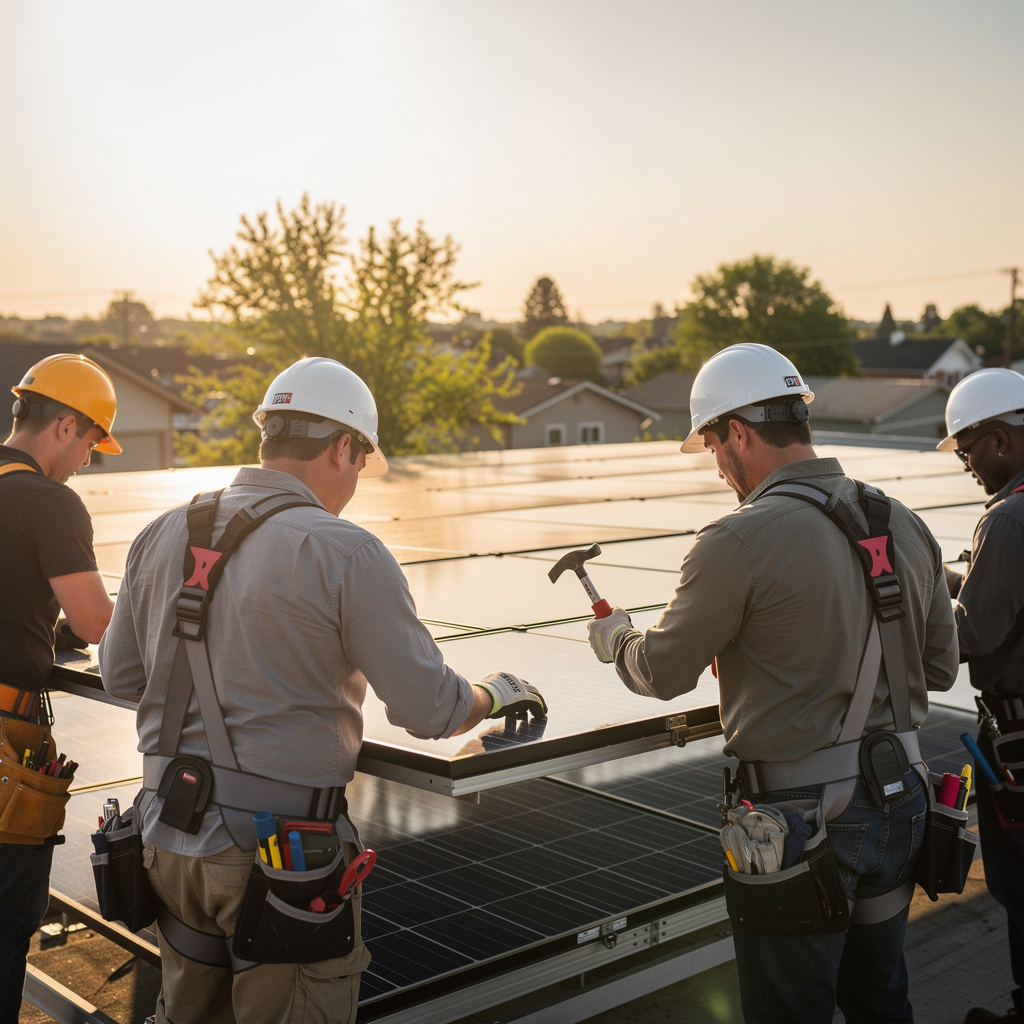
Community solar projects are shared solar energy systems in which multiple participants receive economic or energy benefits from a single array, often without installing equipment on their own property. Core concepts include subscriber agreements, virtual or consolidated billing, ownership and subscription models, host-site arrangements, interconnection capacity, and the allocation of environmental and financial value. The subject spans project development, regulatory compliance, engineering feasibility, financing structures, customer management, and community engagement, making it inherently interdisciplinary. Unlike purely utility-scale or rooftop solar, community solar focuses on broadening access while balancing the needs of hosts, subscribers, developers, financiers, and regulators.
Community solar matters today because it sits at the intersection of energy access, grid modernization, and local economic development. In industry, it is used by utilities, developers, municipalities, nonprofits, and financial institutions to serve renters, low-income households, small businesses, and others who cannot host their own solar. In academia and policy analysis, it is studied for its effects on participation equity, rate design, distributed energy markets, and grid operations. Recent shifts toward stricter interconnection review, new incentive structures, subscriber protection rules, and greater emphasis on community benefits have made practical, cross-disciplinary knowledge more valuable than ever.
Mastering this subject builds a skill stack that combines project screening, financial reasoning, regulatory interpretation, technical literacy, stakeholder communication, and performance oversight. These capabilities are useful in developer roles, utility program design, local government energy planning, community organization, impact finance, and policy evaluation. The subject also supports personal and civic contexts, such as evaluating a local solar proposal, participating in community energy planning, or assessing whether a shared solar offering is fair and viable. Because community solar requires decisions that hold up across engineering, economics, law, and community trust, subject mastery translates directly into better project choices and more credible public-interest outcomes.
What Will This Course Bring You?
- Explain the foundations and value proposition of community solar by comparing economic, environmental, and social benefits for subscribers, host communities, and sponsors.
- Compare community solar ownership and program models, including utility-sponsored, nonprofit, and third-party structures, to recommend one suited to local goals.
- Analyze federal, state, and local policies, regulations, and incentives that determine community solar project feasibility and subscriber eligibility.
- Evaluate candidate sites using solar resource, land-use, environmental, utility, and community criteria to select viable community solar locations.
- Build a financing model that estimates capital costs, incentives, subscriber revenue, and financial returns for a community solar project.
- Design a community solar array and interconnection approach that addresses inverter selection, grid capacity, and utility review requirements.
- Develop a subscriber acquisition and community engagement plan that addresses enrollment, billing, participation barriers, and equitable benefit distribution.
- Assess operations, maintenance, and performance monitoring practices and emerging trends to recommend improvements for community solar project reliability and long-term value.
Curriculum
12 Units1. Foundations of Community Solar
1 hour
2. Benefits and Value Proposition
1 hour
3. Community Solar Models and Ownership Structures
1 hour
4. Policy, Regulation, and Incentives
1 hour
5. Site Selection and Project Development
1 hour
6. Financing and Economics
1 hour
7. Technical Design and Engineering
1 hour
8. Interconnection and Grid Integration
1 hour
9. Subscriber Acquisition and Management
1 hour
10. Community Engagement and Equity
1 hour
11. Operations, Maintenance, and Performance Monitoring
1 hour
12. Project Evaluation and Future Trends
1 hour
Exam – Community Solar Projects
20 Questions • 70% Pass • 30 min
Unlock All Units for Free
Create an account, enroll in the course, and start with the first unit right away.
Exam – Community Solar Projects
20 Questions • Pass: 70% • 30 min
Course Duration
720
Total Minutes
12
Unit
1
Final Exam
~60
Min / Unit
Community Solar Projects Certificate Program
Document Your Skill
Those who pass the 20-question, 30-minute exam with 70% receive the Community Solar Projects Certificate.
Stand Out on Your CV
By adding your certificate to your CV, gain a professional reference in job applications and stand out from the crowd.
Career Advantage
With the verification code, employers can check your certificate instantly — a concrete way to show your growth.
CERTIFICATE FEE
At the end of the course, an online exam consisting of 20 questions with a 30-minute time limit is given. The exam appears automatically after you complete the topics. Anyone who scores at least 70 out of 100 on the certificate exam is awarded the Community Solar Projects Document (certificate of attendance). You can add the certificate you earn to your CV for job applications in the many sectors listed above, and use it as a reference proving that you took this interactive course.
The Certificate of Achievement you receive with the Community Solar Projects course program holds value that proves your personal and professional development in the business world. By adding it to your CV, it can serve as an important reference in your job applications. Moreover, compared with certificates from other private training institutions, Catch Wisdom certificates are offered to our participants at a much more affordable price.
The Community Solar Projects course certificate is a document that proves, with a unique verification code, that you completed the course. Employers can instantly check its authenticity with this code, which helps you show your development concretely in your job applications.
For more information, we recommend visiting the Support page.
Certificate in 7 Languages
Earning success certificates from our courses is now more meaningful and global. With certificates available in Turkish, English, German, French, Spanish, Arabic, and Russian, we fully unlock the potential of students worldwide.
Why Certificate in 7 Languages?
-
01
Global Skill Development
Receiving your certificates in 7 different languages strengthens your communication skills as you engage with more people worldwide. It lets you operate more confidently and capably on the international stage.
-
02
International Job Opportunities
Employers may see your certificates in multiple languages as a sign of your ability to seize global opportunities. You can open more doors to new jobs and projects.
-
03
Cultural Richness
The chance to earn certificates in different languages helps you build closer ties with various cultures and broadens your worldview. It enriches your global perspective and deepens cultural understanding.
-
04
Ability to Participate in International Projects
Multilingual certificates give you an edge to work more effectively on international projects. They boost your chances of leadership and participation in diverse projects in the business world.
-
05
Prove Yourself on the Global Stage
Certificates in multiple languages give you the opportunity to present your skills and knowledge worldwide.
Language diversity opens worldwide opportunities. If you want to prove yourself in the international arena, join our online Community Solar Projects course program and begin this journey with us.
Frequently Asked Questions (FAQ)
Is this course paid?
How do I join the course?
Can I take the course at my own pace?
How can I get my certificate?
What are the advantages of the certificate?
Boost Your Career
Take a new career step with the Community Solar Projects course. Add your certificate to your CV, stand out in job applications, and open the door to new opportunities in the industry.
StartStudent Reviews
No reviews yet
Enroll in this course and be the first to leave a review about your experience with Community Solar Projects.
Start