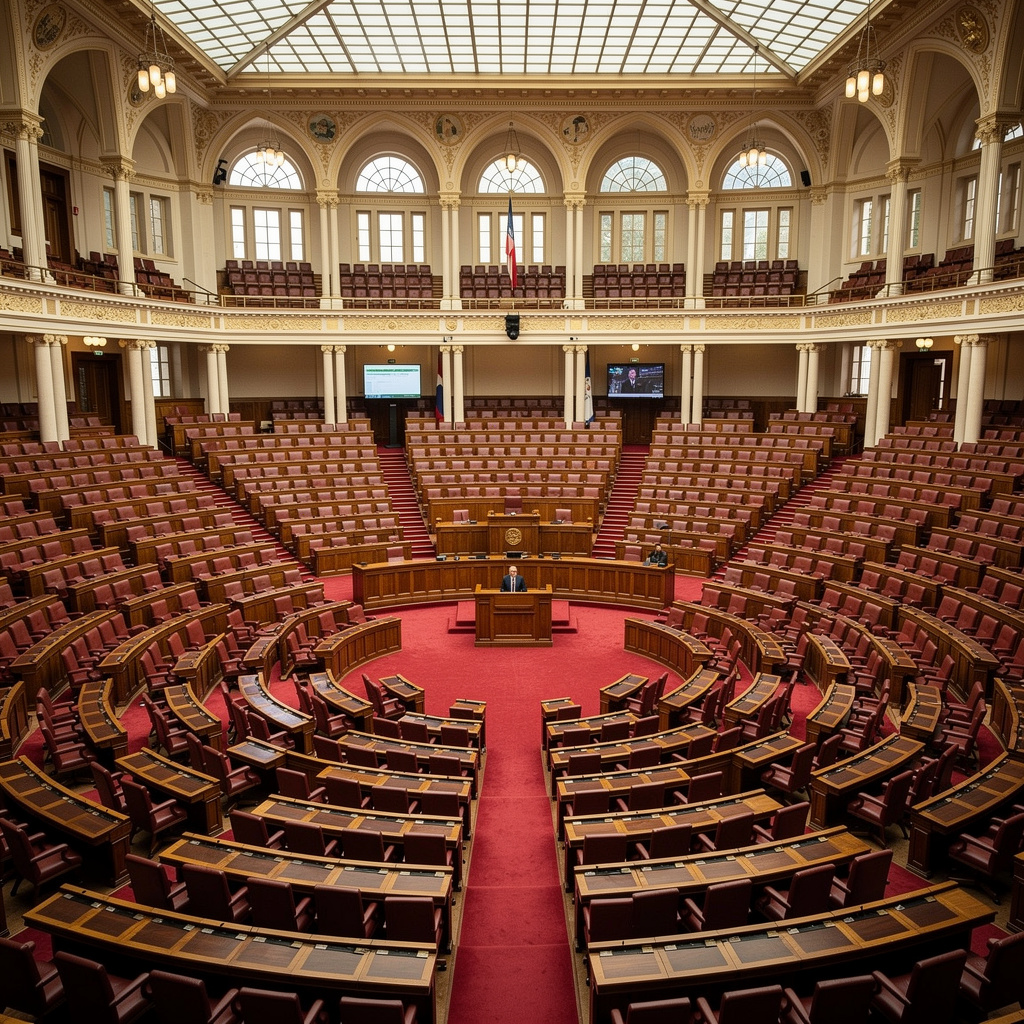
What is Comparative Political Systems?
Comparative Political Systems Certificate Program
Comparative Political Systems certificate program examines how political institutions, regimes, and policy choices vary across countries and why those differences produce unequal governing outcomes. It is designed for students, public-sector analysts, NGO researchers, journalists, and professionals who need a structured way to compare democracies, authoritarian systems, and hybrid regimes rather than rely on country-by-country anecdotes. The curriculum moves from foundational concepts—state, nation, regime, government, and democratization—into institutional design, courts and constitutionalism, electoral and party systems, federalism, political economy, culture, identity, and public-policy performance. The main practical outcome is the ability to produce disciplined cross-national comparisons that explain how executives, legislatures, courts, electoral rules, and territorial arrangements shape representation, accountability, and policy results.
The program is structured for beginners, beginning with the vocabulary and comparative method needed to classify political systems before advancing to paired institutional comparisons and policy-performance analysis. Each stage balances theory with applied cases, so learners test concepts such as regime type, government formation, constitutional review, party-system fragmentation, and decentralization against real-world institutional patterns. Across the sequence, it builds five core skill areas: comparative case selection, institutional analysis, regime and democratization assessment, electoral and party-system diagnosis, and evidence-based evaluation of policy performance. Learners choose this program now because democratic backsliding, coalition volatility, territorial conflict, and welfare-state redesign make the ability to compare institutions across countries an urgent analytical and professional asset.
What is Comparative Political Systems?
Comparative political systems is the systematic study of how political life is organized differently across countries and subnational units, focusing on the institutions, rules, and social cleavages that structure authority and competition. Its scope runs from conceptual questions about the state, nation, regime, and government to empirical analysis of executives, legislatures, courts, electoral systems, party systems, federal arrangements, political economy, culture, identity, and policy performance. Core concepts include regime type, institutional veto points, government formation, constitutionalism, representation, decentralization, welfare regimes, and political participation. The field uses comparison not as description for its own sake but as a method for identifying patterns, testing explanations, and assessing how institutional choices shape power and policy.
Comparative political systems matters today because governing problems increasingly cross borders while institutional responses remain nationally and locally distinct. Researchers use it to explain democratic backsliding, authoritarian adaptation, coalition instability, electoral volatility, federal–central tensions, welfare reform, identity conflict, and uneven public-policy outcomes. Governments, international organizations, development agencies, risk-analysis firms, courts, and journalists rely on comparative evidence when assessing institutional fragility, designing reforms, or interpreting elections and constitutional crises. Recent shifts toward mixed methods, subnational comparison, and richer data on parties and policy outputs have made the field more empirical and more directly relevant to real-time governance debates.
Mastering comparative political systems builds a portable skill stack: concept formation, case selection, institutional tracing, cross-case pattern recognition, and disciplined evaluation of competing explanations. These skills support policy analysis, diplomatic reporting, governance programming, legal and constitutional work, political risk assessment, journalism, and civic education. They also help learners read political news with greater precision, distinguishing regime type from government composition, formal rules from informal practices, and correlation from causal argument. That combination of conceptual clarity and comparative evidence is valuable wherever decisions depend on understanding how institutions actually operate across different political settings.
What Will This Course Bring You?
- Analyze foundational concepts of state, nation, regime, and government to classify real-world political systems accurately using comparative typologies.
- Evaluate democratic and authoritarian regimes by comparing their institutional constraints, accountability mechanisms, and citizen participation structures across selected country cases.
- Apply competing theories of democratization and regime change to explain historical transitions and assess the conditions under which democratic consolidation becomes likely.
- Compare executive-legislative relations and government formation processes to evaluate how different institutional designs shape coalition building and policy stability.
- Assess how constitutional courts and rule-of-law institutions constrain political power by analyzing landmark constitutional rulings and judicial review mechanisms in comparative contexts.
- Analyze electoral and party systems to predict how district magnitude, thresholds, and party fragmentation affect representation and government formation in parliamentary and presidential democracies.
- Evaluate federal and decentralized territorial arrangements by comparing how power-sharing rules affect regional autonomy, public service delivery, and intergovernmental fiscal relations.
- Design a comparative policy analysis that uses political economy, welfare-state, and political culture indicators to explain variation in institutional performance across countries.
Curriculum
12 Units1. Foundations of Comparative Political Systems
1 hour
2. The State, Nation, Regime, and Government
1 hour
3. Democratic and Authoritarian Regimes
1 hour
4. Democratization and Regime Change
1 hour
5. Executives, Legislatures, and Government Formation
1 hour
6. Courts, Constitutionalism, and the Rule of Law
1 hour
7. Electoral Systems and Party Systems
1 hour
8. Federalism, Decentralization, and Territorial Politics
1 hour
9. Political Economy and Welfare State Systems
1 hour
10. Political Culture, Civil Society, and Participation
1 hour
11. Identity, Religion, and Nationalism in Comparative Politics
1 hour
12. Comparative Public Policy and Institutional Performance
1 hour
Exam – Comparative Political Systems
20 Questions • 70% Pass • 30 min
Unlock All Units for Free
Create an account, enroll in the course, and start with the first unit right away.
Exam – Comparative Political Systems
20 Questions • Pass: 70% • 30 min
Course Duration
720
Total Minutes
12
Unit
1
Final Exam
~60
Min / Unit
Comparative Political Systems Certificate Program
Document Your Skill
Those who pass the 20-question, 30-minute exam with 70% receive the Comparative Political Systems Certificate.
Stand Out on Your CV
By adding your certificate to your CV, gain a professional reference in job applications and stand out from the crowd.
Career Advantage
With the verification code, employers can check your certificate instantly — a concrete way to show your growth.
CERTIFICATE FEE
At the end of the course, an online exam consisting of 20 questions with a 30-minute time limit is given. The exam appears automatically after you complete the topics. Anyone who scores at least 70 out of 100 on the certificate exam is awarded the Comparative Political Systems Document (certificate of attendance). You can add the certificate you earn to your CV for job applications in the many sectors listed above, and use it as a reference proving that you took this interactive course.
The Certificate of Achievement you receive with the Comparative Political Systems course program holds value that proves your personal and professional development in the business world. By adding it to your CV, it can serve as an important reference in your job applications. Moreover, compared with certificates from other private training institutions, Catch Wisdom certificates are offered to our participants at a much more affordable price.
The Comparative Political Systems course certificate is a document that proves, with a unique verification code, that you completed the course. Employers can instantly check its authenticity with this code, which helps you show your development concretely in your job applications.
For more information, we recommend visiting the Support page.
Certificate in 7 Languages
Earning success certificates from our courses is now more meaningful and global. With certificates available in Turkish, English, German, French, Spanish, Arabic, and Russian, we fully unlock the potential of students worldwide.
Why Certificate in 7 Languages?
-
01
Global Skill Development
Receiving your certificates in 7 different languages strengthens your communication skills as you engage with more people worldwide. It lets you operate more confidently and capably on the international stage.
-
02
International Job Opportunities
Employers may see your certificates in multiple languages as a sign of your ability to seize global opportunities. You can open more doors to new jobs and projects.
-
03
Cultural Richness
The chance to earn certificates in different languages helps you build closer ties with various cultures and broadens your worldview. It enriches your global perspective and deepens cultural understanding.
-
04
Ability to Participate in International Projects
Multilingual certificates give you an edge to work more effectively on international projects. They boost your chances of leadership and participation in diverse projects in the business world.
-
05
Prove Yourself on the Global Stage
Certificates in multiple languages give you the opportunity to present your skills and knowledge worldwide.
Language diversity opens worldwide opportunities. If you want to prove yourself in the international arena, join our online Comparative Political Systems course program and begin this journey with us.
Frequently Asked Questions (FAQ)
Is this course paid?
How do I join the course?
Can I take the course at my own pace?
How can I get my certificate?
What are the advantages of the certificate?
Boost Your Career
Take a new career step with the Comparative Political Systems course. Add your certificate to your CV, stand out in job applications, and open the door to new opportunities in the industry.
StartStudent Reviews
No reviews yet
Enroll in this course and be the first to leave a review about your experience with Comparative Political Systems.
Start