What is Crisis Communication in Government?
Crisis Communication in Government Certificate Program
The Crisis Communication in Government certificate program prepares public-sector communicators to plan, coordinate, and deliver credible messages when stakes are high and public trust is fragile. It covers the foundations of government crisis communication, legal and ethical accountability, crisis risk assessment, message strategy, stakeholder mapping, equitable communication, spokesperson briefing, media relations, press conference management, digital rumor control, interagency coordination, emergency alerting, political scandal, and recovery learning. The program is designed for public information officers, communications advisers, emergency managers, policy officials, and agency leaders who may need to speak for an institution during disruption. Its main practical outcome is a defensible crisis communication plan and the briefing discipline needed to execute it under pressure.
The curriculum progresses from foundational concepts and legal constraints into risk assessment, stakeholder and trust analysis, spokesperson preparation, media and digital operations, internal coordination, emergency alerting, and prolonged political controversy before culminating in a planning and simulation capstone. It balances short theoretical grounding with repeated practical exercises such as message drafting, briefing practice, press conference management, rumor response, and interagency coordination drills. Across the program, learners build five core skill areas: crisis risk and message strategy; stakeholder trust and equitable public communication; spokesperson and media operations; digital, internal, and interagency coordination; and emergency alerting, recovery, and organizational learning. It is a timely choice for agencies facing misinformation, heightened public scrutiny, legal exposure, and the need to communicate equitably across diverse communities.
What is Crisis Communication in Government?
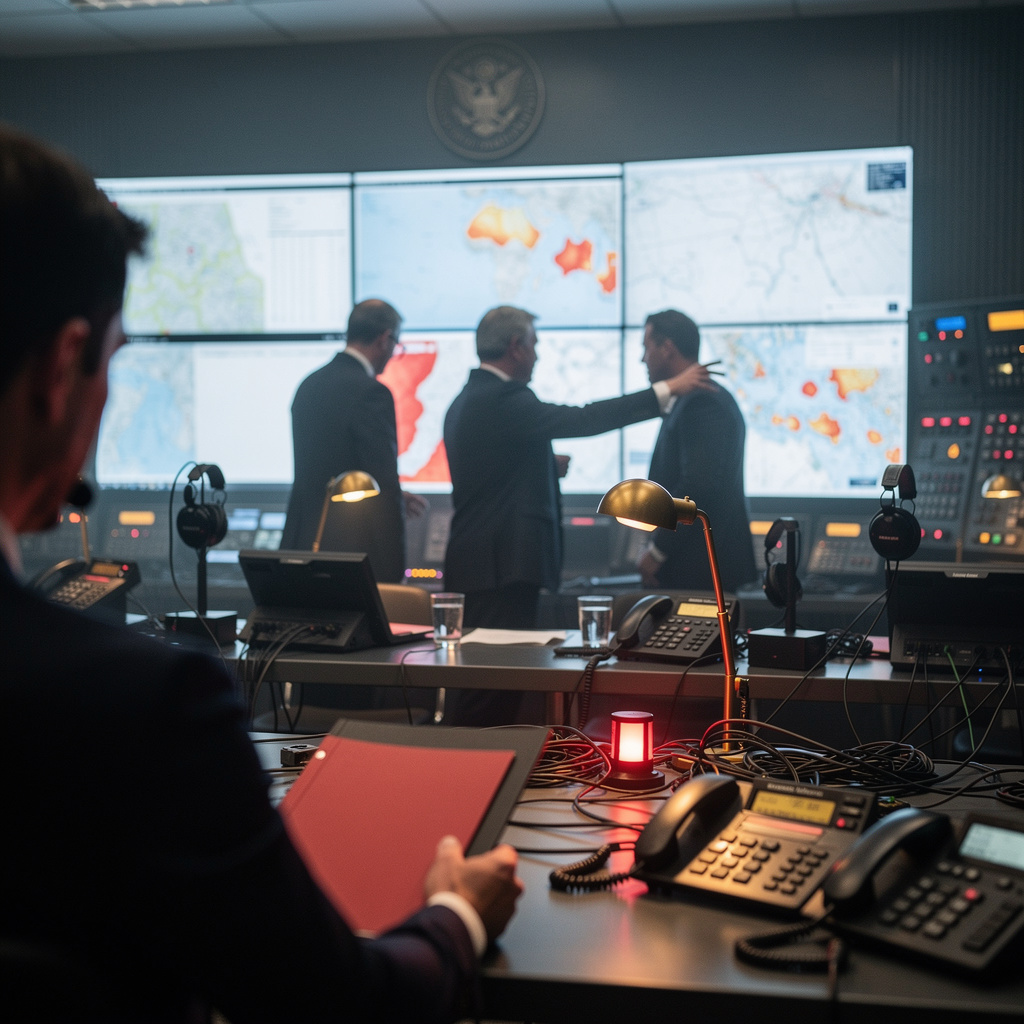
Crisis communication in government is the disciplined practice of informing, directing, and reassuring the public and internal stakeholders during events that threaten safety, services, credibility, or institutional legitimacy. Its scope includes anticipatory risk assessment, legal and ethical constraints, message strategy, stakeholder mapping, spokesperson discipline, media and digital response, interagency coordination, emergency alerting, and recovery communication. Core concepts include public trust, message consistency, timeliness, transparency within legal limits, equity in reach and accessibility, rumor control, and accountability to democratic oversight. It is distinct from generic public relations because government messages can carry legal authority, affect life-safety decisions, and shape public confidence in institutions.
The subject matters today because governments increasingly confront compound crises—natural disasters, public health emergencies, security incidents, infrastructure failures, misinformation, and political scandals—that unfold across traditional media, social platforms, and informal networks. Public expectations for rapid, accurate, and equitable information have risen, while legal scrutiny, partisan contestation, and online rumor cycles make inconsistent messaging costlier. Agencies use these practices in emergency operations centers, communications offices, public health and safety agencies, regulatory bodies, and legislative settings, and scholars study them through crisis management, public administration, risk communication, and media studies. Recent shifts toward platform-based crisis response, accessible multilingual alerting, interagency coordination, and post-crisis learning have made the field more operational and more accountable.
Mastery of this subject builds a skill stack that combines rapid situational assessment, legally aware message design, stakeholder and trust analysis, disciplined public speaking, media and digital monitoring, cross-agency coordination, and structured after-action review. These capabilities are valuable in government communications, emergency management, public health, public safety, regulatory affairs, legislative offices, and civil society roles that interface with public authorities. They also support personal effectiveness for professionals who must explain uncertainty, correct misinformation, or maintain credibility during prolonged controversy without overpromising. The subject therefore bridges analytical rigor, ethical judgment, and operational communication practice in contexts where public consequences are immediate and long-lasting.
What Will This Course Bring You?
- Analyze foundational crisis communication models to distinguish government-specific legal, ethical, and accountability constraints that shape public messaging during emerging incidents.
- Design a crisis risk assessment and message strategy that sets evidence thresholds, priority audiences, and message sequencing before issuing public warnings.
- Apply stakeholder mapping and equity analysis to design public trust-building messages that address vulnerable communities' access and information needs.
- Evaluate spokesperson selection criteria and demonstrate message discipline during simulated briefings with hostile or adversarial questioning.
- Implement media relations and press conference management tactics to control narrative flow and protect institutional credibility during crisis coverage.
- Build a digital crisis communication plan that integrates social media monitoring, rumor control protocols, and rapid public-safety messaging across platforms.
- Design internal communication and interagency coordination protocols that incorporate emergency alerting and public safety messaging requirements during multi-agency incidents.
- Evaluate political crisis and prolonged controversy communication strategies to recommend recovery and after-action learning improvements for future government responses.
Curriculum
12 Units1. Foundations of Crisis Communication in Government
1 hour
2. Legal, Ethical, and Accountability Frameworks
1 hour
3. Crisis Risk Assessment and Message Strategy
1 hour
4. Stakeholder Mapping, Public Trust, and Equitable Communication
1 hour
5. Spokesperson Selection, Message Discipline, and Briefing Practice
1 hour
6. Media Relations and Press Conference Management
1 hour
7. Digital Crisis Communication, Social Media, and Rumor Control
1 hour
8. Internal Communication and Interagency Coordination
1 hour
9. Emergency Alerting and Public Safety Messaging
1 hour
10. Political Crises, Scandal, and Prolonged Controversy
1 hour
11. Recovery Communication, Evaluation, and Organizational Learning
1 hour
12. Crisis Communication Planning and Simulation Capstone
1 hour
Exam – Crisis Communication in Government
20 Questions • 70% Pass • 30 min
Unlock All Units for Free
Create an account, enroll in the course, and start with the first unit right away.
Exam – Crisis Communication in Government
20 Questions • Pass: 70% • 30 min
Course Duration
720
Total Minutes
12
Unit
1
Final Exam
~60
Min / Unit
Crisis Communication in Government Certificate Program
Document Your Skill
Those who pass the 20-question, 30-minute exam with 70% receive the Crisis Communication in Government Certificate.
Stand Out on Your CV
By adding your certificate to your CV, gain a professional reference in job applications and stand out from the crowd.
Career Advantage
With the verification code, employers can check your certificate instantly — a concrete way to show your growth.
CERTIFICATE FEE
At the end of the course, an online exam consisting of 20 questions with a 30-minute time limit is given. The exam appears automatically after you complete the topics. Anyone who scores at least 70 out of 100 on the certificate exam is awarded the Crisis Communication in Government Document (certificate of attendance). You can add the certificate you earn to your CV for job applications in the many sectors listed above, and use it as a reference proving that you took this interactive course.
The Certificate of Achievement you receive with the Crisis Communication in Government course program holds value that proves your personal and professional development in the business world. By adding it to your CV, it can serve as an important reference in your job applications. Moreover, compared with certificates from other private training institutions, Catch Wisdom certificates are offered to our participants at a much more affordable price.
The Crisis Communication in Government course certificate is a document that proves, with a unique verification code, that you completed the course. Employers can instantly check its authenticity with this code, which helps you show your development concretely in your job applications.
For more information, we recommend visiting the Support page.
Certificate in 7 Languages
Earning success certificates from our courses is now more meaningful and global. With certificates available in Turkish, English, German, French, Spanish, Arabic, and Russian, we fully unlock the potential of students worldwide.
Why Certificate in 7 Languages?
-
01
Global Skill Development
Receiving your certificates in 7 different languages strengthens your communication skills as you engage with more people worldwide. It lets you operate more confidently and capably on the international stage.
-
02
International Job Opportunities
Employers may see your certificates in multiple languages as a sign of your ability to seize global opportunities. You can open more doors to new jobs and projects.
-
03
Cultural Richness
The chance to earn certificates in different languages helps you build closer ties with various cultures and broadens your worldview. It enriches your global perspective and deepens cultural understanding.
-
04
Ability to Participate in International Projects
Multilingual certificates give you an edge to work more effectively on international projects. They boost your chances of leadership and participation in diverse projects in the business world.
-
05
Prove Yourself on the Global Stage
Certificates in multiple languages give you the opportunity to present your skills and knowledge worldwide.
Language diversity opens worldwide opportunities. If you want to prove yourself in the international arena, join our online Crisis Communication in Government course program and begin this journey with us.
Frequently Asked Questions (FAQ)
Is this course paid?
How do I join the course?
Can I take the course at my own pace?
How can I get my certificate?
What are the advantages of the certificate?
Boost Your Career
Take a new career step with the Crisis Communication in Government course. Add your certificate to your CV, stand out in job applications, and open the door to new opportunities in the industry.
StartStudent Reviews
No reviews yet
Enroll in this course and be the first to leave a review about your experience with Crisis Communication in Government.
Start