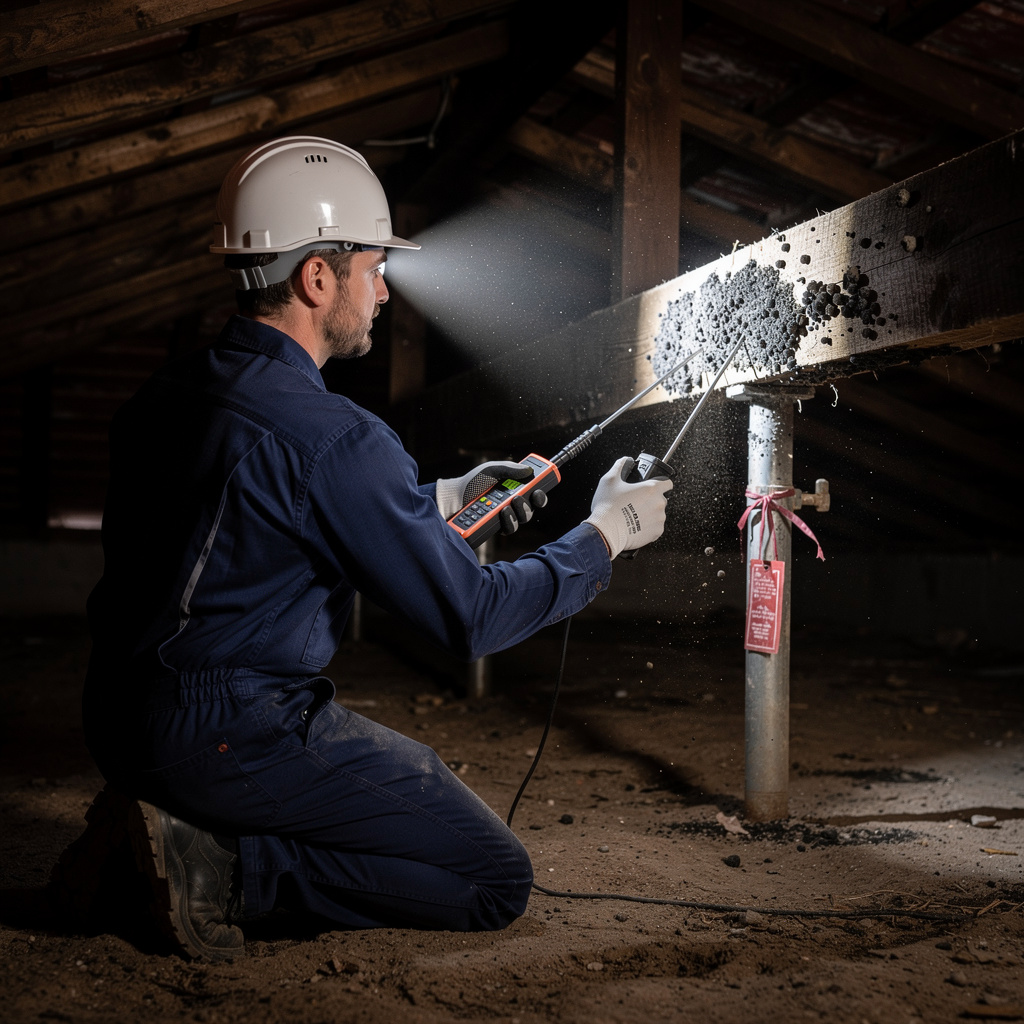
What is Damp and Mould Risk Assessment?
Damp and Mould Risk Assessment Training
The Damp and Mould Risk Assessment certificate program equips housing professionals, environmental health officers, surveyors, and property managers with the technical knowledge to systematically identify, evaluate, and document moisture-related hazards. This course moves beyond generic awareness by teaching you how to trace moisture sources—from rising damp and condensation to penetrating leaks—and link them to mould growth patterns using inspection protocols, moisture meters, and sampling techniques. By the end, you will be able to produce defensible risk assessments that prioritize interventions for vulnerable occupants, including children, the elderly, and those with respiratory conditions.
The program is structured as a beginner-friendly progression that balances theoretical frameworks with hands-on application. You will build four core skill areas: diagnosing damp and mould causes, applying legal standards like the Housing Act and HHSRS, using quantitative moisture measurement and monitoring tools, and writing clear, actionable reports. Starting with foundational concepts and moving through inspection techniques, risk scoring, and remediation strategies, the course culminates in real-world case studies that simulate complex scenarios. Choosing this training now is essential because recent regulatory shifts and rising awareness of indoor air quality have made robust damp and mould risk assessment a critical competency for anyone responsible for safe, habitable living spaces.
What is Damp and Mould Risk Assessment?
Damp and mould risk assessment is a systematic process used to identify the presence, extent, and causes of moisture intrusion and fungal growth within buildings, and to evaluate the potential harm to occupants and structural integrity. Core concepts include understanding the physical mechanisms of condensation, capillary rise, and water ingress, as well as the biological conditions that allow mould spores to germinate and proliferate. The assessment integrates qualitative observation with quantitative measurement—using hygrometers, thermal imaging, and moisture meters—to classify risk levels and determine appropriate remedial actions.
Today, this subject has moved to the forefront of public health and housing policy due to the documented links between damp, mould, and respiratory illnesses such as asthma and allergic reactions. In the UK and many other regions, legal frameworks now explicitly require landlords and social housing providers to address damp and mould hazards proactively, following high-profile cases and updated guidance from bodies like the WHO and local housing authorities. Real-world application spans pre-purchase building surveys, tenant complaint investigations, post-remediation verification, and insurance claims, making it a practical necessity for property professionals and health inspectors alike.
Mastering damp and mould risk assessment builds a skill stack that combines building science, environmental health, and risk management. You learn to interpret moisture data, identify hidden defects, and communicate findings through structured reports that withstand scrutiny. This expertise is invaluable for surveyors, facilities managers, and public health officers, but also for private landlords and homeowners seeking to protect their investments and occupants. The ability to distinguish between cosmetic issues and serious hazards, and to recommend proportionate control measures, directly improves living conditions and reduces liability, making this subject a cornerstone of modern property stewardship.
What Will This Course Bring You?
- Analyze the primary causes and sources of moisture in buildings to identify damp and mould risk factors.
- Evaluate the health effects of damp and mould on vulnerable groups to prioritize safety measures.
- Conduct systematic inspections using appropriate survey techniques to collect evidence for risk assessment.
- Utilize moisture measurement and monitoring tools to quantify dampness levels and track changes over time.
- Identify and sample mould species accurately to determine contamination extent and inform remediation.
- Score and evaluate risks using a structured framework to prioritize remediation actions effectively.
- Implement remediation and control measures to mitigate identified damp and mould issues in buildings.
- Compose detailed reports that clearly communicate risk assessment findings and actionable recommendations.
Curriculum
12 Units1. Understanding Damp and Mould
30 min
2. Causes and Sources of Moisture
30 min
3. Health Effects and Vulnerable Groups
30 min
4. Legal and Regulatory Framework
30 min
5. Risk Assessment Principles
30 min
6. Inspection and Survey Techniques
30 min
7. Moisture Measurement and Monitoring
30 min
8. Mould Identification and Sampling
30 min
9. Risk Evaluation and Scoring
30 min
10. Reporting and Documentation
30 min
11. Remediation and Control Measures
30 min
12. Case Studies and Practical Application
30 min
Exam – Damp and Mould Risk Assessment
20 Questions • 70% Pass • 30 min
Unlock All Units for Free
Create an account, enroll in the course, and start with the first unit right away.
Exam – Damp and Mould Risk Assessment
20 Questions • Pass: 70% • 30 min
Course Duration
360
Total Minutes
12
Unit
1
Final Exam
~30
Min / Unit
Damp and Mould Risk Assessment Certificate Program
Document Your Skill
Those who pass the 20-question, 30-minute exam with 70% receive the Damp and Mould Risk Assessment Certificate.
Stand Out on Your CV
By adding your certificate to your CV, gain a professional reference in job applications and stand out from the crowd.
Career Advantage
Catch Wisdom certificates are recognized by HR departments and increase career opportunities.
CERTIFICATE FEE
At the end of the course, an online exam consisting of 20 questions with a 30-minute time limit is given. The exam appears automatically after you complete the topics. Anyone who scores at least 70 out of 100 on the certificate exam is awarded the Damp and Mould Risk Assessment Document (certificate of attendance). You can add the certificate you earn to your CV for job applications in the many sectors listed above, and use it as a reference proving that you took this interactive course.
The Certificate of Achievement you receive with the Damp and Mould Risk Assessment course program holds value that proves your personal and professional development in the business world. By adding it to your CV, it can serve as an important reference in your job applications. Moreover, compared with certificates from other private training institutions, Catch Wisdom certificates are offered to our participants at a much more affordable price.
Because HR departments recognize Catch Wisdom as a reputable institution in this field, they value these certificates and may evaluate your job applications favorably. For this reason, a Damp and Mould Risk Assessment course certificate from Catch Wisdom can make your applications more attractive and place you in an advantageous position in the business world.
For more information, we recommend visiting the Support page.
Certificate in 7 Languages
Earning success certificates from our courses is now more meaningful and global. With certificates available in Turkish, English, German, French, Spanish, Arabic, and Russian, we fully unlock the potential of students worldwide.
Why Certificate in 7 Languages?
-
01
Global Skill Development
Receiving your certificates in 7 different languages strengthens your communication skills as you engage with more people worldwide. It lets you operate more confidently and capably on the international stage.
-
02
International Job Opportunities
Employers may see your certificates in multiple languages as a sign of your ability to seize global opportunities. You can open more doors to new jobs and projects.
-
03
Cultural Richness
The chance to earn certificates in different languages helps you build closer ties with various cultures and broadens your worldview. It enriches your global perspective and deepens cultural understanding.
-
04
Ability to Participate in International Projects
Multilingual certificates give you an edge to work more effectively on international projects. They boost your chances of leadership and participation in diverse projects in the business world.
-
05
Prove Yourself on the Global Stage
Certificates in multiple languages let you showcase your skills and knowledge worldwide. You can become an internationally recognized professional.
Language diversity opens worldwide opportunities. If you want to prove yourself in the international arena, join our online Damp and Mould Risk Assessment course program and begin this journey with us.
Frequently Asked Questions (FAQ)
Is this course paid?
How do I join the course?
Can I take the course at my own pace?
How can I get my certificate?
What are the advantages of the Certified Certificate?
Boost Your Career
Take a new career step with the Damp and Mould Risk Assessment course. Add your certificate to your CV, stand out in job applications, and open the door to new opportunities in the industry.
StartStudent Reviews
No reviews yet
Enroll in this course and be the first to leave a review about your experience with Damp and Mould Risk Assessment.
Start