What is Decorative Wood Painting?
Decorative Wood Painting Training
The Decorative Wood Painting certificate program is a comprehensive, hands-on course designed for beginners and hobbyists who want to transform plain wooden surfaces into personalized works of art. Through twelve structured lessons, you will master everything from wood preparation and priming to advanced freehand floral designs, special effects, and protective sealing. By the end of the program, you will complete two practical projects—a painted keepsake box and a furniture accent—that showcase your newly acquired skills and serve as portfolio pieces.
This program is carefully structured to build confidence step by step, starting with the essentials of paint types, brush selection, and color theory, then progressing through foundational brush strokes, stenciling, and design transfer. You will develop four core skill areas: surface preparation, brush control, color mixing, and finishing techniques, with each lesson balancing concise theory with immediate practice. Choosing this training now is ideal because decorative wood painting is enjoying a resurgence in both DIY home décor and artisan markets, and this course gives you the precise, professional techniques to stand out in that growing creative field.
What is Decorative Wood Painting?
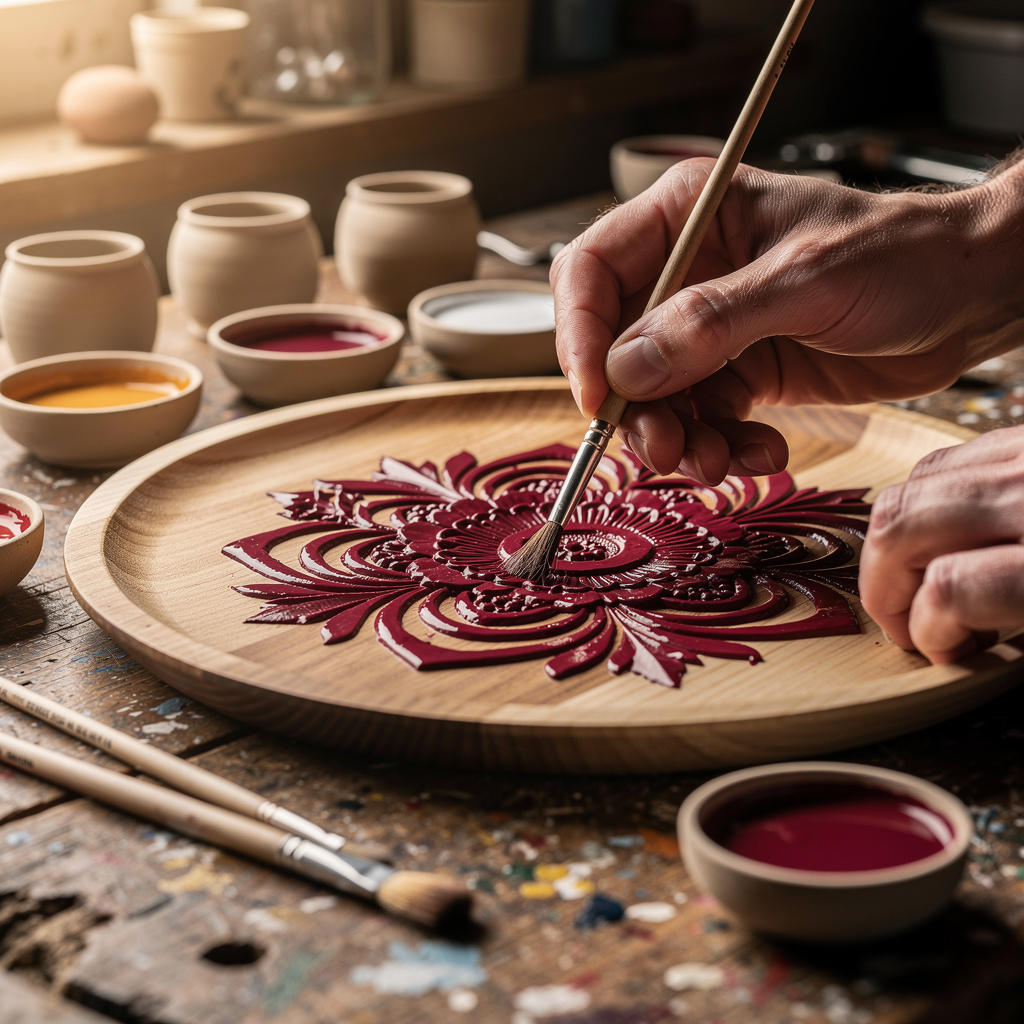
Decorative wood painting is a specialized craft that combines traditional painting techniques with the unique characteristics of wood as a substrate. It encompasses a wide range of practices, from simple stenciled accents to intricate freehand florals, layered shading, and textured effects. Core concepts include understanding wood grain and porosity, selecting appropriate primers and paints, mastering brush dynamics for smooth or textured strokes, and applying protective finishes that preserve both the artwork and the wood itself. The discipline draws on color theory, composition, and surface chemistry, making it both an artistic and technical pursuit.
Today, decorative wood painting matters more than ever as consumers seek handmade, sustainable, and personalized items that mass-produced décor cannot offer. It is widely used in furniture restoration, custom home accents, gift-making, and even in professional interior design where painted wood elements add character and warmth. Recent shifts toward upcycling and slow living have elevated this craft from a pastime to a valued skill in small businesses and artisan marketplaces. Additionally, the rise of online tutorials and social media has created a vibrant community where both traditional and contemporary styles thrive, keeping the practice relevant and evolving.
Mastering decorative wood painting builds a versatile skill stack that includes precise brush control, color mixing intuition, pattern transfer accuracy, and an understanding of sealants and finishes—all transferable to other painting and craft disciplines. For hobbyists, it offers a deeply satisfying creative outlet that yields tangible, functional art. For professionals, it opens doors to furniture customization, commission work, and teaching. Whether you are enhancing your own home, creating gifts, or exploring a new revenue stream, this subject equips you with the knowledge to turn raw wood into enduring, beautiful pieces that reflect your personal style.
Common Questions About Decorative Wood Painting
Is this decorative painting course suitable for complete beginners with no art experience?
How long does it take to complete the decorative wood painting training and get certified?
What is the most common mistake when priming wood before decorative painting?
How do I load a brush correctly for the press-and-pull petal stroke?
- Dip: Submerge about one-third to one-half of the bristle length into the paint.
- Wipe: Gently remove excess paint from one side of the brush against the rim of your palette.
- Load: The paint should be concentrated on one side, creating the gradient that gives the petal its light-to-dark effect.
What's the best way to transfer a design onto wood without leaving graphite ghosts?
How do I layer washes to create depth in decorative wood painting?
Do I need to be good at drawing to do freehand floral painting on wood?
What Will This Course Bring You?
- Evaluate wood surfaces to select and apply appropriate primers and sanding techniques for optimal paint adhesion.
- Select compatible paint types and brush shapes for specific decorative wood painting techniques.
- Apply color wheel relationships to mix custom hues and achieve desired tonal effects on wood.
- Execute foundational brush strokes including flat, round, and liner strokes to create consistent lines and curves.
- Transfer designs onto wood using graphite paper, stencils, and freehand tracing methods with precision.
- Paint freehand floral and foliage elements with realistic shading and natural movement using a liner brush.
- Build three-dimensional depth on painted wood by layering translucent washes and applying highlights and shadows.
- Implement appropriate sealants and protective finishes to safeguard decorative wood paintings from wear and moisture.
Curriculum
12 Units1. Wood Preparation and Priming
1 hour
2. Paint Types and Brush Essentials
1 hour
3. Color Theory and Mixing
1 hour
4. Foundational Brush Strokes
1 hour
5. Transferring Designs and Stenciling
1 hour
6. Freehand Floral and Foliage
1 hour
7. Layering, Shading, and Highlighting
1 hour
8. Decorative Borders and Edges
1 hour
9. Special Effects and Textures
1 hour
10. Sealing and Protecting Finished Pieces
1 hour
11. Project: Painted Keepsake Box
1 hour
12. Project: Painted Furniture Accent
1 hour
Exam – Decorative Wood Painting
20 Questions • 70% Pass • 30 min
Unlock All Units for Free
Create an account, enroll in the course, and start with the first unit right away.
Exam – Decorative Wood Painting
20 Questions • Pass: 70% • 30 min
Course Duration
720
Total Minutes
12
Unit
1
Final Exam
~60
Min / Unit
Decorative Wood Painting Certificate Program
Document Your Skill
Those who pass the 20-question, 30-minute exam with 70% receive the Decorative Wood Painting Certificate.
Stand Out on Your CV
By adding your certificate to your CV, gain a professional reference in job applications and stand out from the crowd.
Career Advantage
Catch Wisdom certificates are recognized by HR departments and increase career opportunities.
CERTIFICATE FEE
At the end of the course, an online exam consisting of 20 questions with a 30-minute time limit is given. The exam appears automatically after you complete the topics. Anyone who scores at least 70 out of 100 on the certificate exam is awarded the Decorative Wood Painting Document (certificate of attendance). You can add the certificate you earn to your CV for job applications in the many sectors listed above, and use it as a reference proving that you took this interactive course.
The Certificate of Achievement you receive with the Decorative Wood Painting course program holds value that proves your personal and professional development in the business world. By adding it to your CV, it can serve as an important reference in your job applications. Moreover, compared with certificates from other private training institutions, Catch Wisdom certificates are offered to our participants at a much more affordable price.
Because HR departments recognize Catch Wisdom as a reputable institution in this field, they value these certificates and may evaluate your job applications favorably. For this reason, a Decorative Wood Painting course certificate from Catch Wisdom can make your applications more attractive and place you in an advantageous position in the business world.
For more information, we recommend visiting the Support page.
Certificate in 7 Languages
Earning success certificates from our courses is now more meaningful and global. With certificates available in Turkish, English, German, French, Spanish, Arabic, and Russian, we fully unlock the potential of students worldwide.
Why Certificate in 7 Languages?
-
01
Global Skill Development
Receiving your certificates in 7 different languages strengthens your communication skills as you engage with more people worldwide. It lets you operate more confidently and capably on the international stage.
-
02
International Job Opportunities
Employers may see your certificates in multiple languages as a sign of your ability to seize global opportunities. You can open more doors to new jobs and projects.
-
03
Cultural Richness
The chance to earn certificates in different languages helps you build closer ties with various cultures and broadens your worldview. It enriches your global perspective and deepens cultural understanding.
-
04
Ability to Participate in International Projects
Multilingual certificates give you an edge to work more effectively on international projects. They boost your chances of leadership and participation in diverse projects in the business world.
-
05
Prove Yourself on the Global Stage
Certificates in multiple languages let you showcase your skills and knowledge worldwide. You can become an internationally recognized professional.
Language diversity opens worldwide opportunities. If you want to prove yourself in the international arena, join our online Decorative Wood Painting course program and begin this journey with us.
Frequently Asked Questions (FAQ)
Is this course paid?
How do I join the course?
Can I take the course at my own pace?
How can I get my certificate?
What are the advantages of the Certified Certificate?
Boost Your Career
Take a new career step with the Decorative Wood Painting course. Add your certificate to your CV, stand out in job applications, and open the door to new opportunities in the industry.
StartStudent Reviews
No reviews yet
Enroll in this course and be the first to leave a review about your experience with Decorative Wood Painting.
Start