What is Deepfake Verification Workflows?
Deepfake Verification Workflows Training
The Deepfake Verification Workflows certificate program equips security analysts, media professionals, and compliance officers with a practical, end-to-end methodology for detecting and mitigating synthetic media threats. Moving beyond theory, this course teaches you how to inspect digital signatures, analyze visual and audio artifacts, and deploy machine learning detectors within a structured verification pipeline. By the end, you will be able to build a repeatable workflow that combines automated tools with human judgment, directly applicable to incident response, journalism, and platform integrity roles.
The program is deliberately sequenced from foundational concepts to advanced techniques, ensuring a beginner-friendly yet rigorous progression. You will first grasp the threat landscape and media forensics basics, then move through artifact analysis, automated detection, and cross-modal verification, before tackling blockchain provenance, GAN fingerprinting, and legal considerations. Each module balances hands-on practice with conceptual depth, building four core skill areas: forensic analysis, tool proficiency, workflow design, and ethical reasoning. With deepfake incidents rising across elections, finance, and entertainment, this training is essential for professionals who need to stay ahead of rapidly evolving synthetic media—and for organizations seeking verifiable trust in their content pipelines.
What is Deepfake Verification Workflows?
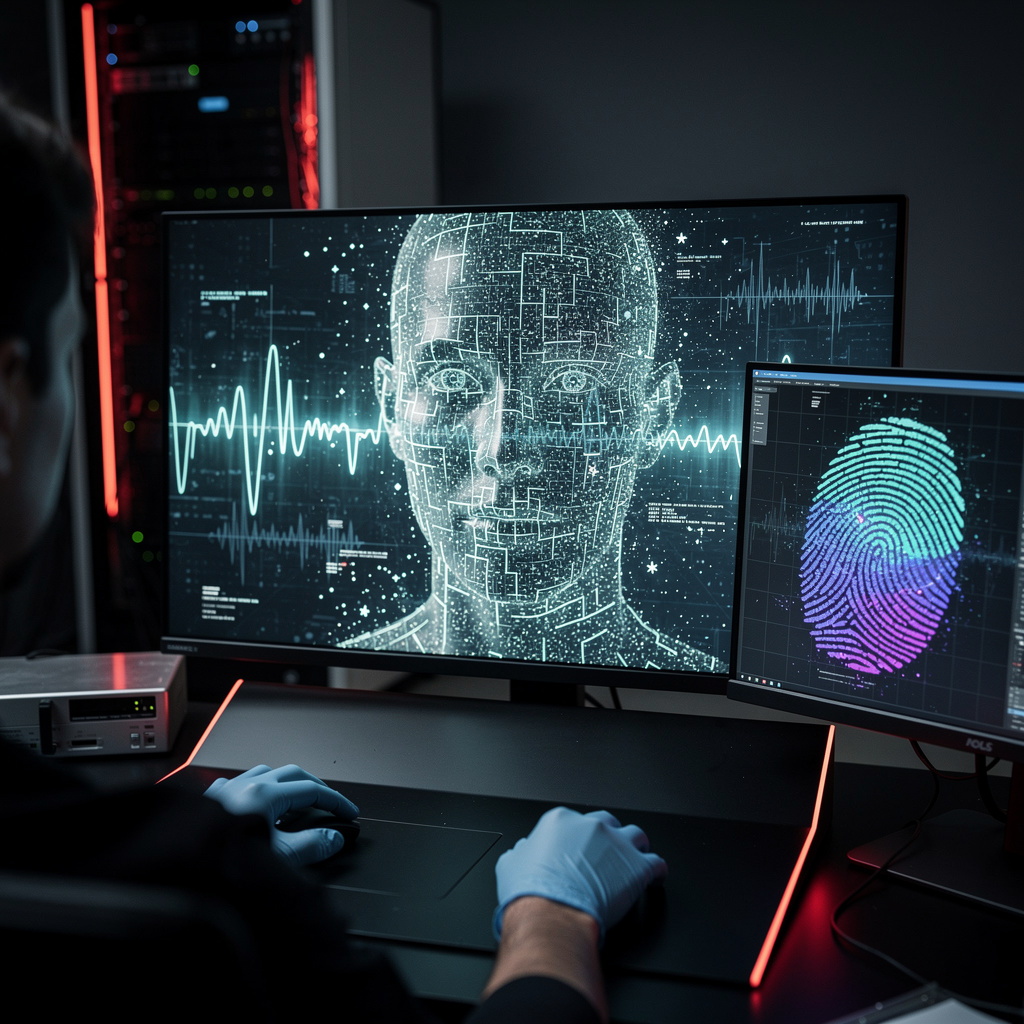
Deepfake verification workflows are systematic processes for determining whether a piece of media—video, audio, or image—is authentic or synthetically generated. The subject encompasses forensic techniques like metadata inspection and digital signature validation, artifact analysis that looks for inconsistencies in lighting, blinking, or acoustic patterns, and automated detection using machine learning models trained on known deepfake datasets. It also integrates provenance tracking through blockchain and cryptographic hashing, as well as cross-modal checks that compare face, voice, and contextual cues to identify mismatches. Core concepts include GAN fingerprinting, source attribution, and the probabilistic nature of verification—where confidence scores and uncertainty are as important as binary verdicts.
Today, deepfake verification is critical in sectors ranging from journalism and law enforcement to corporate security and social media governance. With generative models producing hyper-realistic content at scale, incidents like fraudulent CEO voice calls, manipulated political speeches, and synthetic evidence in courtrooms have made verification a frontline defense. Recent shifts include the rise of real-time detection APIs, regulatory pressure for content authenticity standards (e.g., C2PA), and the integration of provenance metadata into camera hardware. These developments have moved the field from academic curiosity to operational necessity, with organizations now embedding verification workflows into their incident response and content moderation pipelines.
Mastering deepfake verification builds a skill stack that combines technical acumen with critical thinking: you learn to interpret forensic signals, evaluate detection tool outputs, and design decision trees that balance speed, cost, and accuracy. This expertise is invaluable for digital forensic analysts, trust and safety teams, media fact-checkers, and legal professionals who must authenticate evidence. Beyond professional roles, individuals in communications, policy, or civic technology benefit from understanding how to question media authenticity in an era of synthetic content. The subject empowers you to move from passive consumption to active validation, turning uncertainty into a structured, defensible process that protects both organizations and public discourse.
Common Questions About Deepfake Verification Workflows
How does the deepfake verification certificate help in a job application?
Is this deepfake verification course suitable for beginners with no prior experience?
How does the generator-discriminator loop in GANs create deepfakes?
Why is metadata analysis crucial for deepfake verification workflows?
How do CNN-based deepfake detectors identify manipulated media?
How does cross-modal verification detect mismatched face and voice?
Are deepfakes always detectable through visual artifact analysis alone?
What Will This Course Bring You?
- Analyze the deepfake threat landscape to identify potential attack vectors and impact scenarios.
- Apply basic digital signature and metadata analysis techniques to verify media authenticity.
- Evaluate visual and audio artifacts to distinguish manipulated content from genuine media.
- Implement effective machine learning detection models to identify deepfakes in automated pipelines.
- Design a comprehensive step-by-step verification workflow integrating multiple forensic checks and techniques.
- Evaluate tools and platforms for deepfake verification based on accuracy and usability.
- Perform cross-modal verification by comparing face, voice, and contextual cues for consistency.
- Apply advanced GAN fingerprinting and source attribution techniques to trace deepfake origins.
Curriculum
12 Units1. Understanding Deepfakes and the Threat Landscape
1 hour
2. Media Forensics Basics: Digital Signatures and Metadata
1 hour
3. Artifact Analysis: Visual and Audio Clues
1 hour
4. Automated Detection: Machine Learning Approaches
1 hour
5. Building a Verification Workflow: Step-by-Step Process
1 hour
6. Tools and Platforms for Deepfake Verification
1 hour
7. Cross-Modal Verification: Face, Voice, and Context
1 hour
8. Blockchain and Provenance: Verifying Authenticity
1 hour
9. Legal and Ethical Considerations in Verification
1 hour
10. Case Studies: Real-World Deepfake Incidents
1 hour
11. Advanced Techniques: GAN Fingerprinting and Source Attribution
1 hour
12. Future Trends and Continuous Adaptation
1 hour
Exam – Deepfake Verification Workflows
20 Questions • 70% Pass • 30 min
Unlock All Units for Free
Create an account, enroll in the course, and start with the first unit right away.
Exam – Deepfake Verification Workflows
20 Questions • Pass: 70% • 30 min
Course Duration
720
Total Minutes
12
Unit
1
Final Exam
~60
Min / Unit
Deepfake Verification Workflows Certificate Program
Document Your Skill
Those who pass the 20-question, 30-minute exam with 70% receive the Deepfake Verification Workflows Certificate.
Stand Out on Your CV
By adding your certificate to your CV, gain a professional reference in job applications and stand out from the crowd.
Career Advantage
Catch Wisdom certificates are recognized by HR departments and increase career opportunities.
CERTIFICATE FEE
At the end of the course, an online exam consisting of 20 questions with a 30-minute time limit is given. The exam appears automatically after you complete the topics. Anyone who scores at least 70 out of 100 on the certificate exam is awarded the Deepfake Verification Workflows Document (certificate of attendance). You can add the certificate you earn to your CV for job applications in the many sectors listed above, and use it as a reference proving that you took this interactive course.
The Certificate of Achievement you receive with the Deepfake Verification Workflows course program holds value that proves your personal and professional development in the business world. By adding it to your CV, it can serve as an important reference in your job applications. Moreover, compared with certificates from other private training institutions, Catch Wisdom certificates are offered to our participants at a much more affordable price.
Because HR departments recognize Catch Wisdom as a reputable institution in this field, they value these certificates and may evaluate your job applications favorably. For this reason, a Deepfake Verification Workflows course certificate from Catch Wisdom can make your applications more attractive and place you in an advantageous position in the business world.
For more information, we recommend visiting the Support page.
Certificate in 7 Languages
Earning success certificates from our courses is now more meaningful and global. With certificates available in Turkish, English, German, French, Spanish, Arabic, and Russian, we fully unlock the potential of students worldwide.
Why Certificate in 7 Languages?
-
01
Global Skill Development
Receiving your certificates in 7 different languages strengthens your communication skills as you engage with more people worldwide. It lets you operate more confidently and capably on the international stage.
-
02
International Job Opportunities
Employers may see your certificates in multiple languages as a sign of your ability to seize global opportunities. You can open more doors to new jobs and projects.
-
03
Cultural Richness
The chance to earn certificates in different languages helps you build closer ties with various cultures and broadens your worldview. It enriches your global perspective and deepens cultural understanding.
-
04
Ability to Participate in International Projects
Multilingual certificates give you an edge to work more effectively on international projects. They boost your chances of leadership and participation in diverse projects in the business world.
-
05
Prove Yourself on the Global Stage
Certificates in multiple languages let you showcase your skills and knowledge worldwide. You can become an internationally recognized professional.
Language diversity opens worldwide opportunities. If you want to prove yourself in the international arena, join our online Deepfake Verification Workflows course program and begin this journey with us.
Frequently Asked Questions (FAQ)
Is this course paid?
How do I join the course?
Can I take the course at my own pace?
How can I get my certificate?
What are the advantages of the Certified Certificate?
Boost Your Career
Take a new career step with the Deepfake Verification Workflows course. Add your certificate to your CV, stand out in job applications, and open the door to new opportunities in the industry.
StartStudent Reviews
No reviews yet
Enroll in this course and be the first to leave a review about your experience with Deepfake Verification Workflows.
Start