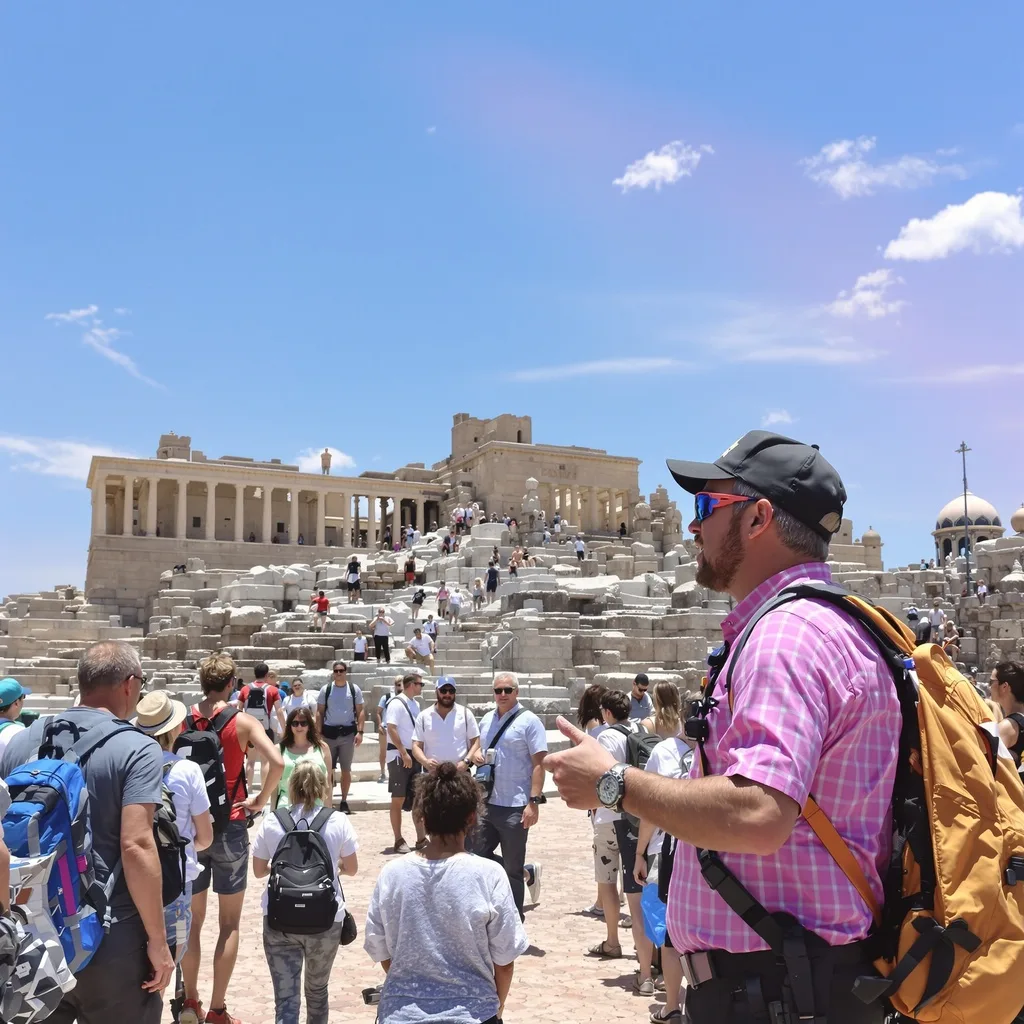
What is Destination Management?
Destination Management Certificate Program
The Destination Management certificate program equips learners with the strategic, operational, and analytical capabilities needed to plan, market, govern, and sustain tourism destinations in competitive and volatile environments. It is designed for tourism board staff, destination marketing and management organization professionals, local government planners, hospitality and attraction managers, consultants, and career changers who want a structured path into destination leadership. Across the curriculum, learners examine foundations, destination planning and development, stakeholder engagement and governance, marketing and branding, visitor experience and service quality, operations and visitor management, sustainability, competitiveness and performance measurement, digital transformation, crisis and risk management, and strategic leadership. The main practical outcome is an integrated capstone project that demonstrates the ability to diagnose destination challenges, align stakeholders, and propose a feasible management strategy.
The program is structured as a beginner-friendly progression: early lessons establish core concepts and planning logic, middle lessons build functional skills in stakeholder engagement, marketing, visitor experience, operations, sustainability, and performance measurement, and later lessons address technology, crisis readiness, and strategic leadership before the capstone. Theory is balanced with applied tools, case-based analysis, and project work so that each concept connects to real destination decisions rather than remaining abstract. It builds five core skill areas: destination strategy and planning; stakeholder governance and partnership building; marketing, branding, and visitor experience design; sustainable operations and risk management; and performance measurement with digital transformation. Learners choose this program now because destinations face overlapping pressures from overtourism, climate risk, workforce shortages, digital disruption, and shifting visitor expectations, and they need managers who can integrate these issues into coherent, evidence-based action.
What is Destination Management?
Destination management is the coordinated practice of guiding a place—its attractions, infrastructure, services, residents, and brand—toward visitor, community, and environmental outcomes that are desirable and durable. Its scope spans strategic planning, governance, marketing, visitor experience, operations, sustainability, competitiveness, technology, and crisis readiness, all applied to a defined geographic area that travelers perceive as a destination. Core concepts include destination positioning and value proposition, stakeholder networks, carrying capacity, visitor flows, service quality, destination resilience, and performance indicators that connect tourism activity to local wellbeing. It sits at the intersection of tourism, urban and regional planning, public policy, marketing, and environmental management, so it requires integration rather than isolated tactical fixes.
Destination management matters today because tourism demand has rebounded unevenly while communities increasingly question the costs of growth, from housing pressure and congestion to environmental degradation. Destinations are used in real life by national and local tourism organizations, municipal governments, destination marketing and management organizations, hospitality clusters, transport authorities, and investors who must coordinate promotion with capacity, infrastructure, and resident consent. Recent shifts include the move from marketing-only mandates to broader destination stewardship, the adoption of real-time data and digital platforms, stronger expectations for climate and social sustainability, and heightened attention to crisis preparedness after pandemics, extreme weather, and geopolitical disruptions. In academia, the field has expanded from destination image and competitiveness studies toward governance, resilience, regenerative tourism, and evidence-based performance measurement.
Mastering destination management builds a skill stack that combines systems thinking, stakeholder facilitation, evidence-based planning, brand and experience design, operational coordination, sustainability literacy, and risk-aware decision-making. That stack is valuable in professional contexts such as destination management organizations, tourism ministries and local authorities, consultancy, attractions and hospitality groups, event and visitor economy agencies, and community development organizations. It also benefits personal contexts where residents, entrepreneurs, and community advocates need to understand how tourism decisions affect place identity, livelihoods, public spaces, and environmental quality. The subject ultimately prepares practitioners to connect strategy to implementation, negotiate trade-offs among stakeholders, and judge destination performance by both visitor value and long-term community and ecological outcomes.
What Will This Course Bring You?
- Analyze destination management foundations to distinguish destination types, governance models, and core functions within integrated destination systems.
- Design a destination development plan that aligns visitor economy goals with infrastructure, community needs, and spatial planning priorities.
- Evaluate stakeholder engagement and governance strategies for balancing public, private, and community interests in destination decision-making.
- Build a destination branding and marketing campaign that positions a destination's identity for target visitor segments across selected channels.
- Implement visitor management and service quality tactics that improve accessibility, satisfaction, and operational flow at destination touchpoints.
- Assess sustainable destination practices using environmental, social, and economic criteria to recommend improvements for resource protection and community benefit.
- Apply destination competitiveness and performance measurement frameworks to interpret indicators and recommend strategic actions for improved destination performance.
- Design an integrated destination management project that incorporates digital transformation, crisis and risk mitigation, and strategic leadership responses to a realistic destination scenario.
Curriculum
12 Units1. Foundations of Destination Management
1 hour
2. Destination Planning and Development
1 hour
3. Stakeholder Engagement and Governance
1 hour
4. Destination Marketing and Branding
1 hour
5. Visitor Experience and Service Quality
1 hour
6. Destination Operations and Visitor Management
1 hour
7. Sustainable Destination Management
1 hour
8. Destination Competitiveness and Performance Measurement
1 hour
9. Technology and Digital Transformation in Destinations
1 hour
10. Crisis and Risk Management for Destinations
1 hour
11. Destination Leadership and Strategic Management
1 hour
12. Capstone: Integrated Destination Management Project
1 hour
Exam – Destination Management
20 Questions • 70% Pass • 30 min
Unlock All Units for Free
Create an account, enroll in the course, and start with the first unit right away.
Exam – Destination Management
20 Questions • Pass: 70% • 30 min
Course Duration
720
Total Minutes
12
Unit
1
Final Exam
~60
Min / Unit
Destination Management Certificate Program
Document Your Skill
Those who pass the 20-question, 30-minute exam with 70% receive the Destination Management Certificate.
Stand Out on Your CV
By adding your certificate to your CV, gain a professional reference in job applications and stand out from the crowd.
Career Advantage
With the verification code, employers can check your certificate instantly — a concrete way to show your growth.
CERTIFICATE FEE
At the end of the course, an online exam consisting of 20 questions with a 30-minute time limit is given. The exam appears automatically after you complete the topics. Anyone who scores at least 70 out of 100 on the certificate exam is awarded the Destination Management Document (certificate of attendance). You can add the certificate you earn to your CV for job applications in the many sectors listed above, and use it as a reference proving that you took this interactive course.
The Certificate of Achievement you receive with the Destination Management course program holds value that proves your personal and professional development in the business world. By adding it to your CV, it can serve as an important reference in your job applications. Moreover, compared with certificates from other private training institutions, Catch Wisdom certificates are offered to our participants at a much more affordable price.
The Destination Management course certificate is a document that proves, with a unique verification code, that you completed the course. Employers can instantly check its authenticity with this code, which helps you show your development concretely in your job applications.
For more information, we recommend visiting the Support page.
Certificate in 7 Languages
Earning success certificates from our courses is now more meaningful and global. With certificates available in Turkish, English, German, French, Spanish, Arabic, and Russian, we fully unlock the potential of students worldwide.
Why Certificate in 7 Languages?
-
01
Global Skill Development
Receiving your certificates in 7 different languages strengthens your communication skills as you engage with more people worldwide. It lets you operate more confidently and capably on the international stage.
-
02
International Job Opportunities
Employers may see your certificates in multiple languages as a sign of your ability to seize global opportunities. You can open more doors to new jobs and projects.
-
03
Cultural Richness
The chance to earn certificates in different languages helps you build closer ties with various cultures and broadens your worldview. It enriches your global perspective and deepens cultural understanding.
-
04
Ability to Participate in International Projects
Multilingual certificates give you an edge to work more effectively on international projects. They boost your chances of leadership and participation in diverse projects in the business world.
-
05
Prove Yourself on the Global Stage
Certificates in multiple languages give you the opportunity to present your skills and knowledge worldwide.
Language diversity opens worldwide opportunities. If you want to prove yourself in the international arena, join our online Destination Management course program and begin this journey with us.
Frequently Asked Questions (FAQ)
Is this course paid?
How do I join the course?
Can I take the course at my own pace?
How can I get my certificate?
What are the advantages of the certificate?
Boost Your Career
Take a new career step with the Destination Management course. Add your certificate to your CV, stand out in job applications, and open the door to new opportunities in the industry.
StartStudent Reviews
No reviews yet
Enroll in this course and be the first to leave a review about your experience with Destination Management.
Start