What is Drum Basics?
Drum Basics Training
Drum Basics certificate program is a hands-on introduction to playing the drum kit, designed for absolute beginners and hobbyists who want to build solid foundational skills. The course teaches drum kit anatomy and setup, proper posture, grip, and stick control, then moves through basic strokes, rebound, reading rhythm and note values, and essential rudiments. Learners also develop bass drum and hi-hat coordination, foundational backbeat grooves, dynamics with accents and ghost notes, fills and transitions, and the ability to play along with songs and click tracks. The main practical outcome is the ability to sit at a kit, read simple charts, coordinate all four limbs, and perform basic grooves and fills with confidence and musicality.
The program is structured as a progressive, beginner-friendly journey across twelve focused units, balancing theoretical understanding of rhythm with immediate physical practice on the kit. Early units build technique and reading skills, while later units integrate coordination, groove playing, dynamics, and performance skills, ensuring no step is skipped. The curriculum develops five core skill areas: stick technique and control, limb independence, rhythmic literacy, groove and timekeeping, and musical expression through fills and improvisation. Someone would choose this program now because it offers a clear, structured path into drumming without overwhelming theory, making it ideal for self-taught learners who want reliable fundamentals, or for anyone seeking a creative, physical, and mentally engaging musical outlet that can be practiced at home or in a studio.
What is Drum Basics?
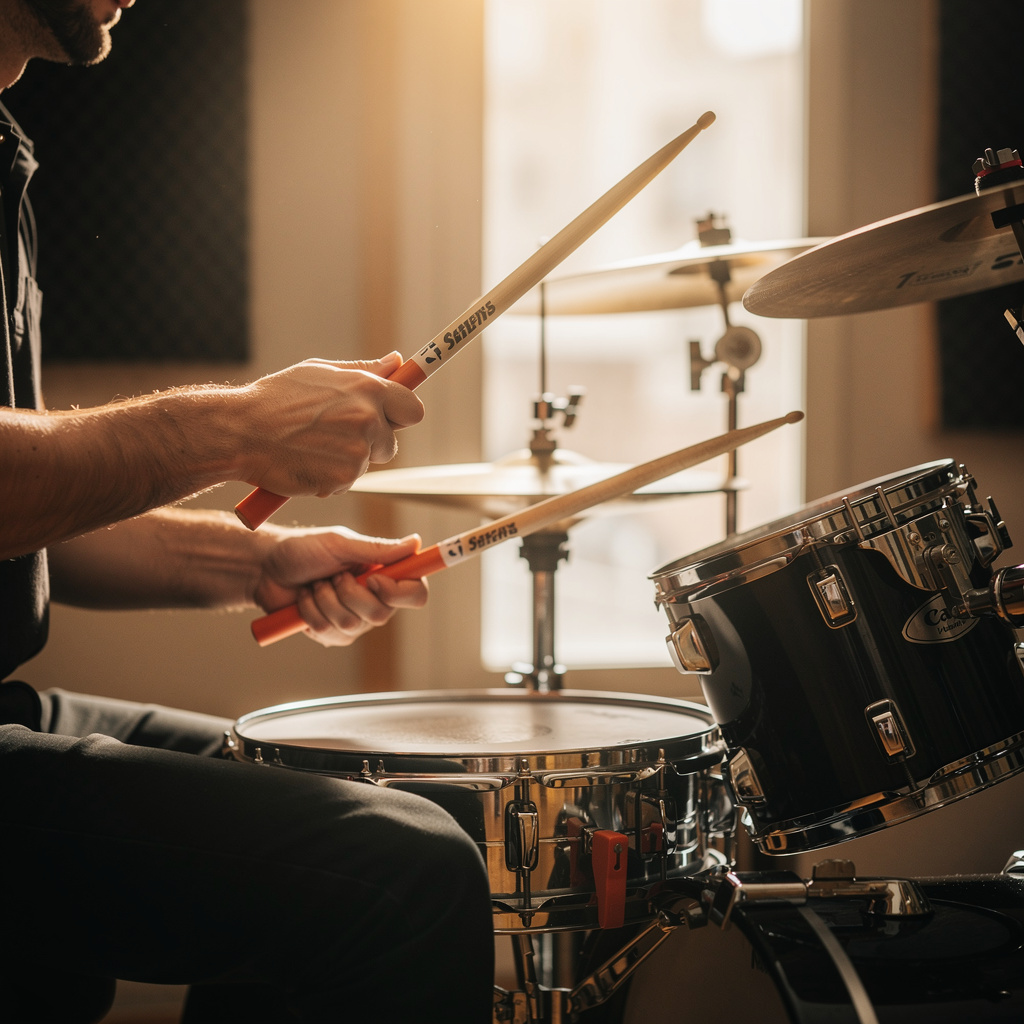
Drum basics refers to the foundational knowledge and physical skills required to play a standard drum kit, covering everything from how the instrument is assembled and adjusted to how a drummer produces a controlled, musical sound. Its scope includes understanding the function of each drum and cymbal, adopting efficient posture and grip, executing basic strokes with rebound, reading rhythmic notation, and applying rudiments to develop hand control. Core concepts include timing, subdivision, dynamics, limb independence, and the relationship between a drummer and the rest of a musical ensemble. These elements form the vocabulary that allows a drummer to play steady grooves, mark transitions with fills, and respond to musical cues in real time.
Drum basics matter today because rhythm is the backbone of virtually every popular music genre, from rock and pop to jazz, hip-hop, and electronic music, and skilled drummers remain in demand for live performance, studio recording, and music production. Beyond the stage, drumming is used in music education, community workshops, and therapeutic settings to improve coordination, focus, and emotional regulation. Recent shifts toward online learning, electronic drum kits, and mobile metronome apps have made it easier than ever for beginners to start practicing at home, while click tracks and backing tracks are now standard tools in both rehearsal and recording. As a result, foundational drumming skills are no longer limited to conservatory students but are accessible to anyone with a practice pad or a basic kit.
Mastering drum basics builds a transferable skill stack that includes physical coordination, rhythmic precision, active listening, pattern recognition, and the ability to stay calm under tempo pressure. These skills serve professional contexts such as session drumming, live band performance, music teaching, audio production, and even dance or movement instruction, where a deep sense of pulse is essential. On a personal level, the subject supports creative expression, stress relief, cognitive flexibility, and social connection through playing with others. Because drum basics emphasize steady time and musical sensitivity rather than flashy technique, they provide a durable foundation that benefits any musical style or future learning path.
Common Questions About Drum Basics
Is Drum Basics suitable for someone who has never held drumsticks?
How much time should I set aside each week for Drum Basics?
How do basic strokes and rebound work together on the practice pad?
- Height control: the same relaxed grip produces quiet or loud notes depending on how far the stick is allowed to travel.
- Fulcrum: the pivot point in your hand is what converts a bounce into a controlled stroke rather than a squeeze.
- Relaxation: a tense hand kills rebound, which is why grip work comes before speed work.
What is the fastest way to read rhythm and note values on drums?
Which rudiments are essential for control before learning backbeat grooves?
- Single stroke roll: builds evenness between your stronger and weaker hand.
- Double stroke roll: builds rebound control and the relaxed wrist you need for fills.
- Accent patterns: teach you to place a loud note inside a quiet stream, which is what a backbeat actually is.
How do bass drum and hi-hat coordination exercises build limb independence?
Do you need natural talent to learn drum basics as an adult?
What Will This Course Bring You?
- Set up a standard drum kit by adjusting throne height, pedal tension, and tom angles to support efficient, balanced playing.
- Demonstrate proper matched grip and posture while executing controlled single strokes that rely on wrist and finger motion rather than arm tension.
- Read and count quarter, eighth, and sixteenth note rhythms accurately on a snare drum before applying them to basic drum kit patterns.
- Apply foundational rudiments such as single-stroke rolls and paradiddles to develop even timing, rebound control, and hand-to-hand consistency.
- Coordinate bass drum and hi-hat patterns with steady backbeat grooves while maintaining consistent tempo and relaxed limb movement.
- Implement dynamics, accents, and ghost notes to shape the feel of foundational grooves without disrupting the underlying pulse.
- Construct simple drum fills and transitions that connect song sections smoothly while keeping time with a click track.
- Design a personal practice routine that targets limb independence, groove vocabulary, and musical improvisation for performance readiness.
Curriculum
12 Units1. Unit 1: Drum Kit Anatomy and Setup
1 hour
2. Unit 2: Posture, Grip, and Stick Control
1 hour
3. Unit 3: Basic Strokes and Rebound
1 hour
4. Unit 4: Reading Rhythm and Note Values
1 hour
5. Unit 5: Rudiments for Control
1 hour
6. Unit 6: Bass Drum and Hi-Hat Coordination
1 hour
7. Unit 7: Foundational Backbeat Grooves
1 hour
8. Unit 8: Dynamics, Accents, and Ghost Notes
1 hour
9. Unit 9: Fills and Transitions
1 hour
10. Unit 10: Playing with Songs and Click Tracks
1 hour
11. Unit 11: Practice Strategies and Limb Independence
1 hour
12. Unit 12: Performance, Improvisation, and Musicality
1 hour
Exam – Drum Basics
20 Questions • 70% Pass • 30 min
Unlock All Units for Free
Create an account, enroll in the course, and start with the first unit right away.
Exam – Drum Basics
20 Questions • Pass: 70% • 30 min
Course Duration
720
Total Minutes
12
Unit
1
Final Exam
~60
Min / Unit
Drum Basics Certificate Program
Document Your Skill
Those who pass the 20-question, 30-minute exam with 70% receive the Drum Basics Certificate.
Stand Out on Your CV
By adding your certificate to your CV, gain a professional reference in job applications and stand out from the crowd.
Career Advantage
With the verification code, employers can check your certificate instantly — a concrete way to show your growth.
CERTIFICATE FEE
At the end of the course, an online exam consisting of 20 questions with a 30-minute time limit is given. The exam appears automatically after you complete the topics. Anyone who scores at least 70 out of 100 on the certificate exam is awarded the Drum Basics Document (certificate of attendance). You can add the certificate you earn to your CV for job applications in the many sectors listed above, and use it as a reference proving that you took this interactive course.
The Certificate of Achievement you receive with the Drum Basics course program holds value that proves your personal and professional development in the business world. By adding it to your CV, it can serve as an important reference in your job applications. Moreover, compared with certificates from other private training institutions, Catch Wisdom certificates are offered to our participants at a much more affordable price.
The Drum Basics course certificate is a document that proves, with a unique verification code, that you completed the course. Employers can instantly check its authenticity with this code, which helps you show your development concretely in your job applications.
For more information, we recommend visiting the Support page.
Certificate in 7 Languages
Earning success certificates from our courses is now more meaningful and global. With certificates available in Turkish, English, German, French, Spanish, Arabic, and Russian, we fully unlock the potential of students worldwide.
Why Certificate in 7 Languages?
-
01
Global Skill Development
Receiving your certificates in 7 different languages strengthens your communication skills as you engage with more people worldwide. It lets you operate more confidently and capably on the international stage.
-
02
International Job Opportunities
Employers may see your certificates in multiple languages as a sign of your ability to seize global opportunities. You can open more doors to new jobs and projects.
-
03
Cultural Richness
The chance to earn certificates in different languages helps you build closer ties with various cultures and broadens your worldview. It enriches your global perspective and deepens cultural understanding.
-
04
Ability to Participate in International Projects
Multilingual certificates give you an edge to work more effectively on international projects. They boost your chances of leadership and participation in diverse projects in the business world.
-
05
Prove Yourself on the Global Stage
Certificates in multiple languages give you the opportunity to present your skills and knowledge worldwide.
Language diversity opens worldwide opportunities. If you want to prove yourself in the international arena, join our online Drum Basics course program and begin this journey with us.
Frequently Asked Questions (FAQ)
Is this course paid?
How do I join the course?
Can I take the course at my own pace?
How can I get my certificate?
What are the advantages of the certificate?
Boost Your Career
Take a new career step with the Drum Basics course. Add your certificate to your CV, stand out in job applications, and open the door to new opportunities in the industry.
StartStudent Reviews
No reviews yet
Enroll in this course and be the first to leave a review about your experience with Drum Basics.
Start