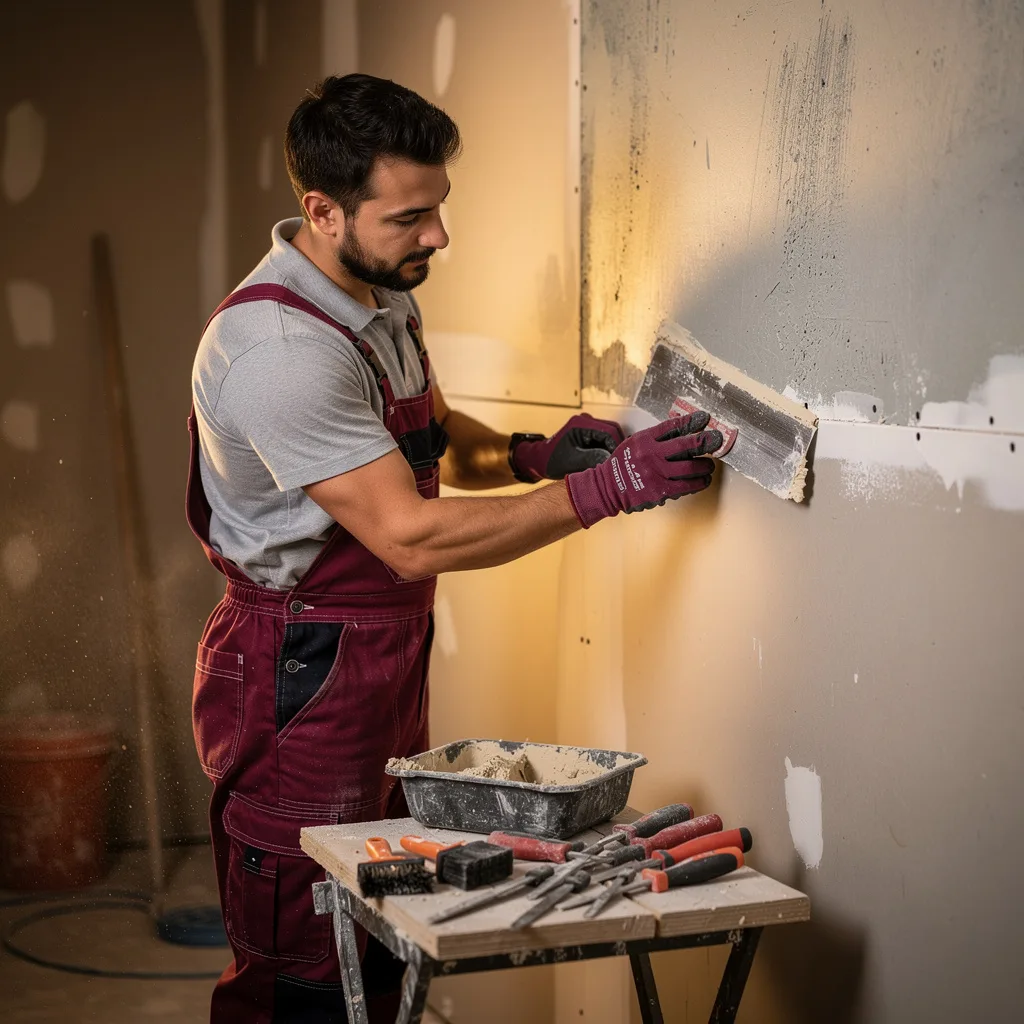
What is Drywall Finishing Techniques?
Drywall Finishing Techniques Training
The Drywall Finishing Techniques certificate program provides a comprehensive, hands-on curriculum designed for aspiring drywall finishers, construction apprentices, and experienced tradespeople seeking to refine their craft. You will master the complete finishing process—from tool selection and safety protocols to advanced Level 4 and Level 5 finishes—ensuring you can produce smooth, durable walls ready for paint or texture. The main practical outcome is the ability to independently plan, execute, and assess a professional-grade drywall finishing project with confidence and efficiency.
This program is structured as a beginner-friendly progression that balances theoretical knowledge with extensive practical application. Starting with tools, materials, and safety, you build core skills in surface preparation, taping, joint compound application, corner bead installation, and sanding, then move into texture finishes, damage repair, and advanced finishing techniques. Each lesson includes troubleshooting common problems and a final project with quality assessment, giving you a complete professional workflow. With the construction industry increasingly demanding higher finish standards and faster turnaround, this training equips you with the precise techniques and problem-solving mindset needed to stand out in today’s market.
What is Drywall Finishing Techniques?
Drywall finishing techniques encompass the methods and skills used to prepare, tape, compound, sand, and texture gypsum board surfaces to create a seamless, paint-ready wall or ceiling. Core concepts include joint reinforcement with paper or mesh tape, the application of multiple coats of joint compound (mud), feathering edges to avoid ridges, and the use of corner beads to protect and define edges. The subject also covers various sanding approaches, from hand sanding to dustless systems, and a range of texture finishes such as knockdown, orange peel, and skip trowel, each requiring specific tool handling and material consistency.
Today, drywall finishing is more relevant than ever as residential and commercial construction demands higher aesthetic standards and faster project completion. Modern building codes and green building practices emphasize airtightness and smooth surfaces for better paint adhesion and energy efficiency, while the rise of open-plan designs and large-format drywall sheets requires finishers to work with precision on expansive, uninterrupted surfaces. Recent shifts toward dust-free sanding technologies and low-VOC compounds also reflect growing health and environmental concerns, making up-to-date knowledge of materials and methods essential for any professional.
Mastering drywall finishing builds a versatile skill stack that includes manual dexterity, material science understanding, problem-solving for common defects like blisters or cracking, and the ability to read and execute project specifications. These competencies are directly applicable in new construction, renovation, commercial fit-outs, and even DIY home improvement contexts. Whether you aim to work as a subcontractor, lead a crew, or simply improve your own property, a deep command of finishing techniques ensures you can deliver consistent, high-quality results that meet industry standards and client expectations.
Common Questions About Drywall Finishing Techniques
Is this drywall finishing course suitable for complete beginners?
Will I receive a certificate after finishing the drywall finishing course?
What is the correct way to embed paper tape in drywall joints?
Why is feathering important when applying joint compound?
What are common mistakes when installing corner bead?
- Wrong bead type: using paper-faced bead on a metal corner or vice versa.
- Misalignment: not centering the bead on the corner edge.
- Insufficient embedding: not pressing the bead into compound, leaving air gaps.
- Visible bulges: not feathering compound over the bead flanges.
How do you choose between dry sanding and wet sanding?
Is it true that more joint compound gives a smoother finish?
What Will This Course Bring You?
- Apply proper safety protocols when selecting and using drywall finishing tools and materials.
- Evaluate surface imperfections and apply appropriate taping techniques to achieve seamless joints.
- Implement multi-coat joint compound application methods to achieve smooth, defect-free surfaces.
- Install corner beads accurately using both paper-faced and metal types to protect external corners.
- Select and execute appropriate sanding techniques to achieve desired surface smoothness without damage.
- Apply various texture finishes such as knockdown or orange peel to match existing surfaces.
- Diagnose and repair common drywall damage including cracks, holes, and popped nails using professional methods.
- Assess the quality of a finished drywall project against industry standards using a detailed checklist.
Curriculum
12 Units1. Tools, Materials, and Safety
1 hour
2. Surface Preparation and Taping
1 hour
3. Applying Joint Compound (Mud)
1 hour
4. Corner Bead Installation
1 hour
5. Sanding Techniques
1 hour
6. Texture Finishes
1 hour
7. Repairing Drywall Damage
1 hour
8. Advanced Finishing (Level 4 and 5)
1 hour
9. Final Surface Preparation and Priming
1 hour
10. Troubleshooting Common Problems
1 hour
11. Project Planning and Professional Workflow
1 hour
12. Final Project and Quality Assessment
1 hour
Exam – Drywall Finishing Techniques
20 Questions • 70% Pass • 30 min
Unlock All Units for Free
Create an account, enroll in the course, and start with the first unit right away.
Exam – Drywall Finishing Techniques
20 Questions • Pass: 70% • 30 min
Course Duration
720
Total Minutes
12
Unit
1
Final Exam
~60
Min / Unit
Drywall Finishing Techniques Certificate Program
Document Your Skill
Those who pass the 20-question, 30-minute exam with 70% receive the Drywall Finishing Techniques Certificate.
Stand Out on Your CV
By adding your certificate to your CV, gain a professional reference in job applications and stand out from the crowd.
Career Advantage
With the verification code, employers can check your certificate instantly — a concrete way to show your growth.
CERTIFICATE FEE
At the end of the course, an online exam consisting of 20 questions with a 30-minute time limit is given. The exam appears automatically after you complete the topics. Anyone who scores at least 70 out of 100 on the certificate exam is awarded the Drywall Finishing Techniques Document (certificate of attendance). You can add the certificate you earn to your CV for job applications in the many sectors listed above, and use it as a reference proving that you took this interactive course.
The Certificate of Achievement you receive with the Drywall Finishing Techniques course program holds value that proves your personal and professional development in the business world. By adding it to your CV, it can serve as an important reference in your job applications. Moreover, compared with certificates from other private training institutions, Catch Wisdom certificates are offered to our participants at a much more affordable price.
The Drywall Finishing Techniques course certificate is a document that proves, with a unique verification code, that you completed the course. Employers can instantly check its authenticity with this code, which helps you show your development concretely in your job applications.
For more information, we recommend visiting the Support page.
Certificate in 7 Languages
Earning success certificates from our courses is now more meaningful and global. With certificates available in Turkish, English, German, French, Spanish, Arabic, and Russian, we fully unlock the potential of students worldwide.
Why Certificate in 7 Languages?
-
01
Global Skill Development
Receiving your certificates in 7 different languages strengthens your communication skills as you engage with more people worldwide. It lets you operate more confidently and capably on the international stage.
-
02
International Job Opportunities
Employers may see your certificates in multiple languages as a sign of your ability to seize global opportunities. You can open more doors to new jobs and projects.
-
03
Cultural Richness
The chance to earn certificates in different languages helps you build closer ties with various cultures and broadens your worldview. It enriches your global perspective and deepens cultural understanding.
-
04
Ability to Participate in International Projects
Multilingual certificates give you an edge to work more effectively on international projects. They boost your chances of leadership and participation in diverse projects in the business world.
-
05
Prove Yourself on the Global Stage
Certificates in multiple languages give you the opportunity to present your skills and knowledge worldwide.
Language diversity opens worldwide opportunities. If you want to prove yourself in the international arena, join our online Drywall Finishing Techniques course program and begin this journey with us.
Frequently Asked Questions (FAQ)
Is this course paid?
How do I join the course?
Can I take the course at my own pace?
How can I get my certificate?
What are the advantages of the certificate?
Boost Your Career
Take a new career step with the Drywall Finishing Techniques course. Add your certificate to your CV, stand out in job applications, and open the door to new opportunities in the industry.
StartStudent Reviews
No reviews yet
Enroll in this course and be the first to leave a review about your experience with Drywall Finishing Techniques.
Start