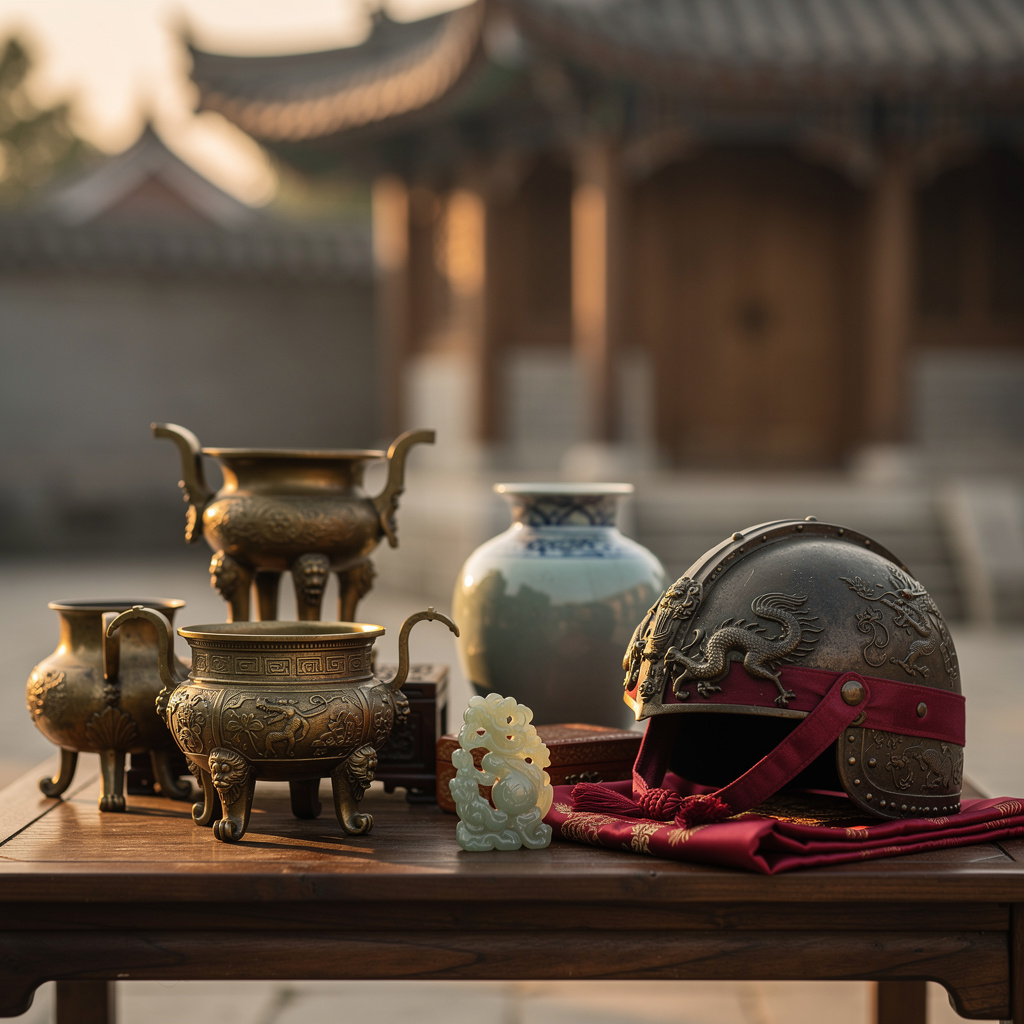
What is East Asian History?
East Asian History Certificate Program
The East Asian History certificate program offers a rigorous chronological and thematic survey of China, Korea, Japan, and their regional interactions, from ancient state formation through contemporary global influence. It is designed for students, educators, museum and heritage professionals, journalists, policy analysts, and internationally focused business professionals who need a deeper grasp of East Asian pasts and presents. Participants engage with geography, source criticism, and periodization before tracing Shang and Zhou China, early Korean and Japanese state formation, Qin-Han and Tang imperial consolidation, Song, Goryeo, Heian, and Kamakura developments, the Mongol Yuan order, Ming, Joseon, and Japanese unification, Qing, Tokugawa, and late Joseon transformations, and the upheavals of imperialism, colonialism, war, revolution, and Cold War development. The main practical outcome is the ability to interpret primary and secondary sources, explain regional change over time, and connect historical patterns to contemporary East Asian societies, economies, and international relations.
The program is structured as a beginner-friendly progression, moving from foundational concepts in geography, sources, and periodization into increasingly complex comparative and thematic material. It balances theory with practice by pairing historiographical debates and conceptual frameworks with map work, document analysis, comparative case studies, and evidence-based argumentation. Across the lessons, learners build four core skill areas: historical geography and periodization, source criticism and evidence evaluation, comparative regional analysis, and clear historical argumentation with contemporary application. This program is worth choosing now because East Asia’s economic weight, security tensions, cultural influence, and deep historical memories shape global affairs, and informed historical literacy is increasingly valuable in education, media, heritage, diplomacy, and international business.
What is East Asian History?
East Asian History is the study of the peoples, polities, economies, religions, and cultural systems of China, Korea, Japan, and neighboring regions across time. Its scope ranges from ancient state formation and classical thought to imperial consolidation, cosmopolitan exchange, Mongol conquest, early modern governance, imperialism, colonialism, revolution, war, and contemporary development. Core concepts include periodization, dynastic and bureaucratic statecraft, Sinification and cultural borrowing, tributary and diplomatic orders, commercial expansion, religion and philosophy, colonialism and nationalism, and the interplay of regional and global forces. The field also examines how historical memory, geography, and transregional connections shape the identities and institutions of East Asian societies.
East Asian History matters today because the region is central to global manufacturing, trade, security, technological competition, and cultural production, and historical legacies inform current diplomatic disputes, domestic politics, and social change. In academia, museums, archives, journalism, public history, and policy analysis, historical knowledge is used to interpret institutions, cultural practices, economic trajectories, and conflict narratives. Recent scholarship has shifted toward transnational, global, environmental, gender, and colonial/postcolonial approaches, while digital archives and new source collections make comparative and source-based research more accessible. These developments make historical literacy about East Asia relevant beyond the classroom, especially for anyone navigating cross-cultural professional or civic contexts.
Mastering East Asian History builds a skill stack that includes chronological reasoning, source criticism, comparative analysis, contextual interpretation, and evidence-based argumentation about complex regional systems. It also develops sensitivity to cultural difference, institutional continuity and change, and the historical roots of contemporary geopolitical and economic patterns. These skills are valuable in education, museum and heritage work, archival research, journalism, diplomacy, international business, tourism, cultural exchange, and further academic study. The subject ultimately supports informed judgment about East Asia’s present by grounding it in a nuanced understanding of its past.
What Will This Course Bring You?
- Evaluate how East Asia's geography, primary sources, and competing periodization schemes shape historical narratives about the region.
- Analyze the political and ritual innovations of Shang and Zhou China and their influence on classical Confucian, Daoist, and Legalist thought.
- Compare state formation and Sinification in early Korea and Japan by evaluating how rulers adapted Chinese institutions to local political and cultural contexts.
- Compare how Qin-Han and Tang imperial consolidation and medieval Song, Goryeo, and Heian-Kamakura developments reshaped governance, trade, and cultural exchange in East Asia.
- Evaluate how Mongol conquest and Yuan rule reorganized governance, trade, and ethnic hierarchies across China and neighboring East Asian states.
- Evaluate how Ming-Qing China, Joseon Korea, and Tokugawa Japan used Neo-Confucian institutions and commercial expansion to manage domestic order and regional relations.
- Analyze how the Opium Wars, Meiji Restoration, and Qing collapse forced East Asian states to implement legal, military, and industrial reforms.
- Evaluate how Japanese colonialism, Korean nationalism, Chinese revolutionary movements, and Cold War alignments shaped contemporary East Asian states and regional identities.
Curriculum
12 Units1. Geography, Sources, and Periodization in East Asian History
1 hour
2. Ancient China: Shang, Zhou, and the Classical Age
1 hour
3. Early Korea and Japan: State Formation and Sinification
1 hour
4. Imperial China: Qin-Han Unification to Tang Cosmopolitanism
1 hour
5. Medieval East Asia: Song China, Goryeo Korea, and Heian-Kamakura Japan
1 hour
6. Mongol Empire and Yuan China: Conquest and New Orders
1 hour
7. Ming China, Joseon Korea, and Japan's Unification
1 hour
8. Early Modern East Asia: Qing China, Tokugawa Japan, and Late Joseon
1 hour
9. Imperialism and Reform: Opium Wars, Meiji Restoration, and Qing Collapse
1 hour
10. Colonialism and Nationalism: Japanese Empire, Korean Colonial Rule, and Republican China
1 hour
11. War and Revolution: WWII, Chinese Civil War, and Korean War
1 hour
12. Contemporary East Asia: Cold War Development to Global Influence
1 hour
Exam – East Asian History
20 Questions • 70% Pass • 30 min
Unlock All Units for Free
Create an account, enroll in the course, and start with the first unit right away.
Exam – East Asian History
20 Questions • Pass: 70% • 30 min
Course Duration
720
Total Minutes
12
Unit
1
Final Exam
~60
Min / Unit
East Asian History Certificate Program
Document Your Skill
Those who pass the 20-question, 30-minute exam with 70% receive the East Asian History Certificate.
Stand Out on Your CV
By adding your certificate to your CV, gain a professional reference in job applications and stand out from the crowd.
Career Advantage
With the verification code, employers can check your certificate instantly — a concrete way to show your growth.
CERTIFICATE FEE
At the end of the course, an online exam consisting of 20 questions with a 30-minute time limit is given. The exam appears automatically after you complete the topics. Anyone who scores at least 70 out of 100 on the certificate exam is awarded the East Asian History Document (certificate of attendance). You can add the certificate you earn to your CV for job applications in the many sectors listed above, and use it as a reference proving that you took this interactive course.
The Certificate of Achievement you receive with the East Asian History course program holds value that proves your personal and professional development in the business world. By adding it to your CV, it can serve as an important reference in your job applications. Moreover, compared with certificates from other private training institutions, Catch Wisdom certificates are offered to our participants at a much more affordable price.
The East Asian History course certificate is a document that proves, with a unique verification code, that you completed the course. Employers can instantly check its authenticity with this code, which helps you show your development concretely in your job applications.
For more information, we recommend visiting the Support page.
Certificate in 7 Languages
Earning success certificates from our courses is now more meaningful and global. With certificates available in Turkish, English, German, French, Spanish, Arabic, and Russian, we fully unlock the potential of students worldwide.
Why Certificate in 7 Languages?
-
01
Global Skill Development
Receiving your certificates in 7 different languages strengthens your communication skills as you engage with more people worldwide. It lets you operate more confidently and capably on the international stage.
-
02
International Job Opportunities
Employers may see your certificates in multiple languages as a sign of your ability to seize global opportunities. You can open more doors to new jobs and projects.
-
03
Cultural Richness
The chance to earn certificates in different languages helps you build closer ties with various cultures and broadens your worldview. It enriches your global perspective and deepens cultural understanding.
-
04
Ability to Participate in International Projects
Multilingual certificates give you an edge to work more effectively on international projects. They boost your chances of leadership and participation in diverse projects in the business world.
-
05
Prove Yourself on the Global Stage
Certificates in multiple languages give you the opportunity to present your skills and knowledge worldwide.
Language diversity opens worldwide opportunities. If you want to prove yourself in the international arena, join our online East Asian History course program and begin this journey with us.
Frequently Asked Questions (FAQ)
Is this course paid?
How do I join the course?
Can I take the course at my own pace?
How can I get my certificate?
What are the advantages of the certificate?
Boost Your Career
Take a new career step with the East Asian History course. Add your certificate to your CV, stand out in job applications, and open the door to new opportunities in the industry.
StartStudent Reviews
No reviews yet
Enroll in this course and be the first to leave a review about your experience with East Asian History.
Start