What is Elderly and Patient Care?
Elderly and Patient Care Training
This Elderly and Patient Care certificate program equips you with the essential knowledge and hands-on skills to provide compassionate, high-quality support to aging adults and individuals with health needs. Designed for aspiring caregivers, family members, and healthcare aides, the course covers everything from understanding the aging process and common health conditions to assisting with daily living activities and managing medications safely. You will learn to communicate effectively with elderly individuals and patients, support mobility while preventing falls, and address nutritional and hydration requirements. The main practical outcome is the ability to deliver person-centered care that promotes dignity, safety, and well-being in home care settings, assisted living facilities, or community health environments.
The program follows a structured, beginner-friendly progression that balances foundational theory with real-world application. You will build competence across four core skill areas: personal care and safety (including ADLs, mobility support, and fall prevention), clinical awareness (medication management, chronic condition monitoring, and pain relief), cognitive and emotional support (dementia care, effective communication, and end-of-life care), and professional resilience (legal and ethical considerations, caregiver well-being). With the global population aging rapidly and a growing preference for home-based and patient-centered care, there has never been a more critical time to gain these credentials. This training responds directly to that demand, preparing you to step confidently into a role where empathy and expertise make a tangible difference every day.
What is Elderly and Patient Care?
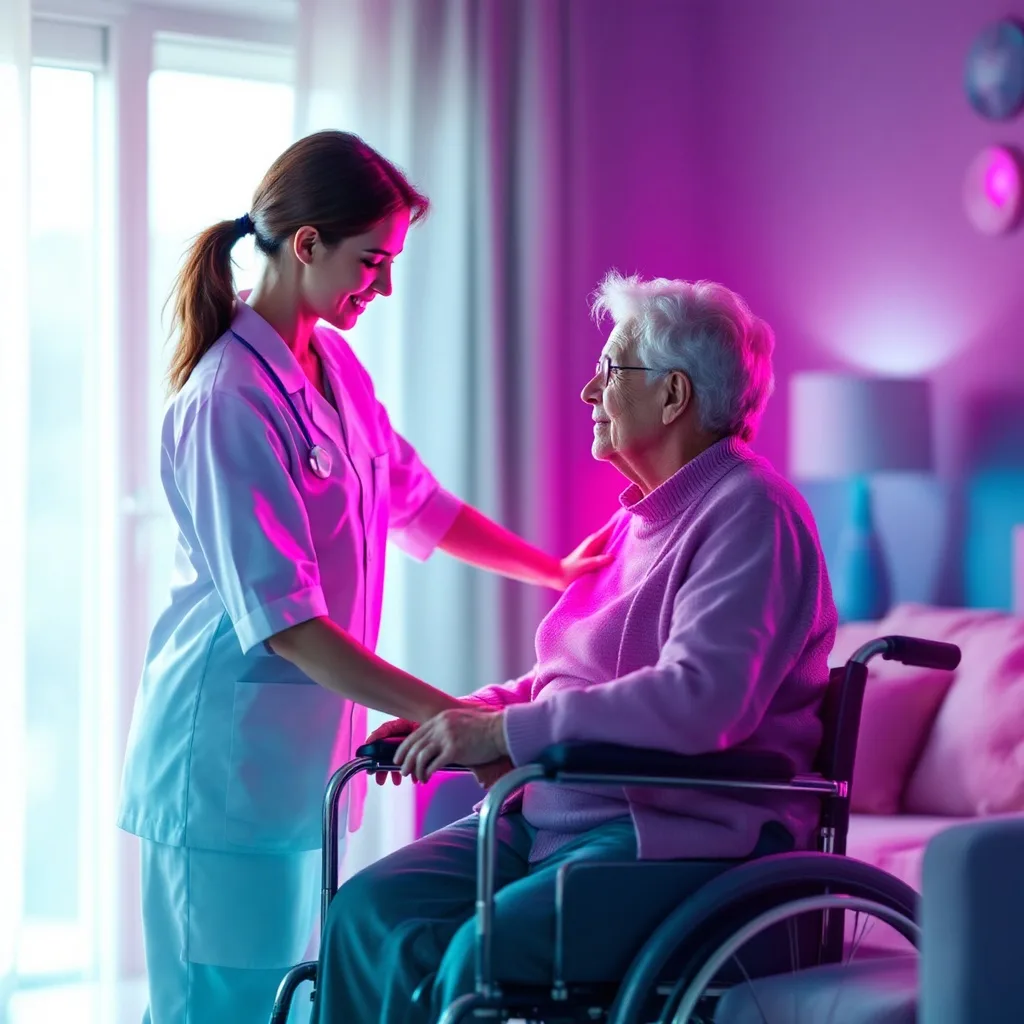
Elderly and patient care is a multidisciplinary field focused on supporting the physical, emotional, and social well-being of older adults and individuals with health conditions. It encompasses a wide spectrum of services, from assisting with basic activities of daily living—such as bathing, dressing, and meal preparation—to managing complex chronic illnesses, providing medication reminders, and offering companionship. At its core, the discipline is built on principles of dignity, respect, and person-centered practice, recognizing that each individual has unique needs, preferences, and life histories. The scope extends across home care, residential facilities, hospitals, and palliative settings, integrating elements of nursing, gerontology, nutrition, and psychology to maintain quality of life.
In today’s world, elderly and patient care has become more relevant than ever. With life expectancy rising and the baby boomer generation entering advanced age, the demand for skilled caregivers is surging globally. At the same time, healthcare systems are shifting toward community-based and home care models to reduce hospital burdens and honor patients’ wishes to age in place. This has elevated the role of trained caregivers, who now serve as the frontline of long-term care, bridging gaps between clinical treatment and everyday living. The field also increasingly emphasizes specialized knowledge in dementia support, fall prevention, and ethical decision-making, reflecting the complex realities of an aging society.
Mastering the subject of elderly and patient care builds a versatile skill stack that combines clinical observation, empathetic communication, safety management, and ethical reasoning. Those who develop expertise in this area are prepared for a range of professional contexts, from working as certified nursing assistants and home health aides to coordinating care in assisted living communities or supporting family members as informed, confident caregivers. The knowledge gained fosters not only career readiness but also a deeper capacity to advocate for vulnerable populations, navigate healthcare systems, and contribute meaningfully to the well-being of individuals during some of their most challenging life stages.
Common Questions About Elderly and Patient Care
Is the Elderly and Patient Care course suitable for beginners with no experience?
What certificate will I earn after completing this elderly care training?
How does the biopsychosocial model help in understanding elderly patients?
- Biological: physical health, genetics, and chronic conditions.
- Psychological: mental state, emotions, and cognitive function.
- Social: relationships, support systems, and environment.
What are the most common chronic conditions in elderly care?
How can I use person-centred communication with dementia patients?
- Respect: address the person by their preferred name.
- Simplicity: use short sentences and one idea at a time.
- Validation: acknowledge their feelings even if reality is distorted.
What is the correct way to assist with ADLs without causing dependence?
Is dementia just a normal part of aging and not a disease?
What Will This Course Bring You?
- Analyze the physiological and psychosocial changes of aging to tailor care approaches for elderly individuals.
- Evaluate common geriatric health conditions such as dementia, arthritis, and cardiovascular disease to inform patient-centered care plans.
- Apply empathetic communication techniques to overcome barriers like hearing loss and cognitive decline when interacting with elderly patients.
- Design individualized strategies for assisting with activities of daily living that preserve patient dignity and promote functional independence.
- Implement evidence-based fall risk assessments and environmental modifications to enhance mobility safety in elderly care settings.
- Develop nutrition and hydration plans that address age-related changes, dysphagia, and chronic conditions in elderly patients.
- Evaluate medication regimens for polypharmacy risks and educate elderly patients on safe administration practices to prevent adverse events.
- Apply person-centered communication strategies to support individuals with dementia and reduce behavioral and psychological symptoms.
Curriculum
12 Units1. Understanding Aging and the Elderly Population
1 hour
2. Common Health Conditions in Elderly and Patient Care
1 hour
3. Effective Communication with Elderly and Patients
1 hour
4. Assisting with Activities of Daily Living (ADLs)
1 hour
5. Mobility Support and Fall Prevention
1 hour
6. Nutrition and Hydration for Elderly and Patients
1 hour
7. Medication Management and Safe Administration
1 hour
8. Managing Chronic Conditions and Pain
1 hour
9. Cognitive Health and Dementia Care
1 hour
10. End-of-Life and Palliative Care
1 hour
11. Legal and Ethical Considerations in Elderly and Patient Care
1 hour
12. Caregiver Well-Being and Professional Development
1 hour
Exam – Elderly and Patient Care
20 Questions • 70% Pass • 30 min
Unlock All Units for Free
Create an account, enroll in the course, and start with the first unit right away.
Exam – Elderly and Patient Care
20 Questions • Pass: 70% • 30 min
Course Duration
720
Total Minutes
12
Unit
1
Final Exam
~60
Min / Unit
Elderly and Patient Care Certificate Program
Document Your Skill
Those who pass the 20-question, 30-minute exam with 70% receive the Elderly and Patient Care Certificate.
Stand Out on Your CV
By adding your certificate to your CV, gain a professional reference in job applications and stand out from the crowd.
Career Advantage
With the verification code, employers can check your certificate instantly — a concrete way to show your growth.
CERTIFICATE FEE
At the end of the course, an online exam consisting of 20 questions with a 30-minute time limit is given. The exam appears automatically after you complete the topics. Anyone who scores at least 70 out of 100 on the certificate exam is awarded the Elderly and Patient Care Document (certificate of attendance). You can add the certificate you earn to your CV for job applications in the many sectors listed above, and use it as a reference proving that you took this interactive course.
The Certificate of Achievement you receive with the Elderly and Patient Care course program holds value that proves your personal and professional development in the business world. By adding it to your CV, it can serve as an important reference in your job applications. Moreover, compared with certificates from other private training institutions, Catch Wisdom certificates are offered to our participants at a much more affordable price.
The Elderly and Patient Care course certificate is a document that proves, with a unique verification code, that you completed the course. Employers can instantly check its authenticity with this code, which helps you show your development concretely in your job applications.
For more information, we recommend visiting the Support page.
Certificate in 7 Languages
Earning success certificates from our courses is now more meaningful and global. With certificates available in Turkish, English, German, French, Spanish, Arabic, and Russian, we fully unlock the potential of students worldwide.
Why Certificate in 7 Languages?
-
01
Global Skill Development
Receiving your certificates in 7 different languages strengthens your communication skills as you engage with more people worldwide. It lets you operate more confidently and capably on the international stage.
-
02
International Job Opportunities
Employers may see your certificates in multiple languages as a sign of your ability to seize global opportunities. You can open more doors to new jobs and projects.
-
03
Cultural Richness
The chance to earn certificates in different languages helps you build closer ties with various cultures and broadens your worldview. It enriches your global perspective and deepens cultural understanding.
-
04
Ability to Participate in International Projects
Multilingual certificates give you an edge to work more effectively on international projects. They boost your chances of leadership and participation in diverse projects in the business world.
-
05
Prove Yourself on the Global Stage
Certificates in multiple languages give you the opportunity to present your skills and knowledge worldwide.
Language diversity opens worldwide opportunities. If you want to prove yourself in the international arena, join our online Elderly and Patient Care course program and begin this journey with us.
Frequently Asked Questions (FAQ)
Is this course paid?
How do I join the course?
Can I take the course at my own pace?
How can I get my certificate?
What are the advantages of the certificate?
Boost Your Career
Take a new career step with the Elderly and Patient Care course. Add your certificate to your CV, stand out in job applications, and open the door to new opportunities in the industry.
StartStudent Reviews
No reviews yet
Enroll in this course and be the first to leave a review about your experience with Elderly and Patient Care.
Start