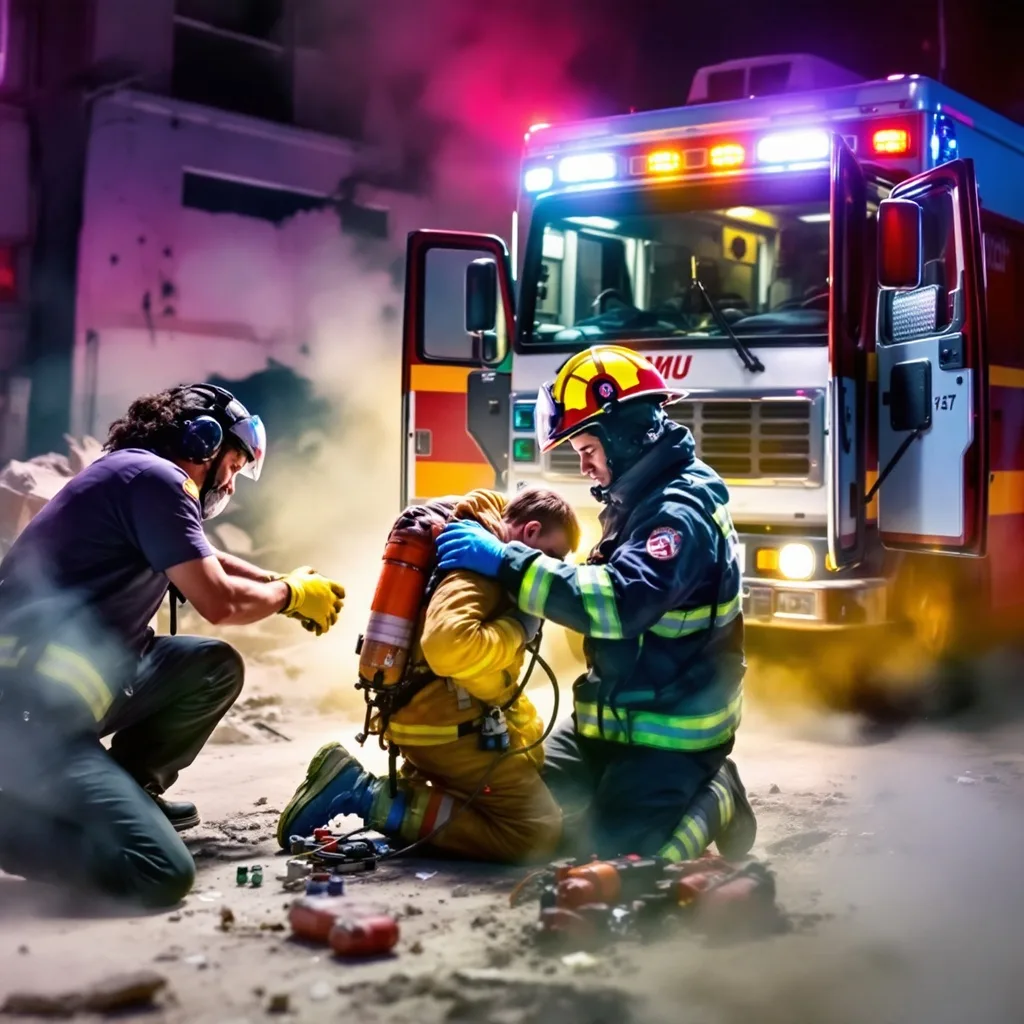
What is Emergency Rescue Techniques?
Emergency Rescue Techniques Training
The Emergency Rescue Techniques certificate program delivers a complete education in life-saving interventions, from basic life support and airway management to complex vehicle extrication, water rescue, and mass casualty triage. It is built for aspiring firefighters, EMTs, search and rescue volunteers, industrial safety officers, and anyone who may be first on the scene of an accident or disaster. By the end of the program, you will possess the practical ability to assess dynamic hazards, stabilize patients, and execute coordinated rescues in high-stakes environments where every second counts.
This training follows a beginner-friendly progression that first grounds you in scene safety and patient assessment, then systematically develops four core skill clusters: medical resuscitation, technical rescue operations, disaster response, and team coordination. Each module weaves together essential theory with hands-on simulations, ensuring you can confidently apply techniques like spinal motion restriction, rope rescue, and confined space entry. With natural disasters and industrial emergencies on the rise, choosing this program now means gaining a certification that proves your readiness to lead rescue efforts and protect lives when communities need it most.
What is Emergency Rescue Techniques?
Emergency rescue techniques encompass the structured methods, protocols, and equipment-based skills used to locate, stabilize, extricate, and deliver immediate medical care to individuals in hazardous or inaccessible settings. The field covers a broad continuum, from medical first response—such as cardiopulmonary resuscitation and airway management—to technical rescue disciplines like swiftwater operations, high-angle rope work, and confined space entry. Its core concepts include dynamic scene assessment, triage prioritization, safe patient handling, and the integration of communication systems that allow multiple responders to function as a single, efficient unit under extreme pressure.
In an era marked by climate-driven disasters, urban density risks, and complex industrial operations, the importance of these techniques has never been greater. They are applied daily by fire departments, emergency medical services, military units, and specialized search and rescue teams, while also becoming essential knowledge for construction managers, offshore workers, and event safety coordinators. Recent shifts in the field emphasize the use of digital tools for victim tracking, drone-based scene surveys, and a holistic approach that includes psychological first aid, reflecting a modern understanding that rescue extends beyond physical extraction to the full spectrum of human survival.
Mastering this subject builds a robust skill stack that fuses medical knowledge, mechanical problem-solving, physical capability, and crisis leadership. Those who internalize emergency rescue techniques develop the ability to make rapid, sound decisions, adapt to unpredictable environments, and coordinate multi-agency responses with clarity. This expertise not only advances careers in emergency services but also empowers individuals to act decisively in everyday emergencies, transforming ordinary citizens into prepared, capable first responders who can save lives before professional help arrives.
Common Questions About Emergency Rescue Techniques
Does the Emergency Rescue Techniques certificate help in firefighter hiring?
Can someone with no medical background take this rescue course?
What is the SCENE mnemonic used for in scene assessment?
How does the START triage algorithm sort patients in 30 seconds?
- Respirations: If absent after opening airway, tag Black (deceased). If >30/min, tag Red (immediate). If 2 seconds, tag Red. If present, move to mental status.
- Mental Status: If patient can follow simple commands, tag Green (minor). If not, tag Yellow (delayed).
Why is spinal motion restriction preferred over full immobilization?
What are the six phases of vehicle extrication in rescue?
- Phase 1 – Arrival and Scene Assessment: Evaluate hazards, stabilize the vehicle, and size up the situation.
- Phase 2 – Stabilization: Secure the vehicle to prevent movement using cribbing, struts, or chocks.
- Phase 3 – Access: Create an entry point to reach the patient, often by removing windows or doors.
- Phase 4 – Space Creation: Use tools to displace or cut components to free the patient.
- Phase 5 – Patient Care and Removal: Provide medical care while carefully extricating the patient.
- Phase 6 – Transfer and Scene Termination: Hand off the patient to EMS and secure the scene.
Is it a myth that drowning victims always splash and call for help?
What Will This Course Bring You?
- Apply scene assessment and hazard control procedures to identify and mitigate risks before initiating rescue operations.
- Perform high-quality cardiopulmonary resuscitation (CPR) and utilize an automated external defibrillator (AED) on adult, child, and infant manikins.
- Execute basic and advanced airway management techniques, including oropharyngeal and nasopharyngeal adjunct insertion and bag-valve-mask ventilation.
- Conduct a systematic primary and secondary patient assessment and assign triage categories using the START system in a mass casualty simulation.
- Immobilize a patient's spine using a long backboard and cervical collar while maintaining manual in-line stabilization during extrication.
- Demonstrate safe vehicle extrication sequences using hydraulic spreaders, cutters, and rams to access and remove entrapped patients.
- Perform a reach, throw, row, and go water rescue progression and initiate resuscitation of a drowning victim in a controlled environment.
- Construct and operate a mechanical advantage rope system to raise and lower a stokes basket during a simulated high-angle rescue.
Curriculum
12 Units1. Foundations of Emergency Rescue
1 h
2. Scene Assessment and Hazard Control
1 h
3. Basic Life Support and CPR
1 h
4. Airway Management and Breathing Emergencies
1 h
5. Patient Assessment and Triage Systems
1 h
6. Spinal Motion Restriction and Immobilization
1 h
7. Vehicle Extrication and Rescue
1 h
8. Water Rescue and Drowning Emergencies
1 h
9. Rope Rescue and High-Angle Operations
1 h
10. Confined Space Rescue
1 h
11. Mass Casualty and Disaster Response
1 h
12. Special Rescue Environments and Team Coordination
1 h
Exam – Emergency Rescue Techniques
20 Questions • 70% Pass • 30 min
Unlock All Units for Free
Create an account, enroll in the course, and start with the first unit right away.
Exam – Emergency Rescue Techniques
20 Questions • Pass: 70% • 30 min
Course Duration
720
Total Minutes
12
Unit
1
Final Exam
~60
Min / Unit
Emergency Rescue Techniques Certificate Program
Document Your Skill
Those who pass the 20-question, 30-minute exam with 70% receive the Emergency Rescue Techniques Certificate.
Stand Out on Your CV
By adding your certificate to your CV, gain a professional reference in job applications and stand out from the crowd.
Career Advantage
Catch Wisdom certificates are recognized by HR departments and increase career opportunities.
CERTIFICATE FEE
At the end of the course, an online exam consisting of 20 questions with a 30-minute time limit is given. The exam appears automatically after you complete the topics. Anyone who scores at least 70 out of 100 on the certificate exam is awarded the Emergency Rescue Techniques Document (certificate of attendance). You can add the certificate you earn to your CV for job applications in the many sectors listed above, and use it as a reference proving that you took this interactive course.
The Certificate of Achievement you receive with the Emergency Rescue Techniques course program holds value that proves your personal and professional development in the business world. By adding it to your CV, it can serve as an important reference in your job applications. Moreover, compared with certificates from other private training institutions, Catch Wisdom certificates are offered to our participants at a much more affordable price.
Because HR departments recognize Catch Wisdom as a reputable institution in this field, they value these certificates and may evaluate your job applications favorably. For this reason, a Emergency Rescue Techniques course certificate from Catch Wisdom can make your applications more attractive and place you in an advantageous position in the business world.
For more information, we recommend visiting the Support page.
Certificate in 7 Languages
Earning success certificates from our courses is now more meaningful and global. With certificates available in Turkish, English, German, French, Spanish, Arabic, and Russian, we fully unlock the potential of students worldwide.
Why Certificate in 7 Languages?
-
01
Global Skill Development
Receiving your certificates in 7 different languages strengthens your communication skills as you engage with more people worldwide. It lets you operate more confidently and capably on the international stage.
-
02
International Job Opportunities
Employers may see your certificates in multiple languages as a sign of your ability to seize global opportunities. You can open more doors to new jobs and projects.
-
03
Cultural Richness
The chance to earn certificates in different languages helps you build closer ties with various cultures and broadens your worldview. It enriches your global perspective and deepens cultural understanding.
-
04
Ability to Participate in International Projects
Multilingual certificates give you an edge to work more effectively on international projects. They boost your chances of leadership and participation in diverse projects in the business world.
-
05
Prove Yourself on the Global Stage
Certificates in multiple languages let you showcase your skills and knowledge worldwide. You can become an internationally recognized professional.
Language diversity opens worldwide opportunities. If you want to prove yourself in the international arena, join our online Emergency Rescue Techniques course program and begin this journey with us.
Frequently Asked Questions (FAQ)
Is this course paid?
How do I join the course?
Can I take the course at my own pace?
How can I get my certificate?
What are the advantages of the Certified Certificate?
Boost Your Career
Take a new career step with the Emergency Rescue Techniques course. Add your certificate to your CV, stand out in job applications, and open the door to new opportunities in the industry.
StartStudent Reviews
No reviews yet
Enroll in this course and be the first to leave a review about your experience with Emergency Rescue Techniques.
Start