What is Feng Shui: Tradition and Interior Principles?
Feng Shui: Tradition and Interior Principles Training
The Feng Shui: Tradition and Interior Principles certificate program teaches you how to harmonize living and working environments by applying ancient Chinese principles of energy flow, balance, and spatial design. This course is designed for interior designers, architects, wellness coaches, homeowners, and anyone seeking to create more supportive, peaceful, and prosperous spaces. By the end of the program, you will be able to assess any room’s energy using the Bagua map, select colors and materials that align with the Five Elements, and arrange furniture to optimize chi flow—giving you a practical, actionable skill set for transforming any interior.
The program is structured as a beginner-friendly progression, starting with the foundations of Feng Shui and moving through core concepts such as yin and yang, the Five Elements, and decluttering techniques. It then builds four key skill areas: spatial analysis (using the Bagua map), elemental balancing, furniture placement, and advanced applications like Feng Shui for specific rooms. Each lesson combines theory with real-world examples, and the final module guides you in creating a personalized Feng Shui plan. With growing interest in holistic wellness and sustainable design, this training equips you to meet modern demands for spaces that nurture both well-being and productivity.
What is Feng Shui: Tradition and Interior Principles?
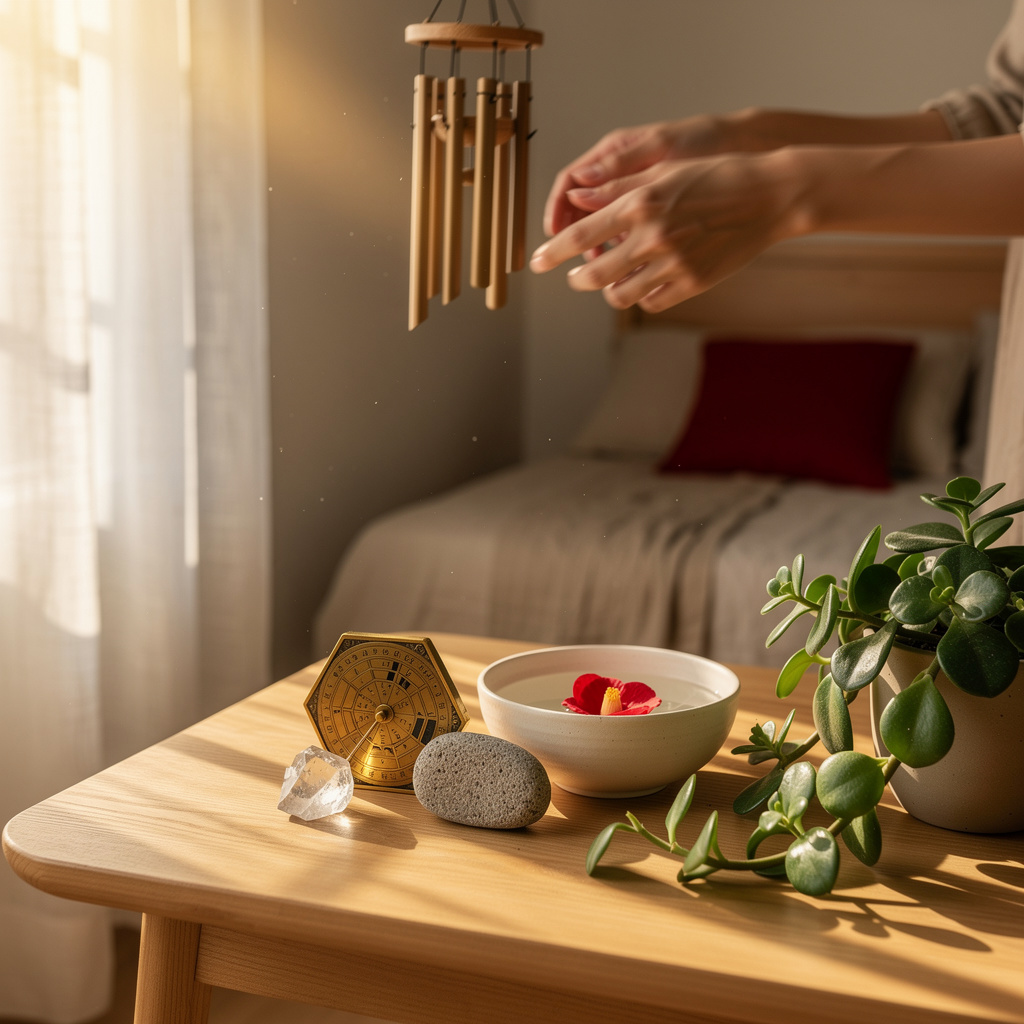
Feng Shui, which translates to “wind and water,” is an ancient Chinese practice that studies how the flow of energy—called chi—interacts with the built environment. Its core concepts include the Bagua map, an energy grid used to map a space’s connection to life areas such as career, relationships, and health; the Five Elements (wood, fire, earth, metal, water), which represent different qualities and cycles of energy; and the principle of yin and yang, the dynamic balance of opposites. Space energy refers to the subtle yet measurable effects that layout, clutter, color, and material have on the occupants’ mood, focus, and vitality.
Today, Feng Shui is increasingly relevant as people seek to reduce stress and improve well-being in their homes and workplaces. It is used by interior designers to create calming bedrooms, by corporate offices to enhance collaboration and productivity, and by wellness practitioners to design healing environments. Recent shifts include the integration of Feng Shui with biophilic design, sustainable architecture, and neuroscience research on how spatial factors affect cognition and emotion. This cross-disciplinary relevance makes Feng Shui a valuable tool for anyone involved in creating or improving human-centered spaces.
Mastering Feng Shui and space energy builds a skill stack that combines intuitive observation with practical design techniques. You learn to read a room’s energy flow, apply elemental remedies, declutter with intention, and select furnishings that support specific outcomes—such as better sleep, sharper focus, or stronger relationships. These skills benefit interior designers seeking a competitive edge, real estate professionals staging homes, wellness coaches advising clients, and individuals wanting to create a sanctuary at home. The subject also provides a framework for understanding how our surroundings shape our daily experience, making it relevant to anyone interested in personal development or environmental psychology.
Common Questions About Feng Shui: Tradition and Interior Principles
Is the Feng Shui and Space Energy course suitable for beginners?
What is the duration and format of the Feng Shui course?
How do you measure chi flow in a room?
What is the command position in furniture layout?
Which Bagua method works best for my home?
How do the five elements nourish each other?
- Wood feeds Fire
- Fire creates Earth (ash)
- Earth bears Metal
- Metal carries Water
- Water nourishes Wood
Is Feng Shui just about decoration and superstition?
What Will This Course Bring You?
- Analyze the foundational principles of Feng Shui to understand how they influence spatial energy dynamics.
- Apply the Bagua Map to evaluate the energy distribution in a room and identify areas for improvement.
- Design a balanced interior using the Five Elements theory to enhance harmony and support specific life areas.
- Implement decluttering and space clearing techniques to optimize the flow of Chi in a living environment.
- Evaluate the yin and yang balance of a room's color and material selections to create a harmonious atmosphere.
- Create a personalized Feng Shui plan that integrates modern design aesthetics with traditional principles.
- Assess furniture placement and room layout to improve energy flow in specific rooms such as the bedroom or office.
Curriculum
12 Units1. Foundations of Feng Shui
1 hour
2. Understanding Chi Flow
1 hour
3. The Bagua Map
1 hour
4. The Five Elements in Practice
1 hour
5. Yin and Yang Balance
1 hour
6. Decluttering and Space Clearing
1 hour
7. Furniture Placement and Room Layout
1 hour
8. Color and Material Selection
1 hour
9. Feng Shui for Specific Rooms
1 hour
10. Advanced Feng Shui Techniques
1 hour
11. Integrating Feng Shui with Modern Design
1 hour
12. Creating a Personal Feng Shui Plan
1 hour
Exam – Feng Shui and Space Energy
20 Questions • 70% Pass • 30 min
Unlock All Units for Free
Create an account, enroll in the course, and start with the first unit right away.
Exam – Feng Shui and Space Energy
20 Questions • Pass: 70% • 30 min
Course Duration
720
Total Minutes
12
Unit
1
Final Exam
~60
Min / Unit
Feng Shui: Tradition and Interior Principles Certificate Program
Document Your Skill
Those who pass the 20-question, 30-minute exam with 70% receive the Feng Shui: Tradition and Interior Principles Certificate.
Stand Out on Your CV
By adding your certificate to your CV, gain a professional reference in job applications and stand out from the crowd.
Career Advantage
Catch Wisdom certificates are recognized by HR departments and increase career opportunities.
CERTIFICATE FEE
At the end of the course, an online exam consisting of 20 questions with a 30-minute time limit is given. The exam appears automatically after you complete the topics. Anyone who scores at least 70 out of 100 on the certificate exam is awarded the Feng Shui: Tradition and Interior Principles Document (certificate of attendance). You can add the certificate you earn to your CV for job applications in the many sectors listed above, and use it as a reference proving that you took this interactive course.
The Certificate of Achievement you receive with the Feng Shui: Tradition and Interior Principles course program holds value that proves your personal and professional development in the business world. By adding it to your CV, it can serve as an important reference in your job applications. Moreover, compared with certificates from other private training institutions, Catch Wisdom certificates are offered to our participants at a much more affordable price.
Because HR departments recognize Catch Wisdom as a reputable institution in this field, they value these certificates and may evaluate your job applications favorably. For this reason, a Feng Shui: Tradition and Interior Principles course certificate from Catch Wisdom can make your applications more attractive and place you in an advantageous position in the business world.
For more information, we recommend visiting the Support page.
Certificate in 7 Languages
Earning success certificates from our courses is now more meaningful and global. With certificates available in Turkish, English, German, French, Spanish, Arabic, and Russian, we fully unlock the potential of students worldwide.
Why Certificate in 7 Languages?
-
01
Global Skill Development
Receiving your certificates in 7 different languages strengthens your communication skills as you engage with more people worldwide. It lets you operate more confidently and capably on the international stage.
-
02
International Job Opportunities
Employers may see your certificates in multiple languages as a sign of your ability to seize global opportunities. You can open more doors to new jobs and projects.
-
03
Cultural Richness
The chance to earn certificates in different languages helps you build closer ties with various cultures and broadens your worldview. It enriches your global perspective and deepens cultural understanding.
-
04
Ability to Participate in International Projects
Multilingual certificates give you an edge to work more effectively on international projects. They boost your chances of leadership and participation in diverse projects in the business world.
-
05
Prove Yourself on the Global Stage
Certificates in multiple languages let you showcase your skills and knowledge worldwide. You can become an internationally recognized professional.
Language diversity opens worldwide opportunities. If you want to prove yourself in the international arena, join our online Feng Shui: Tradition and Interior Principles course program and begin this journey with us.
Frequently Asked Questions (FAQ)
Is this course paid?
How do I join the course?
Can I take the course at my own pace?
How can I get my certificate?
What are the advantages of the Certified Certificate?
Boost Your Career
Take a new career step with the Feng Shui: Tradition and Interior Principles course. Add your certificate to your CV, stand out in job applications, and open the door to new opportunities in the industry.
StartStudent Reviews
No reviews yet
Enroll in this course and be the first to leave a review about your experience with Feng Shui: Tradition and Interior Principles.
Start