What is Fermentation for Food Business?
Fermentation for Food Business Training
The Fermentation for Food Business certificate program provides a comprehensive foundation in the science and practice of fermentation tailored for entrepreneurs and food professionals. This course teaches the biological principles behind lactic acid, alcoholic, acetic acid, and mold-based fermentations, while guiding learners through the practical steps of setting up a fermentation workspace and scaling from kitchen to commercial production. The primary outcome is the ability to design, produce, and market safe, high-quality fermented foods for a viable business.
The program is structured for beginners, progressing from microbial foundations to advanced topics like quality control, food safety, and business planning. It balances theoretical knowledge with hands-on application across five core skill areas: fermentation science, production techniques, safety protocols, business strategy, and marketing. With the growing consumer demand for probiotic-rich and artisanal foods, this training equips you to capitalize on current market trends while mastering the craft of fermentation.
What is Fermentation for Food Business?
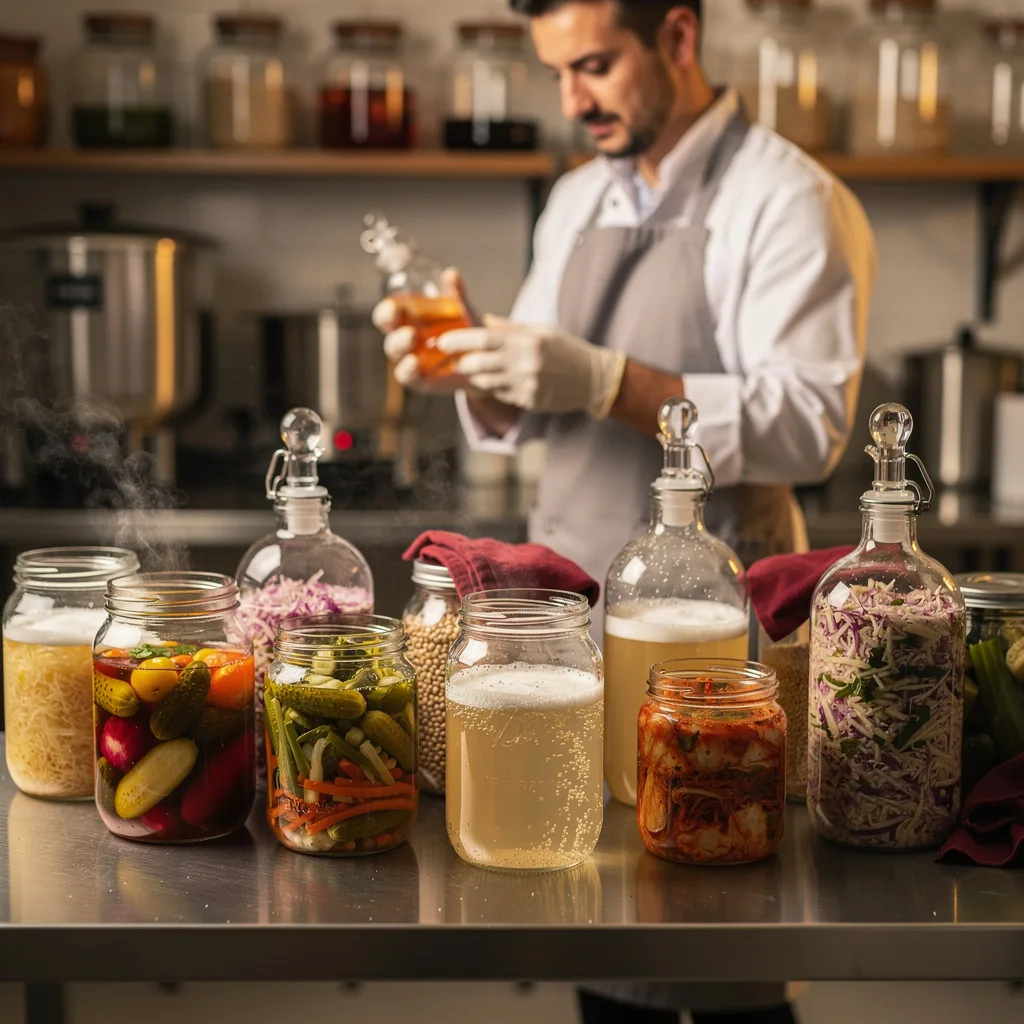
Fermentation for food business is the applied science and art of using microorganisms to transform raw ingredients into value-added products such as sauerkraut, yogurt, beer, vinegar, tempeh, and kombucha. It encompasses the study of microbial metabolism, enzymatic reactions, and environmental controls that drive lactic acid, alcoholic, acetic acid, and mold-based fermentations. Core concepts include understanding starter cultures, pH management, anaerobic conditions, and the role of salt, sugar, and temperature in directing fermentation outcomes.
Today, fermentation is experiencing a renaissance driven by consumer interest in gut health, natural preservation, and artisanal food production. Small-scale manufacturers and large producers alike are leveraging traditional techniques alongside modern biotechnology to create innovative products. The field intersects with food science, microbiology, and sustainable agriculture, offering solutions for reducing food waste and extending shelf life without artificial additives. Fermentation is also central to the growing functional foods and beverages market.
Mastering fermentation builds a versatile skill stack combining microbiology, food chemistry, sensory evaluation, and process engineering. Professionals in this domain can apply their knowledge to product development, quality assurance, food safety consulting, or launching their own fermented food brand. The subject is equally valuable for chefs seeking to deepen their craft, entrepreneurs exploring niche markets, and food scientists aiming to innovate in preservation and flavor development.
Common Questions About Fermentation for Food Business
How to start a fermented food business?
- Learn fermentation science: Understand lactic acid, alcoholic, acetic acid, and mold-based pathways.
- Set up a workspace: Choose vessels, control temperature, and implement sanitation protocols.
- Develop a product: Select a fermentation type and recipe, then test at small scale.
- Ensure safety: Use pH as a critical control point and follow HACCP principles.
- Create a business plan: Cover production scaling, labeling, marketing, and financials.
What do you need to ferment food at home?
How long does it take to learn fermentation?
Can a beginner learn fermentation?
What are the main types of fermentation?
- Lactic acid fermentation: Used for vegetables (sauerkraut, kimchi) and dairy (yogurt, cheese).
- Alcoholic fermentation: Yeast converts sugars to ethanol in beer, wine, and cider.
- Acetic acid fermentation: Acetobacter turns alcohol into vinegar; also used for kombucha.
- Mold-based fermentation: Koji, tempeh, and miso rely on filamentous fungi like Aspergillus.
How to ensure safety in fermented foods?
What equipment is needed for commercial fermentation?
What Will This Course Bring You?
- Analyze the microbial principles underlying lactic, alcoholic, and acetic acid fermentations to predict fermentation outcomes.
- Design a commercial fermentation workspace that meets hygiene, temperature control, and workflow requirements.
- Apply lactic acid fermentation techniques to produce safe and flavorful vegetable and dairy products.
- Evaluate the key variables in alcoholic fermentation (beer, wine, cider) to control alcohol content and flavor profile.
- Implement quality control protocols to monitor pH, acidity, and microbial contamination in fermented products.
- Build a business plan that includes cost analysis, production scaling, and regulatory compliance for a fermentation food business.
- Develop a marketing strategy that communicates the unique health and flavor benefits of fermented foods to target consumers.
- Troubleshoot common fermentation failures (off-flavors, mold, inconsistent batches) using systematic diagnostic methods.
Curriculum
12 Units1. Microbial Foundations of Fermentation
1 hour
2. Setting Up a Fermentation Workspace
1 hour
3. Lactic Acid Fermentation: Vegetables and Dairy
1 hour
4. Alcoholic Fermentation: Beer, Wine, and Cider
1 hour
5. Acetic Acid Fermentation: Vinegar and Kombucha
1 hour
6. Mold-Based Fermentations: Tempeh, Koji, and Miso
1 hour
7. Fermentation for Preservation and Flavor Development
1 hour
8. Scaling Fermentation from Kitchen to Commercial Production
1 hour
9. Quality Control and Food Safety in Fermentation
1 hour
10. Business Planning for a Fermentation Food Business
1 hour
11. Marketing and Branding Fermented Foods
1 hour
12. Troubleshooting and Innovation in Fermentation
1 hour
Exam – Fermentation for Food Business
20 Questions • 70% Pass • 30 min
Unlock All Units for Free
Create an account, enroll in the course, and start with the first unit right away.
Exam – Fermentation for Food Business
20 Questions • Pass: 70% • 30 min
Course Duration
720
Total Minutes
12
Unit
1
Final Exam
~60
Min / Unit
Fermentation for Food Business Certificate Program
Document Your Skill
Those who pass the 20-question, 30-minute exam with 70% receive the Fermentation for Food Business Certificate.
Stand Out on Your CV
By adding your certificate to your CV, gain a professional reference in job applications and stand out from the crowd.
Career Advantage
With the verification code, employers can check your certificate instantly — a concrete way to show your growth.
CERTIFICATE FEE
At the end of the course, an online exam consisting of 20 questions with a 30-minute time limit is given. The exam appears automatically after you complete the topics. Anyone who scores at least 70 out of 100 on the certificate exam is awarded the Fermentation for Food Business Document (certificate of attendance). You can add the certificate you earn to your CV for job applications in the many sectors listed above, and use it as a reference proving that you took this interactive course.
The Certificate of Achievement you receive with the Fermentation for Food Business course program holds value that proves your personal and professional development in the business world. By adding it to your CV, it can serve as an important reference in your job applications. Moreover, compared with certificates from other private training institutions, Catch Wisdom certificates are offered to our participants at a much more affordable price.
The Fermentation for Food Business course certificate is a document that proves, with a unique verification code, that you completed the course. Employers can instantly check its authenticity with this code, which helps you show your development concretely in your job applications.
For more information, we recommend visiting the Support page.
Certificate in 7 Languages
Earning success certificates from our courses is now more meaningful and global. With certificates available in Turkish, English, German, French, Spanish, Arabic, and Russian, we fully unlock the potential of students worldwide.
Why Certificate in 7 Languages?
-
01
Global Skill Development
Receiving your certificates in 7 different languages strengthens your communication skills as you engage with more people worldwide. It lets you operate more confidently and capably on the international stage.
-
02
International Job Opportunities
Employers may see your certificates in multiple languages as a sign of your ability to seize global opportunities. You can open more doors to new jobs and projects.
-
03
Cultural Richness
The chance to earn certificates in different languages helps you build closer ties with various cultures and broadens your worldview. It enriches your global perspective and deepens cultural understanding.
-
04
Ability to Participate in International Projects
Multilingual certificates give you an edge to work more effectively on international projects. They boost your chances of leadership and participation in diverse projects in the business world.
-
05
Prove Yourself on the Global Stage
Certificates in multiple languages give you the opportunity to present your skills and knowledge worldwide.
Language diversity opens worldwide opportunities. If you want to prove yourself in the international arena, join our online Fermentation for Food Business course program and begin this journey with us.
Frequently Asked Questions (FAQ)
Is this course paid?
How do I join the course?
Can I take the course at my own pace?
How can I get my certificate?
What are the advantages of the certificate?
Boost Your Career
Take a new career step with the Fermentation for Food Business course. Add your certificate to your CV, stand out in job applications, and open the door to new opportunities in the industry.
StartStudent Reviews
No reviews yet
Enroll in this course and be the first to leave a review about your experience with Fermentation for Food Business.
Start