What is Fermented Vegetables and Kimchi?
Fermented Vegetables and Kimchi Training
The Fermented Vegetables and Kimchi certificate program offers a comprehensive, hands-on journey into the ancient craft of lacto-fermentation, from the microbiology of beneficial bacteria to the culinary artistry of building complex, tangy flavors. Designed for home cooks, culinary students, and food entrepreneurs alike, this course transforms beginners into confident fermenters capable of producing everything from crisp dill pickles to authentic baechu kimchi. By the end, participants will possess the practical skills and food-safety knowledge to ferment safely and deliciously in any kitchen environment.
The program progresses from foundational principles—such as brine chemistry, salt ratios, and equipment selection—through to advanced techniques like secondary ferments, seasonal kimchi variations, and troubleshooting common fermentation failures. Each of the twelve lessons balances scientific theory with hands-on practice, building core skills in fermentation science, flavor development, quality control, and culinary application across sauerkraut, pickles, and multiple kimchi styles. With the rising global interest in gut health and probiotic-rich foods, this is the ideal moment to master a craft that bridges tradition, nutrition, and modern gastronomy.
What is Fermented Vegetables and Kimchi?
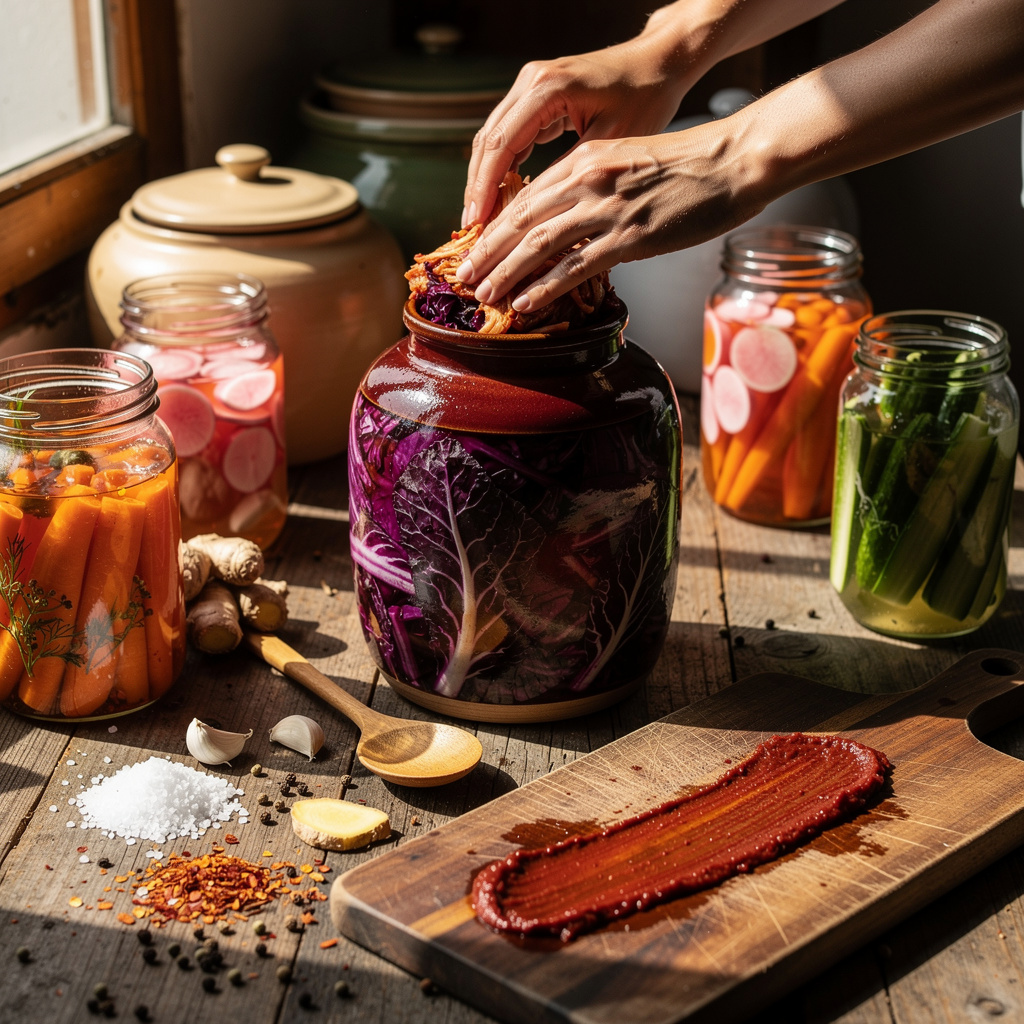
Fermented vegetables are foods transformed by beneficial lactic acid bacteria, which convert natural sugars into organic acids that preserve the produce while creating distinctive sour, umami-rich flavors. This practice spans cultures worldwide—from German sauerkraut and Korean kimchi to Japanese tsukemono and Eastern European pickles—and relies on core concepts like salt concentration, anaerobic conditions, and temperature control. The subject encompasses both the microbiology of fermentation and the culinary artistry of ingredient selection, spice blending, and texture management, making it a uniquely interdisciplinary field.
Today, fermented vegetables have moved from traditional pantry staples to the forefront of the health and wellness movement, driven by growing awareness of the gut microbiome's role in immunity, digestion, and mental health. Chefs in fine dining and casual restaurants alike use house-made ferments to add depth and acidity to dishes, while food manufacturers scale up production to meet consumer demand for probiotic-rich products. Academic research continues to explore the nutritional bioavailability, microbial diversity, and potential therapeutic applications of fermented foods, cementing their relevance in both scientific and culinary spheres.
Mastering fermented vegetables and kimchi builds a versatile skill stack that combines microbiology fundamentals, sensory evaluation, recipe development, and food preservation techniques applicable across home and professional kitchens. For home cooks, this knowledge unlocks a world of creative, healthful cooking; for culinary professionals, it adds a highly marketable specialty that distinguishes their work. The subject also empowers food entrepreneurs to develop unique fermented product lines, while nutrition enthusiasts gain a deeper understanding of how traditional food practices support modern wellbeing.
Common Questions About Fermented Vegetables and Kimchi
Does this fermented vegetables and kimchi training suit absolute beginners?
How can this kimchi course certificate help my culinary job application?
Why is lactic acid bacteria the key to successful vegetable fermentation?
What is the difference between dry salt and brine fermentation methods?
Why is an onggi considered the gold standard for kimchi fermentation?
How do I spot the difference between golmaji and white mold on my ferment?
- Appearance: Golmaji is flat and powdery; white mold is fuzzy and raised.
- Texture: Golmaji feels dry and chalky; white mold feels soft and fluffy.
- Safety: Golmaji is generally safe; white mold should be discarded.
Is it a myth that all kimchi must be spicy and fermented for months?
What Will This Course Bring You?
- Analyze the roles of lactic acid bacteria and environmental factors in vegetable fermentation to predict final flavor and safety.
- Select appropriate tools, equipment, and ingredient varieties based on fermentation method and desired texture.
- Apply precise brine concentrations and submersion techniques to produce crisp sauerkraut and pickles.
- Evaluate salt's impact on fermentation rate and microbial ecology to adjust recipes for optimal results.
- Design custom spice and aromatic blends to achieve targeted flavor profiles in fermented vegetables.
- Build a traditional baechu kimchi, including salting, paste preparation, and fermentation management.
- Control fermentation temperature, time, and container selection to achieve desired acidity and texture.
- Troubleshoot common fermentation defects such as mold, off-odors, and softening using systematic analysis.
Curriculum
12 Units1. The Science of Vegetable Fermentation
1 hour
2. Tools, Equipment, and Ingredient Selection
1 hour
3. Mastering Brine Fermentation: Sauerkraut and Pickles
30 minutes
4. Salt: The Critical Ingredient
1 hour
5. Building Flavor: Spices, Aromatics, and Seasonings
1 hour
6. Kimchi Fundamentals: Making Baechu Kimchi
1 hour
7. Regional and Seasonal Kimchi Variations
1 hour
8. Fermentation Environment: Temperature, Time, and Containers
1 hour
9. Troubleshooting and Quality Control
1 hour
10. Advanced Fermentation Techniques
1 hour
11. Health Benefits and Nutrition of Fermented Vegetables
1 hour
12. Culinary Applications: Cooking and Serving Fermented Vegetables
1 hour
Exam – Fermented Vegetables and Kimchi
20 Questions • 70% Pass • 30 min
Unlock All Units for Free
Create an account, enroll in the course, and start with the first unit right away.
Exam – Fermented Vegetables and Kimchi
20 Questions • Pass: 70% • 30 min
Course Duration
690
Total Minutes
12
Unit
1
Final Exam
~58
Min / Unit
Fermented Vegetables and Kimchi Certificate Program
Document Your Skill
Those who pass the 20-question, 30-minute exam with 70% receive the Fermented Vegetables and Kimchi Certificate.
Stand Out on Your CV
By adding your certificate to your CV, gain a professional reference in job applications and stand out from the crowd.
Career Advantage
With the verification code, employers can check your certificate instantly — a concrete way to show your growth.
CERTIFICATE FEE
At the end of the course, an online exam consisting of 20 questions with a 30-minute time limit is given. The exam appears automatically after you complete the topics. Anyone who scores at least 70 out of 100 on the certificate exam is awarded the Fermented Vegetables and Kimchi Document (certificate of attendance). You can add the certificate you earn to your CV for job applications in the many sectors listed above, and use it as a reference proving that you took this interactive course.
The Certificate of Achievement you receive with the Fermented Vegetables and Kimchi course program holds value that proves your personal and professional development in the business world. By adding it to your CV, it can serve as an important reference in your job applications. Moreover, compared with certificates from other private training institutions, Catch Wisdom certificates are offered to our participants at a much more affordable price.
The Fermented Vegetables and Kimchi course certificate is a document that proves, with a unique verification code, that you completed the course. Employers can instantly check its authenticity with this code, which helps you show your development concretely in your job applications.
For more information, we recommend visiting the Support page.
Certificate in 7 Languages
Earning success certificates from our courses is now more meaningful and global. With certificates available in Turkish, English, German, French, Spanish, Arabic, and Russian, we fully unlock the potential of students worldwide.
Why Certificate in 7 Languages?
-
01
Global Skill Development
Receiving your certificates in 7 different languages strengthens your communication skills as you engage with more people worldwide. It lets you operate more confidently and capably on the international stage.
-
02
International Job Opportunities
Employers may see your certificates in multiple languages as a sign of your ability to seize global opportunities. You can open more doors to new jobs and projects.
-
03
Cultural Richness
The chance to earn certificates in different languages helps you build closer ties with various cultures and broadens your worldview. It enriches your global perspective and deepens cultural understanding.
-
04
Ability to Participate in International Projects
Multilingual certificates give you an edge to work more effectively on international projects. They boost your chances of leadership and participation in diverse projects in the business world.
-
05
Prove Yourself on the Global Stage
Certificates in multiple languages give you the opportunity to present your skills and knowledge worldwide.
Language diversity opens worldwide opportunities. If you want to prove yourself in the international arena, join our online Fermented Vegetables and Kimchi course program and begin this journey with us.
Frequently Asked Questions (FAQ)
Is this course paid?
How do I join the course?
Can I take the course at my own pace?
How can I get my certificate?
What are the advantages of the certificate?
Boost Your Career
Take a new career step with the Fermented Vegetables and Kimchi course. Add your certificate to your CV, stand out in job applications, and open the door to new opportunities in the industry.
StartStudent Reviews
No reviews yet
Enroll in this course and be the first to leave a review about your experience with Fermented Vegetables and Kimchi.
Start