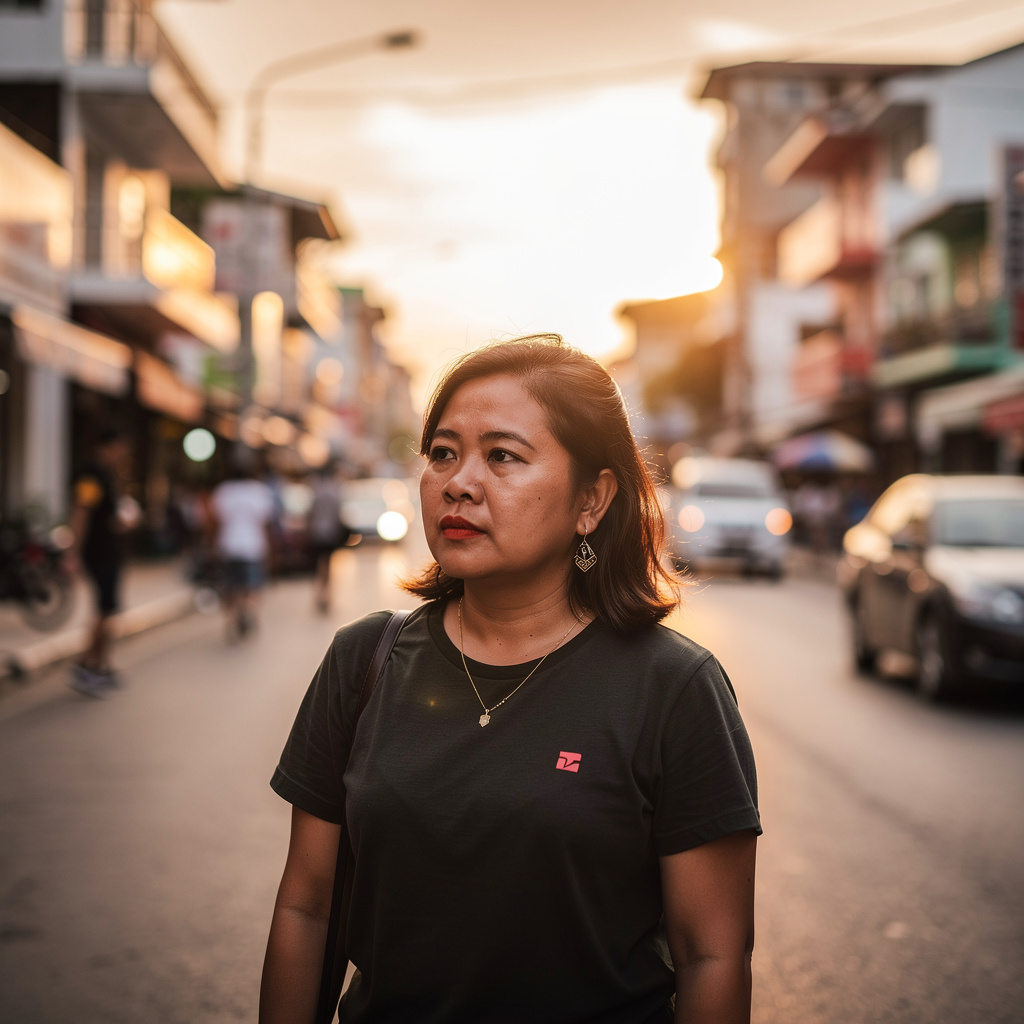
What is Filipino Language?
Filipino Language Certificate Program
Filipino Language certificate program is a structured training path that teaches learners to recognize and produce Filipino sounds, use polite greetings and survival phrases, and build sentences with noun markers, pronouns, and verbs. It suits complete beginners, heritage learners who want to reconnect with family language, travelers, and professionals who need practical communication for work or community settings. The main practical outcome is the ability to handle everyday Filipino conversations—shopping, food, directions, social exchanges—while developing the reading, writing, and grammar foundations needed for intermediate conversation.
The program progresses from sounds, alphabet, and pronunciation into greetings and survival phrases, then moves through noun markers, pronouns, possession, verb aspect, focus and voice, adjectives, numbers, time, dates, counters, questions, negation, and connectors before applying these tools in shopping, food, directions, social interactions, and cultural nuances. Each stage balances clear grammar explanation with guided practice, so learners hear, speak, read, and write Filipino while also building cultural awareness and conversational confidence. It develops five core skill areas—listening, speaking, reading, writing, and intercultural competence—through sequenced lessons that end with reading, writing, and intermediate conversation practice. Choosing this program now makes sense for anyone navigating the growing presence of Filipino in diaspora communities, customer support, education, travel, and digital media, where practical language skills and cultural understanding create immediate connection.
What is Filipino Language?
Filipino is the national language of the Philippines and a standardized, dynamic variety of Tagalog that serves as a lingua franca across the archipelago’s many language communities. Its scope includes phonology and the modern alphabet, a noun-marker system that signals grammatical roles, a pronoun and demonstrative inventory, possession, adjective and comparative formation, number and counter systems, and a verb system organized around aspect, focus, and voice. Core concepts also include politeness registers, question and negation strategies, connectors, and the cultural norms that shape everyday interaction, from greetings to shopping and giving directions. Because Filipino borrows actively from English, Spanish, and other Philippine languages, its vocabulary and usage continue to shift across formal education, media, and daily conversation.
Filipino matters today because it connects millions of speakers in the Philippines and a large global diaspora, and it is used in government, education, media, call centers, healthcare communication, and community organizing. In industry, Filipino-language skills support customer service, localization, translation, content moderation, and market research for Philippine audiences, while in academia the language opens access to Southeast Asian studies, linguistics, literature, and Philippine history. Recent shifts toward mother tongue-based education, digital communication, and code-switching practices such as Taglish have made Filipino a living subject of study rather than a fixed school subject. The language also carries strong personal and cultural value for heritage learners and families maintaining ties across generations.
Mastering Filipino builds a skill stack that combines phonological awareness, morphological and syntactic analysis, sociolinguistic judgment, and intercultural communication. Learners develop the ability to parse noun markers and verb focus, adjust politeness and register, interpret cultural nuance, and move between conversational and written modes. These capabilities support professional contexts such as teaching, translation and localization, customer support, journalism, public health outreach, and community interpreting. On a personal level, the subject supports family communication, travel, heritage reconnection, and deeper participation in Filipino-speaking communities. Because the language’s grammar rewards attention to focus, aspect, and social context, it also strengthens general analytical skills that transfer to other language-learning and communication tasks.
What Will This Course Bring You?
- Pronounce Filipino vowels, consonants, and stress patterns accurately by applying the alphabet and pronunciation rules to unfamiliar words during oral practice.
- Construct polite greetings, introductions, and survival phrases to initiate and sustain brief Filipino conversations in common social and travel situations.
- Apply Filipino noun markers and basic sentence patterns to build grammatically correct simple sentences describing people, objects, and everyday actions.
- Differentiate Filipino pronouns, demonstratives, and possession markers to select appropriate forms when referring to people, objects, and ownership in spoken exchanges.
- Analyze verb aspect and focus/voice in Filipino action sentences to choose correct verb forms for completed, ongoing, and planned activities in contextual dialogues.
- Use Filipino adjectives, comparatives, modifiers, numbers, time expressions, dates, and counters to describe quantities, schedules, and qualities in practical written and oral tasks.
- Formulate Filipino questions, negations, and connectors to manage turn-taking and link ideas during guided conversations about shopping, food, and directions.
- Interpret short Filipino texts and produce written and conversational responses that reflect appropriate cultural nuances, politeness, and respect in social interactions.
Curriculum
12 Units1. Sounds, Alphabet, and Pronunciation
1 hour
2. Greetings, Politeness, and Survival Phrases
1 hour
3. Noun Markers and Basic Sentence Patterns
1 hour
4. Pronouns, Demonstratives, and Possession
1 hour
5. Verbs, Aspect, and Basic Action Sentences
1 hour
6. Focus and Voice in Filipino Verbs
1 hour
7. Adjectives, Comparatives, and Modifiers
1 hour
8. Numbers, Time, Dates, and Counters
1 hour
9. Questions, Negation, and Connectors
1 hour
10. Everyday Situations: Shopping, Food, and Directions
1 hour
11. Social Interactions and Cultural Nuances
1 hour
12. Reading, Writing, and Intermediate Conversation
1 hour
Exam – Filipino Language
20 Questions • 70% Pass • 30 min
Unlock All Units for Free
Create an account, enroll in the course, and start with the first unit right away.
Exam – Filipino Language
20 Questions • Pass: 70% • 30 min
Course Duration
720
Total Minutes
12
Unit
1
Final Exam
~60
Min / Unit
Filipino Language Certificate Program
Document Your Skill
Those who pass the 20-question, 30-minute exam with 70% receive the Filipino Language Certificate.
Stand Out on Your CV
By adding your certificate to your CV, gain a professional reference in job applications and stand out from the crowd.
Career Advantage
With the verification code, employers can check your certificate instantly — a concrete way to show your growth.
CERTIFICATE FEE
At the end of the course, an online exam consisting of 20 questions with a 30-minute time limit is given. The exam appears automatically after you complete the topics. Anyone who scores at least 70 out of 100 on the certificate exam is awarded the Filipino Language Document (certificate of attendance). You can add the certificate you earn to your CV for job applications in the many sectors listed above, and use it as a reference proving that you took this interactive course.
The Certificate of Achievement you receive with the Filipino Language course program holds value that proves your personal and professional development in the business world. By adding it to your CV, it can serve as an important reference in your job applications. Moreover, compared with certificates from other private training institutions, Catch Wisdom certificates are offered to our participants at a much more affordable price.
The Filipino Language course certificate is a document that proves, with a unique verification code, that you completed the course. Employers can instantly check its authenticity with this code, which helps you show your development concretely in your job applications.
For more information, we recommend visiting the Support page.
Certificate in 7 Languages
Earning success certificates from our courses is now more meaningful and global. With certificates available in Turkish, English, German, French, Spanish, Arabic, and Russian, we fully unlock the potential of students worldwide.
Why Certificate in 7 Languages?
-
01
Global Skill Development
Receiving your certificates in 7 different languages strengthens your communication skills as you engage with more people worldwide. It lets you operate more confidently and capably on the international stage.
-
02
International Job Opportunities
Employers may see your certificates in multiple languages as a sign of your ability to seize global opportunities. You can open more doors to new jobs and projects.
-
03
Cultural Richness
The chance to earn certificates in different languages helps you build closer ties with various cultures and broadens your worldview. It enriches your global perspective and deepens cultural understanding.
-
04
Ability to Participate in International Projects
Multilingual certificates give you an edge to work more effectively on international projects. They boost your chances of leadership and participation in diverse projects in the business world.
-
05
Prove Yourself on the Global Stage
Certificates in multiple languages give you the opportunity to present your skills and knowledge worldwide.
Language diversity opens worldwide opportunities. If you want to prove yourself in the international arena, join our online Filipino Language course program and begin this journey with us.
Frequently Asked Questions (FAQ)
Is this course paid?
How do I join the course?
Can I take the course at my own pace?
How can I get my certificate?
What are the advantages of the certificate?
Boost Your Career
Take a new career step with the Filipino Language course. Add your certificate to your CV, stand out in job applications, and open the door to new opportunities in the industry.
StartStudent Reviews
No reviews yet
Enroll in this course and be the first to leave a review about your experience with Filipino Language.
Start