What is Film Camera Revival?
Film Camera Revival Training
Film Camera Revival certificate program teaches the complete analog workflow, from understanding the appeal and landscape of film photography and camera anatomy to loading, advancing, and unloading film, metering exposure, and manually focusing and framing each shot. It is designed for beginners who have never handled a film body, digital photographers seeking a tactile counterpractice, and returning enthusiasts who want to revive dormant gear with confidence. Across the lessons, learners work through choosing a first camera body, selecting film formats and stocks, troubleshooting a first roll, communicating with labs, and scanning negatives into digital files. The main practical outcome is a repeatable shooting and post-production workflow that turns exposed rolls into presentable images and a sustainable long-term practice.
The program is structured as a beginner-friendly progression that begins with the appeal and landscape of film photography and camera anatomy, then moves through choosing a first body, film formats and stock selection, loading and advancing film, exposure settings and light metering, and manual focus and framing technique. Theory is paired with practice at every stage—first-roll workflow and troubleshooting lead directly into lab communication, negative scanning, post-processing, and presenting film images—so learners build five core skill areas: camera handling and exposure control, film stock and shooting workflow, lab and processing coordination, scanning and digital file management, and long-term gear care, budgeting, and community involvement. This balance keeps the learning concrete, moving from controlled exercises to a complete roll-to-presentation cycle rather than isolated tips. Learners choose this program now because film has moved from niche nostalgia to a visible creative and commercial practice, and hybrid analog-digital workflows, lab services, and community knowledge make it more accessible than ever to build a durable, personal visual voice.
What is Film Camera Revival?
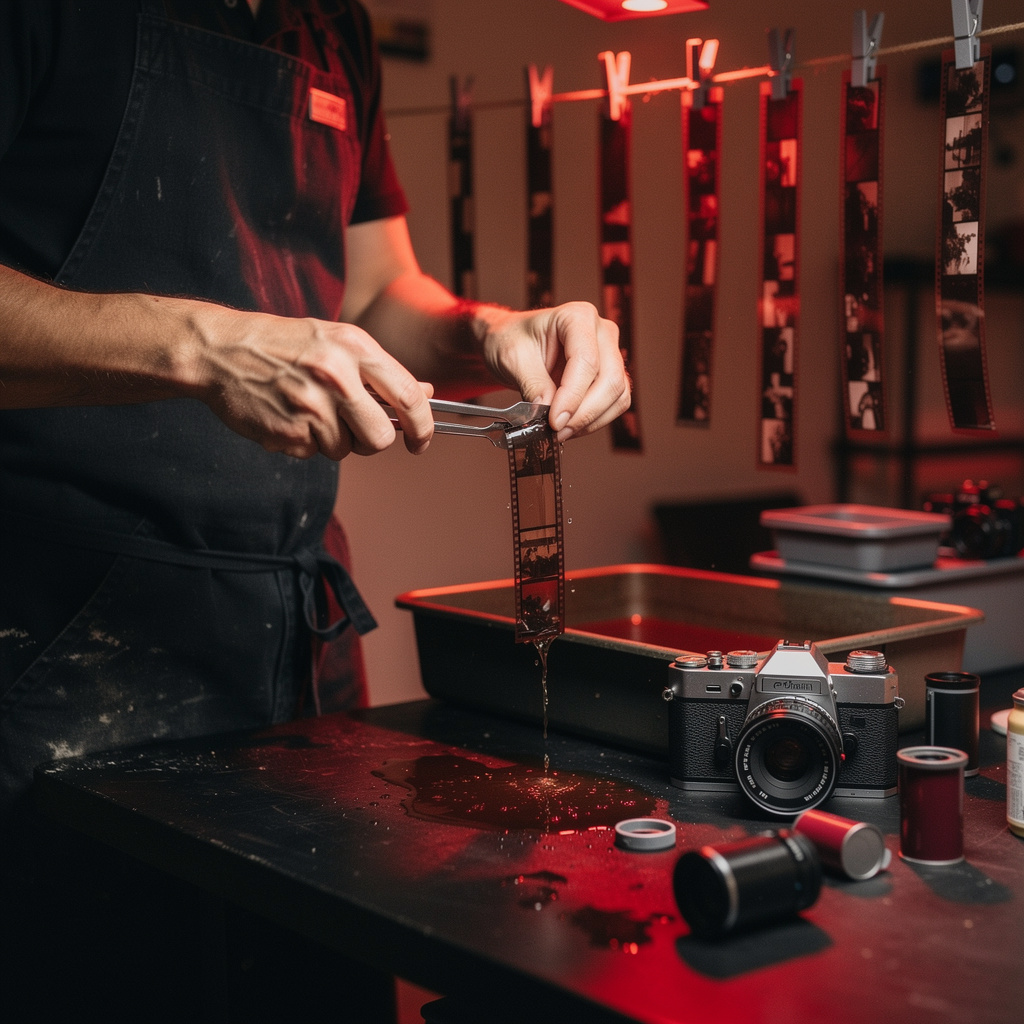
Film camera revival is the renewed practice and study of photographing with analog film cameras, spanning mechanical and electronic bodies, film formats, exposure control, and the chemical and digital workflows that transform exposed film into finished images. Its scope includes camera anatomy and basic controls, film stock characteristics, metering and manual focusing, loading and advancing film, processing choices, negative scanning, and post-processing for presentation. Core concepts include the latent image, film speed and latitude, grain and contrast, the exposure triangle applied to film, color balance and density, and the hybrid analog-digital pipeline that links a physical negative to a digital file. The subject also encompasses long-term gear care, budgeting, and community knowledge-sharing because film practice depends on maintenance, material availability, and collective troubleshooting.
Film camera revival matters today because analog processes have re-entered commercial photography, fashion and editorial work, wedding and portrait practice, fine art, and archival digitization, where the material look and slowed workflow offer a distinct visual and experiential value. In industry, labs, scanning services, camera repair specialists, and hybrid analog-digital post-production have expanded alongside renewed interest, while academia uses film to teach exposure, materiality, and the history of photographic technology. Recent shifts include new film stock releases, improved negative-scanning tools, online communities that share repair and metering knowledge, and a growing conversation about sustainability and the cost of analog materials. At the same time, scarcity and price changes in film and gear make informed choices about formats, budgets, and maintenance more relevant than ever, which is why the subject is studied as both craft and resource-aware practice.
Mastering the subject builds a layered skill stack: precise manual exposure and focus control, material literacy across film formats and stocks, a disciplined shooting and labeling workflow, lab or home processing coordination, negative scanning and digital color correction, and informed gear maintenance and budgeting. This stack supports professional contexts such as editorial and commercial photography, archival and digitization work, lab and repair services, teaching, and hybrid post-production, where film's material qualities and workflow constraints must be managed reliably. It also benefits personal contexts—documentary projects, travel, family archives, and community-based creative practice—by fostering patience, visual intentionality, and resourceful problem-solving. Because the subject links physical materials, chemical or lab processes, digital files, and long-term stewardship, learners develop a transferable understanding of how analog and digital systems interact rather than a narrow set of camera tricks.
What Will This Course Bring You?
- Evaluate the current film photography landscape to justify choosing analog workflows for specific creative projects and budget constraints.
- Identify and operate essential camera controls, including shutter speed, aperture, ISO, advance lever, and film rewind mechanisms, during manual shooting exercises.
- Compare first camera body options by format, lens mount, meter type, repairability, and price to select a suitable starter kit.
- Differentiate film formats and stock characteristics, then select appropriate film for given lighting, grain, and color-rendition goals.
- Demonstrate correct loading, advancing, and unloading procedures for 35mm and medium-format cameras to prevent light leaks and jams.
- Apply exposure settings and light-metering techniques to achieve intended density and highlight/shadow detail across varied lighting conditions.
- Implement manual focus, framing, and shooting routines, then troubleshoot common first-roll problems using a structured diagnostic checklist.
- Evaluate processing lab options, communicate development instructions, scan negatives, and edit digital files for presentation-ready film images.
Curriculum
12 Units1. The Appeal and Landscape of Film Photography
1 hour
2. Camera Anatomy and Basic Controls
1 hour
3. Choosing a First Camera Body
1 hour
4. Film Formats and Stock Selection
1 hour
5. Loading, Advancing, and Unloading Film
1 hour
6. Exposure Settings and Light Metering
1 hour
7. Focus, Framing, and Manual Shooting Technique
1 hour
8. First Roll Workflow and Troubleshooting
1 hour
9. Film Processing Options and Lab Communication
1 hour
10. Negative Scanning and Digital Files
1 hour
11. Post-Processing and Presenting Film Images
1 hour
12. Long-Term Gear Care, Budget, and Community
1 hour
Exam – Film Camera Revival
20 Questions • 70% Pass • 30 min
Unlock All Units for Free
Create an account, enroll in the course, and start with the first unit right away.
Exam – Film Camera Revival
20 Questions • Pass: 70% • 30 min
Course Duration
720
Total Minutes
12
Unit
1
Final Exam
~60
Min / Unit
Film Camera Revival Certificate Program
Document Your Skill
Those who pass the 20-question, 30-minute exam with 70% receive the Film Camera Revival Certificate.
Stand Out on Your CV
By adding your certificate to your CV, gain a professional reference in job applications and stand out from the crowd.
Career Advantage
With the verification code, employers can check your certificate instantly — a concrete way to show your growth.
CERTIFICATE FEE
At the end of the course, an online exam consisting of 20 questions with a 30-minute time limit is given. The exam appears automatically after you complete the topics. Anyone who scores at least 70 out of 100 on the certificate exam is awarded the Film Camera Revival Document (certificate of attendance). You can add the certificate you earn to your CV for job applications in the many sectors listed above, and use it as a reference proving that you took this interactive course.
The Certificate of Achievement you receive with the Film Camera Revival course program holds value that proves your personal and professional development in the business world. By adding it to your CV, it can serve as an important reference in your job applications. Moreover, compared with certificates from other private training institutions, Catch Wisdom certificates are offered to our participants at a much more affordable price.
The Film Camera Revival course certificate is a document that proves, with a unique verification code, that you completed the course. Employers can instantly check its authenticity with this code, which helps you show your development concretely in your job applications.
For more information, we recommend visiting the Support page.
Certificate in 7 Languages
Earning success certificates from our courses is now more meaningful and global. With certificates available in Turkish, English, German, French, Spanish, Arabic, and Russian, we fully unlock the potential of students worldwide.
Why Certificate in 7 Languages?
-
01
Global Skill Development
Receiving your certificates in 7 different languages strengthens your communication skills as you engage with more people worldwide. It lets you operate more confidently and capably on the international stage.
-
02
International Job Opportunities
Employers may see your certificates in multiple languages as a sign of your ability to seize global opportunities. You can open more doors to new jobs and projects.
-
03
Cultural Richness
The chance to earn certificates in different languages helps you build closer ties with various cultures and broadens your worldview. It enriches your global perspective and deepens cultural understanding.
-
04
Ability to Participate in International Projects
Multilingual certificates give you an edge to work more effectively on international projects. They boost your chances of leadership and participation in diverse projects in the business world.
-
05
Prove Yourself on the Global Stage
Certificates in multiple languages give you the opportunity to present your skills and knowledge worldwide.
Language diversity opens worldwide opportunities. If you want to prove yourself in the international arena, join our online Film Camera Revival course program and begin this journey with us.
Frequently Asked Questions (FAQ)
Is this course paid?
How do I join the course?
Can I take the course at my own pace?
How can I get my certificate?
What are the advantages of the certificate?
Boost Your Career
Take a new career step with the Film Camera Revival course. Add your certificate to your CV, stand out in job applications, and open the door to new opportunities in the industry.
StartStudent Reviews
No reviews yet
Enroll in this course and be the first to leave a review about your experience with Film Camera Revival.
Start