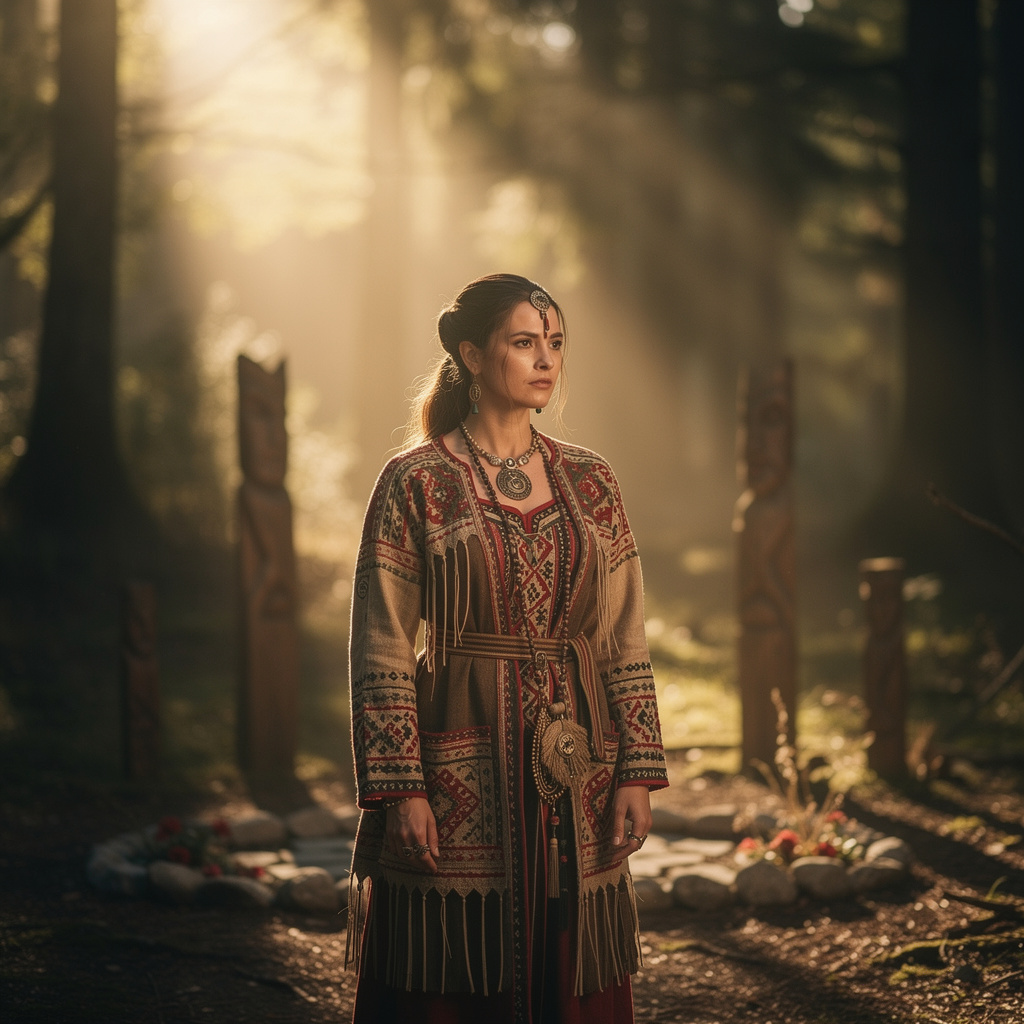
What is Folklore and Mythology?
Folklore and Mythology Certificate Program
Folklore and Mythology certificate program is a structured introduction to how communities create, transmit, and transform expressive culture, from oral narratives and belief systems to ritual performance and material traditions. The curriculum examines the foundations of folklore and mythology, the mechanics of oral tradition, creation myths and cosmologies, legends and the supernatural, folktales and fairy tales, heroic epics and mythic cycles, ritual and festival, material folklore and vernacular culture, proverbs, riddles, and ballads, as well as collecting, archives, and fieldwork. It is designed for educators, writers, cultural heritage professionals, librarians, archivists, museum practitioners, and curious learners who want a rigorous yet accessible grounding in the discipline. The main practical outcome is the ability to identify, analyze, and interpret folklore and mythological materials with appropriate theoretical frameworks and ethical fieldwork awareness, and to communicate those interpretations clearly in professional and public contexts.
The program is structured as a progressive sequence that begins with foundational definitions and the dynamics of oral transmission before moving into genre-specific study and applied methods, so learners can build confidence without prior coursework in anthropology or literary studies. Theory and practice are balanced throughout: lessons on creation myths, legends, and epics sit alongside fieldwork, archiving, and material culture analysis, while the final lesson connects folklore and mythology to contemporary life, including digital storytelling, heritage debates, and public culture. Across the curriculum, learners develop five core skill areas: genre analysis, comparative myth interpretation, ethnographic documentation and ethical collecting, archival and curatorial reasoning, and critical application of folklore theory to modern contexts. This program is a strong choice now because cultural institutions, media producers, educators, and community organizations increasingly need people who can navigate oral traditions and symbolic systems with accuracy and respect, especially as debates over heritage, identity, and representation intensify.
What is Folklore and Mythology?
Folklore and mythology is the study of expressive culture and sacred narrative as they are created, performed, and transmitted within communities. Folklore encompasses the vernacular, unofficial, and often orally circulated materials of everyday life—stories, songs, riddles, proverbs, customs, crafts, and beliefs—while mythology refers to narratives that explain origins, cosmos, deities, heroes, and the moral or natural order. Core concepts include tradition, variation, genre, performance, transmission, belief, identity, and the relationship between local practice and broader cultural patterns. The field therefore crosses literature, anthropology, history, religious studies, linguistics, and ethnomusicology, and it treats neither folklore nor myth as static remnants but as active processes that people use to make meaning.
Folklore and mythology matter today because they shape public memory, political rhetoric, marketing, education, and creative industries, and they provide communities with resources for identity, resistance, and adaptation. In academia, the field has moved decisively beyond text-only approaches to attend to performance, embodiment, materiality, and digital circulation, while heritage policy, museum practice, tourism, and media production increasingly rely on folklore expertise to avoid misrepresentation and to engage audiences responsibly. Recent shifts include the study of internet memes, conspiracy narratives, fan cultures, and transnational mythmaking, alongside renewed attention to decolonizing archives and to the ethics of collecting from marginalized communities. Understanding these dynamics helps professionals anticipate how stories and symbols travel, persuade, and mutate across contexts.
Mastering folklore and mythology builds a distinctive skill stack: interpretive agility across oral, written, and material forms; comparative and historical reasoning about narrative patterns; ethnographic sensitivity and ethical documentation habits; and the capacity to analyze how beliefs and traditions function socially. These skills are valuable in education, cultural heritage management, publishing, writing and screenwriting, game and narrative design, community organizing, counseling, and public policy, where symbolic literacy and cultural context matter. On a personal level, the subject offers tools for understanding one’s own family and community traditions, for questioning naturalized assumptions about “authentic” culture, and for engaging respectfully with narratives that belong to others. The result is not just knowledge about stories but a disciplined way of attending to how stories make worlds.
What Will This Course Bring You?
- Differentiate folklore from mythology by analyzing definitions, genres, and scholarly debates introduced in the foundations unit.
- Evaluate how oral tradition shapes the transmission and variation of myths and tales across communities and generations.
- Compare creation myths and cosmologies from multiple cultures to identify recurring structural patterns and cultural functions.
- Analyze legends and supernatural belief narratives to explain how communities negotiate fear, trust, and the unknown.
- Apply folktale classification and structural analysis methods to interpret fairy tales and their cultural meanings.
- Evaluate heroic epics and mythic cycles by tracing their narrative patterns, character types, and social values.
- Design a small ethnographic fieldwork or archival research project to collect and document vernacular cultural expression.
- Assess major folklore and mythology theories and apply them to interpret folklore in contemporary media and daily life.
Curriculum
12 Units1. Foundations of Folklore and Mythology
1 hour
2. Oral Tradition and Transmission
1 hour
3. Creation Myths and Cosmologies
1 hour
4. Legends, Belief, and the Supernatural
1 hour
5. Folktales and Fairy Tales
1 hour
6. Heroes, Epics, and Mythic Cycles
1 hour
7. Ritual, Festival, and Performance
1 hour
8. Material Folklore and Vernacular Culture
1 hour
9. Proverbs, Riddles, and Ballads
1 hour
10. Collecting, Archives, and Fieldwork
1 hour
11. Theories of Folklore and Mythology
1 hour
12. Folklore and Mythology in Contemporary Life
1 hour
Exam – Folklore and Mythology
20 Questions • 70% Pass • 30 min
Unlock All Units for Free
Create an account, enroll in the course, and start with the first unit right away.
Exam – Folklore and Mythology
20 Questions • Pass: 70% • 30 min
Course Duration
720
Total Minutes
12
Unit
1
Final Exam
~60
Min / Unit
Folklore and Mythology Certificate Program
Document Your Skill
Those who pass the 20-question, 30-minute exam with 70% receive the Folklore and Mythology Certificate.
Stand Out on Your CV
By adding your certificate to your CV, gain a professional reference in job applications and stand out from the crowd.
Career Advantage
With the verification code, employers can check your certificate instantly — a concrete way to show your growth.
CERTIFICATE FEE
At the end of the course, an online exam consisting of 20 questions with a 30-minute time limit is given. The exam appears automatically after you complete the topics. Anyone who scores at least 70 out of 100 on the certificate exam is awarded the Folklore and Mythology Document (certificate of attendance). You can add the certificate you earn to your CV for job applications in the many sectors listed above, and use it as a reference proving that you took this interactive course.
The Certificate of Achievement you receive with the Folklore and Mythology course program holds value that proves your personal and professional development in the business world. By adding it to your CV, it can serve as an important reference in your job applications. Moreover, compared with certificates from other private training institutions, Catch Wisdom certificates are offered to our participants at a much more affordable price.
The Folklore and Mythology course certificate is a document that proves, with a unique verification code, that you completed the course. Employers can instantly check its authenticity with this code, which helps you show your development concretely in your job applications.
For more information, we recommend visiting the Support page.
Certificate in 7 Languages
Earning success certificates from our courses is now more meaningful and global. With certificates available in Turkish, English, German, French, Spanish, Arabic, and Russian, we fully unlock the potential of students worldwide.
Why Certificate in 7 Languages?
-
01
Global Skill Development
Receiving your certificates in 7 different languages strengthens your communication skills as you engage with more people worldwide. It lets you operate more confidently and capably on the international stage.
-
02
International Job Opportunities
Employers may see your certificates in multiple languages as a sign of your ability to seize global opportunities. You can open more doors to new jobs and projects.
-
03
Cultural Richness
The chance to earn certificates in different languages helps you build closer ties with various cultures and broadens your worldview. It enriches your global perspective and deepens cultural understanding.
-
04
Ability to Participate in International Projects
Multilingual certificates give you an edge to work more effectively on international projects. They boost your chances of leadership and participation in diverse projects in the business world.
-
05
Prove Yourself on the Global Stage
Certificates in multiple languages give you the opportunity to present your skills and knowledge worldwide.
Language diversity opens worldwide opportunities. If you want to prove yourself in the international arena, join our online Folklore and Mythology course program and begin this journey with us.
Frequently Asked Questions (FAQ)
Is this course paid?
How do I join the course?
Can I take the course at my own pace?
How can I get my certificate?
What are the advantages of the certificate?
Boost Your Career
Take a new career step with the Folklore and Mythology course. Add your certificate to your CV, stand out in job applications, and open the door to new opportunities in the industry.
StartStudent Reviews
No reviews yet
Enroll in this course and be the first to leave a review about your experience with Folklore and Mythology.
Start