What is Froebel Pedagogy?
Froebel Pedagogy Certificate Program
The Froebel Pedagogy certificate program explores Friedrich Froebel’s educational philosophy from its historical roots and core principles to the kindergarten idea, gifts, occupations, songs, games, movement, nature-based learning, community, and observation-led planning. It is designed for early childhood educators, kindergarten and preschool practitioners, curriculum coordinators, teacher educators, and parents or carers who want a principled alternative to scripted early learning. Participants examine how Froebel’s view of child development and self-activity shapes play as the child’s serious work, and how the sequence and symbolism of gifts and occupations can be used thoughtfully rather than mechanically. The main practical outcome is the ability to design and facilitate a coherent Froebel-inspired early years environment, with responsive planning informed by observation and documentation.
The program is structured as a beginner-friendly progression through twelve lessons, beginning with Froebel’s life and historical context before moving into core principles, child development, play, the kindergarten design, gifts, occupations, songs and games, nature and outdoor learning, community and the teacher’s role, observation and documentation, and finally critiques and contemporary adaptations. Theory is balanced with practice through reflective tasks, material analysis, and planning exercises that connect each idea to real early years settings. It builds five core skill areas: philosophical and historical foundations; play- and gift-based curriculum design; creative and outdoor learning environments; social and community facilitation; and observation, documentation, and responsive planning. This program is worth choosing now because early childhood practice is under pressure to become more standardized, while educators increasingly seek play-based, nature-rich, and relationship-centered approaches that are both historically grounded and adaptable to contemporary classrooms.
What is Froebel Pedagogy?
Froebel pedagogy is the educational tradition derived from Friedrich Froebel’s work, most famously the kindergarten, or “children’s garden.” Its scope includes a philosophy of childhood, a theory of development through self-activity, a curriculum of play, gifts, occupations, songs, games, movement, nature study, and community life, and a distinctive role for the teacher as observer and facilitator. Core concepts include unity and connectedness, the child’s active self-expression, play as serious work, symbolic and sequenced materials, and learning through practical and creative activity. It is not a fixed script but a principled approach that asks educators to study children, prepare environments, and connect hand, heart, and mind.
Froebel pedagogy matters today because contemporary early years policy and research increasingly recognize play, well-being, outdoor learning, and holistic development as central rather than peripheral. It is used in kindergartens, nursery and preschool settings, nature-based programs, teacher education, curriculum design, and museum or archive-based professional learning concerned with the history of childhood and material culture. Recent shifts toward play-based learning, maker and handwork education, social-emotional development, and observation-informed practice make Froebel’s emphasis on self-activity, sequenced materials, and community especially relevant. At the same time, critical discussions of Froebel’s legacy, cultural assumptions, and adaptations remind educators to use the tradition thoughtfully rather than romantically.
Mastering Froebel pedagogy builds a skill stack that combines historical and philosophical literacy with practical curriculum design, material sequencing, environment preparation, play facilitation, and reflective observation. It strengthens the ability to read children’s activity as meaningful, to document learning without reducing it to checklists, and to plan responsively within a coherent educational vision. These capabilities are valuable in early years teaching, kindergarten leadership, outdoor and nature education, teacher training, curriculum development, parenting, and community-based learning projects. The subject also supports a personal and professional stance that treats childhood as a serious period of self-formation rather than preparation for the next stage.
What Will This Course Bring You?
- Analyze Friedrich Froebel's life and historical context to explain how his experiences shaped the founding principles of the kindergarten movement.
- Apply Froebel's core principles of unity, self-activity, and connectedness to evaluate the design of early childhood learning experiences.
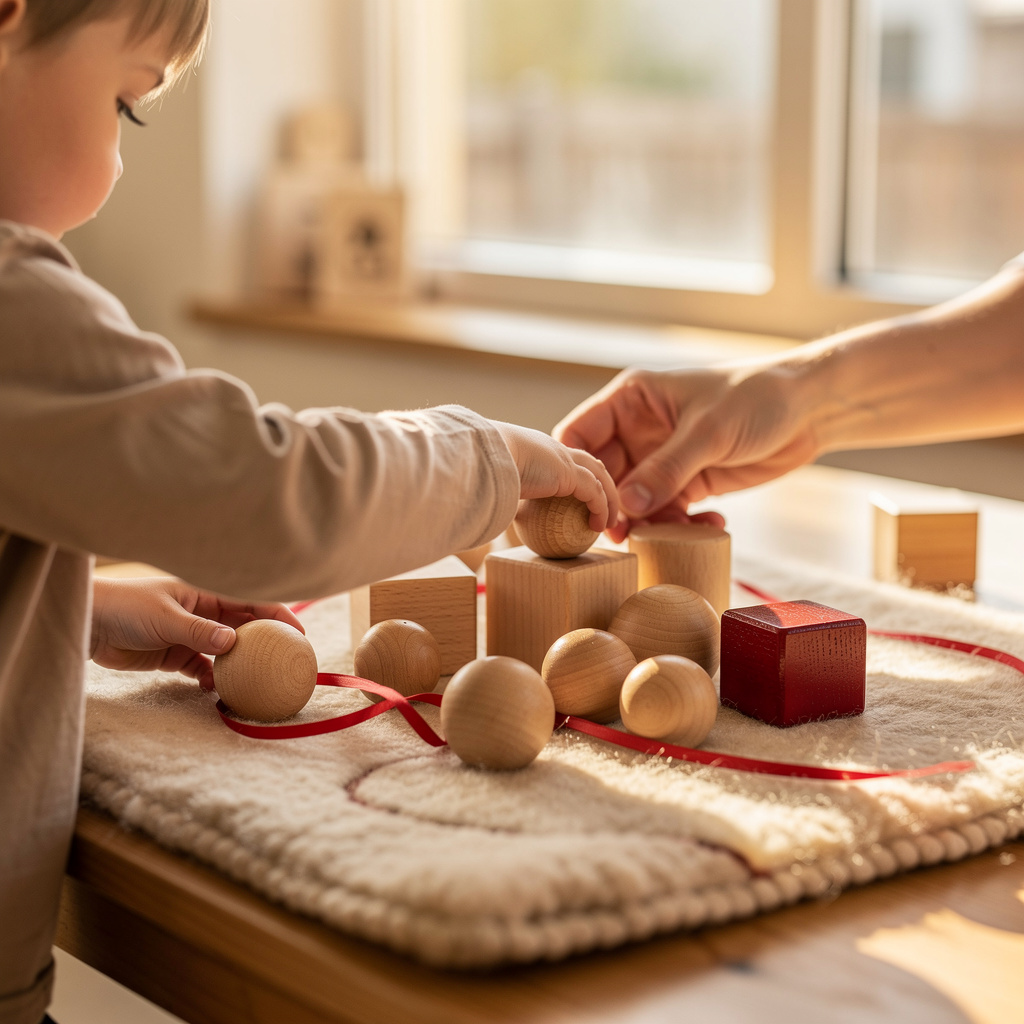
- Design a sequenced set of Froebel Gifts and Occupations that demonstrates an understanding of their symbolism and developmental progression.
- Implement Froebelian songs, games, and movement activities to support children's physical, social, and creative development in early learning settings.
- Evaluate the role of nature, garden, and outdoor learning in Froebel's pedagogy and plan authentic outdoor experiences for young children.
- Analyze the teacher's role in fostering community and social development, and apply observation and documentation strategies to plan responsive learning.
- Critique historical and contemporary adaptations of Froebel pedagogy to justify informed decisions about applying Froebelian practices in diverse early childhood contexts.
Curriculum
12 Units1. Historical Roots and Life of Friedrich Froebel
1 hour
2. Core Principles of Froebel Pedagogy
1 hour
3. Froebel's View of Child Development and Self-Activity
1 hour
4. Play as the Child's Serious Work
1 hour
5. The Kindergarten Idea and Its Original Design
1 hour
6. Froebel Gifts: Sequence, Symbolism, and Use
1 hour
7. Occupations, Handwork, and Creative Expression
1 hour
8. Songs, Games, and Movement in Early Learning
1 hour
9. Nature, Garden, and Outdoor Learning
1 hour
10. Community, Social Development, and the Teacher's Role
1 hour
11. Observation, Documentation, and Responsive Planning
1 hour
12. Critiques, Adaptations, and Contemporary Applications
1 hour
Exam – Froebel Pedagogy
20 Questions • 70% Pass • 30 min
Unlock All Units for Free
Create an account, enroll in the course, and start with the first unit right away.
Exam – Froebel Pedagogy
20 Questions • Pass: 70% • 30 min
Course Duration
720
Total Minutes
12
Unit
1
Final Exam
~60
Min / Unit
Froebel Pedagogy Certificate Program
Document Your Skill
Those who pass the 20-question, 30-minute exam with 70% receive the Froebel Pedagogy Certificate.
Stand Out on Your CV
By adding your certificate to your CV, gain a professional reference in job applications and stand out from the crowd.
Career Advantage
With the verification code, employers can check your certificate instantly — a concrete way to show your growth.
CERTIFICATE FEE
At the end of the course, an online exam consisting of 20 questions with a 30-minute time limit is given. The exam appears automatically after you complete the topics. Anyone who scores at least 70 out of 100 on the certificate exam is awarded the Froebel Pedagogy Document (certificate of attendance). You can add the certificate you earn to your CV for job applications in the many sectors listed above, and use it as a reference proving that you took this interactive course.
The Certificate of Achievement you receive with the Froebel Pedagogy course program holds value that proves your personal and professional development in the business world. By adding it to your CV, it can serve as an important reference in your job applications. Moreover, compared with certificates from other private training institutions, Catch Wisdom certificates are offered to our participants at a much more affordable price.
The Froebel Pedagogy course certificate is a document that proves, with a unique verification code, that you completed the course. Employers can instantly check its authenticity with this code, which helps you show your development concretely in your job applications.
For more information, we recommend visiting the Support page.
Certificate in 7 Languages
Earning success certificates from our courses is now more meaningful and global. With certificates available in Turkish, English, German, French, Spanish, Arabic, and Russian, we fully unlock the potential of students worldwide.
Why Certificate in 7 Languages?
-
01
Global Skill Development
Receiving your certificates in 7 different languages strengthens your communication skills as you engage with more people worldwide. It lets you operate more confidently and capably on the international stage.
-
02
International Job Opportunities
Employers may see your certificates in multiple languages as a sign of your ability to seize global opportunities. You can open more doors to new jobs and projects.
-
03
Cultural Richness
The chance to earn certificates in different languages helps you build closer ties with various cultures and broadens your worldview. It enriches your global perspective and deepens cultural understanding.
-
04
Ability to Participate in International Projects
Multilingual certificates give you an edge to work more effectively on international projects. They boost your chances of leadership and participation in diverse projects in the business world.
-
05
Prove Yourself on the Global Stage
Certificates in multiple languages give you the opportunity to present your skills and knowledge worldwide.
Language diversity opens worldwide opportunities. If you want to prove yourself in the international arena, join our online Froebel Pedagogy course program and begin this journey with us.
Frequently Asked Questions (FAQ)
Is this course paid?
How do I join the course?
Can I take the course at my own pace?
How can I get my certificate?
What are the advantages of the certificate?
Boost Your Career
Take a new career step with the Froebel Pedagogy course. Add your certificate to your CV, stand out in job applications, and open the door to new opportunities in the industry.
StartStudent Reviews
No reviews yet
Enroll in this course and be the first to leave a review about your experience with Froebel Pedagogy.
Start