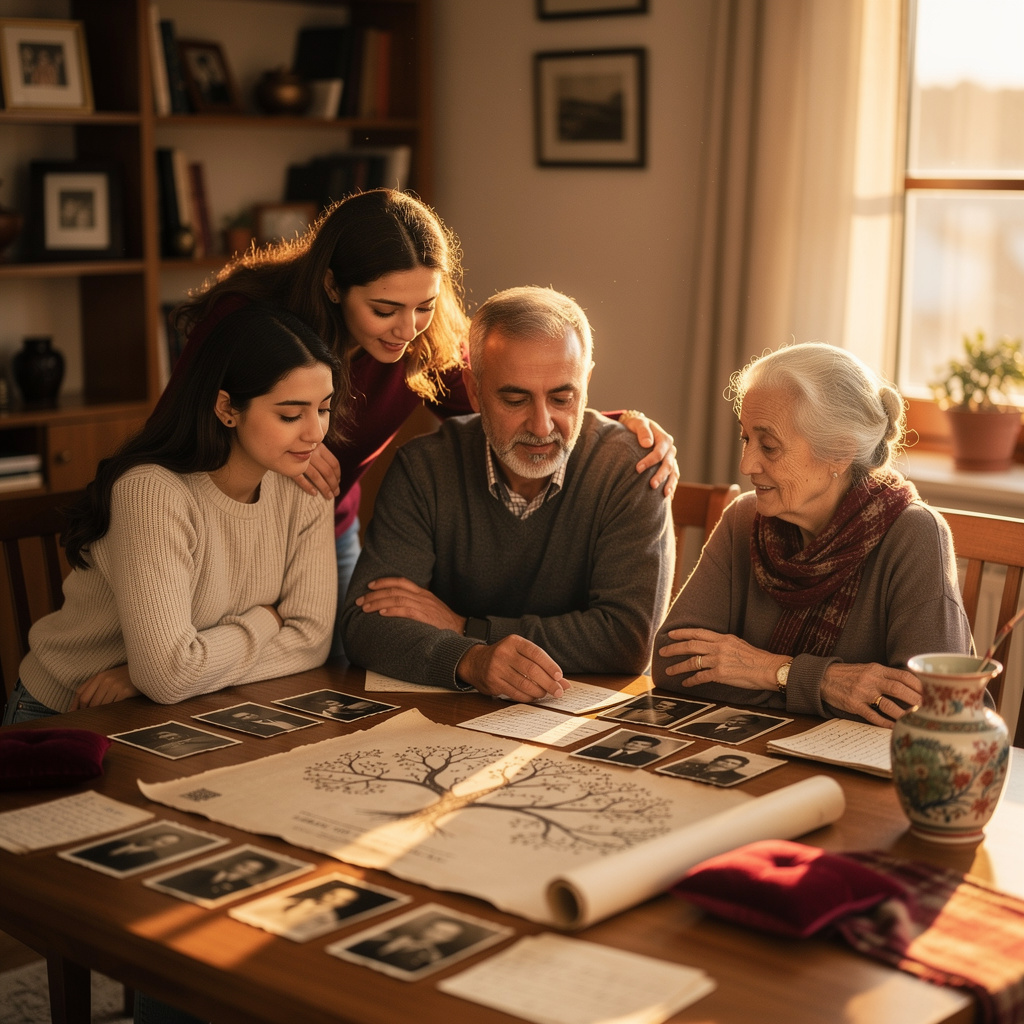
What is Genealogy and Family History Research?
Genealogy and Family History Research Certificate Program
The Genealogy and Family History Research certificate program teaches learners how to move from scattered family stories to a structured, evidence-based research practice. It covers the full research cycle, from foundations and research planning through home sources and oral history, civil registration and census records, church and cemetery records, land and probate records, immigration and military records, newspapers and local histories, online databases and archives, genetic genealogy, evidence analysis, and ethical writing and publishing. The program is designed for beginning family historians, local historians, archivists, librarians, and professionals who need to document kinship and community relationships with accuracy. Its main practical outcome is the ability to plan, execute, and document a family history research project that stands up to scrutiny and can be shared or published responsibly.
The program is structured as a beginner-friendly progression that starts with foundational concepts and research questions before moving into increasingly complex record groups and interpretive challenges. Each lesson balances theory with practice, so learners engage with source evaluation, documentation standards, and real-world research scenarios rather than memorizing record types in isolation. Across the twelve lessons, it builds five core skill areas: research design and planning, record acquisition and contextual reading, evidence analysis and citation, genetic and digital research methods, and ethical writing and family history stewardship. This program is worth choosing now because digitized archives, DNA testing, and online databases have expanded access to records while also raising the stakes for accurate citation, source criticism, and responsible interpretation.
What is Genealogy and Family History Research?
Genealogy and Family History Research is the disciplined study of kinship, lineage, and the documentary and genetic evidence that connects individuals to families, communities, and historical contexts. Its scope extends beyond names and dates to include migration, occupation, landholding, religious affiliation, military service, legal status, and the social conditions that shaped families over time. Core concepts include source classification, information versus evidence, provenance, record context, identity resolution, proof standards, and the ethical handling of sensitive family information. The field draws on civil, church, census, land, probate, court, immigration, military, newspaper, and genetic sources, and it requires researchers to interpret each source within the administrative and cultural systems that produced it.
Genealogy and Family History Research matters today because family identity, community memory, and historical accountability are increasingly public and digitally mediated. Archives and libraries are digitizing record collections, DNA testing has become mainstream, and online platforms allow researchers to collaborate across borders, yet the same tools can spread unsourced pedigrees and misinterpreted genetic data. The field is used in heritage and public history projects, archival description, local history publishing, hereditary society applications, legal and probate research, and academic studies of migration, kinship, and social change. Recent shifts toward open archival access, ethical data stewardship, and reparative family history have made rigorous genealogical method more relevant, not less.
Mastery of Genealogy and Family History Research builds a transferable skill stack: research design, source criticism, data management, citation, genetic evidence interpretation, contextual historical analysis, and clear narrative writing. These skills benefit professional contexts such as archives, libraries, museums, heritage organizations, publishing, journalism, and legal or probate investigation, where documented lineage and reliable evidence matter. They also support personal and community contexts, including family reunions, local history societies, oral history projects, and the responsible preservation of family collections. The subject ultimately bridges evidence and story, equipping researchers to make defensible claims about the past while communicating those findings with clarity and care.
What Will This Course Bring You?
- Design a focused genealogical research plan that converts family questions into documented objectives, source priorities, and manageable next steps.
- Evaluate home sources, oral histories, and family interviews by comparing informant accounts with documentary evidence to identify reliable clues and gaps.
- Apply civil registration, vital records, and census search strategies to locate individuals, reconstruct households, and resolve identity or relationship questions.
- Analyze church, cemetery, and religious records to extract baptism, marriage, burial, and membership details that corroborate family relationships and migration patterns.
- Interpret land, probate, tax, and court records to infer kinship, property transfers, residence changes, and legal disputes relevant to ancestral families.
- Build evidence-based narratives from immigration, naturalization, and military records that document arrival, citizenship, service, and associated family movements.
- Evaluate newspapers, directories, local histories, and community context alongside online databases and archival repositories to verify biographical details and locate additional records.
- Construct a DNA-supported proof argument that applies citation standards and ethical stewardship to communicate documented family history conclusions.
Curriculum
12 Units1. Foundations of Genealogy and Family History Research
1 hour
2. Research Planning, Questions, and Documentation
1 hour
3. Home Sources, Oral History, and Family Interviews
1 hour
4. Civil Registration, Vital Records, and Census Records
1 hour
5. Church, Cemetery, and Religious Records
1 hour
6. Land, Probate, Tax, and Court Records
1 hour
7. Immigration, Naturalization, and Military Records
1 hour
8. Newspapers, Directories, Local Histories, and Community Context
1 hour
9. Online Databases, Archives, and Repository Research
1 hour
10. Genetic Genealogy and DNA Evidence
1 hour
11. Evidence Analysis, Citations, and Proof Arguments
1 hour
12. Writing, Publishing, and Ethical Family History Stewardship
1 hour
Exam – Genealogy and Family History Research
20 Questions • 70% Pass • 30 min
Unlock All Units for Free
Create an account, enroll in the course, and start with the first unit right away.
Exam – Genealogy and Family History Research
20 Questions • Pass: 70% • 30 min
Course Duration
720
Total Minutes
12
Unit
1
Final Exam
~60
Min / Unit
Genealogy and Family History Research Certificate Program
Document Your Skill
Those who pass the 20-question, 30-minute exam with 70% receive the Genealogy and Family History Research Certificate.
Stand Out on Your CV
By adding your certificate to your CV, gain a professional reference in job applications and stand out from the crowd.
Career Advantage
With the verification code, employers can check your certificate instantly — a concrete way to show your growth.
CERTIFICATE FEE
At the end of the course, an online exam consisting of 20 questions with a 30-minute time limit is given. The exam appears automatically after you complete the topics. Anyone who scores at least 70 out of 100 on the certificate exam is awarded the Genealogy and Family History Research Document (certificate of attendance). You can add the certificate you earn to your CV for job applications in the many sectors listed above, and use it as a reference proving that you took this interactive course.
The Certificate of Achievement you receive with the Genealogy and Family History Research course program holds value that proves your personal and professional development in the business world. By adding it to your CV, it can serve as an important reference in your job applications. Moreover, compared with certificates from other private training institutions, Catch Wisdom certificates are offered to our participants at a much more affordable price.
The Genealogy and Family History Research course certificate is a document that proves, with a unique verification code, that you completed the course. Employers can instantly check its authenticity with this code, which helps you show your development concretely in your job applications.
For more information, we recommend visiting the Support page.
Certificate in 7 Languages
Earning success certificates from our courses is now more meaningful and global. With certificates available in Turkish, English, German, French, Spanish, Arabic, and Russian, we fully unlock the potential of students worldwide.
Why Certificate in 7 Languages?
-
01
Global Skill Development
Receiving your certificates in 7 different languages strengthens your communication skills as you engage with more people worldwide. It lets you operate more confidently and capably on the international stage.
-
02
International Job Opportunities
Employers may see your certificates in multiple languages as a sign of your ability to seize global opportunities. You can open more doors to new jobs and projects.
-
03
Cultural Richness
The chance to earn certificates in different languages helps you build closer ties with various cultures and broadens your worldview. It enriches your global perspective and deepens cultural understanding.
-
04
Ability to Participate in International Projects
Multilingual certificates give you an edge to work more effectively on international projects. They boost your chances of leadership and participation in diverse projects in the business world.
-
05
Prove Yourself on the Global Stage
Certificates in multiple languages give you the opportunity to present your skills and knowledge worldwide.
Language diversity opens worldwide opportunities. If you want to prove yourself in the international arena, join our online Genealogy and Family History Research course program and begin this journey with us.
Frequently Asked Questions (FAQ)
Is this course paid?
How do I join the course?
Can I take the course at my own pace?
How can I get my certificate?
What are the advantages of the certificate?
Boost Your Career
Take a new career step with the Genealogy and Family History Research course. Add your certificate to your CV, stand out in job applications, and open the door to new opportunities in the industry.
StartStudent Reviews
No reviews yet
Enroll in this course and be the first to leave a review about your experience with Genealogy and Family History Research.
Start