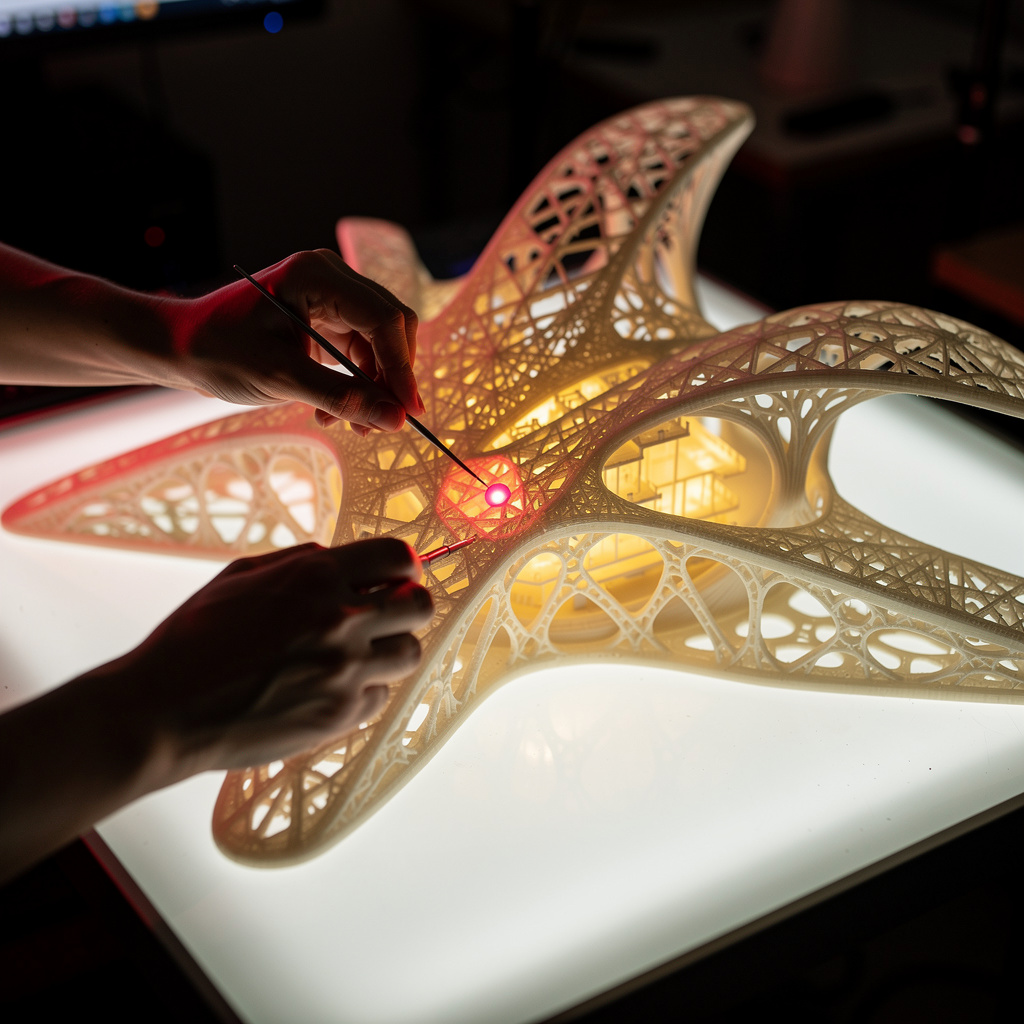
What is Generative Design in Architecture?
Generative Design in Architecture Training
The Generative Design in Architecture certificate program equips architects, computational designers, and advanced architecture students with the practical skills to move beyond static modeling and into algorithmic, data-driven form generation. This course teaches you how to translate design intent into parametric systems, explore vast solution spaces with evolutionary solvers, and integrate machine learning for adaptive form exploration—culminating in a portfolio-ready project that demonstrates performance-driven design and digital fabrication readiness. It is designed for professionals who want to lead the shift toward intelligent, responsive architectural workflows and for students seeking a competitive edge in computational design.
The program is structured as a beginner-friendly progression that balances theoretical foundations with hands-on studio exercises, building five core skill areas: computational thinking, parametric and associative geometry, algorithmic and procedural modeling, optimization and machine learning integration, and interactive real-time environments. Starting with the fundamentals of generative logic and associative geometry, you will advance through data-driven workflows, evolutionary solvers, and performance simulation, finally applying your knowledge to digital fabrication and industry case studies. Choosing this program now positions you at the forefront of a rapidly transforming field—where generative design is becoming the standard for tackling complex sustainability, material efficiency, and customization challenges in contemporary architecture.
What is Generative Design in Architecture?
Generative design in architecture is a computational methodology that uses algorithmic rules, parametric relationships, and iterative processes to produce and evaluate a wide range of design alternatives. Rather than manually crafting a single solution, the architect defines a set of design parameters, constraints, and goals, and the system generates multiple viable options that respond to those inputs. Core concepts include associative geometry, where changes propagate through a model automatically; procedural rule-based systems that mimic natural growth or urban patterns; and evolutionary optimization, which uses genetic algorithms to search for high-performing designs based on criteria like structural efficiency, daylight access, or energy consumption.
Today, generative design is reshaping how architects approach complex problems, from high-rise facades that adapt to solar radiation to urban layouts that optimize pedestrian flow and microclimate. It is widely used in leading firms such as Zaha Hadid Architects and Foster + Partners, and is embedded in software like Grasshopper, Dynamo, and Rhino.Inside.Revit. The recent integration of machine learning has expanded its scope, enabling form exploration that learns from historical data and predicts performance outcomes in real time. With the growing demand for sustainable and resilient buildings, generative design offers a systematic way to balance multiple, often conflicting, performance criteria—making it an essential methodology in both academic research and professional practice.
Mastering generative design builds a robust skill stack that combines algorithmic thinking, scripting, data analysis, and digital fabrication awareness—capabilities that are increasingly sought after in architecture firms, engineering consultancies, and tech-driven construction companies. It empowers you to move from a designer of static forms to a designer of design systems, capable of creating adaptable, high-performance architecture that responds to environmental, social, and economic pressures. Whether you aim to lead computational design teams, develop custom design tools, or pursue research in generative methods, this subject provides the intellectual and technical foundation to innovate at the intersection of computation and built form.
Common Questions About Generative Design in Architecture
Is this generative design architecture course suitable for beginners?
What does the certificate from this generative design course add to an architecture CV?
How does the intent-logic-algorithm-geometry pipeline guide algorithmic thinking?
What is the difference between parametric modeling and associative geometry?
Why are Voronoi diagrams and Delaunay triangulation used together in form generation?
What is the role of a fitness function in evolutionary optimization?
- Measures performance: it quantifies criteria such as daylight, structural efficiency, or circulation distance.
- Balances trade-offs: it weights multiple objectives so a design that excels in one area but fails in another is ranked honestly.
- Guides the search: it creates a fitness landscape with peaks and valleys that the solver explores across generations.
Does generative design in architecture replace the architect's creativity?
What Will This Course Bring You?
- Analyze architectural design problems to identify where generative methods can enhance creativity and efficiency.
- Design parametric models using associative geometry to control complex form variations and maintain design intent.
- Implement algorithmic form generation techniques to explore novel architectural geometries beyond traditional design methods.
- Apply procedural and rule-based systems to automate design generation based on contextual constraints and design rules.
- Evaluate data-driven design workflows to integrate performance data into generative processes for informed decision-making.
- Build evolutionary optimization models to refine design solutions toward multiple conflicting objectives simultaneously.
- Apply machine learning algorithms for form exploration and pattern recognition to generate adaptive architectural solutions.
- Integrate performance-driven generative design to optimize building performance metrics such as energy and daylight.
Curriculum
12 Units1. Foundations of Generative Design in Architecture
1 hour
2. Computational Thinking for Architects
1 hour
3. Parametric Modeling and Associative Geometry
1 hour
4. Algorithmic Form Generation
1 hour
5. Procedural and Rule-Based Systems
1 hour
6. Data-Driven Design Workflows
1 hour
7. Evolutionary Optimization and Solvers
1 hour
8. Machine Learning for Form Exploration
1 hour
9. Performance-Driven Generative Design
1 hour
10. Interactive and Real-Time Design Environments
1 hour
11. Digital Fabrication and Materialization
1 hour
12. Industry Applications and Future Directions
1 hour
Exam – Generative Design in Architecture
20 Questions • 70% Pass • 30 min
Unlock All Units for Free
Create an account, enroll in the course, and start with the first unit right away.
Exam – Generative Design in Architecture
20 Questions • Pass: 70% • 30 min
Course Duration
720
Total Minutes
12
Unit
1
Final Exam
~60
Min / Unit
Generative Design in Architecture Certificate Program
Document Your Skill
Those who pass the 20-question, 30-minute exam with 70% receive the Generative Design in Architecture Certificate.
Stand Out on Your CV
By adding your certificate to your CV, gain a professional reference in job applications and stand out from the crowd.
Career Advantage
Catch Wisdom certificates are recognized by HR departments and increase career opportunities.
CERTIFICATE FEE
At the end of the course, an online exam consisting of 20 questions with a 30-minute time limit is given. The exam appears automatically after you complete the topics. Anyone who scores at least 70 out of 100 on the certificate exam is awarded the Generative Design in Architecture Document (certificate of attendance). You can add the certificate you earn to your CV for job applications in the many sectors listed above, and use it as a reference proving that you took this interactive course.
The Certificate of Achievement you receive with the Generative Design in Architecture course program holds value that proves your personal and professional development in the business world. By adding it to your CV, it can serve as an important reference in your job applications. Moreover, compared with certificates from other private training institutions, Catch Wisdom certificates are offered to our participants at a much more affordable price.
Because HR departments recognize Catch Wisdom as a reputable institution in this field, they value these certificates and may evaluate your job applications favorably. For this reason, a Generative Design in Architecture course certificate from Catch Wisdom can make your applications more attractive and place you in an advantageous position in the business world.
For more information, we recommend visiting the Support page.
Certificate in 7 Languages
Earning success certificates from our courses is now more meaningful and global. With certificates available in Turkish, English, German, French, Spanish, Arabic, and Russian, we fully unlock the potential of students worldwide.
Why Certificate in 7 Languages?
-
01
Global Skill Development
Receiving your certificates in 7 different languages strengthens your communication skills as you engage with more people worldwide. It lets you operate more confidently and capably on the international stage.
-
02
International Job Opportunities
Employers may see your certificates in multiple languages as a sign of your ability to seize global opportunities. You can open more doors to new jobs and projects.
-
03
Cultural Richness
The chance to earn certificates in different languages helps you build closer ties with various cultures and broadens your worldview. It enriches your global perspective and deepens cultural understanding.
-
04
Ability to Participate in International Projects
Multilingual certificates give you an edge to work more effectively on international projects. They boost your chances of leadership and participation in diverse projects in the business world.
-
05
Prove Yourself on the Global Stage
Certificates in multiple languages let you showcase your skills and knowledge worldwide. You can become an internationally recognized professional.
Language diversity opens worldwide opportunities. If you want to prove yourself in the international arena, join our online Generative Design in Architecture course program and begin this journey with us.
Frequently Asked Questions (FAQ)
Is this course paid?
How do I join the course?
Can I take the course at my own pace?
How can I get my certificate?
What are the advantages of the Certified Certificate?
Boost Your Career
Take a new career step with the Generative Design in Architecture course. Add your certificate to your CV, stand out in job applications, and open the door to new opportunities in the industry.
StartStudent Reviews
No reviews yet
Enroll in this course and be the first to leave a review about your experience with Generative Design in Architecture.
Start