What is Halal Food Value Chain?
Halal Food Value Chain Training
The Halal Food Value Chain certificate program offers a comprehensive, end-to-end understanding of how halal integrity is maintained from farm to fork, covering everything from dietary law foundations to global trade dynamics. Designed for food industry professionals, quality assurance managers, supply chain specialists, entrepreneurs, and compliance officers, this program equips participants with the practical skills to design, audit, and manage halal-compliant operations. By the end, learners will be able to map value chain touchpoints, implement certification-ready processes, and build consumer trust through transparent halal practices.
The curriculum progresses from foundational concepts—such as halal dietary law and value chain mapping—through sourcing, processing, certification, logistics, packaging, retail, and safety, culminating in advanced topics like technology adoption, international trade, and sustainability. This beginner-friendly structure balances theoretical frameworks with real-world case studies, building core competencies across four key areas: regulatory compliance, operational integrity, supply chain traceability, and strategic market positioning. Choosing this program now positions you at the forefront of a rapidly expanding global halal market, where demand for skilled professionals who can navigate both religious compliance and modern business challenges has never been higher.
What is Halal Food Value Chain?
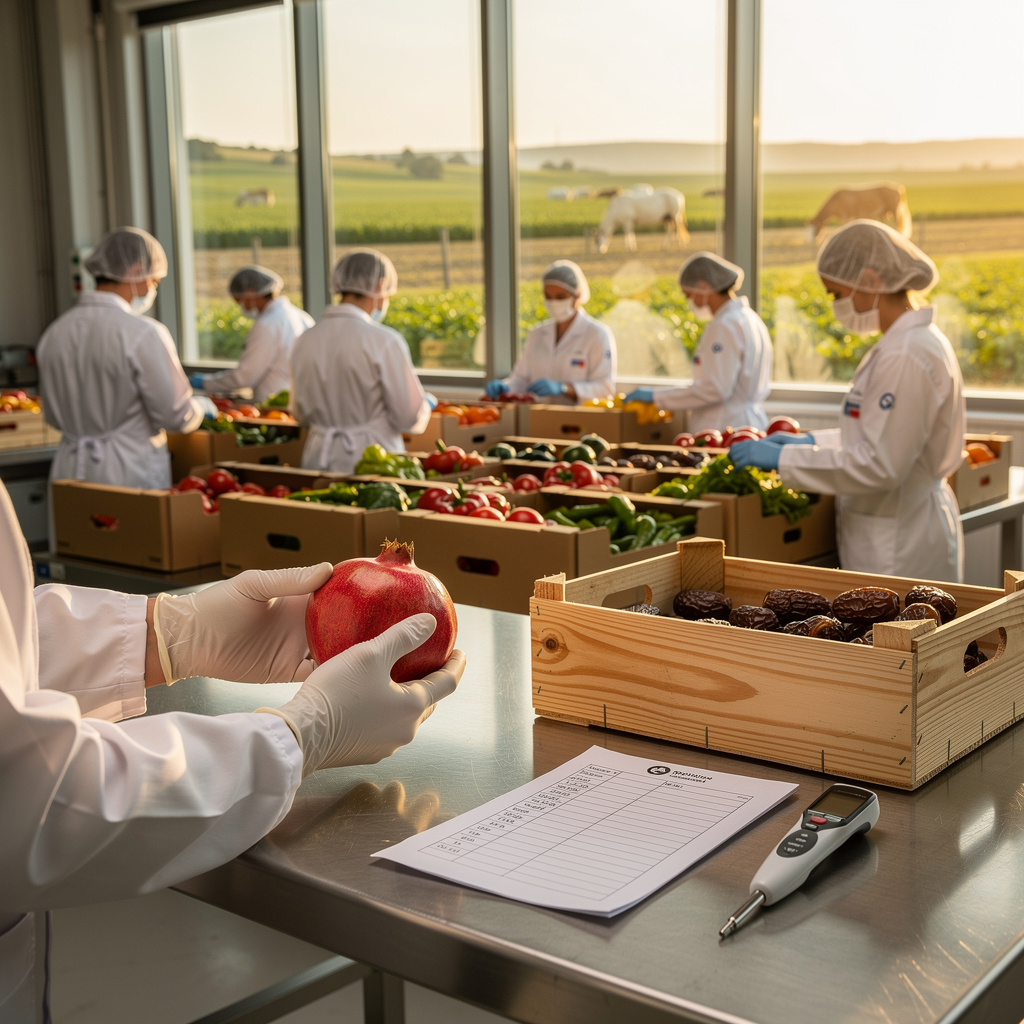
The halal food value chain refers to the entire sequence of activities—from sourcing raw materials, through processing, manufacturing, packaging, logistics, and retail—that ensures food products remain permissible (halal) under Islamic law. Core concepts include the prohibition of certain substances (e.g., pork and alcohol), the requirement for humane animal slaughter, and the avoidance of cross-contamination with non-halal items. This value chain integrates religious principles with operational standards, requiring meticulous documentation, segregation, and verification at every stage to maintain halal status.
Today, the halal food value chain is a global industry worth over $2 trillion, driven by a growing Muslim population and increasing demand for ethical, clean, and transparent food systems. It is applied in diverse real-world contexts, from multinational food corporations and dedicated halal certifying bodies to logistics providers and e-commerce platforms. Recent shifts include the adoption of blockchain for traceability, AI-driven quality control, and the expansion of halal standards into pharmaceuticals and cosmetics, making the value chain more complex and technology-dependent than ever before.
Mastering the halal food value chain builds a robust skill stack that combines regulatory literacy, supply chain management, quality assurance, and cross-cultural communication. Professionals who understand this subject can effectively bridge the gap between religious compliance and modern business efficiency, making them invaluable in roles such as halal auditors, compliance managers, procurement specialists, and market development strategists. Beyond career advancement, this knowledge empowers entrepreneurs to innovate in halal product development and enables consumers to make informed choices, fostering a more ethical and inclusive food ecosystem.
Common Questions About Halal Food Value Chain
How does halal food value chain certification boost your CV?
What job roles benefit from halal food certification?
How does cross-contamination happen in halal food processing?
- Direct contact: Halal ingredients are mixed with haram ones, such as through shared storage or improper segregation.
- Indirect contact: Shared equipment, utensils, or surfaces that have not been adequately cleaned between runs.
- Airborne contamination: Particles or aerosols from non-halal products processed in the same facility.
What is the three-tier risk classification in halal sourcing?
- Tier 1 (High risk): Animal-derived ingredients, enzymes, and flavorings that often require halal certification.
- Tier 2 (Medium risk): Processed ingredients like emulsifiers or starches that may have been contaminated during production.
- Tier 3 (Low risk): Pure plant-based or mineral ingredients with minimal risk.
Why is traceability critical in halal packaging and labeling?
What are the four principles of halal logistics?
Is halal food only about avoiding pork and alcohol?
What Will This Course Bring You?
- Analyze the foundational principles of Halal dietary law to determine compliance requirements across the value chain.
- Map the stages of the Halal food value chain to identify critical control points for integrity maintenance.
- Evaluate sourcing strategies for raw materials to ensure Halal authenticity and prevent contamination.
- Design a Halal processing workflow that adheres to manufacturing standards and avoids cross-contamination.
- Apply Halal certification and regulatory standards to develop a compliance checklist for facility audits.
- Implement traceability systems that integrate packaging, labeling, and digital records to verify Halal status.
- Develop a Halal marketing plan that leverages consumer trust and transparent communication of certification.
- Assess global trade regulations and market entry strategies for Halal products in international contexts.
Curriculum
12 Units1. Foundations of Halal Dietary Law
1 hour
2. Mapping the Halal Food Value Chain
1 hour
3. Halal Sourcing and Raw Material Integrity
1 hour
4. Halal Processing and Manufacturing
1 hour
5. Halal Certification and Regulatory Standards
1 hour
6. Halal Logistics and Supply Chain Management
1 hour
7. Halal Packaging, Labeling, and Traceability
1 hour
8. Halal Retail, Marketing, and Consumer Trust
1 hour
9. Halal Food Safety and Quality Management
1 hour
10. Technology and Digital Solutions in the Halal Value Chain
1 hour
11. Global Halal Market and International Trade
1 hour
12. Sustainability and Ethics in the Halal Food Value Chain
1 hour
Exam – Halal Food Value Chain
20 Questions • 70% Pass • 30 min
Unlock All Units for Free
Create an account, enroll in the course, and start with the first unit right away.
Exam – Halal Food Value Chain
20 Questions • Pass: 70% • 30 min
Course Duration
720
Total Minutes
12
Unit
1
Final Exam
~60
Min / Unit
Halal Food Value Chain Certificate Program
Document Your Skill
Those who pass the 20-question, 30-minute exam with 70% receive the Halal Food Value Chain Certificate.
Stand Out on Your CV
By adding your certificate to your CV, gain a professional reference in job applications and stand out from the crowd.
Career Advantage
Catch Wisdom certificates are recognized by HR departments and increase career opportunities.
CERTIFICATE FEE
At the end of the course, an online exam consisting of 20 questions with a 30-minute time limit is given. The exam appears automatically after you complete the topics. Anyone who scores at least 70 out of 100 on the certificate exam is awarded the Halal Food Value Chain Document (certificate of attendance). You can add the certificate you earn to your CV for job applications in the many sectors listed above, and use it as a reference proving that you took this interactive course.
The Certificate of Achievement you receive with the Halal Food Value Chain course program holds value that proves your personal and professional development in the business world. By adding it to your CV, it can serve as an important reference in your job applications. Moreover, compared with certificates from other private training institutions, Catch Wisdom certificates are offered to our participants at a much more affordable price.
Because HR departments recognize Catch Wisdom as a reputable institution in this field, they value these certificates and may evaluate your job applications favorably. For this reason, a Halal Food Value Chain course certificate from Catch Wisdom can make your applications more attractive and place you in an advantageous position in the business world.
For more information, we recommend visiting the Support page.
Certificate in 7 Languages
Earning success certificates from our courses is now more meaningful and global. With certificates available in Turkish, English, German, French, Spanish, Arabic, and Russian, we fully unlock the potential of students worldwide.
Why Certificate in 7 Languages?
-
01
Global Skill Development
Receiving your certificates in 7 different languages strengthens your communication skills as you engage with more people worldwide. It lets you operate more confidently and capably on the international stage.
-
02
International Job Opportunities
Employers may see your certificates in multiple languages as a sign of your ability to seize global opportunities. You can open more doors to new jobs and projects.
-
03
Cultural Richness
The chance to earn certificates in different languages helps you build closer ties with various cultures and broadens your worldview. It enriches your global perspective and deepens cultural understanding.
-
04
Ability to Participate in International Projects
Multilingual certificates give you an edge to work more effectively on international projects. They boost your chances of leadership and participation in diverse projects in the business world.
-
05
Prove Yourself on the Global Stage
Certificates in multiple languages let you showcase your skills and knowledge worldwide. You can become an internationally recognized professional.
Language diversity opens worldwide opportunities. If you want to prove yourself in the international arena, join our online Halal Food Value Chain course program and begin this journey with us.
Frequently Asked Questions (FAQ)
Is this course paid?
How do I join the course?
Can I take the course at my own pace?
How can I get my certificate?
What are the advantages of the Certified Certificate?
Boost Your Career
Take a new career step with the Halal Food Value Chain course. Add your certificate to your CV, stand out in job applications, and open the door to new opportunities in the industry.
StartStudent Reviews
No reviews yet
Enroll in this course and be the first to leave a review about your experience with Halal Food Value Chain.
Start