What is Hanbok: Traditional Dress and Modern Fashion?
Hanbok: Traditional Dress and Modern Fashion Certificate Program
Hanbok: Traditional Dress and Modern Fashion certificate program provides a comprehensive study of Korea’s traditional attire and its evolving role in contemporary design. It is designed for designers, cultural historians, stylists, and fashion enthusiasts who want to understand hanbok from its historical foundations to its modern adaptations. Learners examine garment structure, symbolic color systems, ceremonial contexts, and the textile traditions that define hanbok’s visual identity. The main practical outcome is the ability to analyze, style, and communicate hanbok-informed design concepts with historical accuracy and contemporary relevance.
The program progresses from foundational lessons on form, meaning, and identity through historical evolution, garment components, and symbolic textiles, ensuring beginners can build knowledge step by step. Theoretical study of court dress, regional traditions, and colonial modernity is balanced with practical work in styling, accessory selection, and occasion-based wear. Across twelve lessons, learners develop five core skill areas: historical analysis, structural garment literacy, symbolic color and textile interpretation, contextual styling, and sustainable production awareness. This program is chosen now because hanbok is experiencing a global revival in media, pop culture, and fashion systems, creating demand for professionals who can bridge tradition and innovation responsibly.
What is Hanbok: Traditional Dress and Modern Fashion?
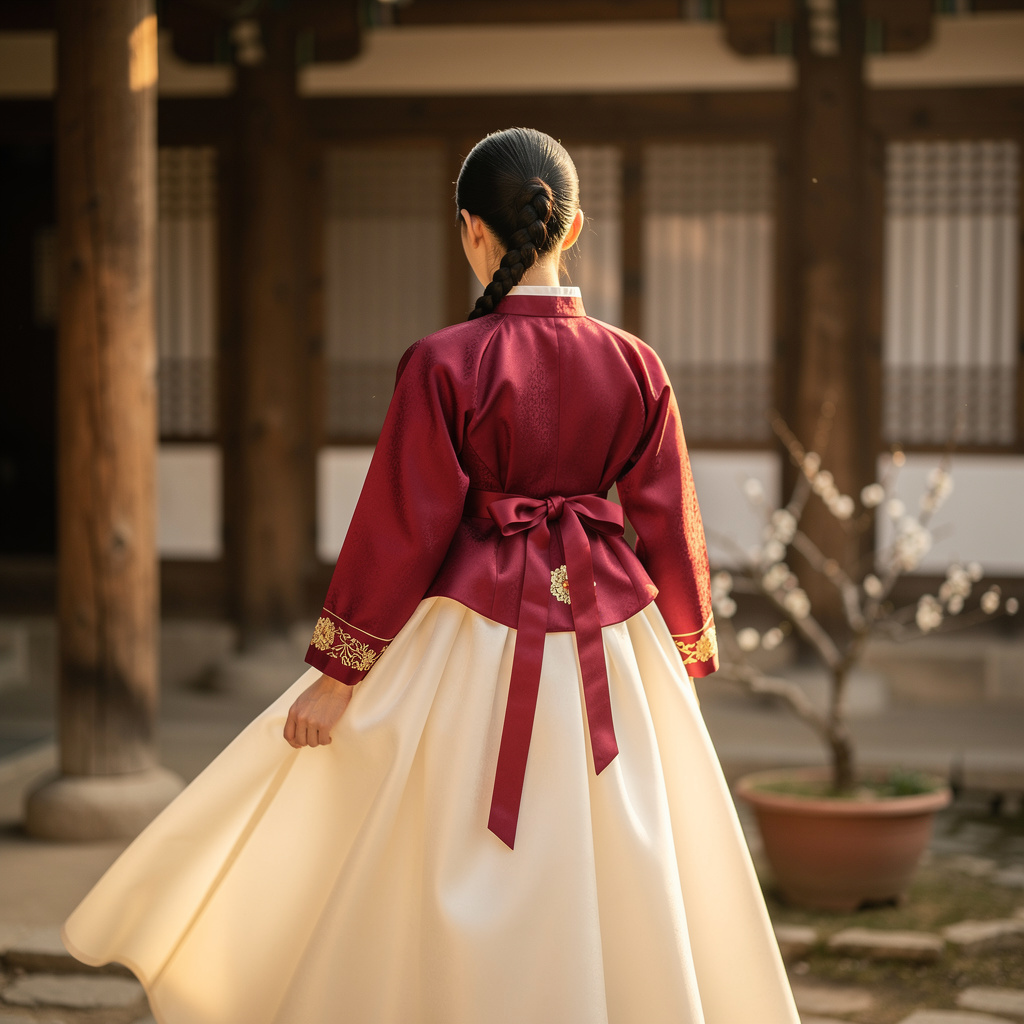
Hanbok is the traditional clothing system of Korea, characterized by distinctive silhouettes such as the jeogori, chima, and baji, along with layered construction and symbolic color use. Its scope extends beyond garments to include textiles, accessories, ceremonial protocols, and status markers that have evolved from the Three Kingdoms period through the Joseon dynasty to the present. Core concepts include the relationship between form and social identity, the codification of color and motif, and the distinction between ritual, court, and everyday dress. Understanding hanbok requires attention to both its material construction and its embedded cultural meanings.
Today hanbok matters as a living cultural heritage and a dynamic resource for contemporary fashion, film, television, and global pop culture. It appears in museum curation, tourism experiences, K-drama costume design, and sustainable fashion initiatives that value repair and slow production. Recent shifts include the rise of lifestyle hanbok, gender-neutral adaptations, and digital pattern archives that make historical construction accessible to independent designers. Academic research increasingly examines colonial-era decline and revival movements, positioning hanbok within postcolonial and globalization studies.
Mastering hanbok knowledge builds a skill stack that combines historical research, visual analysis, garment construction literacy, and culturally sensitive styling. These skills apply in fashion design, costume departments, cultural institutions, content creation, and sustainable product development where authenticity and innovation must coexist. Professionals in education, tourism, and media also benefit from the ability to interpret hanbok accurately and respectfully for diverse audiences. Personal enrichment comes from understanding how dress encodes identity, memory, and social change across centuries.
What Will This Course Bring You?
- Analyze hanbok’s foundational form, meaning, and identity by comparing core garment categories and their cultural significance in Korean dress.
- Trace the historical evolution of hanbok from the Three Kingdoms through Joseon using visual, archaeological, and textual evidence.
- Evaluate how jeogori, chima, and baji components construct hanbok silhouette by examining garment structure, layering, and construction techniques.
- Interpret hanbok textiles, colors, and symbolic motifs by decoding their meanings across ceremonial, ritual, and everyday dress contexts.
- Differentiate court, status-based, and regional hanbok traditions by classifying garments according to social rank, occasion, and geographic origin.
- Assess how colonial modernity shaped hanbok’s decline and revival by analyzing historical narratives, dress reforms, and cultural preservation efforts.
- Design an occasion-based contemporary hanbok styling plan with accessories that applies sustainable material and production choices.
- Evaluate hanbok representations in media and pop culture to propose innovation and preservation strategies for global audiences.
Curriculum
12 Units1. Foundations of Hanbok: Form, Meaning, and Identity
1 hour
2. Historical Evolution from Three Kingdoms to Joseon
1 hour
3. Structure, Silhouette, and Garment Components
1 hour
4. Textiles, Colors, and Symbolic Language
1 hour
5. Ritual, Ceremonial, and Everyday Dress
1 hour
6. Court, Status, and Regional Dress Traditions
1 hour
7. Colonial Modernity, Decline, and Revival
1 hour
8. Contemporary Hanbok and Lifestyle Adaptation
1 hour
9. Hanbok in Media, Pop Culture, and Global Reception
1 hour
10. Design, Production, and Sustainable Fashion Systems
1 hour
11. Styling, Accessories, and Occasion-Based Wear
1 hour
12. Innovation, Preservation, and Future Directions
1 hour
Exam – Hanbok: Traditional Dress and Modern Fashion
20 Questions • 70% Pass • 30 min
Unlock All Units for Free
Create an account, enroll in the course, and start with the first unit right away.
Exam – Hanbok: Traditional Dress and Modern Fashion
20 Questions • Pass: 70% • 30 min
Course Duration
720
Total Minutes
12
Unit
1
Final Exam
~60
Min / Unit
Hanbok: Traditional Dress and Modern Fashion Certificate Program
Document Your Skill
Those who pass the 20-question, 30-minute exam with 70% receive the Hanbok: Traditional Dress and Modern Fashion Certificate.
Stand Out on Your CV
By adding your certificate to your CV, gain a professional reference in job applications and stand out from the crowd.
Career Advantage
With the verification code, employers can check your certificate instantly — a concrete way to show your growth.
CERTIFICATE FEE
At the end of the course, an online exam consisting of 20 questions with a 30-minute time limit is given. The exam appears automatically after you complete the topics. Anyone who scores at least 70 out of 100 on the certificate exam is awarded the Hanbok: Traditional Dress and Modern Fashion Document (certificate of attendance). You can add the certificate you earn to your CV for job applications in the many sectors listed above, and use it as a reference proving that you took this interactive course.
The Certificate of Achievement you receive with the Hanbok: Traditional Dress and Modern Fashion course program holds value that proves your personal and professional development in the business world. By adding it to your CV, it can serve as an important reference in your job applications. Moreover, compared with certificates from other private training institutions, Catch Wisdom certificates are offered to our participants at a much more affordable price.
The Hanbok: Traditional Dress and Modern Fashion course certificate is a document that proves, with a unique verification code, that you completed the course. Employers can instantly check its authenticity with this code, which helps you show your development concretely in your job applications.
For more information, we recommend visiting the Support page.
Certificate in 7 Languages
Earning success certificates from our courses is now more meaningful and global. With certificates available in Turkish, English, German, French, Spanish, Arabic, and Russian, we fully unlock the potential of students worldwide.
Why Certificate in 7 Languages?
-
01
Global Skill Development
Receiving your certificates in 7 different languages strengthens your communication skills as you engage with more people worldwide. It lets you operate more confidently and capably on the international stage.
-
02
International Job Opportunities
Employers may see your certificates in multiple languages as a sign of your ability to seize global opportunities. You can open more doors to new jobs and projects.
-
03
Cultural Richness
The chance to earn certificates in different languages helps you build closer ties with various cultures and broadens your worldview. It enriches your global perspective and deepens cultural understanding.
-
04
Ability to Participate in International Projects
Multilingual certificates give you an edge to work more effectively on international projects. They boost your chances of leadership and participation in diverse projects in the business world.
-
05
Prove Yourself on the Global Stage
Certificates in multiple languages give you the opportunity to present your skills and knowledge worldwide.
Language diversity opens worldwide opportunities. If you want to prove yourself in the international arena, join our online Hanbok: Traditional Dress and Modern Fashion course program and begin this journey with us.
Frequently Asked Questions (FAQ)
Is this course paid?
How do I join the course?
Can I take the course at my own pace?
How can I get my certificate?
What are the advantages of the certificate?
Boost Your Career
Take a new career step with the Hanbok: Traditional Dress and Modern Fashion course. Add your certificate to your CV, stand out in job applications, and open the door to new opportunities in the industry.
StartStudent Reviews
No reviews yet
Enroll in this course and be the first to leave a review about your experience with Hanbok: Traditional Dress and Modern Fashion.
Start