What is Hand Embroidery Art?
Hand Embroidery Art Training
The Hand Embroidery Art certificate program offers a comprehensive journey into the timeless craft of needlework, from foundational tools and fabric preparation to advanced decorative techniques. Designed for beginners and experienced stitchers alike, this course teaches a full repertoire of stitches including running, backstitch, stem, chain, satin, French knots, cross stitch, ribbon embroidery, and beadwork. By the end, you will have the skills to design, transfer, and execute your own embroidery projects with confidence and precision.
The program is structured as a beginner-friendly progression that balances hands-on practice with essential theory, building core competencies in stitch mastery, pattern design, color theory, and finishing methods. With twelve focused lessons covering everything from basic stitches to project planning and framing, you will develop a versatile skill stack that applies to fashion, home décor, textile art, and personal creative expression. This is the ideal time to learn hand embroidery as the craft experiences a renaissance in slow fashion and mindful making.
What is Hand Embroidery Art?
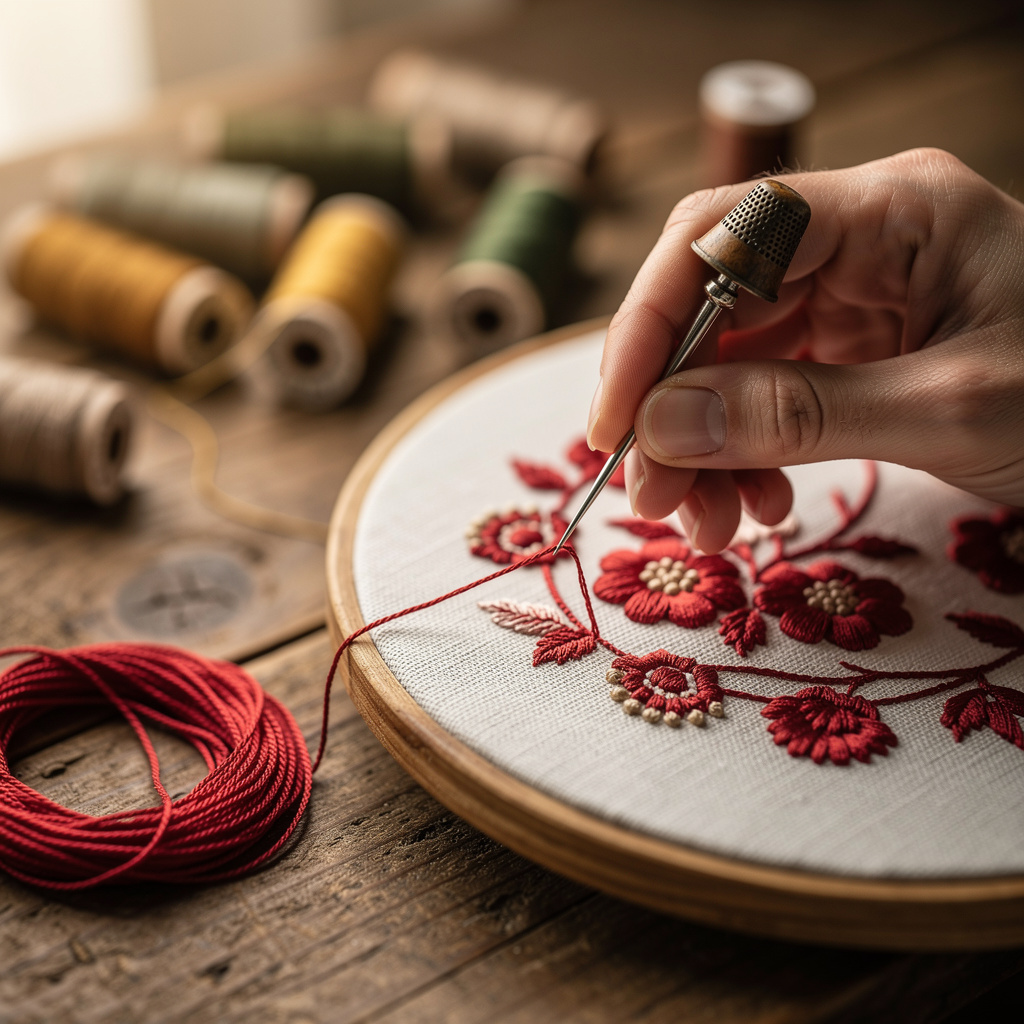
Hand embroidery art is the practice of decorating fabric using a needle and thread to create intricate patterns, textures, and images. It encompasses a wide range of techniques, from simple running stitches to complex satin fills, French knots, and bead embellishments. Core concepts include stitch selection, fabric tension, thread management, and pattern transfer, all of which combine to produce both functional and decorative textile pieces.
Today, hand embroidery is experiencing a resurgence as a form of mindful creativity and sustainable artistry. It is used in fashion design to add unique details to garments, in home décor for personalized linens and wall art, and in contemporary textile art exhibited in galleries. Recent shifts toward slow fashion and handmade goods have elevated embroidery from a domestic pastime to a respected craft with commercial and therapeutic value.
Mastering hand embroidery builds a skill stack that includes fine motor control, color harmony, pattern interpretation, and project management. These abilities benefit fashion designers, textile artists, hobbyists, and anyone seeking a meditative creative outlet. Whether you aim to launch a small business, enhance your wardrobe, or simply enjoy a relaxing craft, hand embroidery offers a versatile and rewarding path.
Common Questions About Hand Embroidery Art
Is the hand embroidery art course suitable for complete beginners?
What certification do I get after completing the hand embroidery course?
What is the difference between running stitch and backstitch in embroidery?
How do I choose the right needle for my embroidery project?
What are the steps to make a French knot in hand embroidery?
- Bring the needle up through the fabric at your desired point.
- Wrap the thread around the needle two or three times (depending on desired knot size).
- Insert the needle back into the fabric very close to where it emerged, but not in the exact same hole.
- Pull the thread gently while holding the wraps taut until the knot forms snugly against the fabric.
What is the best method for transferring embroidery patterns to fabric?
Do I need expensive materials to start hand embroidery?
What Will This Course Bring You?
- Select and prepare appropriate fabrics, needles, and threads for various hand embroidery projects.
- Execute running, backstitch, and stem stitch with consistent tension and even spacing.
- Apply chain stitch and its variations to create textured lines and decorative borders.
- Implement satin stitch and filling techniques to achieve smooth, solid color areas in embroidery.
- Produce French knots and decorative knots with uniform size and placement for dimensional accents.
- Design original embroidery patterns and transfer them accurately onto fabric using multiple methods.
- Evaluate and apply appropriate finishing and framing techniques to preserve and display completed embroidery pieces.
Curriculum
12 Units1. Tools, Materials, and Fabric Preparation
1 hour
2. Basic Stitches: Running, Backstitch, and Stem Stitch
1 hour
3. Chain Stitches and Variations
1 hour
4. Satin Stitch and Filling Techniques
1 hour
5. French Knots and Decorative Knots
1 hour
6. Cross Stitch and Counted Thread Techniques
1 hour
7. Ribbon Embroidery and Specialty Threads
1 hour
8. Bead Embroidery and Sequins
1 hour
9. Pattern Design and Transfer Methods
1 hour
10. Color Theory and Thread Selection
1 hour
11. Finishing and Framing
1 hour
12. Project Planning and Execution
1 hour
Exam – Hand Embroidery Art
20 Questions • 70% Pass • 30 min
Unlock All Units for Free
Create an account, enroll in the course, and start with the first unit right away.
Exam – Hand Embroidery Art
20 Questions • Pass: 70% • 30 min
Course Duration
720
Total Minutes
12
Unit
1
Final Exam
~60
Min / Unit
Hand Embroidery Art Certificate Program
Document Your Skill
Those who pass the 20-question, 30-minute exam with 70% receive the Hand Embroidery Art Certificate.
Stand Out on Your CV
By adding your certificate to your CV, gain a professional reference in job applications and stand out from the crowd.
Career Advantage
With the verification code, employers can check your certificate instantly — a concrete way to show your growth.
CERTIFICATE FEE
At the end of the course, an online exam consisting of 20 questions with a 30-minute time limit is given. The exam appears automatically after you complete the topics. Anyone who scores at least 70 out of 100 on the certificate exam is awarded the Hand Embroidery Art Document (certificate of attendance). You can add the certificate you earn to your CV for job applications in the many sectors listed above, and use it as a reference proving that you took this interactive course.
The Certificate of Achievement you receive with the Hand Embroidery Art course program holds value that proves your personal and professional development in the business world. By adding it to your CV, it can serve as an important reference in your job applications. Moreover, compared with certificates from other private training institutions, Catch Wisdom certificates are offered to our participants at a much more affordable price.
The Hand Embroidery Art course certificate is a document that proves, with a unique verification code, that you completed the course. Employers can instantly check its authenticity with this code, which helps you show your development concretely in your job applications.
For more information, we recommend visiting the Support page.
Certificate in 7 Languages
Earning success certificates from our courses is now more meaningful and global. With certificates available in Turkish, English, German, French, Spanish, Arabic, and Russian, we fully unlock the potential of students worldwide.
Why Certificate in 7 Languages?
-
01
Global Skill Development
Receiving your certificates in 7 different languages strengthens your communication skills as you engage with more people worldwide. It lets you operate more confidently and capably on the international stage.
-
02
International Job Opportunities
Employers may see your certificates in multiple languages as a sign of your ability to seize global opportunities. You can open more doors to new jobs and projects.
-
03
Cultural Richness
The chance to earn certificates in different languages helps you build closer ties with various cultures and broadens your worldview. It enriches your global perspective and deepens cultural understanding.
-
04
Ability to Participate in International Projects
Multilingual certificates give you an edge to work more effectively on international projects. They boost your chances of leadership and participation in diverse projects in the business world.
-
05
Prove Yourself on the Global Stage
Certificates in multiple languages give you the opportunity to present your skills and knowledge worldwide.
Language diversity opens worldwide opportunities. If you want to prove yourself in the international arena, join our online Hand Embroidery Art course program and begin this journey with us.
Frequently Asked Questions (FAQ)
Is this course paid?
How do I join the course?
Can I take the course at my own pace?
How can I get my certificate?
What are the advantages of the certificate?
Boost Your Career
Take a new career step with the Hand Embroidery Art course. Add your certificate to your CV, stand out in job applications, and open the door to new opportunities in the industry.
StartStudent Reviews
No reviews yet
Enroll in this course and be the first to leave a review about your experience with Hand Embroidery Art.
Start