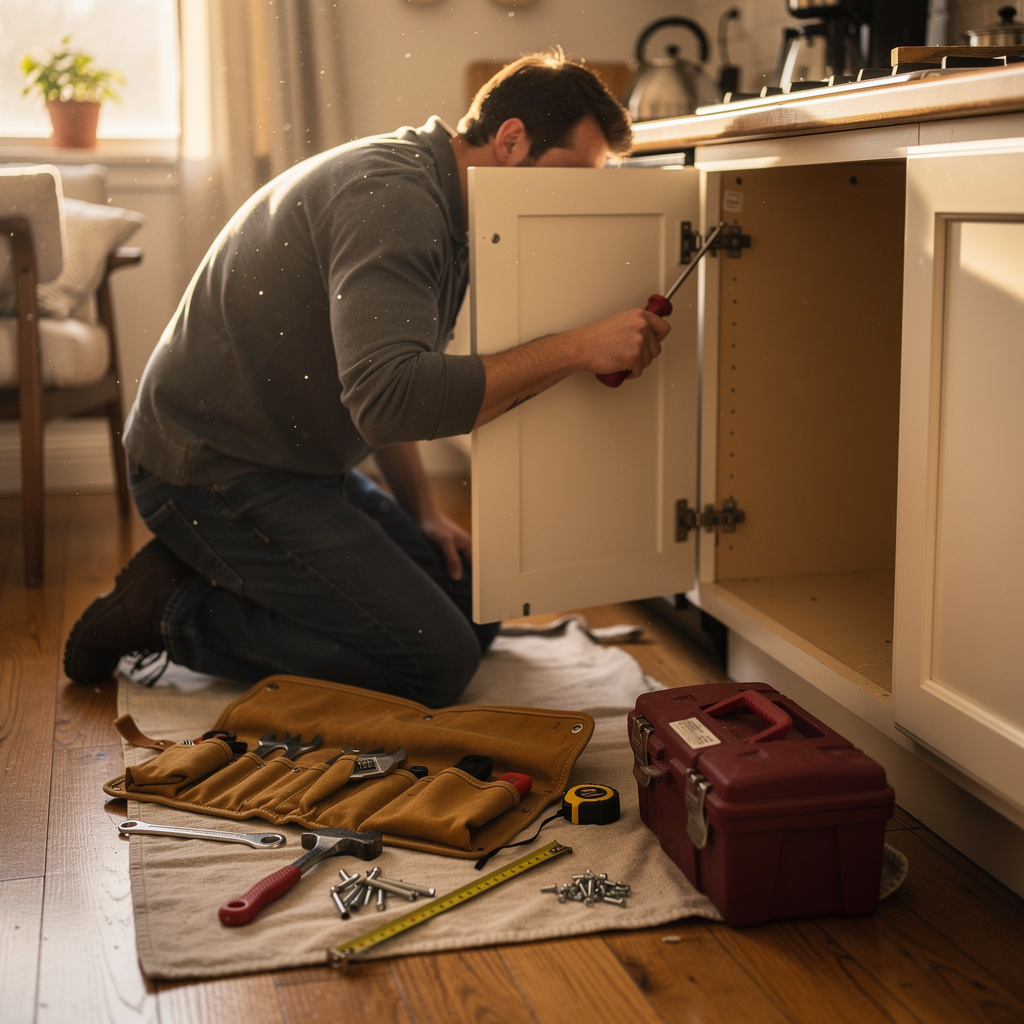
What is Home Repair Basics?
Home Repair Basics Training
Home Repair Basics certificate program is designed for homeowners, renters, and aspiring handypersons who want to handle common household repairs safely and confidently. The course teaches practical safety and utility shutoff procedures, correct tool and fastener selection, accurate measuring, stud finding, drywall and plaster patching, caulking and weatherstripping, interior painting, basic plumbing and electrical repairs, door and window hardware adjustments, flooring and trim fixes, and preventive maintenance planning. It suits beginners who need a structured foundation as well as experienced DIYers who want to close knowledge gaps and work more methodically. The main practical outcome is the ability to diagnose common household problems, choose safe repair limits, and complete routine fixes with professional-level care.
The program is structured as a beginner-friendly progression that starts with safety, utility control, tools, and measuring before moving into wall systems, surface repairs, weather sealing, finishes, plumbing, electrical basics, hardware, flooring, trim, and maintenance planning. Each stage balances short theoretical explanations with hands-on practice, so learners connect building science and material behavior to real repair decisions rather than memorizing isolated tricks. It builds five core skill areas: safe work and utility isolation, tool and measurement competence, surface and envelope repair, basic plumbing and electrical troubleshooting, and finish carpentry plus preventive maintenance planning. Learners choose this program now because housing stock is aging, repair costs are rising, and well-informed maintenance decisions protect both property value and personal safety.
What is Home Repair Basics?
Home repair basics is the practical body of knowledge used to maintain, adjust, and restore common residential building systems without overstepping legal or safety limits. Its scope covers minor plumbing and electrical work, wall and ceiling surface repair, weatherization, painting and finishing, hardware adjustment, flooring and trim repair, and routine preventive maintenance. Core concepts include utility isolation, load paths and stud location, material compatibility, moisture control, measurement tolerances, fastener selection, and knowing when a task requires a licensed specialist. The subject sits at the intersection of building science, craft technique, and risk management rather than being a simple collection of quick fixes.
This subject matters today because aging housing stock, rising contractor costs, and greater awareness of indoor air quality and energy loss make informed maintenance a daily necessity. In real life, it is used by homeowners, landlords, property managers, facilities staff, remodelers, and maintenance technicians who need to stabilize small problems before they become expensive failures. Recent shifts toward weatherization, water-damage prevention, and code-aware DIY work have made basic repair literacy more valuable, while online information has increased the need for reliable judgment about safe limits. Building science and vocational training also rely on these fundamentals as the foundation for more advanced inspection, renovation, and trade specialization.
Mastering this subject builds a skill stack that combines diagnostic reasoning, safe tool use, accurate measurement, material selection, repair sequencing, and clear documentation of what was done and what should be referred to a professional. Those capabilities benefit personal contexts such as maintaining a first home, preparing a rental property, or managing a small renovation, and professional contexts such as property management, facilities maintenance, home inspection support, and apprenticeship preparation. The subject also strengthens risk assessment and communication, because a competent repair decision depends on recognizing hazards, understanding system interactions, and explaining limits clearly. This knowledge bridge turns general awareness into disciplined, repeatable repair judgment across surfaces, fixtures, envelopes, and basic building systems.
What Will This Course Bring You?
- Demonstrate safe home repair practices by locating and operating main water, gas, and electrical shutoffs before beginning common household repairs.
- Select and use essential hand tools, fasteners, and measuring devices accurately to complete basic repair and assembly tasks.
- Identify wall types and locate wall studs with a stud finder to safely install anchors and hang heavy objects.
- Repair drywall and plaster damage, then prepare and paint the patched surface by sanding, priming, and blending finish coats.
- Apply caulk and weatherstripping to seal drafts around windows, doors, and exterior gaps, evaluating seal quality after application.
- Diagnose plumbing leaks and repair faucet, toilet, and drain fixtures by using shutoffs, replacing seals, and tightening accessible pipe connections.
- Implement basic electrical repairs safely by identifying breaker circuits, testing for power, and replacing switches or receptacles under de-energized conditions.
- Repair or replace minor flooring, trim, and baseboard sections, adjust door, window, and cabinet hardware, and plan preventive maintenance using a project checklist.
Curriculum
12 Units1. Home Repair Safety and Utility Shutoffs
1 hour
2. Essential Tools, Fasteners, and Measuring
1 hour
3. Wall Types, Stud Finding, and Heavy Hanging
1 hour
4. Drywall and Plaster Patch Repair
1 hour
5. Caulking, Weatherstripping, and Draft Sealing
1 hour
6. Interior Painting and Surface Finishing
1 hour
7. Plumbing Shutoffs, Leaks, and Pipe Basics
1 hour
8. Faucet, Toilet, and Drain Fixture Repairs
1 hour
9. Basic Electrical Repairs and Breaker Safety
1 hour
10. Doors, Windows, and Cabinet Hardware
1 hour
11. Flooring, Trim, and Baseboard Repairs
1 hour
12. Preventive Maintenance and Repair Project Planning
1 hour
Exam – Home Repair Basics
20 Questions • 70% Pass • 30 min
Unlock All Units for Free
Create an account, enroll in the course, and start with the first unit right away.
Exam – Home Repair Basics
20 Questions • Pass: 70% • 30 min
Course Duration
720
Total Minutes
12
Unit
1
Final Exam
~60
Min / Unit
Home Repair Basics Certificate Program
Document Your Skill
Those who pass the 20-question, 30-minute exam with 70% receive the Home Repair Basics Certificate.
Stand Out on Your CV
By adding your certificate to your CV, gain a professional reference in job applications and stand out from the crowd.
Career Advantage
With the verification code, employers can check your certificate instantly — a concrete way to show your growth.
CERTIFICATE FEE
At the end of the course, an online exam consisting of 20 questions with a 30-minute time limit is given. The exam appears automatically after you complete the topics. Anyone who scores at least 70 out of 100 on the certificate exam is awarded the Home Repair Basics Document (certificate of attendance). You can add the certificate you earn to your CV for job applications in the many sectors listed above, and use it as a reference proving that you took this interactive course.
The Certificate of Achievement you receive with the Home Repair Basics course program holds value that proves your personal and professional development in the business world. By adding it to your CV, it can serve as an important reference in your job applications. Moreover, compared with certificates from other private training institutions, Catch Wisdom certificates are offered to our participants at a much more affordable price.
The Home Repair Basics course certificate is a document that proves, with a unique verification code, that you completed the course. Employers can instantly check its authenticity with this code, which helps you show your development concretely in your job applications.
For more information, we recommend visiting the Support page.
Certificate in 7 Languages
Earning success certificates from our courses is now more meaningful and global. With certificates available in Turkish, English, German, French, Spanish, Arabic, and Russian, we fully unlock the potential of students worldwide.
Why Certificate in 7 Languages?
-
01
Global Skill Development
Receiving your certificates in 7 different languages strengthens your communication skills as you engage with more people worldwide. It lets you operate more confidently and capably on the international stage.
-
02
International Job Opportunities
Employers may see your certificates in multiple languages as a sign of your ability to seize global opportunities. You can open more doors to new jobs and projects.
-
03
Cultural Richness
The chance to earn certificates in different languages helps you build closer ties with various cultures and broadens your worldview. It enriches your global perspective and deepens cultural understanding.
-
04
Ability to Participate in International Projects
Multilingual certificates give you an edge to work more effectively on international projects. They boost your chances of leadership and participation in diverse projects in the business world.
-
05
Prove Yourself on the Global Stage
Certificates in multiple languages give you the opportunity to present your skills and knowledge worldwide.
Language diversity opens worldwide opportunities. If you want to prove yourself in the international arena, join our online Home Repair Basics course program and begin this journey with us.
Frequently Asked Questions (FAQ)
Is this course paid?
How do I join the course?
Can I take the course at my own pace?
How can I get my certificate?
What are the advantages of the certificate?
Boost Your Career
Take a new career step with the Home Repair Basics course. Add your certificate to your CV, stand out in job applications, and open the door to new opportunities in the industry.
StartStudent Reviews
No reviews yet
Enroll in this course and be the first to leave a review about your experience with Home Repair Basics.
Start