What is Humanitarian Aid Worker Career Path?
Humanitarian Aid Worker Career Path Certificate Program
Humanitarian Aid Worker Career Path certificate program prepares learners to understand how humanitarian organizations structure roles, make ethical decisions, and deliver assistance in complex environments. It is designed for aspiring aid workers, career changers, early-career professionals, volunteers, and sector-adjacent staff who want a realistic and structured entry point into humanitarian work. Across the lessons, participants examine humanitarian roles and career families, core competencies, principles and accountability, field safety and risk management, well-being and duty of care, project cycle management and needs assessment, funding and grant management, coordination and localization, logistics and field operations, data and humanitarian technology, and professional development. The main practical outcome is a clear career roadmap and a role-ready foundation for pursuing entry-level or early mid-level positions and for planning further professional growth.
The program is structured as a beginner-friendly progression: it starts with the sector and role families, builds a base in principles, ethics, safety, and well-being, then moves into project cycle, funding, coordination, logistics, and data before closing with career launch and advancement. Theory is balanced with practical application through case-based exercises, role-focused scenarios, and reflective planning that connect each topic to real humanitarian work. It builds five core skill areas: sector literacy and career navigation; ethical, safe, and accountable practice; program and funding management; operational coordination, logistics, and information management; and professional resilience and advancement. Learners choose this program now because humanitarian work is changing under localization, digital transformation, funding scrutiny, and stronger duty-of-care expectations, and a structured pathway makes those demands easier to navigate.
What is Humanitarian Aid Worker Career Path?
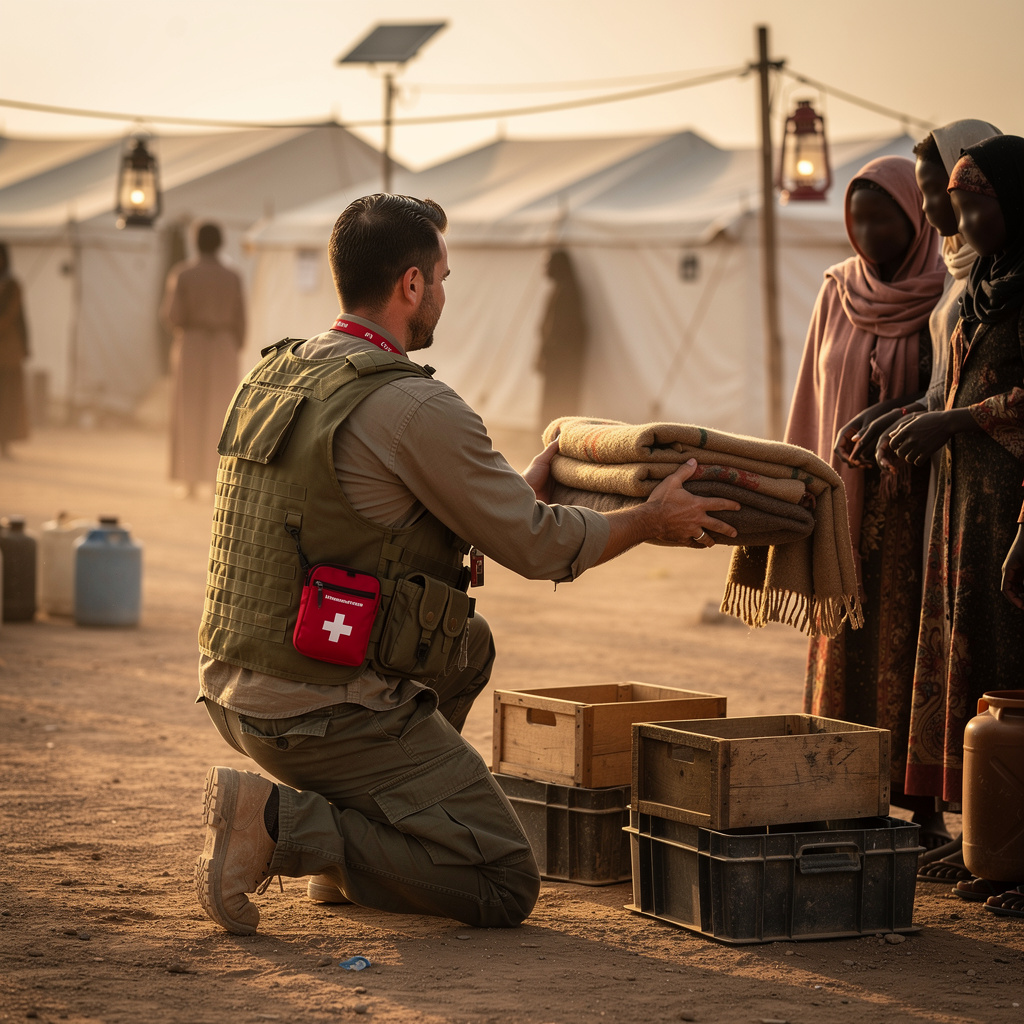
A humanitarian aid worker career path is the professional trajectory through which people enter, develop within, and advance across roles that support principled assistance to people affected by crises. Its scope covers the knowledge, behaviors, and operational systems that connect needs assessment and program design with funding, coordination, logistics, security, accountability, and staff well-being. Core concepts include humanitarian principles, impartiality and neutrality, accountability to affected populations, localization, risk management, project cycle management, and ethical decision-making under pressure. The subject is not a single job description but a family of roles spanning field operations, program support, coordination, information management, logistics, funding, and specialist functions.
This subject matters today because humanitarian needs are increasingly prolonged, climate-driven, and displacement-heavy, while access and funding face intense constraints. Humanitarian aid workers are used in NGOs, UN agencies, Red Cross and Red Crescent organizations, donor bodies, community-based partners, and specialist consultancies that respond to conflict, disaster, health emergencies, and protection crises. Recent shifts toward localization, cash and market-based assistance, data responsibility, remote management, and stronger safeguarding and duty-of-care standards have changed what effective humanitarian practice requires. These changes make career preparation more relevant than ever, because technical competence alone is insufficient without ethical judgment, coordination skill, and contextual awareness.
Mastering this subject builds a skill stack that combines analytical needs assessment, project and budget planning, stakeholder coordination, risk and security awareness, data literacy, ethical reasoning, and personal resilience. These capabilities are valuable in field roles, headquarters support functions, partner organizations, volunteering, and career transitions from sectors such as public health, logistics, education, social work, or international development. The subject also benefits people who work indirectly with humanitarian systems, including researchers, donors, policy staff, and community leaders who need to understand how aid is planned, funded, delivered, and held accountable. Ultimately, it equips professionals to navigate uncertainty, make defensible decisions, and sustain constructive careers in high-pressure environments.
What Will This Course Bring You?
- Differentiate humanitarian roles and career-path families, then build a targeted career-launch plan aligning personal qualifications with entry-level, mid-level, and specialist positions.
- Apply core competencies, humanitarian principles, ethics, and accountability standards to evaluate field decisions and design responsible community-facing aid interventions.
- Implement field safety, security, and risk-management procedures by assessing threats and drafting practical mitigation and incident-response plans for aid operations.
- Analyze well-being, resilience, and duty-of-care practices to build personal stress-management strategies and support team welfare in humanitarian field settings.
- Design a project cycle management plan that incorporates participatory needs assessment, logical frameworks, monitoring indicators, and evaluation methods for humanitarian programming.
- Evaluate humanitarian funding mechanisms and draft proposal components, budgets, and grant-management controls aligned with donor requirements and accountability standards.
- Apply coordination, partnership, and localization approaches to plan inclusive collaborations with local organizations and strengthen community-led humanitarian response.
- Use logistics, supply-chain, and data/information-management tools to plan field operations and track humanitarian assistance through appropriate technology and reporting systems.
Curriculum
12 Units1. Humanitarian Sector and Humanitarian Aid Worker Roles
1 hour
2. Mapping Career Paths and Role Families
1 hour
3. Core Competencies and Professional Skills
1 hour
4. Humanitarian Principles, Ethics, and Accountability
1 hour
5. Field Safety, Security, and Risk Management
1 hour
6. Well-being, Resilience, and Duty of Care
1 hour
7. Project Cycle Management and Needs Assessment
1 hour
8. Humanitarian Funding, Proposals, and Grant Management
1 hour
9. Coordination, Partnerships, and Localization
1 hour
10. Logistics, Supply Chain, and Field Operations
1 hour
11. Data, Information Management, and Humanitarian Technology
1 hour
12. Career Launch, Professional Development, and Advancement
1 hour
Exam – Humanitarian Aid Worker Career Path
20 Questions • 70% Pass • 30 min
Unlock All Units for Free
Create an account, enroll in the course, and start with the first unit right away.
Exam – Humanitarian Aid Worker Career Path
20 Questions • Pass: 70% • 30 min
Course Duration
720
Total Minutes
12
Unit
1
Final Exam
~60
Min / Unit
Humanitarian Aid Worker Career Path Certificate Program
Document Your Skill
Those who pass the 20-question, 30-minute exam with 70% receive the Humanitarian Aid Worker Career Path Certificate.
Stand Out on Your CV
By adding your certificate to your CV, gain a professional reference in job applications and stand out from the crowd.
Career Advantage
With the verification code, employers can check your certificate instantly — a concrete way to show your growth.
CERTIFICATE FEE
At the end of the course, an online exam consisting of 20 questions with a 30-minute time limit is given. The exam appears automatically after you complete the topics. Anyone who scores at least 70 out of 100 on the certificate exam is awarded the Humanitarian Aid Worker Career Path Document (certificate of attendance). You can add the certificate you earn to your CV for job applications in the many sectors listed above, and use it as a reference proving that you took this interactive course.
The Certificate of Achievement you receive with the Humanitarian Aid Worker Career Path course program holds value that proves your personal and professional development in the business world. By adding it to your CV, it can serve as an important reference in your job applications. Moreover, compared with certificates from other private training institutions, Catch Wisdom certificates are offered to our participants at a much more affordable price.
The Humanitarian Aid Worker Career Path course certificate is a document that proves, with a unique verification code, that you completed the course. Employers can instantly check its authenticity with this code, which helps you show your development concretely in your job applications.
For more information, we recommend visiting the Support page.
Certificate in 7 Languages
Earning success certificates from our courses is now more meaningful and global. With certificates available in Turkish, English, German, French, Spanish, Arabic, and Russian, we fully unlock the potential of students worldwide.
Why Certificate in 7 Languages?
-
01
Global Skill Development
Receiving your certificates in 7 different languages strengthens your communication skills as you engage with more people worldwide. It lets you operate more confidently and capably on the international stage.
-
02
International Job Opportunities
Employers may see your certificates in multiple languages as a sign of your ability to seize global opportunities. You can open more doors to new jobs and projects.
-
03
Cultural Richness
The chance to earn certificates in different languages helps you build closer ties with various cultures and broadens your worldview. It enriches your global perspective and deepens cultural understanding.
-
04
Ability to Participate in International Projects
Multilingual certificates give you an edge to work more effectively on international projects. They boost your chances of leadership and participation in diverse projects in the business world.
-
05
Prove Yourself on the Global Stage
Certificates in multiple languages give you the opportunity to present your skills and knowledge worldwide.
Language diversity opens worldwide opportunities. If you want to prove yourself in the international arena, join our online Humanitarian Aid Worker Career Path course program and begin this journey with us.
Frequently Asked Questions (FAQ)
Is this course paid?
How do I join the course?
Can I take the course at my own pace?
How can I get my certificate?
What are the advantages of the certificate?
Boost Your Career
Take a new career step with the Humanitarian Aid Worker Career Path course. Add your certificate to your CV, stand out in job applications, and open the door to new opportunities in the industry.
StartStudent Reviews
No reviews yet
Enroll in this course and be the first to leave a review about your experience with Humanitarian Aid Worker Career Path.
Start