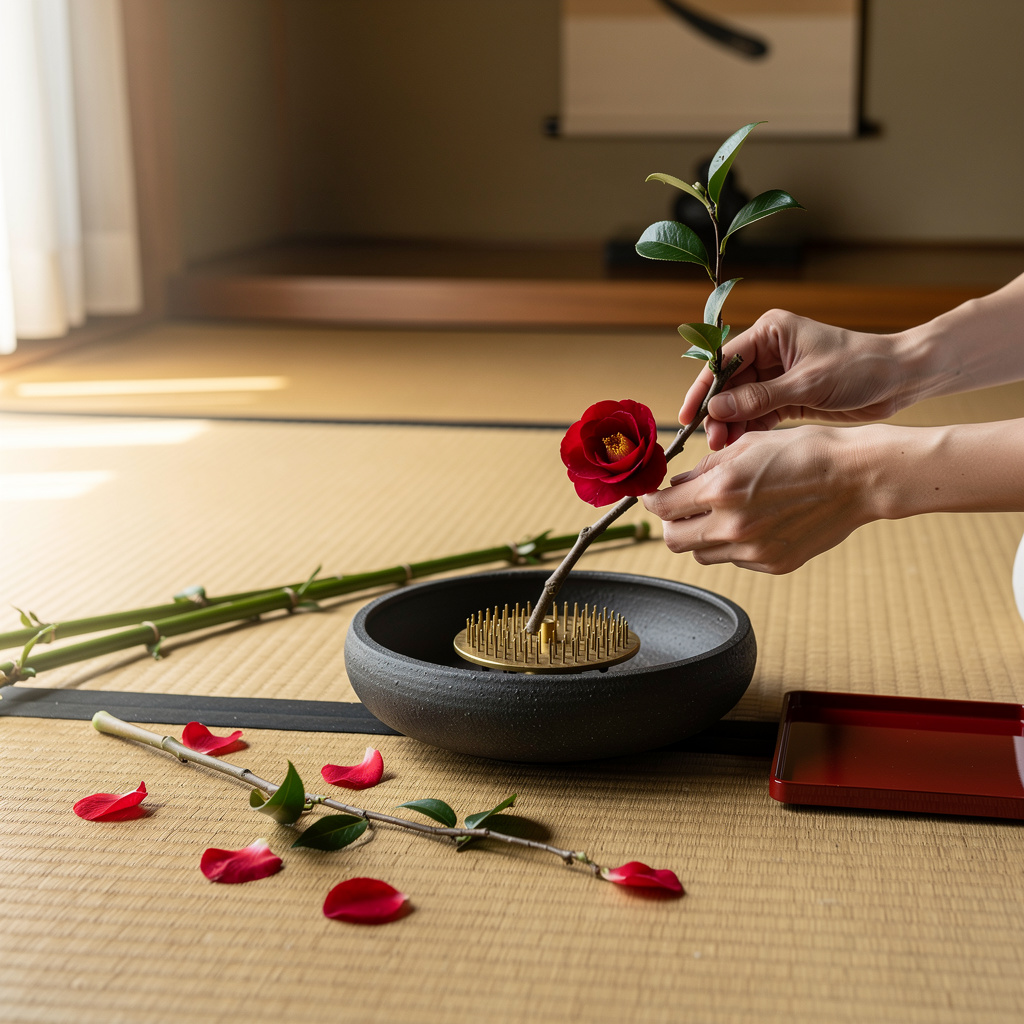
What is Ikebana: Japanese Flower Arranging?
Ikebana: Japanese Flower Arranging Training
The Ikebana: Japanese Flower Arranging certificate program is a comprehensive journey into the meditative art of Japanese floral design, guiding you from the philosophical roots of ikebana to the creation of your own original arrangements. This course is designed for absolute beginners as well as practicing florists, artists, and mindfulness seekers who want to master a disciplined yet expressive creative practice. By the end of the program, you will have designed a complete original arrangement that reflects your personal style while honoring centuries of ikebana tradition.
The program unfolds in a carefully sequenced, beginner-friendly progression that balances hands-on technique with deep conceptual understanding. Across twelve immersive lessons, you will build four core skill areas: structural composition through the Shin, Soe, and Hikae lines; stylistic versatility in both Moribana and Nageire forms; botanical craftsmanship including bending, wiring, and working with branches and leaves; and aesthetic sensitivity through color theory and seasonal expression. With the growing global interest in mindfulness, sustainability, and Japanese aesthetics, there has never been a better moment to develop a skill that enriches both your professional portfolio and your personal well-being.
What is Ikebana: Japanese Flower Arranging?
Ikebana, the Japanese art of flower arranging, is a disciplined practice that transforms natural materials into sculptural compositions defined by space, asymmetry, and balance. Unlike Western floral design, which often emphasizes fullness and color, ikebana treats empty space as an active element, and each stem, branch, and leaf is placed with deliberate intention. The practice is rooted in Buddhist philosophy and the Shinto reverence for nature, and it has evolved over six centuries into a refined art form with multiple schools and styles.
In today's world, ikebana has moved far beyond traditional tea rooms and temple alcoves. It is practiced globally in art studios, interior design, wellness retreats, and even corporate workshops, where its principles of mindfulness and intentionality resonate with modern audiences seeking calm and focus. Contemporary ikebana artists push the boundaries of the medium, incorporating unconventional materials and abstract forms, while the practice also aligns with current trends toward sustainability and slow living, making it more relevant than ever.
Mastering ikebana builds a distinctive skill stack that combines fine motor control, spatial reasoning, botanical knowledge, and aesthetic judgment. These competencies translate directly into careers in floral design, event styling, interior decoration, and art education, while also offering profound personal benefits such as reduced stress, heightened presence, and a deeper connection to nature. Whether you are an aspiring professional or a lifelong learner, the discipline of ikebana offers a transformative pathway to creative expression and inner balance.
Common Questions About Ikebana: Japanese Flower Arranging
How does an Ikebana certificate boost my CV?
Is Ikebana training suitable for complete beginners?
What is the difference between Moribana and Nageire styles?
- Container: Moribana uses a low, wide dish; Nageire uses a tall, narrow vase.
- Support: Moribana relies on a kenzan; Nageire uses the vase's mouth and internal structure.
- Expression: Moribana feels structured and stable; Nageire appears free-flowing and dynamic.
What are the roles of Shin, Soe, and Hikae lines?
How do you apply the concept of Ma in Ikebana?
What does the 30% rule in Ikebana color theory mean?
Is Ikebana just putting flowers in a vase?
What Will This Course Bring You?
- Analyze the philosophical origins of Ikebana and its influence on modern practice.
- Select and utilize appropriate tools and materials for constructing an Ikebana arrangement.
- Apply principles of space, asymmetry, and balance to create a harmonious composition.
- Construct a Moribana upright or slanting arrangement using the Shin, Soe, and Hikae lines.
- Design a Nageire free-flowing arrangement that emphasizes natural stem lines and minimal intervention.
- Evaluate color harmony and seasonal themes to convey a specific mood or message.
- Implement advanced bending and wiring techniques to manipulate branches and leaves effectively.
- Create a personal contemporary Ikebana piece that integrates traditional principles with individual expression.
Curriculum
12 Units1. Origins and Philosophy of Ikebana
1 hour
2. Tools and Materials for Ikebana
1 hour
3. Principles of Space, Asymmetry, and Balance
1 hour
4. The Three Lines: Shin, Soe, Hikae
1 hour
5. Moribana Style: Upright and Slanting
1 hour
6. Nageire Style: Free-Flowing Arrangements
1 hour
7. Working with Branches and Leaves
1 hour
8. Color Theory and Harmony in Ikebana
1 hour
9. Seasonal and Thematic Expressions
1 hour
10. Advanced Techniques: Bending and Wiring
1 hour
11. Contemporary Ikebana and Personal Style
1 hour
12. Capstone: Designing Your Own Arrangement
1 hour
Exam – Ikebana: Japanese Flower Arranging
20 Questions • 70% Pass • 30 min
Unlock All Units for Free
Create an account, enroll in the course, and start with the first unit right away.
Exam – Ikebana: Japanese Flower Arranging
20 Questions • Pass: 70% • 30 min
Course Duration
720
Total Minutes
12
Unit
1
Final Exam
~60
Min / Unit
Ikebana: Japanese Flower Arranging Certificate Program
Document Your Skill
Those who pass the 20-question, 30-minute exam with 70% receive the Ikebana: Japanese Flower Arranging Certificate.
Stand Out on Your CV
By adding your certificate to your CV, gain a professional reference in job applications and stand out from the crowd.
Career Advantage
Catch Wisdom certificates are recognized by HR departments and increase career opportunities.
CERTIFICATE FEE
At the end of the course, an online exam consisting of 20 questions with a 30-minute time limit is given. The exam appears automatically after you complete the topics. Anyone who scores at least 70 out of 100 on the certificate exam is awarded the Ikebana: Japanese Flower Arranging Document (certificate of attendance). You can add the certificate you earn to your CV for job applications in the many sectors listed above, and use it as a reference proving that you took this interactive course.
The Certificate of Achievement you receive with the Ikebana: Japanese Flower Arranging course program holds value that proves your personal and professional development in the business world. By adding it to your CV, it can serve as an important reference in your job applications. Moreover, compared with certificates from other private training institutions, Catch Wisdom certificates are offered to our participants at a much more affordable price.
Because HR departments recognize Catch Wisdom as a reputable institution in this field, they value these certificates and may evaluate your job applications favorably. For this reason, a Ikebana: Japanese Flower Arranging course certificate from Catch Wisdom can make your applications more attractive and place you in an advantageous position in the business world.
For more information, we recommend visiting the Support page.
Certificate in 7 Languages
Earning success certificates from our courses is now more meaningful and global. With certificates available in Turkish, English, German, French, Spanish, Arabic, and Russian, we fully unlock the potential of students worldwide.
Why Certificate in 7 Languages?
-
01
Global Skill Development
Receiving your certificates in 7 different languages strengthens your communication skills as you engage with more people worldwide. It lets you operate more confidently and capably on the international stage.
-
02
International Job Opportunities
Employers may see your certificates in multiple languages as a sign of your ability to seize global opportunities. You can open more doors to new jobs and projects.
-
03
Cultural Richness
The chance to earn certificates in different languages helps you build closer ties with various cultures and broadens your worldview. It enriches your global perspective and deepens cultural understanding.
-
04
Ability to Participate in International Projects
Multilingual certificates give you an edge to work more effectively on international projects. They boost your chances of leadership and participation in diverse projects in the business world.
-
05
Prove Yourself on the Global Stage
Certificates in multiple languages let you showcase your skills and knowledge worldwide. You can become an internationally recognized professional.
Language diversity opens worldwide opportunities. If you want to prove yourself in the international arena, join our online Ikebana: Japanese Flower Arranging course program and begin this journey with us.
Frequently Asked Questions (FAQ)
Is this course paid?
How do I join the course?
Can I take the course at my own pace?
How can I get my certificate?
What are the advantages of the Certified Certificate?
Boost Your Career
Take a new career step with the Ikebana: Japanese Flower Arranging course. Add your certificate to your CV, stand out in job applications, and open the door to new opportunities in the industry.
StartStudent Reviews
No reviews yet
Enroll in this course and be the first to leave a review about your experience with Ikebana: Japanese Flower Arranging.
Start