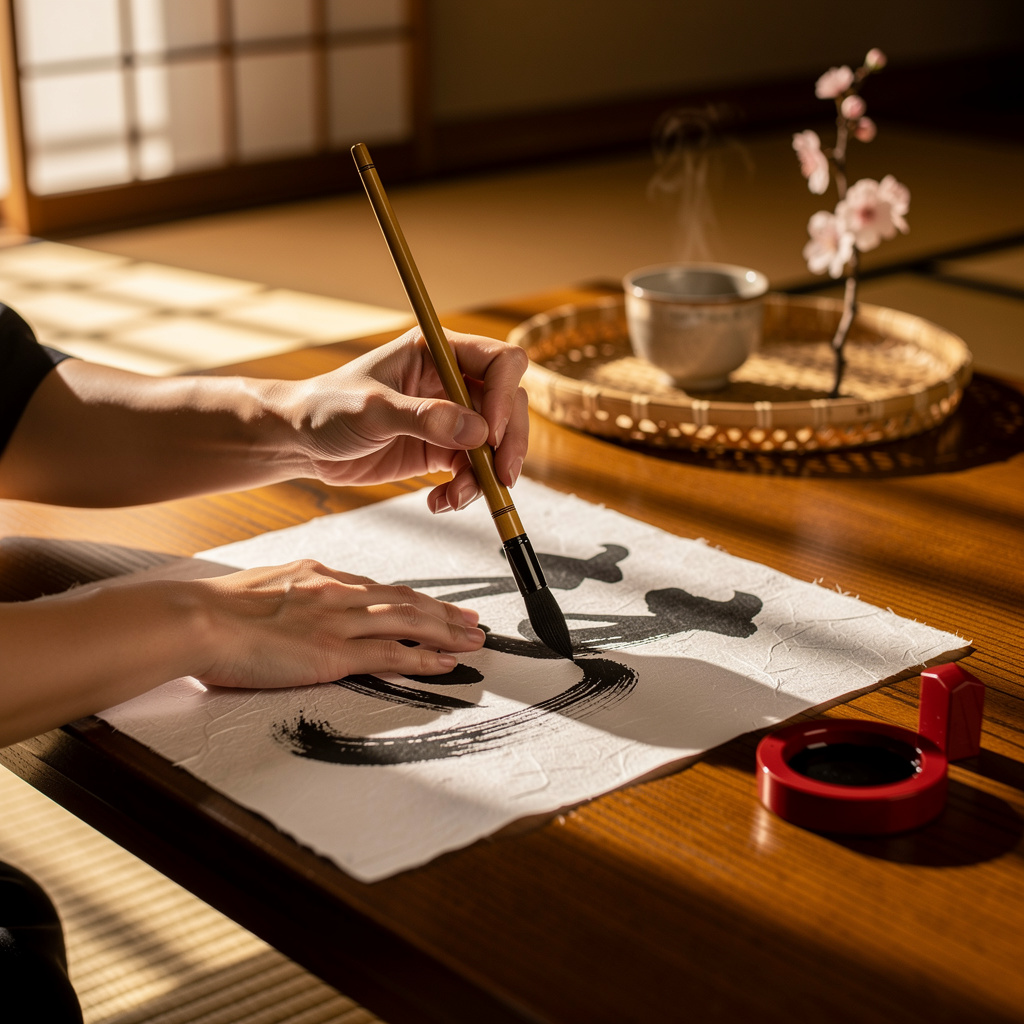
What is Japanese for Beginners?
Japanese for Beginners Training
The Japanese for Beginners certificate program provides a comprehensive introduction to the Japanese language, starting with the Hiragana and Katakana syllabaries and progressing through basic greetings, self-introductions, numbers, time, and dates. It covers core sentence structure, particles, essential verbs in polite forms, adjectives, and daily routines, while also introducing Kanji, question formation, and practical scenarios like shopping, dining, and directions. This course is designed for absolute beginners with no prior Japanese knowledge, as well as for travelers, anime enthusiasts, or professionals seeking a foundation in the language. The main practical outcome is the ability to hold simple conversations, read basic texts, and navigate everyday situations in Japanese with cultural awareness.
The program is structured as a step-by-step progression, beginning with writing systems and pronunciation before moving to grammar and vocabulary, ensuring learners build confidence gradually. Each lesson balances clear explanations with interactive practice, so learners apply new concepts immediately through dialogues, listening exercises, and written drills. The course develops the four core skill areas—reading, writing, speaking, and listening—while also weaving in cultural etiquette as a fifth dimension. Choosing this program now is ideal because Japan's global cultural and economic influence continues to grow, and a beginner-friendly certificate offers a structured, accessible entry point without overwhelming jargon or unrealistic fluency promises.
What is Japanese for Beginners?
Japanese for Beginners is the foundational stage of learning the Japanese language, encompassing the three writing systems—Hiragana, Katakana, and basic Kanji—along with essential pronunciation, vocabulary, and grammar. Its core concepts include the subject-object-verb sentence order, the use of particles to mark grammatical relationships, and the distinction between polite and casual speech registers. At this level, learners also encounter counters for numbers, time expressions, and common set phrases for greetings and daily interactions. The scope is deliberately practical, focusing on high-frequency language that enables immediate, basic communication rather than abstract linguistic theory.
The relevance of beginner Japanese has surged in recent years due to Japan's prominent role in technology, automotive, gaming, and pop culture, as well as increased tourism and business exchanges. In real life, even basic Japanese skills enhance travel experiences, deepen cultural appreciation, and facilitate smoother interactions in hospitality, retail, and customer service roles. Academia and industry increasingly value multilingualism, and Japanese is a strategic language for careers in international relations, translation, engineering, and animation. Recent shifts toward online learning and mobile apps have made beginner Japanese more accessible than ever, while a growing emphasis on cultural etiquette reflects the importance of context in Japanese communication.
Mastering the basics of Japanese builds a skill stack that includes phonetic literacy, pattern recognition for grammar, memorization strategies for characters, and cross-cultural communication. These skills transfer to professional contexts such as customer support for Japanese clients, entry-level translation, study abroad preparation, and roles in tourism or export/import. On a personal level, the ability to read menus, ask for directions, or introduce oneself in Japanese fosters independence and meaningful connections. The foundational knowledge gained at this stage also serves as a springboard for intermediate study, whether for academic credit, business fluency, or lifelong enrichment.
Common Questions About Japanese for Beginners
Is this Japanese for Beginners course suitable if I have zero experience?
How long does the Japanese for Beginners course usually take to finish?
Why does hiragana have 46 characters in the gojūon grid?
- Vowel order: every row follows the same a-i-u-e-o sequence, so a new row is a variation on a pattern you already know rather than a fresh puzzle.
- Row logic: characters in one row share a consonant (ka-row, sa-row, ta-row) and differ only by the vowel attached to it.
- Empty slots: a few sounds simply do not exist in modern Japanese, so those blank cells are not characters you forgot — they were never there.
Why does Japanese sentence structure put the verb at the end?
How do the three Japanese verb groups change the ます form?
- Group 1 (godan / u-verbs): the final syllable shifts from the u-row to the i-row before ます — 書く (kaku) becomes 書きます, 話す becomes 話します, 飲む becomes 飲みます.
- Group 2 (ichidan / ru-verbs): the final る simply drops off — 食べる (taberu) becomes 食べます, 見る becomes 見ます.
- Group 3 (irregular): only two verbs, memorised as fixed pairs — する becomes します, and 来る (kuru) becomes 来ます (kimasu).
Why do Japanese adjectives fall into two different conjugation families?
Do you really need to master kanji before learning basic Japanese?
What Will This Course Bring You?
- Read and write all basic hiragana characters accurately, including voiced sounds and small や, ゆ, よ combinations, to form simple Japanese words.
- Recognize and pronounce common katakana loanwords and foreign names by decoding extended sounds and small vowel combinations in menus, signs, and personal introductions.
- Produce appropriate Japanese greetings and self-introductions using desu, polite sentence endings, and culturally suitable bowing or phrasing for first meetings.
- Apply numbers, counters, and time expressions to state dates, ask prices, and schedule appointments in everyday Japanese conversations.
- Construct basic Japanese sentences using core particles such as wa, ga, o, ni, and de to identify subjects, objects, locations, and directions.
- Conjugate essential polite verbs in present, past, affirmative, and negative forms to describe daily routines and make simple requests.
- Use i-adjectives and na-adjectives to describe people, places, and objects, and compare items using yori and ichiban in beginner-level speech.
- Identify basic kanji characters and apply learned vocabulary to ask questions, make requests, and navigate shopping, dining, and directions in basic conversations with cultural etiquette.
Curriculum
12 Units1. Hiragana: The Foundation of the Writing System
1 hour
2. Katakana: Reading Loanwords and Foreign Names
1 hour
3. Basic Greetings and Self-Introductions
1 hour
4. Numbers, Time, and Dates
1 hour
5. Core Sentence Structure and Particles
1 hour
6. Essential Verbs and Polite Forms
1 hour
7. Adjectives and Descriptions
1 hour
8. Daily Routines and Common Expressions
1 hour
9. Introduction to Kanji
1 hour
10. Asking Questions and Making Requests
1 hour
11. Shopping, Dining, and Directions
1 hour
12. Basic Conversation and Cultural Etiquette
1 hour
Exam – Japanese for Beginners
20 Questions • 70% Pass • 30 min
Unlock All Units for Free
Create an account, enroll in the course, and start with the first unit right away.
Exam – Japanese for Beginners
20 Questions • Pass: 70% • 30 min
Course Duration
720
Total Minutes
12
Unit
1
Final Exam
~60
Min / Unit
Japanese for Beginners Certificate Program
Document Your Skill
Those who pass the 20-question, 30-minute exam with 70% receive the Japanese for Beginners Certificate.
Stand Out on Your CV
By adding your certificate to your CV, gain a professional reference in job applications and stand out from the crowd.
Career Advantage
With the verification code, employers can check your certificate instantly — a concrete way to show your growth.
CERTIFICATE FEE
At the end of the course, an online exam consisting of 20 questions with a 30-minute time limit is given. The exam appears automatically after you complete the topics. Anyone who scores at least 70 out of 100 on the certificate exam is awarded the Japanese for Beginners Document (certificate of attendance). You can add the certificate you earn to your CV for job applications in the many sectors listed above, and use it as a reference proving that you took this interactive course.
The Certificate of Achievement you receive with the Japanese for Beginners course program holds value that proves your personal and professional development in the business world. By adding it to your CV, it can serve as an important reference in your job applications. Moreover, compared with certificates from other private training institutions, Catch Wisdom certificates are offered to our participants at a much more affordable price.
The Japanese for Beginners course certificate is a document that proves, with a unique verification code, that you completed the course. Employers can instantly check its authenticity with this code, which helps you show your development concretely in your job applications.
For more information, we recommend visiting the Support page.
Certificate in 7 Languages
Earning success certificates from our courses is now more meaningful and global. With certificates available in Turkish, English, German, French, Spanish, Arabic, and Russian, we fully unlock the potential of students worldwide.
Why Certificate in 7 Languages?
-
01
Global Skill Development
Receiving your certificates in 7 different languages strengthens your communication skills as you engage with more people worldwide. It lets you operate more confidently and capably on the international stage.
-
02
International Job Opportunities
Employers may see your certificates in multiple languages as a sign of your ability to seize global opportunities. You can open more doors to new jobs and projects.
-
03
Cultural Richness
The chance to earn certificates in different languages helps you build closer ties with various cultures and broadens your worldview. It enriches your global perspective and deepens cultural understanding.
-
04
Ability to Participate in International Projects
Multilingual certificates give you an edge to work more effectively on international projects. They boost your chances of leadership and participation in diverse projects in the business world.
-
05
Prove Yourself on the Global Stage
Certificates in multiple languages give you the opportunity to present your skills and knowledge worldwide.
Language diversity opens worldwide opportunities. If you want to prove yourself in the international arena, join our online Japanese for Beginners course program and begin this journey with us.
Frequently Asked Questions (FAQ)
Is this course paid?
How do I join the course?
Can I take the course at my own pace?
How can I get my certificate?
What are the advantages of the certificate?
Boost Your Career
Take a new career step with the Japanese for Beginners course. Add your certificate to your CV, stand out in job applications, and open the door to new opportunities in the industry.
StartStudent Reviews
No reviews yet
Enroll in this course and be the first to leave a review about your experience with Japanese for Beginners.
Start