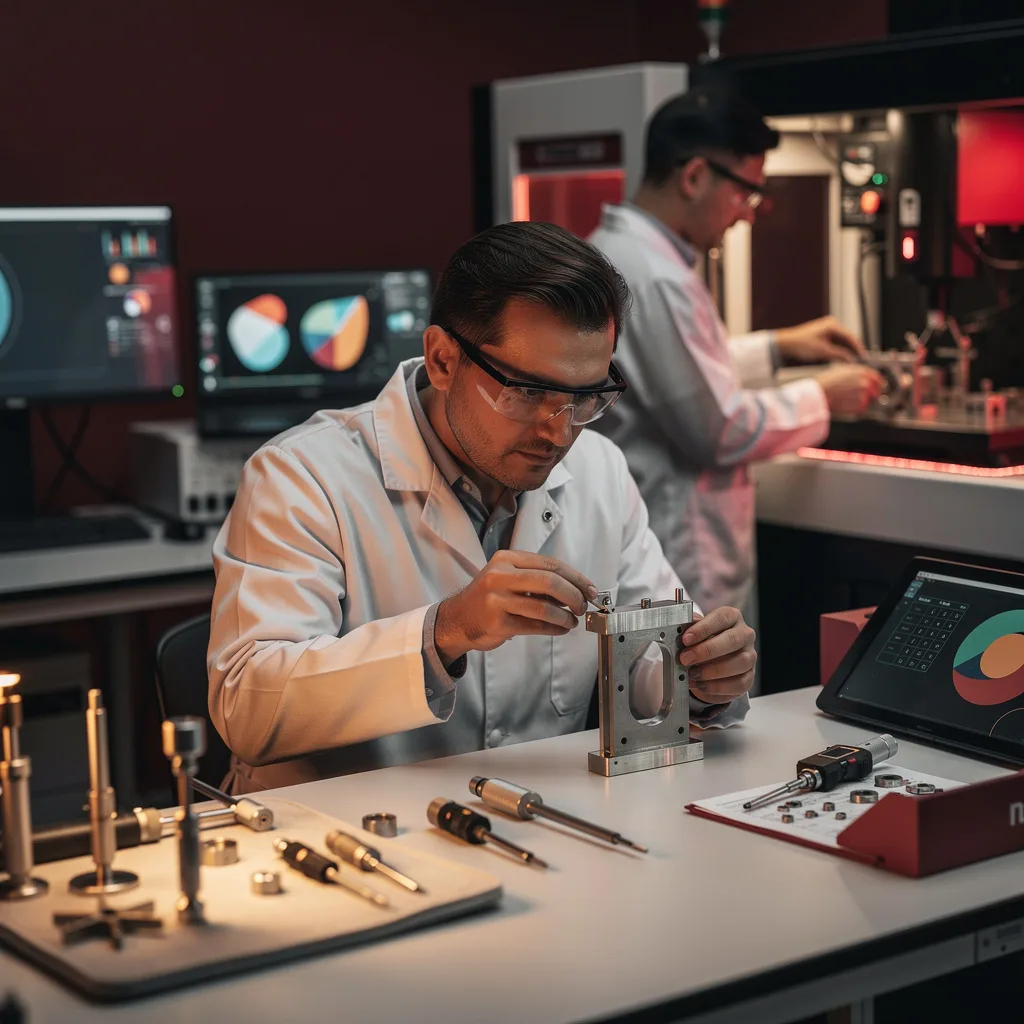
What is Kaizen and Continuous Improvement?
Kaizen and Continuous Improvement Training
Kaizen and Continuous Improvement certificate program teaches participants how to turn small, repeated process improvements into durable operational results by combining the philosophy’s origins with practical methods such as the PDCA cycle, waste identification, 5S, standard work, value stream mapping, and rapid kaizen events. It is designed for team leaders, supervisors, process owners, quality and operations professionals, and improvement facilitators who need a shared language for diagnosing problems and engaging frontline employees. The main practical outcome is the ability to lead a focused improvement cycle—from observing work and finding waste to testing changes, standardizing gains, and tracking whether the improvement actually holds.
The program is structured as a beginner-friendly progression: it begins with the philosophy and mindsets behind continuous improvement, then builds capability through scientific thinking, workplace organization, process stability, and value stream analysis before moving into kaizen events, daily kaizen, leadership routines, measurement, and scaling across the organization. Theory is paired with practice-oriented application so participants can connect concepts such as muda, standard work, and PDCA to real process conditions rather than treating them as slogans. Across the course, participants build five core skill areas: improvement thinking, process observation and analysis, waste elimination and workplace organization, facilitation of rapid and daily improvement, and leadership and measurement for sustaining gains. This program is worth choosing now because organizations facing cost pressure, quality variation, and employee engagement challenges need improvement capability that is continuous, measurable, and embedded in daily work—not a one-off project.
What is Kaizen and Continuous Improvement?
Kaizen and Continuous Improvement is a management philosophy and practical system for creating ongoing, incremental improvement through the participation of people who do the work. Its scope covers the mindsets and principles that make improvement habitual, the scientific problem-solving logic of plan-do-check-act, and the operational methods used to see and remove waste from processes. Core concepts include muda, workplace organization through 5S, standard work as a baseline for stability, value stream analysis, rapid improvement events, daily small-scale kaizen, and leadership behaviors that make improvement visible and sustainable. Rather than treating improvement as a temporary campaign, the subject frames it as a disciplined way of managing work, learning from changes, and standardizing what proves effective.
The subject matters today because organizations operate in environments of volatile demand, tight cost constraints, labor shortages, and rising expectations for quality and speed, making the ability to improve continuously a competitive necessity rather than a specialist nicety. It is used in manufacturing, healthcare, logistics, service operations, software delivery, public-sector administration, and academic research on operations and organizational learning, wherever processes depend on coordination and repeatable performance. Recent shifts have moved continuous improvement beyond factory floors toward digital workflows, remote team routines, employee engagement, and leadership systems that connect daily problem-solving to strategic priorities. As automation and data tools spread, the human capability to observe, test, and sustain better ways of working becomes more important, not less.
Mastering this subject builds a skill stack that combines systems thinking, process observation, data-informed experimentation, facilitation, coaching, and the discipline to sustain gains after the initial excitement fades. It benefits professionals in operations, quality, engineering, healthcare administration, service management, project leadership, and human resources, as well as anyone responsible for making daily work safer, smoother, and more engaging. The subject also supports personal effectiveness, because the same improvement logic applies to how individuals plan work, remove friction, and learn from small experiments. In professional contexts, this capability translates into stronger problem-solving credibility, better cross-functional collaboration, and a practical way to connect improvement activity to measurable business and customer outcomes.
What Will This Course Bring You?
- Explain Kaizen's philosophical origins and core principles to justify continuous improvement initiatives within an organization.
- Apply the PDCA cycle to structure a small-scale process improvement experiment and document the resulting learning.
- Identify and categorize the eight wastes (Muda) in a selected workflow to prioritize elimination opportunities.
- Conduct a 5S workplace assessment and design a practical action plan for organizing a work area.
- Develop standard work documentation for a stable process and evaluate how it supports consistency and problem detection.
- Construct a current-state value stream map to analyze process flow, lead time, and improvement opportunities.
- Plan a Kaizen event with clear scope, team roles, targets, and daily follow-up routines for rapid improvement.
- Evaluate improvement metrics, employee engagement practices, and leadership mechanisms required to sustain and scale Kaizen across an organization.
Curriculum
12 Units1. Foundations of Kaizen: Philosophy and Origins
1 hour
2. Core Principles and Mindsets of Continuous Improvement
1 hour
3. The PDCA Cycle and Scientific Thinking
1 hour
4. Identifying and Eliminating Waste (Muda)
1 hour
5. 5S Workplace Organization
1 hour
6. Standard Work and Process Stability
1 hour
7. Value Stream Mapping and Process Analysis
1 hour
8. Kaizen Events and Rapid Improvement
1 hour
9. Daily Kaizen and Employee Engagement
1 hour
10. Leadership's Role in Continuous Improvement
1 hour
11. Measuring and Sustaining Improvement
1 hour
12. Scaling Kaizen Across the Organization
1 hour
Exam – Kaizen and Continuous Improvement
20 Questions • 70% Pass • 30 min
Unlock All Units for Free
Create an account, enroll in the course, and start with the first unit right away.
Exam – Kaizen and Continuous Improvement
20 Questions • Pass: 70% • 30 min
Course Duration
720
Total Minutes
12
Unit
1
Final Exam
~60
Min / Unit
Kaizen and Continuous Improvement Certificate Program
Document Your Skill
Those who pass the 20-question, 30-minute exam with 70% receive the Kaizen and Continuous Improvement Certificate.
Stand Out on Your CV
By adding your certificate to your CV, gain a professional reference in job applications and stand out from the crowd.
Career Advantage
With the verification code, employers can check your certificate instantly — a concrete way to show your growth.
CERTIFICATE FEE
At the end of the course, an online exam consisting of 20 questions with a 30-minute time limit is given. The exam appears automatically after you complete the topics. Anyone who scores at least 70 out of 100 on the certificate exam is awarded the Kaizen and Continuous Improvement Document (certificate of attendance). You can add the certificate you earn to your CV for job applications in the many sectors listed above, and use it as a reference proving that you took this interactive course.
The Certificate of Achievement you receive with the Kaizen and Continuous Improvement course program holds value that proves your personal and professional development in the business world. By adding it to your CV, it can serve as an important reference in your job applications. Moreover, compared with certificates from other private training institutions, Catch Wisdom certificates are offered to our participants at a much more affordable price.
The Kaizen and Continuous Improvement course certificate is a document that proves, with a unique verification code, that you completed the course. Employers can instantly check its authenticity with this code, which helps you show your development concretely in your job applications.
For more information, we recommend visiting the Support page.
Certificate in 7 Languages
Earning success certificates from our courses is now more meaningful and global. With certificates available in Turkish, English, German, French, Spanish, Arabic, and Russian, we fully unlock the potential of students worldwide.
Why Certificate in 7 Languages?
-
01
Global Skill Development
Receiving your certificates in 7 different languages strengthens your communication skills as you engage with more people worldwide. It lets you operate more confidently and capably on the international stage.
-
02
International Job Opportunities
Employers may see your certificates in multiple languages as a sign of your ability to seize global opportunities. You can open more doors to new jobs and projects.
-
03
Cultural Richness
The chance to earn certificates in different languages helps you build closer ties with various cultures and broadens your worldview. It enriches your global perspective and deepens cultural understanding.
-
04
Ability to Participate in International Projects
Multilingual certificates give you an edge to work more effectively on international projects. They boost your chances of leadership and participation in diverse projects in the business world.
-
05
Prove Yourself on the Global Stage
Certificates in multiple languages give you the opportunity to present your skills and knowledge worldwide.
Language diversity opens worldwide opportunities. If you want to prove yourself in the international arena, join our online Kaizen and Continuous Improvement course program and begin this journey with us.
Frequently Asked Questions (FAQ)
Is this course paid?
How do I join the course?
Can I take the course at my own pace?
How can I get my certificate?
What are the advantages of the certificate?
Boost Your Career
Take a new career step with the Kaizen and Continuous Improvement course. Add your certificate to your CV, stand out in job applications, and open the door to new opportunities in the industry.
StartStudent Reviews
No reviews yet
Enroll in this course and be the first to leave a review about your experience with Kaizen and Continuous Improvement.
Start