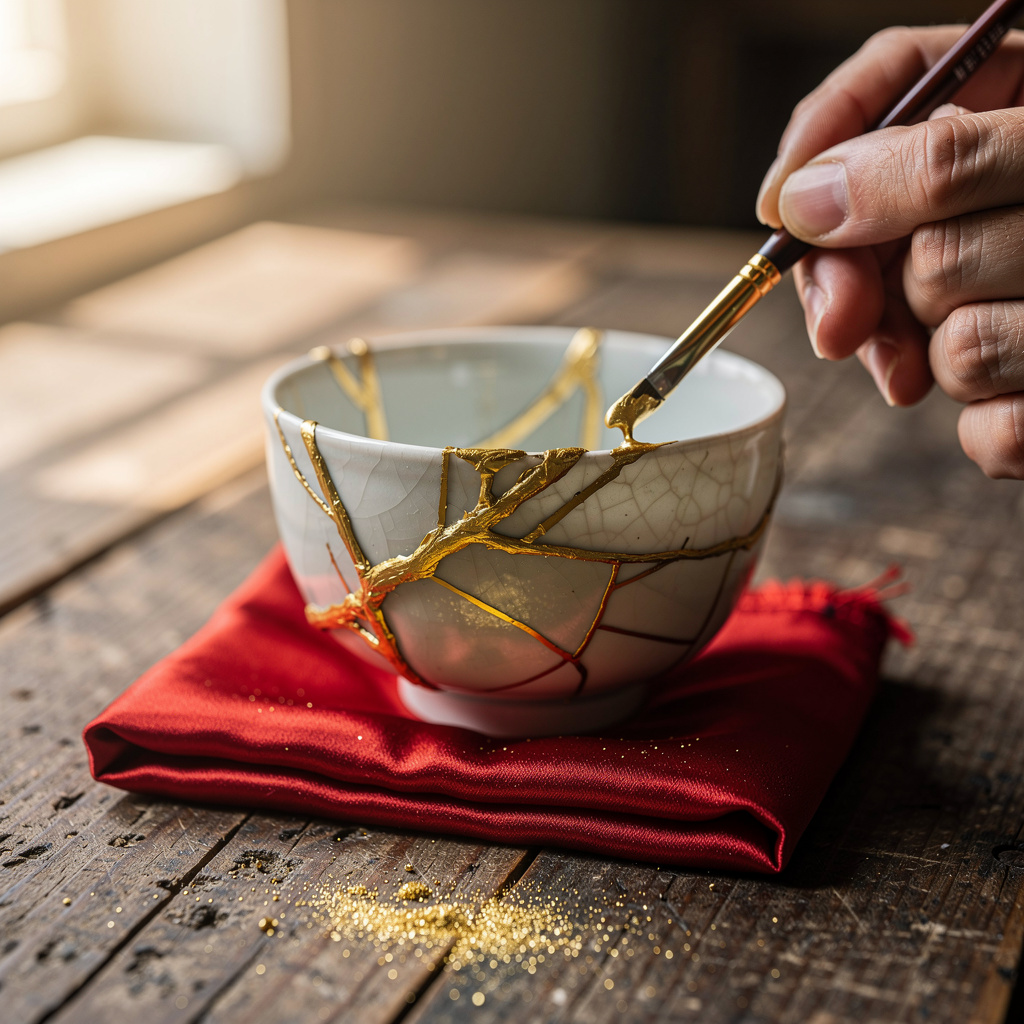
What is Kintsugi: The Art of Repair?
Kintsugi: The Art of Repair Training
The Kintsugi: The Art of Repair certificate program offers a comprehensive journey into the ancient Japanese practice of repairing broken ceramics with precious metals. This course teaches the philosophy of wabi-sabi and the practical techniques of urushi lacquer, gold powder application, and alternative modern materials. It is designed for artists, craftspeople, and anyone seeking a mindful, creative practice. The main practical outcome is the ability to repair broken pottery or porcelain pieces with durable, beautiful kintsugi repairs, transforming damage into art.
The program is structured for beginners, with a step-by-step progression from safety and material preparation to advanced maki-e and finishing techniques. It balances theory (history, design principles) with hands-on practice across four core skill areas: joining, filling, lacquering, and gold application. Choosing this program now allows you to learn a meditative craft that reduces waste, honors imperfection, and connects you to a centuries-old tradition that is increasingly relevant in today's sustainable and mindful living movements.
What is Kintsugi: The Art of Repair?
Kintsugi, also known as kintsukuroi, is the Japanese art of repairing broken pottery by mending the cracks with lacquer dusted or mixed with powdered gold, silver, or platinum. Its core concept is that breakage and repair are part of the object's history, not something to hide. Rather than disguising damage, kintsugi highlights it, making the repair visible and beautiful, thereby celebrating imperfection and transience—a philosophy rooted in wabi-sabi and mottainai (a sense of regret over waste).
Today, kintsugi has moved beyond traditional ceramics into contemporary art, design, and even psychology as a metaphor for resilience and healing. It is used in conservation, upcycling, and as a therapeutic practice. The recent surge in interest in mindfulness, sustainability, and slow craft has brought kintsugi into workshops, online courses, and even corporate team-building events. Its principles are applied in fields as diverse as furniture repair, jewelry making, and digital design, where the "golden repair" aesthetic is celebrated.
Mastering kintsugi builds a unique skill stack: patience, fine motor control, knowledge of natural adhesives and lacquers, color theory, and design composition. These skills benefit professional restorers, ceramic artists, hobbyists, and anyone interested in Japanese culture or sustainable living. Personal contexts include repairing cherished heirlooms, creating art from broken objects, or simply cultivating a mindset that finds beauty in imperfection. The practice also fosters a deeper appreciation for materiality and the stories objects carry.
Common Questions About Kintsugi: The Art of Repair
Is the Kintsugi course suitable for complete beginners with no pottery experience?
What career benefits does a Kintsugi certificate offer?
What is the difference between Mugi-urushi and Sabi-urushi?
- Mugi-urushi: Adhesive paste for bonding pieces together.
- Sabi-urushi: Filler for filling gaps and missing sections.
How does urushi lacquer cure and what is the curing time?
Is Kintsugi just gluing broken pottery back together?
What is the purpose of men-tori in Kintsugi preparation?
What are the common mistakes when applying gold powder in Kintsugi?
What Will This Course Bring You?
- Analyze the philosophical and historical context of kintsugi to understand its cultural significance and aesthetic principles.
- Prepare broken ceramic pieces by cleaning and shaping edges to ensure a precise fit for repair.
- Apply urushi lacquer to join broken pieces using traditional techniques and proper curing times.
- Fill gaps and missing sections with a mixture of urushi and tonoko to restore the object's form.
- Execute the maki-e technique to apply gold powder over lacquered repairs for a decorative finish.
- Evaluate design principles for emphasizing the repair line to enhance the visual narrative of the piece.
- Implement proper curing, polishing, and finishing methods to achieve a durable and smooth surface.
- Design a final project that integrates kintsugi techniques and personal artistic vision.
Curriculum
12 Units1. The Philosophy and History of Kintsugi
1 hour
2. Essential Materials and Tools
1 hour
3. Safety, Allergies, and Workspace Preparation
1 hour
4. Preparing Broken Pieces: Cleaning and Shaping
1 hour
5. Joining Pieces with Urushi Lacquer
1 hour
6. Filling Gaps and Missing Sections
1 hour
7. Applying the Final Lacquer Coats
1 hour
8. The Gold Application: Maki-e and Kintsugi Techniques
1 hour
9. Alternative Materials and Modern Adaptations
1 hour
10. Design Principles: Emphasizing the Repair
1 hour
11. Finishing, Polishing, and Curing
1 hour
12. Caring for Kintsugi Pieces and Final Project Guidance
1 hour
Exam – Kintsugi: The Art of Repair
20 Questions • 70% Pass • 30 min
Unlock All Units for Free
Create an account, enroll in the course, and start with the first unit right away.
Exam – Kintsugi: The Art of Repair
20 Questions • Pass: 70% • 30 min
Course Duration
720
Total Minutes
12
Unit
1
Final Exam
~60
Min / Unit
Kintsugi: The Art of Repair Certificate Program
Document Your Skill
Those who pass the 20-question, 30-minute exam with 70% receive the Kintsugi: The Art of Repair Certificate.
Stand Out on Your CV
By adding your certificate to your CV, gain a professional reference in job applications and stand out from the crowd.
Career Advantage
Catch Wisdom certificates are recognized by HR departments and increase career opportunities.
CERTIFICATE FEE
At the end of the course, an online exam consisting of 20 questions with a 30-minute time limit is given. The exam appears automatically after you complete the topics. Anyone who scores at least 70 out of 100 on the certificate exam is awarded the Kintsugi: The Art of Repair Document (certificate of attendance). You can add the certificate you earn to your CV for job applications in the many sectors listed above, and use it as a reference proving that you took this interactive course.
The Certificate of Achievement you receive with the Kintsugi: The Art of Repair course program holds value that proves your personal and professional development in the business world. By adding it to your CV, it can serve as an important reference in your job applications. Moreover, compared with certificates from other private training institutions, Catch Wisdom certificates are offered to our participants at a much more affordable price.
Because HR departments recognize Catch Wisdom as a reputable institution in this field, they value these certificates and may evaluate your job applications favorably. For this reason, a Kintsugi: The Art of Repair course certificate from Catch Wisdom can make your applications more attractive and place you in an advantageous position in the business world.
For more information, we recommend visiting the Support page.
Certificate in 7 Languages
Earning success certificates from our courses is now more meaningful and global. With certificates available in Turkish, English, German, French, Spanish, Arabic, and Russian, we fully unlock the potential of students worldwide.
Why Certificate in 7 Languages?
-
01
Global Skill Development
Receiving your certificates in 7 different languages strengthens your communication skills as you engage with more people worldwide. It lets you operate more confidently and capably on the international stage.
-
02
International Job Opportunities
Employers may see your certificates in multiple languages as a sign of your ability to seize global opportunities. You can open more doors to new jobs and projects.
-
03
Cultural Richness
The chance to earn certificates in different languages helps you build closer ties with various cultures and broadens your worldview. It enriches your global perspective and deepens cultural understanding.
-
04
Ability to Participate in International Projects
Multilingual certificates give you an edge to work more effectively on international projects. They boost your chances of leadership and participation in diverse projects in the business world.
-
05
Prove Yourself on the Global Stage
Certificates in multiple languages let you showcase your skills and knowledge worldwide. You can become an internationally recognized professional.
Language diversity opens worldwide opportunities. If you want to prove yourself in the international arena, join our online Kintsugi: The Art of Repair course program and begin this journey with us.
Frequently Asked Questions (FAQ)
Is this course paid?
How do I join the course?
Can I take the course at my own pace?
How can I get my certificate?
What are the advantages of the Certified Certificate?
Boost Your Career
Take a new career step with the Kintsugi: The Art of Repair course. Add your certificate to your CV, stand out in job applications, and open the door to new opportunities in the industry.
StartStudent Reviews
No reviews yet
Enroll in this course and be the first to leave a review about your experience with Kintsugi: The Art of Repair.
Start