What is Korean Cuisine and Banchan?
Korean Cuisine and Banchan Training
This Korean Cuisine and Banchan certificate program is a comprehensive journey into the heart of Korea’s culinary identity, designed for home cooks, aspiring chefs, and food entrepreneurs who want to master the art of the shared table. You will progress from foundational techniques—such as preparing perfect steamed rice and understanding essential seasonings—to the intricate world of fermentation, braising, and stir-frying that defines the nation’s beloved side dishes. The program’s primary outcome is the ability to confidently compose a full Korean meal, balancing flavors, textures, and temperatures with an array of authentic banchan.
Structured as a progressive, hands-on exploration, the curriculum first grounds you in the philosophy of Korean eating and pantry setup before moving through core cooking methods like blanching, braising, and pan-frying. Each lesson builds a specific skill set, from knife cuts and fermentation management to advanced preservation and menu composition, ensuring you develop both technical precision and a deep cultural understanding. Whether you seek to enrich your home cooking, launch a food business, or simply understand the global phenomenon of Korean cuisine, this program offers a clear, methodical path to creating vibrant, balanced meals with confidence.
What is Korean Cuisine and Banchan?
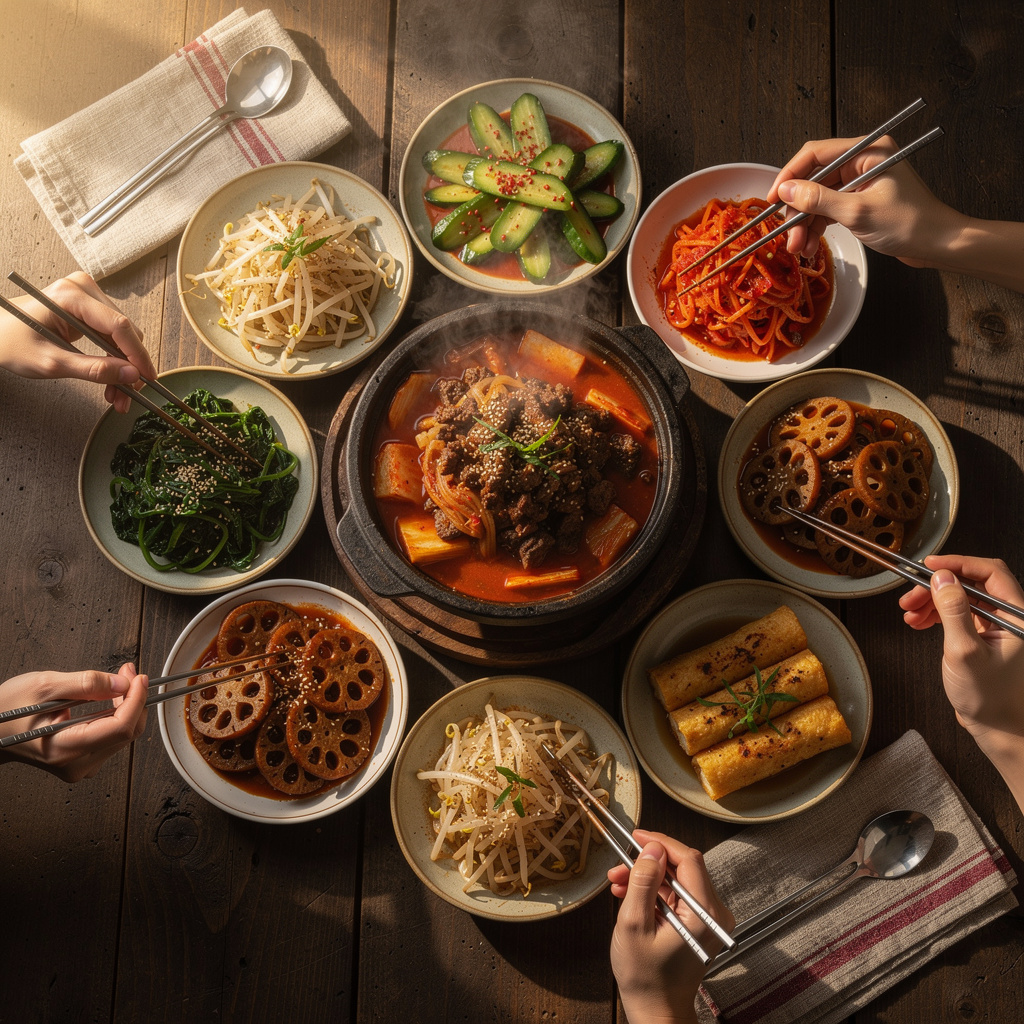
Korean cuisine is a holistic culinary tradition centered on balance, seasonality, and the communal experience of a shared table, where a single main dish is almost always accompanied by an array of small side dishes known as banchan. Banchan are not mere appetizers but integral components of the meal, ranging from fermented vegetables like kimchi and pickled radishes to seasoned greens, braised tofu, and savory pancakes. The core philosophy emphasizes the harmony of five flavors and five colors in every spread, reflecting a deep cultural belief that food should nourish both the body and the spirit through variety and visual appeal.
In today’s global food landscape, Korean cuisine has surged in popularity due to its bold, health-forward profile and the worldwide fascination with K-culture. The practice of serving multiple banchan encourages portion control, vegetable-centric eating, and the use of probiotic-rich fermented foods, aligning perfectly with modern wellness trends. Beyond home kitchens, the intricate art of banchan is a cornerstone of Korean restaurant identity and a growing niche in the meal-prep and food-tech industries, where the demand for authentic, small-batch side dishes is rapidly expanding.
Understanding Korean cuisine and banchan builds a versatile skill stack that goes far beyond recipe following, teaching fermentation science, knife skills, flavor balancing, and the art of efficient meal composition. This knowledge is invaluable for culinary professionals seeking to specialize in Asian gastronomy, nutritionists exploring gut-healthy food traditions, and home cooks aiming to elevate everyday meals with vibrant, seasonal variety. Mastering the discipline of banchan transforms the way one approaches cooking, fostering creativity, resourcefulness, and a deep appreciation for the cultural stories embedded in every dish.
Common Questions About Korean Cuisine and Banchan
What is banchan in Korean cuisine?
How long does it take to learn Korean banchan cooking?
Can a beginner learn Korean side dish recipes online?
What are the main types of Korean banchan?
- Kimchi and Jangajji: Fermented vegetables and pickles, the most iconic banchan.
- Namul: Blanched or steamed vegetables seasoned with sesame oil, garlic, and soy sauce.
- Jorim and Jjim: Braised or steamed dishes in a concentrated sauce, often made with soy sauce or gochujang.
- Bokkeum: Stir-fried vegetables, meats, or tofu with bold seasonings.
- Jeon and Buchimgae: Savory pancakes and fritters, crispy on the outside and tender inside.
- Guk, Tang, and Jjigae: Soups and stews that complete the meal.
What is the difference between jorim and jjim?
What ingredients are essential for Korean banchan?
What Will This Course Bring You?
- Analyze the cultural and historical significance of banchan in Korean dining to explain how side dishes shape meal structure and communal eating.
- Identify and categorize essential Korean pantry ingredients by their flavor profiles and functions in traditional recipes.
- Apply fundamental Korean knife techniques to uniformly cut vegetables and proteins for consistent cooking and authentic presentation.
- Prepare fermented staples such as napa cabbage kimchi and soy-pickled jangajji while controlling salinity, temperature, and time for optimal flavor development.
- Create balanced namul dishes by blanching, seasoning, and hand-mixing a variety of vegetables with sesame oil and traditional condiments.
- Execute braising and steaming methods to produce tender jorim and jjim banchan, adjusting liquid ratios and cooking times for different ingredients.
- Design a visually harmonious bansang table setting that incorporates multiple banchan, rice, soup, and a main dish according to Korean aesthetic principles.
Curriculum
12 Units1. Foundations of Korean Cuisine and Banchan Culture
1 hour
2. The Korean Pantry: Essential Ingredients
1 hour
3. Core Knife Skills and Preparation Techniques
1 hour
4. Fermentation Foundations: Kimchi and Jangajji
1 hour
5. Namul: Seasoned Vegetable Side Dishes
1 hour
6. Jorim and Jjim: Braised and Steamed Banchan
1 hour
7. Bokkeum: Stir-Fried Side Dishes
1 hour
8. Jeon and Buchimgae: Savory Pancakes and Fritters
1 hour
9. Rice and Porridge: The Heart of the Korean Table
1 hour
10. Soups and Stews: Guk, Tang, and Jjigae
1 hour
11. Advanced Banchan and Preservation Techniques
1 hour
12. Composing the Korean Table: Meal Planning and Presentation
1 hour
Exam – Korean Cuisine and Banchan
20 Questions • 70% Pass • 30 min
Unlock All Units for Free
Create an account, enroll in the course, and start with the first unit right away.
Exam – Korean Cuisine and Banchan
20 Questions • Pass: 70% • 30 min
Course Duration
720
Total Minutes
12
Unit
1
Final Exam
~60
Min / Unit
Korean Cuisine and Banchan Certificate Program
Document Your Skill
Those who pass the 20-question, 30-minute exam with 70% receive the Korean Cuisine and Banchan Certificate.
Stand Out on Your CV
By adding your certificate to your CV, gain a professional reference in job applications and stand out from the crowd.
Career Advantage
Catch Wisdom certificates are recognized by HR departments and increase career opportunities.
CERTIFICATE FEE
At the end of the course, an online exam consisting of 20 questions with a 30-minute time limit is given. The exam appears automatically after you complete the topics. Anyone who scores at least 70 out of 100 on the certificate exam is awarded the Korean Cuisine and Banchan Document (certificate of attendance). You can add the certificate you earn to your CV for job applications in the many sectors listed above, and use it as a reference proving that you took this interactive course.
The Certificate of Achievement you receive with the Korean Cuisine and Banchan course program holds value that proves your personal and professional development in the business world. By adding it to your CV, it can serve as an important reference in your job applications. Moreover, compared with certificates from other private training institutions, Catch Wisdom certificates are offered to our participants at a much more affordable price.
Because HR departments recognize Catch Wisdom as a reputable institution in this field, they value these certificates and may evaluate your job applications favorably. For this reason, a Korean Cuisine and Banchan course certificate from Catch Wisdom can make your applications more attractive and place you in an advantageous position in the business world.
For more information, we recommend visiting the Support page.
Certificate in 7 Languages
Earning success certificates from our courses is now more meaningful and global. With certificates available in Turkish, English, German, French, Spanish, Arabic, and Russian, we fully unlock the potential of students worldwide.
Why Certificate in 7 Languages?
-
01
Global Skill Development
Receiving your certificates in 7 different languages strengthens your communication skills as you engage with more people worldwide. It lets you operate more confidently and capably on the international stage.
-
02
International Job Opportunities
Employers may see your certificates in multiple languages as a sign of your ability to seize global opportunities. You can open more doors to new jobs and projects.
-
03
Cultural Richness
The chance to earn certificates in different languages helps you build closer ties with various cultures and broadens your worldview. It enriches your global perspective and deepens cultural understanding.
-
04
Ability to Participate in International Projects
Multilingual certificates give you an edge to work more effectively on international projects. They boost your chances of leadership and participation in diverse projects in the business world.
-
05
Prove Yourself on the Global Stage
Certificates in multiple languages let you showcase your skills and knowledge worldwide. You can become an internationally recognized professional.
Language diversity opens worldwide opportunities. If you want to prove yourself in the international arena, join our online Korean Cuisine and Banchan course program and begin this journey with us.
Frequently Asked Questions (FAQ)
Is this course paid?
How do I join the course?
Can I take the course at my own pace?
How can I get my certificate?
What are the advantages of the Certified Certificate?
Boost Your Career
Take a new career step with the Korean Cuisine and Banchan course. Add your certificate to your CV, stand out in job applications, and open the door to new opportunities in the industry.
StartStudent Reviews
No reviews yet
Enroll in this course and be the first to leave a review about your experience with Korean Cuisine and Banchan.
Start