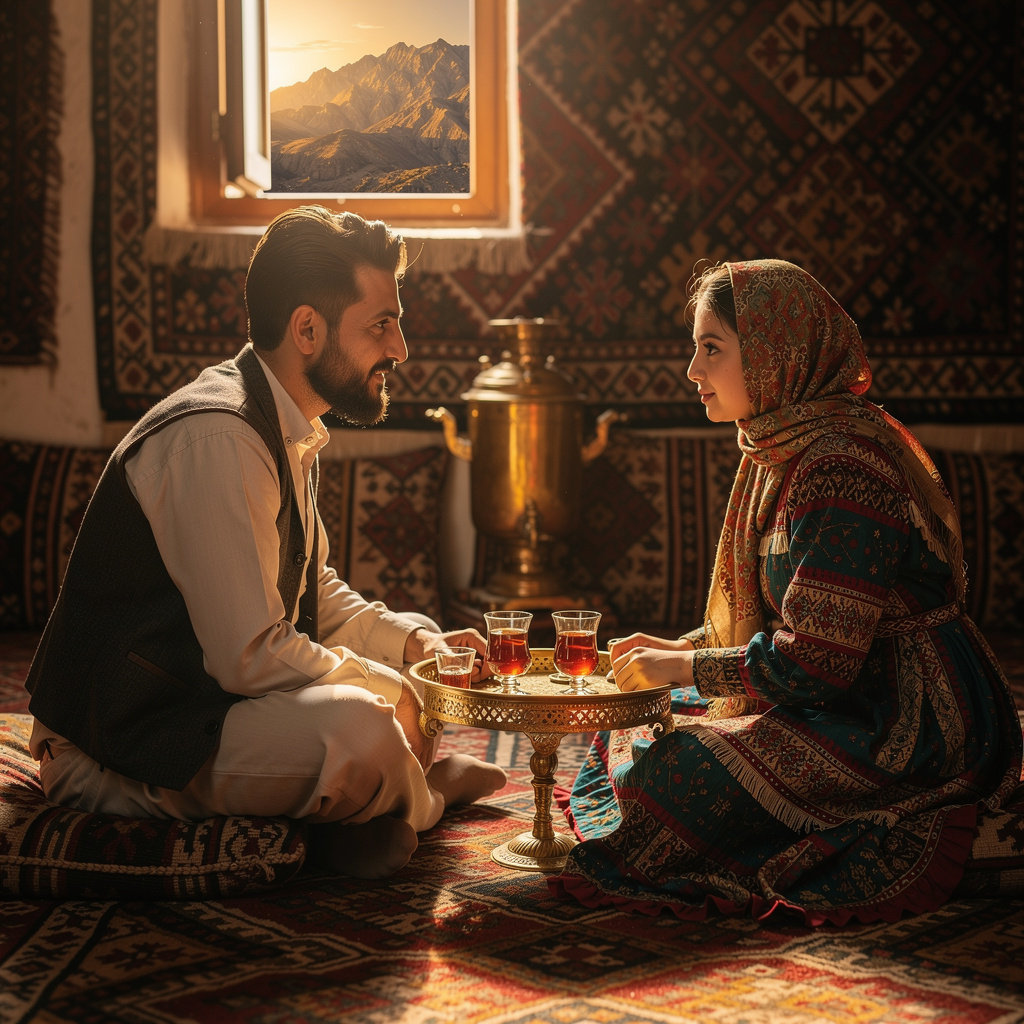
What is Kurdish Language: Kurmanji and Sorani?
Kurdish Language: Kurmanji and Sorani Training Program
The Kurdish Language: Kurmanji and Sorani certificate program equips learners with a comparative foundation in the two major Kurdish dialect groups, beginning with scripts and alphabets and moving through greetings, essential phrases, numbers, time, and daily expressions. It is designed for beginners, heritage speakers seeking structure, linguists, NGO and humanitarian staff, translators, and anyone who needs practical Kurdish for study, community work, or regional engagement. Across the lessons, participants examine pronouns and basic sentence structure, the present tense of regular verbs, nouns and gender and case in Kurmanji versus definiteness in Sorani, adjectives, comparatives, possession, past tense and aspect, future forms, modals, conditionals, prepositions, postpositions, spatial relations, and complex sentences with conjunctions, relative clauses, and subordination. The main practical outcome is the ability to recognize dialect differences, read both familiar scripts with guidance, form and interpret everyday sentences, and handle introductory conversation with greater accuracy and cultural awareness.
The program is structured as a beginner-friendly progression: early lessons establish scripts, pronunciation, greetings, numbers, and core sentence patterns before later lessons extend into tense and aspect, noun phrase complexity, spatial language, and subordination. Theory is balanced with practice through guided comparison of Kurmanji and Sorani forms, sentence-building tasks, listening and speaking routines, reading and writing exercises, and conversation practice set in cultural context. It builds the five core skill areas of listening, speaking, reading, writing, and intercultural awareness, with grammar presented as a tool for real communication rather than as isolated memorization. Learners choose this program now because Kurdish-language competence is increasingly valuable in humanitarian, journalistic, academic, diaspora, and public-service settings, while the course’s explicit Kurmanji–Sorani comparison helps them avoid conflating the two and communicate more appropriately across communities.
What is Kurdish Language: Kurmanji and Sorani?
Kurdish is a Western Iranian language continuum spoken across Turkey, Iran, Iraq, Syria, and diaspora communities, with Kurmanji and Sorani as its two most widely documented literary varieties. Kurmanji, often called Northern Kurdish, is predominantly written in a Latin-based alphabet and retains grammatical gender and a case system, while Sorani, often called Central Kurdish, is commonly written in an Arabic-derived script and marks definiteness and indefinite reference through distinct nominal particles. The subject therefore covers comparative phonology and orthography, pronouns and verb morphology, tense and aspect, noun phrases, adpositions, clause combining, and the sociolinguistic choices that shape how speakers identify and use each variety. Its core concepts include dialect continua versus standardized languages, script politics, loanword layers from Arabic, Persian, Turkish, and European languages, and the relationship between spoken regional forms and written norms.
Kurdish language knowledge matters today because Kurdish-speaking communities are central to debates over cultural rights, education, media, and political representation across the Middle East and in large diaspora populations. In real life it is used in humanitarian and refugee support, healthcare interpreting, journalism, local governance, translation and localization, broadcasting, and community organizing, where mistaking Kurmanji for Sorani or misreading script conventions can create practical misunderstandings. In academia, Kurdish linguistics, comparative Iranian studies, oral history, and diaspora studies increasingly attend to variation, standardization, and the politics of script and orthography. Recent shifts include growing digital content and online language learning, expanded use of Kurdish in media and education where policy permits, and greater attention to Unicode, fonts, and machine translation, all of which make informed comparative knowledge more useful than ever.
Mastering the subject builds a comparative linguistic skill stack: recognizing dialect markers in sound and script, analyzing nominal and verbal patterns across Kurmanji and Sorani, interpreting adpositional and clause structures, and adapting register and vocabulary to context. It also develops transferable competencies in intercultural communication, transcription and translation caution, language documentation, and the ability to work with speakers and written sources without assuming that one variety stands for all Kurdish. These capabilities benefit professionals in education, humanitarian response, public health, law, journalism, localization, diplomacy, and cultural heritage, as well as family and community members reconnecting with Kurdish language and identity. Because the skill stack combines grammatical comparison with sociolinguistic awareness, it supports both practical communication and more rigorous study of Kurdish language and society.
What Will This Course Bring You?
- Differentiate the Kurmanji and Sorani dialects by comparing their scripts, alphabets, and geographic distribution.
- Apply essential Kurmanji and Sorani greetings, introductions, and daily phrases in simulated conversational exchanges.
- Construct sentences using Kurdish numbers, time expressions, and everyday vocabulary to describe routines and schedules.
- Analyze pronoun systems and basic sentence structure to build grammatically correct simple sentences in both dialects.
- Conjugate regular present-tense verbs and apply noun gender, case, and definiteness rules appropriately in Kurmanji and Sorani.
- Form comparative adjectives and possessive constructions, then narrate past events using correct tense and aspect markers.
- Implement future tense, modal, and conditional structures to express plans, obligations, and hypothetical situations.
- Build complex sentences using conjunctions, relative clauses, and prepositions or postpositions while interpreting Kurdish cultural norms.
Curriculum
12 Units1. Introduction to Kurdish Language and Dialects: Scripts and Alphabets
1 hour
2. Greetings, Introductions, and Essential Phrases
1 hour
3. Numbers, Time, and Daily Expressions
1 hour
4. Pronouns and Basic Sentence Structure
1 hour
5. Present Tense of Regular Verbs
1 hour
6. Nouns, Gender, and Case in Kurmanji; Definiteness in Sorani
1 hour
7. Adjectives, Comparatives, and Possession
1 hour
8. Past Tense and Aspect
1 hour
9. Future Tense, Modals, and Conditional
1 hour
10. Prepositions, Postpositions, and Spatial Relations
1 hour
11. Complex Sentences: Conjunctions, Relative Clauses, and Subordination
1 hour
12. Conversation Practice and Cultural Context
1 hour
Exam – Kurdish Language: Kurmanji and Sorani
20 Questions • 70% Pass • 30 min
Unlock All Units for Free
Create an account, enroll in the course, and start with the first unit right away.
Exam – Kurdish Language: Kurmanji and Sorani
20 Questions • Pass: 70% • 30 min
Course Duration
720
Total Minutes
12
Unit
1
Final Exam
~60
Min / Unit
Kurdish Language: Kurmanji and Sorani Certificate Program
Document Your Skill
Those who pass the 20-question, 30-minute exam with 70% receive the Kurdish Language: Kurmanji and Sorani Certificate.
Stand Out on Your CV
By adding your certificate to your CV, gain a professional reference in job applications and stand out from the crowd.
Career Advantage
With the verification code, employers can check your certificate instantly — a concrete way to show your growth.
CERTIFICATE FEE
At the end of the course, an online exam consisting of 20 questions with a 30-minute time limit is given. The exam appears automatically after you complete the topics. Anyone who scores at least 70 out of 100 on the certificate exam is awarded the Kurdish Language: Kurmanji and Sorani Document (certificate of attendance). You can add the certificate you earn to your CV for job applications in the many sectors listed above, and use it as a reference proving that you took this interactive course.
The Certificate of Achievement you receive with the Kurdish Language: Kurmanji and Sorani course program holds value that proves your personal and professional development in the business world. By adding it to your CV, it can serve as an important reference in your job applications. Moreover, compared with certificates from other private training institutions, Catch Wisdom certificates are offered to our participants at a much more affordable price.
The Kurdish Language: Kurmanji and Sorani course certificate is a document that proves, with a unique verification code, that you completed the course. Employers can instantly check its authenticity with this code, which helps you show your development concretely in your job applications.
For more information, we recommend visiting the Support page.
Certificate in 7 Languages
Earning success certificates from our courses is now more meaningful and global. With certificates available in Turkish, English, German, French, Spanish, Arabic, and Russian, we fully unlock the potential of students worldwide.
Why Certificate in 7 Languages?
-
01
Global Skill Development
Receiving your certificates in 7 different languages strengthens your communication skills as you engage with more people worldwide. It lets you operate more confidently and capably on the international stage.
-
02
International Job Opportunities
Employers may see your certificates in multiple languages as a sign of your ability to seize global opportunities. You can open more doors to new jobs and projects.
-
03
Cultural Richness
The chance to earn certificates in different languages helps you build closer ties with various cultures and broadens your worldview. It enriches your global perspective and deepens cultural understanding.
-
04
Ability to Participate in International Projects
Multilingual certificates give you an edge to work more effectively on international projects. They boost your chances of leadership and participation in diverse projects in the business world.
-
05
Prove Yourself on the Global Stage
Certificates in multiple languages give you the opportunity to present your skills and knowledge worldwide.
Language diversity opens worldwide opportunities. If you want to prove yourself in the international arena, join our online Kurdish Language: Kurmanji and Sorani course program and begin this journey with us.
Frequently Asked Questions (FAQ)
Is this course paid?
How do I join the course?
Can I take the course at my own pace?
How can I get my certificate?
What are the advantages of the certificate?
Boost Your Career
Take a new career step with the Kurdish Language: Kurmanji and Sorani course. Add your certificate to your CV, stand out in job applications, and open the door to new opportunities in the industry.
StartStudent Reviews
No reviews yet
Enroll in this course and be the first to leave a review about your experience with Kurdish Language: Kurmanji and Sorani.
Start