What is Lab-Grown Materials Science?
Lab-Grown Materials Science Training
The Lab-Grown Materials Science certificate program provides a comprehensive foundation in the principles and applications of materials created through controlled laboratory processes. Designed for scientists, engineers, entrepreneurs, and sustainability professionals, this course equips learners with the practical knowledge needed to evaluate, produce, and commercialize lab-grown materials across multiple industries. The main outcome is the ability to critically assess synthesis methods and material properties, enabling informed decisions in R&D, product development, and policy.
The program is structured to be beginner-friendly, starting with the fundamentals of crystal growth and progressing through advanced techniques such as High-Pressure High-Temperature (HPHT) synthesis, Chemical Vapor Deposition (CVD), and biofabrication from microorganisms. It builds core skills in material characterization, life cycle assessment, and commercialization strategy, while also covering emerging areas like cultured meat and bioplastics. Choosing this program now positions learners at the forefront of a rapidly evolving field that is reshaping traditional manufacturing, reducing environmental impact, and unlocking new material capabilities.
What is Lab-Grown Materials Science?
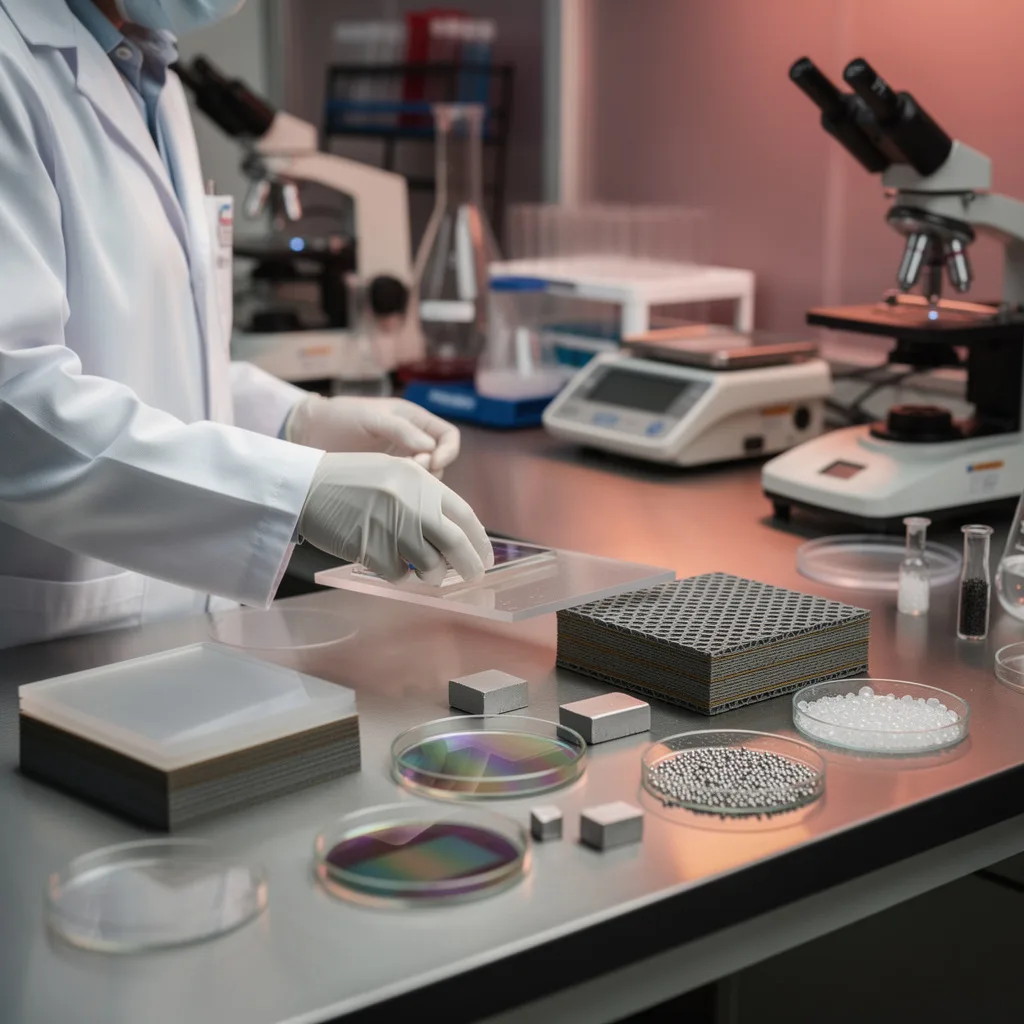
Lab-Grown Materials Science is the interdisciplinary study and engineering of materials produced in controlled laboratory environments rather than extracted or harvested from nature. It encompasses the synthesis of gemstones, metals, polymers, and biological tissues using techniques such as chemical vapor deposition, high-pressure high-temperature processing, and cellular agriculture. Core concepts include nucleation and growth kinetics, phase diagrams, defect engineering, and the scaling of lab-based processes to industrial production.
This field matters today because it offers solutions to critical challenges in resource scarcity, environmental degradation, and ethical sourcing. Lab-grown diamonds and gemstones provide conflict-free alternatives to mined stones, while cultured meat and seafood promise to reduce the ecological footprint of animal agriculture. In industry, synthetic polymers and bioplastics are replacing petroleum-based materials, and biofabricated materials from microorganisms are enabling new classes of sustainable textiles and construction materials. Recent shifts include regulatory approvals for cell-cultured meat and the rapid expansion of CVD diamond production for electronics and optics.
Mastering Lab-Grown Materials Science builds a versatile skill stack that includes materials characterization, process optimization, sustainability assessment, and technology commercialization. This knowledge is directly applicable in sectors such as jewelry, food technology, biomedical devices, electronics, and environmental consulting. Professionals who understand these methods can drive innovation in their organizations, while entrepreneurs can identify market opportunities in the growing lab-grown materials economy. The subject also empowers consumers and policymakers to make informed choices about the materials that shape our world.
Common Questions About Lab-Grown Materials Science
How does the certificate enhance your materials science career?
Can beginners without a science background take this course?
How does HPHT synthesis differ from CVD for diamond growth?
- HPHT: Uses high pressure (5-6 GPa) and high temperature (1300-1600°C) with a solvent-catalyst to dissolve carbon and crystallize diamond. It mimics natural diamond formation deep in the Earth.
- CVD: Uses a low-pressure gas mixture (typically methane and hydrogen) activated by microwave plasma to deposit diamond layer by layer on a substrate. It offers higher purity and larger areas.
What is the role of nucleation in crystal growth?
How is bacterial cellulose produced for textile applications?
- Fermentation: Bacteria are grown in a liquid medium containing sugars; they produce cellulose as a byproduct.
- Harvesting: The cellulose pellicle is collected, washed, and purified.
- Processing: The material is dried, pressed, or treated to create textile-like sheets with high strength and breathability.
What are the three key drivers for lab-grown materials?
Are lab-grown gemstones considered fake or real?
What Will This Course Bring You?
- Analyze the key parameters controlling crystal growth in HPHT synthesis to optimize diamond production.
- Design a Chemical Vapor Deposition (CVD) process for creating a thin film of a specified material.
- Evaluate the quality and authenticity of lab-grown gemstones using standard characterization techniques.
- Apply cellular agriculture methods to produce a cultured meat product with desired texture and nutritional profile.
- Implement a life cycle assessment to compare the environmental impact of a lab-grown material versus its mined counterpart.
- Build a synthetic bioplastic from renewable monomers and test its mechanical properties.
- Assess the commercial viability of a novel biofabricated material derived from microorganisms.
Curriculum
12 Units1. Introduction to Lab-Grown Materials Science
1 hour
2. Fundamentals of Crystal Growth
1 hour
3. High-Pressure High-Temperature (HPHT) Synthesis
1 hour
4. Chemical Vapor Deposition (CVD)
1 hour
5. Lab-Grown Gemstones
1 hour
6. Cellular Agriculture for Materials
1 hour
7. Cultured Meat and Seafood
1 hour
8. Biofabricated Materials from Microorganisms
1 hour
9. Synthetic Polymers and Bioplastics
1 hour
10. Characterization Techniques
1 hour
11. Sustainability and Life Cycle Assessment
1 hour
12. Future Directions and Commercialization
1 hour
Exam – Lab-Grown Materials Science
20 Questions • 70% Pass • 30 min
Unlock All Units for Free
Create an account, enroll in the course, and start with the first unit right away.
Exam – Lab-Grown Materials Science
20 Questions • Pass: 70% • 30 min
Course Duration
720
Total Minutes
12
Unit
1
Final Exam
~60
Min / Unit
Lab-Grown Materials Science Certificate Program
Document Your Skill
Those who pass the 20-question, 30-minute exam with 70% receive the Lab-Grown Materials Science Certificate.
Stand Out on Your CV
By adding your certificate to your CV, gain a professional reference in job applications and stand out from the crowd.
Career Advantage
With the verification code, employers can check your certificate instantly — a concrete way to show your growth.
CERTIFICATE FEE
At the end of the course, an online exam consisting of 20 questions with a 30-minute time limit is given. The exam appears automatically after you complete the topics. Anyone who scores at least 70 out of 100 on the certificate exam is awarded the Lab-Grown Materials Science Document (certificate of attendance). You can add the certificate you earn to your CV for job applications in the many sectors listed above, and use it as a reference proving that you took this interactive course.
The Certificate of Achievement you receive with the Lab-Grown Materials Science course program holds value that proves your personal and professional development in the business world. By adding it to your CV, it can serve as an important reference in your job applications. Moreover, compared with certificates from other private training institutions, Catch Wisdom certificates are offered to our participants at a much more affordable price.
The Lab-Grown Materials Science course certificate is a document that proves, with a unique verification code, that you completed the course. Employers can instantly check its authenticity with this code, which helps you show your development concretely in your job applications.
For more information, we recommend visiting the Support page.
Certificate in 7 Languages
Earning success certificates from our courses is now more meaningful and global. With certificates available in Turkish, English, German, French, Spanish, Arabic, and Russian, we fully unlock the potential of students worldwide.
Why Certificate in 7 Languages?
-
01
Global Skill Development
Receiving your certificates in 7 different languages strengthens your communication skills as you engage with more people worldwide. It lets you operate more confidently and capably on the international stage.
-
02
International Job Opportunities
Employers may see your certificates in multiple languages as a sign of your ability to seize global opportunities. You can open more doors to new jobs and projects.
-
03
Cultural Richness
The chance to earn certificates in different languages helps you build closer ties with various cultures and broadens your worldview. It enriches your global perspective and deepens cultural understanding.
-
04
Ability to Participate in International Projects
Multilingual certificates give you an edge to work more effectively on international projects. They boost your chances of leadership and participation in diverse projects in the business world.
-
05
Prove Yourself on the Global Stage
Certificates in multiple languages give you the opportunity to present your skills and knowledge worldwide.
Language diversity opens worldwide opportunities. If you want to prove yourself in the international arena, join our online Lab-Grown Materials Science course program and begin this journey with us.
Frequently Asked Questions (FAQ)
Is this course paid?
How do I join the course?
Can I take the course at my own pace?
How can I get my certificate?
What are the advantages of the certificate?
Boost Your Career
Take a new career step with the Lab-Grown Materials Science course. Add your certificate to your CV, stand out in job applications, and open the door to new opportunities in the industry.
StartStudent Reviews
No reviews yet
Enroll in this course and be the first to leave a review about your experience with Lab-Grown Materials Science.
Start