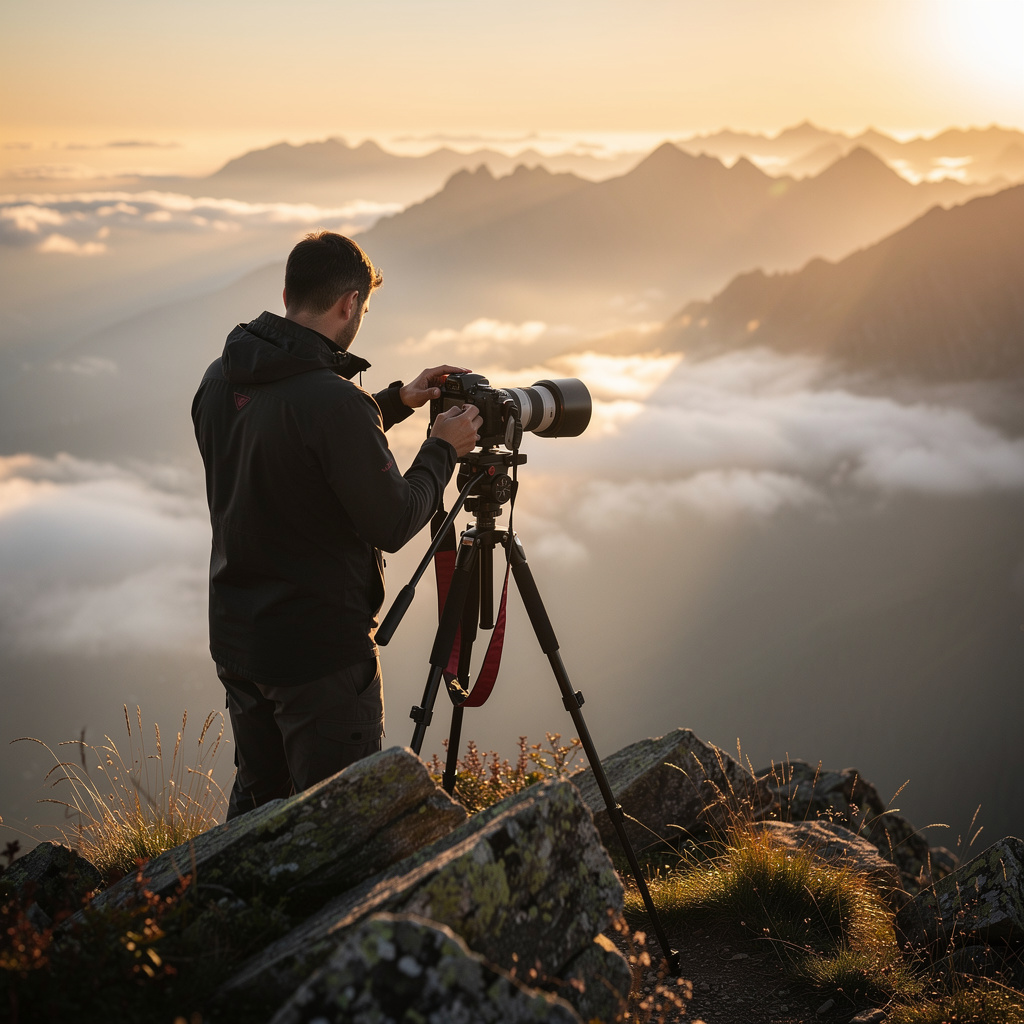
What is Landscape and Nature Photography?
Landscape and Nature Photography Training
The Landscape and Nature Photography certificate program is a comprehensive, hands-on journey designed for aspiring photographers who want to master the art of capturing the natural world with technical precision and creative vision. From camera fundamentals and lens selection to advanced exposure blending and post-processing, this course equips you with the complete skill set needed to produce stunning, professional-grade landscape and nature images. Whether you are a beginner picking up a camera for the first time or an enthusiast looking to refine your craft, the practical outcome is a polished portfolio that demonstrates your ability to plan, shoot, and edit like a pro.
The program is structured as a beginner-friendly progression that balances theoretical knowledge with field-tested practice, building your expertise across four core areas: camera control, composition and light, advanced techniques like long exposure and HDR, and post-processing workflow. Each lesson builds on the previous one, starting with the essentials of exposure and focusing, then moving through filters, tripods, and location scouting, and culminating in the development of a personal style and a cohesive portfolio. With the growing demand for authentic outdoor imagery in travel, conservation, and editorial media, this course offers a timely and practical path to turning your passion for nature into a marketable skill.
What is Landscape and Nature Photography?
Landscape and nature photography is a genre of photography that captures the beauty, scale, and intricate details of the natural environment—from sweeping mountain vistas and seascapes to close-up studies of flora and fauna. Its core concepts revolve around understanding light, composition, depth of field, and the interplay between subject and environment. Practitioners use a blend of technical skills, such as exposure control and focusing techniques, and artistic judgment to convey a sense of place, mood, and narrative, often working in challenging outdoor conditions to achieve a unique perspective.
Today, landscape and nature photography holds significant relevance as a tool for environmental awareness, tourism promotion, and scientific documentation. With the rise of social media and digital publishing, stunning natural imagery is more sought after than ever, used by conservation organizations to advocate for protected areas, by travel brands to inspire wanderlust, and by researchers to record ecological changes. Recent shifts toward high dynamic range imaging, long exposure aesthetics, and drone photography have expanded the creative possibilities, while post-processing software has become an integral part of the workflow, allowing photographers to realize their vision with greater control.
Mastering this subject builds a versatile skill stack that includes not only photographic techniques but also patience, observation, and environmental literacy. For professionals, it opens doors to careers in editorial photography, fine art sales, and commercial assignments; for amateurs, it enriches travel experiences and deepens a personal connection to nature. The ability to plan a shoot, adapt to unpredictable weather, and ethically capture wild subjects is invaluable, whether you aim to exhibit your work, share it online, or simply document the world around you with confidence and artistry.
Common Questions About Landscape and Nature Photography
Does the landscape photography certificate help my portfolio stand out to clients?
Is this landscape and nature photography course suitable for complete beginners?
How do I read a histogram to avoid clipping in landscape photos?
- Left edge: if the graph touches it, shadows are clipped and detail is lost.
- Right edge: if the graph touches it, highlights are blown out.
- Ideal shape: extends to the right without touching the edge, capturing maximum detail.
What is the golden ratio and how does it improve nature composition?
Why does hyperfocal focusing fail when using wide-angle lenses?
How do circular polarizers enhance colors in waterfall photography?
Is the 'f/8 and be there' rule actually ruining my landscape sharpness?
What Will This Course Bring You?
- Apply camera fundamentals to capture sharp, well-exposed landscape images in varying field conditions.
- Design compelling compositions using leading lines, rule of thirds, and foreground interest to guide viewer attention.
- Evaluate natural light conditions and adjust exposure settings to capture the desired mood and contrast in nature scenes.
- Select appropriate lenses and focal lengths to achieve desired perspective and magnification for landscape subjects.
- Implement hyperfocal focusing techniques to maximize depth of field in landscape photographs.
- Utilize polarizers, ND, and graduated ND filters to control reflections, exposure, and dynamic range in the field.
- Execute long exposure photography techniques to convey motion and time in natural environments.
- Build a cohesive portfolio that reflects a personal style developed through iterative shooting and post-processing.
Curriculum
12 Units1. Camera Fundamentals for Landscape and Nature Photography
1 hour
2. Composition and Visual Design in Nature
1 hour
3. Understanding and Working with Natural Light
1 hour
4. Choosing and Using Lenses for Landscape Photography
1 hour
5. Depth of Field and Hyperfocal Focusing
1 hour
6. Filters: Polarizers, ND, and Graduated ND
1 hour
7. Long Exposure Photography
1 hour
8. Tripods and Camera Support Systems
1 hour
9. Advanced Exposure: Bracketing, HDR, and Exposure Blending
1 hour
10. Post-Processing for Landscape and Nature Photography
1 hour
11. Planning and Scouting: Location Research and Field Techniques
1 hour
12. Developing a Personal Style and Building a Portfolio
1 hour
Exam – Landscape and Nature Photography
20 Questions • 70% Pass • 30 min
Unlock All Units for Free
Create an account, enroll in the course, and start with the first unit right away.
Exam – Landscape and Nature Photography
20 Questions • Pass: 70% • 30 min
Course Duration
720
Total Minutes
12
Unit
1
Final Exam
~60
Min / Unit
Landscape and Nature Photography Certificate Program
Document Your Skill
Those who pass the 20-question, 30-minute exam with 70% receive the Landscape and Nature Photography Certificate.
Stand Out on Your CV
By adding your certificate to your CV, gain a professional reference in job applications and stand out from the crowd.
Career Advantage
Catch Wisdom certificates are recognized by HR departments and increase career opportunities.
CERTIFICATE FEE
At the end of the course, an online exam consisting of 20 questions with a 30-minute time limit is given. The exam appears automatically after you complete the topics. Anyone who scores at least 70 out of 100 on the certificate exam is awarded the Landscape and Nature Photography Document (certificate of attendance). You can add the certificate you earn to your CV for job applications in the many sectors listed above, and use it as a reference proving that you took this interactive course.
The Certificate of Achievement you receive with the Landscape and Nature Photography course program holds value that proves your personal and professional development in the business world. By adding it to your CV, it can serve as an important reference in your job applications. Moreover, compared with certificates from other private training institutions, Catch Wisdom certificates are offered to our participants at a much more affordable price.
Because HR departments recognize Catch Wisdom as a reputable institution in this field, they value these certificates and may evaluate your job applications favorably. For this reason, a Landscape and Nature Photography course certificate from Catch Wisdom can make your applications more attractive and place you in an advantageous position in the business world.
For more information, we recommend visiting the Support page.
Certificate in 7 Languages
Earning success certificates from our courses is now more meaningful and global. With certificates available in Turkish, English, German, French, Spanish, Arabic, and Russian, we fully unlock the potential of students worldwide.
Why Certificate in 7 Languages?
-
01
Global Skill Development
Receiving your certificates in 7 different languages strengthens your communication skills as you engage with more people worldwide. It lets you operate more confidently and capably on the international stage.
-
02
International Job Opportunities
Employers may see your certificates in multiple languages as a sign of your ability to seize global opportunities. You can open more doors to new jobs and projects.
-
03
Cultural Richness
The chance to earn certificates in different languages helps you build closer ties with various cultures and broadens your worldview. It enriches your global perspective and deepens cultural understanding.
-
04
Ability to Participate in International Projects
Multilingual certificates give you an edge to work more effectively on international projects. They boost your chances of leadership and participation in diverse projects in the business world.
-
05
Prove Yourself on the Global Stage
Certificates in multiple languages let you showcase your skills and knowledge worldwide. You can become an internationally recognized professional.
Language diversity opens worldwide opportunities. If you want to prove yourself in the international arena, join our online Landscape and Nature Photography course program and begin this journey with us.
Frequently Asked Questions (FAQ)
Is this course paid?
How do I join the course?
Can I take the course at my own pace?
How can I get my certificate?
What are the advantages of the Certified Certificate?
Boost Your Career
Take a new career step with the Landscape and Nature Photography course. Add your certificate to your CV, stand out in job applications, and open the door to new opportunities in the industry.
StartStudent Reviews
No reviews yet
Enroll in this course and be the first to leave a review about your experience with Landscape and Nature Photography.
Start