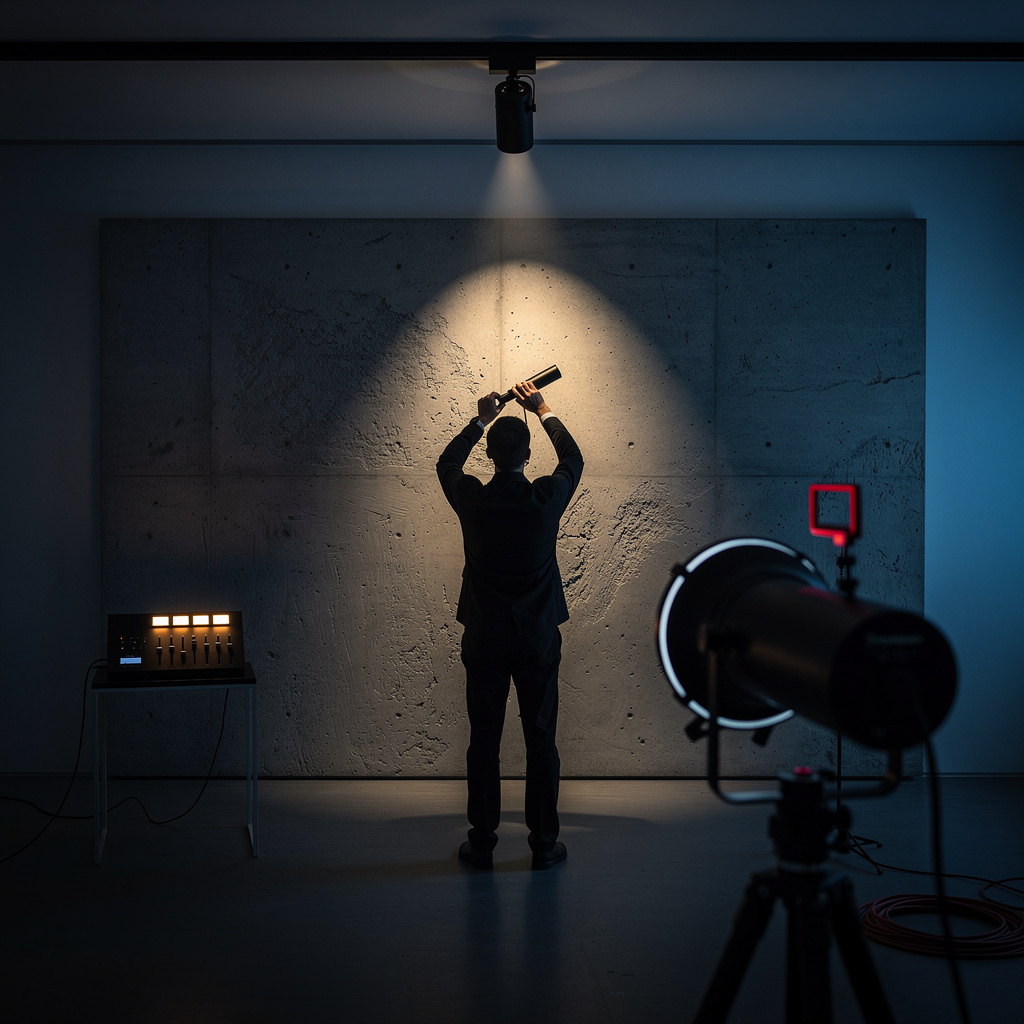
What is Lighting Design?
Lighting Design Certificate Program
The Lighting Design certificate program equips learners with the technical and creative skills needed to plan, evaluate, and communicate effective lighting solutions across residential, commercial, workplace, architectural, and exterior settings. It is designed for aspiring lighting designers, interior and architectural professionals, electrical and energy consultants, and anyone responsible for specifying or reviewing lighting systems. Participants examine visual perception, color quality and glare, photometric metrics, luminaires and optics, controls, daylighting integration, and layered composition. The practical outcome is the ability to develop lighting concepts, perform basic calculations, select appropriate equipment, and document designs with professional clarity.
The program progresses from foundational principles to applied design scenarios, so beginners can build confidence before tackling complex projects. Each module balances explanatory theory with calculation exercises, design critique, and documentation practice that mirror real project workflows. Across the curriculum, learners develop four core skill areas: technical analysis, visual composition, system integration, and professional communication. This program is valuable now because lighting is central to energy performance, occupant well-being, sustainability compliance, and the visual identity of built environments.
What is Lighting Design?
Lighting design is the discipline of shaping light to support human activity, safety, comfort, and aesthetic experience in built and exterior environments. Its scope spans the physics of light, human visual perception, color appearance, glare control, photometric measurement, luminaire and optics selection, control strategies, daylight integration, and the composition of layers such as ambient, task, accent, and decorative light. Core concepts include balancing quantitative criteria like illuminance and luminance with qualitative concerns such as contrast, directionality, color rendering, and visual hierarchy. It also involves coordinating lighting with architecture, interiors, electrical systems, sustainability goals, and user needs.
Lighting design matters today because light influences productivity, health, safety, energy use, and the atmosphere of nearly every indoor and outdoor space. In industry, it is used in homes, offices, retail, hospitality, healthcare, education, cultural facilities, public realm, and facade illumination, while academic research continues to refine knowledge about circadian effects, glare, and visual performance. Recent shifts toward LED technology, tunable and connected control systems, daylight-responsive strategies, and stricter energy and sustainability codes have made lighting design more dynamic and more integrated with building performance. At the same time, growing attention to occupant well-being and inclusive visual environments has expanded the field beyond simple illumination levels.
Mastering lighting design builds a skill stack that combines analytical calculation, visual judgment, technical specification, system coordination, and clear documentation. That stack supports professional contexts such as architectural and interior design teams, lighting consultancies, electrical and energy engineering, facilities planning, retail and hospitality environments, and public-space projects. It also benefits personal projects where thoughtful lighting can improve comfort, function, and ambiance at home or in small creative spaces. Because lighting decisions connect design intent with measurable performance, this subject prepares practitioners to make defensible choices that serve both people and sustainability goals.
What Will This Course Bring You?
- Apply principles of visual perception and photometric metrics to calculate illuminance, luminance, and contrast for a simple interior lighting layout.
- Evaluate color rendering, correlated color temperature, and glare metrics to select light sources and luminaires that meet visual comfort and task requirements.
- Design layered lighting compositions for residential spaces that integrate ambient, task, and accent lighting with appropriate controls and fixture selections.
- Develop a daylighting strategy that predicts aperture performance and integrates electric lighting controls to reduce energy use in a workplace design.
- Analyze workplace and commercial lighting layouts using photometric calculations and glare criteria to recommend luminaire and control solutions.
- Create architectural and exterior lighting concepts that respect site context, facade composition, and light pollution constraints while specifying appropriate luminaires.
- Apply energy-efficiency and sustainability criteria to compare lighting schemes and justify selections against applicable lighting codes and standards.
- Prepare lighting documentation and visualizations that communicate design intent, calculations, control sequences, and code compliance to clients and project teams.
Curriculum
12 Units1. Foundations of Light and Visual Perception
1 hour
2. Color, Light Quality, and Glare
1 hour
3. Photometric Metrics and Lighting Calculations
1 hour
4. Light Sources, Luminaires, and Optics
1 hour
5. Lighting Controls and Dynamic Systems
1 hour
6. Daylighting Strategies and Integration
1 hour
7. Lighting Layering and Composition
1 hour
8. Residential Lighting Design
1 hour
9. Workplace and Commercial Lighting Design
1 hour
10. Architectural and Exterior Lighting Design
1 hour
11. Energy Efficiency, Sustainability, and Lighting Codes
1 hour
12. Documentation, Visualization, and Professional Practice
1 hour
Exam – Lighting Design
20 Questions • 70% Pass • 30 min
Unlock All Units for Free
Create an account, enroll in the course, and start with the first unit right away.
Exam – Lighting Design
20 Questions • Pass: 70% • 30 min
Course Duration
720
Total Minutes
12
Unit
1
Final Exam
~60
Min / Unit
Lighting Design Certificate Program
Document Your Skill
Those who pass the 20-question, 30-minute exam with 70% receive the Lighting Design Certificate.
Stand Out on Your CV
By adding your certificate to your CV, gain a professional reference in job applications and stand out from the crowd.
Career Advantage
With the verification code, employers can check your certificate instantly — a concrete way to show your growth.
CERTIFICATE FEE
At the end of the course, an online exam consisting of 20 questions with a 30-minute time limit is given. The exam appears automatically after you complete the topics. Anyone who scores at least 70 out of 100 on the certificate exam is awarded the Lighting Design Document (certificate of attendance). You can add the certificate you earn to your CV for job applications in the many sectors listed above, and use it as a reference proving that you took this interactive course.
The Certificate of Achievement you receive with the Lighting Design course program holds value that proves your personal and professional development in the business world. By adding it to your CV, it can serve as an important reference in your job applications. Moreover, compared with certificates from other private training institutions, Catch Wisdom certificates are offered to our participants at a much more affordable price.
The Lighting Design course certificate is a document that proves, with a unique verification code, that you completed the course. Employers can instantly check its authenticity with this code, which helps you show your development concretely in your job applications.
For more information, we recommend visiting the Support page.
Certificate in 7 Languages
Earning success certificates from our courses is now more meaningful and global. With certificates available in Turkish, English, German, French, Spanish, Arabic, and Russian, we fully unlock the potential of students worldwide.
Why Certificate in 7 Languages?
-
01
Global Skill Development
Receiving your certificates in 7 different languages strengthens your communication skills as you engage with more people worldwide. It lets you operate more confidently and capably on the international stage.
-
02
International Job Opportunities
Employers may see your certificates in multiple languages as a sign of your ability to seize global opportunities. You can open more doors to new jobs and projects.
-
03
Cultural Richness
The chance to earn certificates in different languages helps you build closer ties with various cultures and broadens your worldview. It enriches your global perspective and deepens cultural understanding.
-
04
Ability to Participate in International Projects
Multilingual certificates give you an edge to work more effectively on international projects. They boost your chances of leadership and participation in diverse projects in the business world.
-
05
Prove Yourself on the Global Stage
Certificates in multiple languages give you the opportunity to present your skills and knowledge worldwide.
Language diversity opens worldwide opportunities. If you want to prove yourself in the international arena, join our online Lighting Design course program and begin this journey with us.
Frequently Asked Questions (FAQ)
Is this course paid?
How do I join the course?
Can I take the course at my own pace?
How can I get my certificate?
What are the advantages of the certificate?
Boost Your Career
Take a new career step with the Lighting Design course. Add your certificate to your CV, stand out in job applications, and open the door to new opportunities in the industry.
StartStudent Reviews
No reviews yet
Enroll in this course and be the first to leave a review about your experience with Lighting Design.
Start