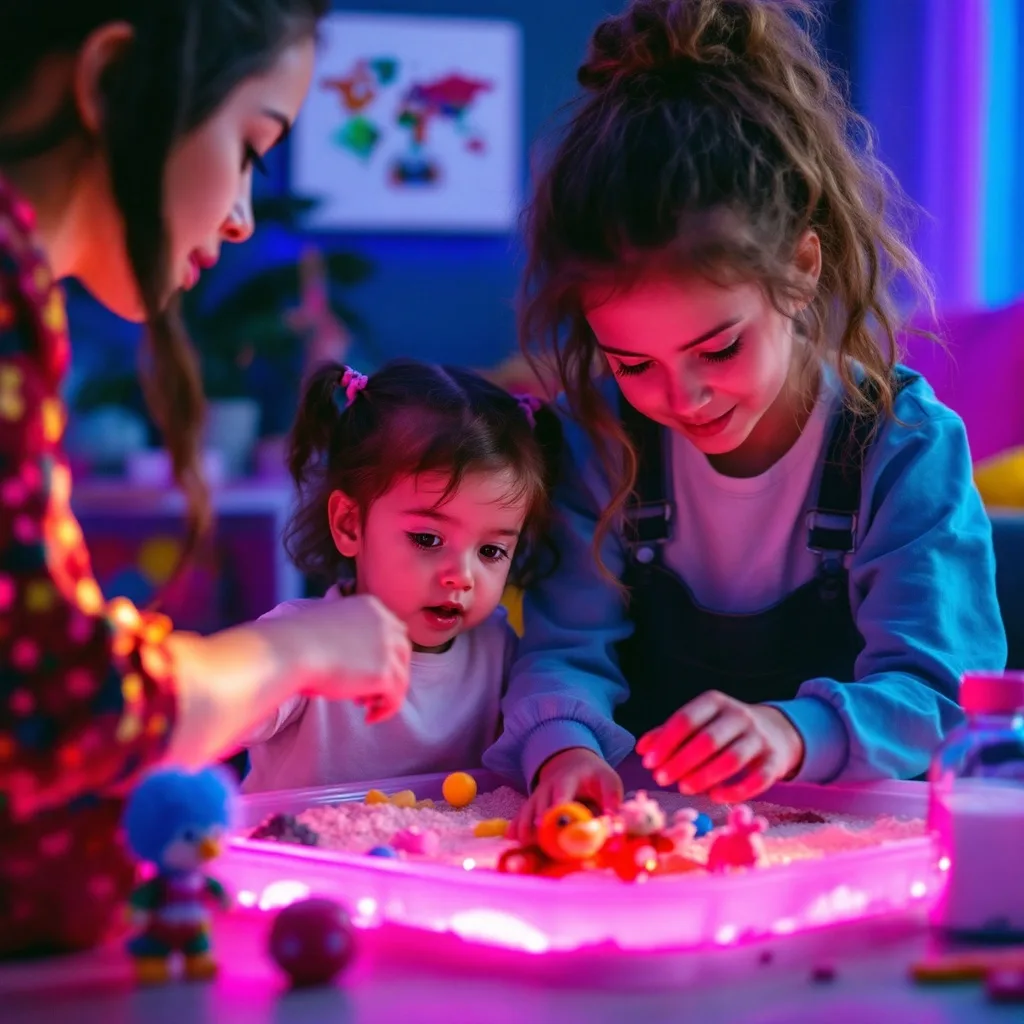
What is Listening to Children?
Listening to Children Training
The Listening to Children certificate program equips educators, caregivers, social workers, and healthcare professionals with the evidence-based skills needed to genuinely hear and understand the children in their care. This course teaches the art and science of attentive listening, covering everything from recognizing non-verbal cues to navigating emotionally charged conversations with young people. By the end of the program, participants will have a practical toolkit for building trust, reducing conflict, and fostering healthier communication with children across diverse settings.
The program is structured as a beginner-friendly progression that moves from foundational concepts to advanced application, balancing theoretical frameworks with hands-on practice. It builds five core skill areas: active listening techniques, reading non-verbal communication, creating psychologically safe listening environments, managing challenging conversations, and applying cultural and ethical sensitivity. With the growing emphasis on child-centered approaches in education, social services, and family therapy, this training is essential for anyone seeking to align their practice with modern standards of child welfare and participation.
What is Listening to Children?
Listening to children is a specialized communication practice that goes beyond simply hearing words — it involves understanding the full spectrum of how children express themselves, including body language, play, art, and silence. The subject draws on developmental psychology, child rights frameworks, and communication theory to explore how children process and convey their experiences, needs, and emotions. Core concepts include active listening, validation, attunement, and the recognition that children are competent communicators whose voices deserve genuine consideration.
In today's world, where child mental health concerns and safeguarding issues are increasingly prominent, the ability to truly listen to children has never been more critical. This subject is applied across education, pediatric healthcare, social work, family law, and child advocacy, with recent shifts emphasizing participatory approaches that treat children as active agents rather than passive recipients. The rise of digital communication and the ongoing conversations about child rights have further underscored the need for adults who can bridge generational and developmental gaps to hear what children are really saying.
Mastering this subject builds a skill stack that includes emotional intelligence, patience, observation, and the ability to create safe spaces for vulnerable individuals. Professionals in teaching, counseling, social work, and even pediatric medicine benefit directly, while parents and caregivers gain transformative tools for strengthening family relationships. The knowledge gained here also supports broader competencies in communication and empathy that are valuable in virtually any human-centered profession.
Common Questions About Listening to Children
How does a Listening to Children certificate boost my CV?
Is this training suitable for someone with no childcare experience?
What are the five steps to active listening in this course?
- Stop: Give your full attention and silence internal distractions.
- Observe: Read body language and facial expressions alongside words.
- Reflect: Paraphrase or summarize what the child said to confirm understanding.
- Clarify: Ask gentle, open-ended questions to fill gaps.
- Respond: Offer a supportive, non-judgmental reply that validates their feelings.
How can I tell the difference between hearing and active listening?
What are common adult-centric assumptions that block listening?
How do children communicate before they can speak?
Don't children need to be taught to listen before adults listen to them?
What Will This Course Bring You?
- Analyze the importance of listening to children for their development and well-being.
- Identify and interpret the various verbal and non-verbal communication cues used by children.
- Evaluate common barriers to effective listening and propose strategies to overcome them.
- Apply active listening techniques such as paraphrasing, summarizing, and open-ended questioning in interactions with children.
- Design a listening-friendly environment that encourages children to express themselves freely and safely.
- Implement appropriate listening strategies in challenging situations such as when a child is upset or distressed.
- Analyze cultural and contextual factors that influence children's communication and adapt listening approaches accordingly.
- Apply ethical and legal principles to ensure respectful and confidential listening practices with children.
Curriculum
12 Units1. Why Listening to Children Matters
1 hour
2. How Children Communicate
1 hour
3. Barriers to Listening
1 hour
4. Active Listening Techniques
1 hour
5. Listening Beyond Words
1 hour
6. Creating a Listening Environment
1 hour
7. Listening in Challenging Situations
1 hour
8. Listening to Children in Groups
1 hour
9. Cultural and Contextual Sensitivity
1 hour
10. Ethical and Legal Foundations
1 hour
11. Applying Listening Skills in Practice
1 hour
12. Reflecting and Growing as a Listener
1 hour
Exam – Listening to Children
20 Questions • 70% Pass • 30 min
Unlock All Units for Free
Create an account, enroll in the course, and start with the first unit right away.
Exam – Listening to Children
20 Questions • Pass: 70% • 30 min
Course Duration
720
Total Minutes
12
Unit
1
Final Exam
~60
Min / Unit
Listening to Children Certificate Program
Document Your Skill
Those who pass the 20-question, 30-minute exam with 70% receive the Listening to Children Certificate.
Stand Out on Your CV
By adding your certificate to your CV, gain a professional reference in job applications and stand out from the crowd.
Career Advantage
Catch Wisdom certificates are recognized by HR departments and increase career opportunities.
CERTIFICATE FEE
At the end of the course, an online exam consisting of 20 questions with a 30-minute time limit is given. The exam appears automatically after you complete the topics. Anyone who scores at least 70 out of 100 on the certificate exam is awarded the Listening to Children Document (certificate of attendance). You can add the certificate you earn to your CV for job applications in the many sectors listed above, and use it as a reference proving that you took this interactive course.
The Certificate of Achievement you receive with the Listening to Children course program holds value that proves your personal and professional development in the business world. By adding it to your CV, it can serve as an important reference in your job applications. Moreover, compared with certificates from other private training institutions, Catch Wisdom certificates are offered to our participants at a much more affordable price.
Because HR departments recognize Catch Wisdom as a reputable institution in this field, they value these certificates and may evaluate your job applications favorably. For this reason, a Listening to Children course certificate from Catch Wisdom can make your applications more attractive and place you in an advantageous position in the business world.
For more information, we recommend visiting the Support page.
Certificate in 7 Languages
Earning success certificates from our courses is now more meaningful and global. With certificates available in Turkish, English, German, French, Spanish, Arabic, and Russian, we fully unlock the potential of students worldwide.
Why Certificate in 7 Languages?
-
01
Global Skill Development
Receiving your certificates in 7 different languages strengthens your communication skills as you engage with more people worldwide. It lets you operate more confidently and capably on the international stage.
-
02
International Job Opportunities
Employers may see your certificates in multiple languages as a sign of your ability to seize global opportunities. You can open more doors to new jobs and projects.
-
03
Cultural Richness
The chance to earn certificates in different languages helps you build closer ties with various cultures and broadens your worldview. It enriches your global perspective and deepens cultural understanding.
-
04
Ability to Participate in International Projects
Multilingual certificates give you an edge to work more effectively on international projects. They boost your chances of leadership and participation in diverse projects in the business world.
-
05
Prove Yourself on the Global Stage
Certificates in multiple languages let you showcase your skills and knowledge worldwide. You can become an internationally recognized professional.
Language diversity opens worldwide opportunities. If you want to prove yourself in the international arena, join our online Listening to Children course program and begin this journey with us.
Frequently Asked Questions (FAQ)
Is this course paid?
How do I join the course?
Can I take the course at my own pace?
How can I get my certificate?
What are the advantages of the Certified Certificate?
Boost Your Career
Take a new career step with the Listening to Children course. Add your certificate to your CV, stand out in job applications, and open the door to new opportunities in the industry.
StartStudent Reviews
No reviews yet
Enroll in this course and be the first to leave a review about your experience with Listening to Children.
Start