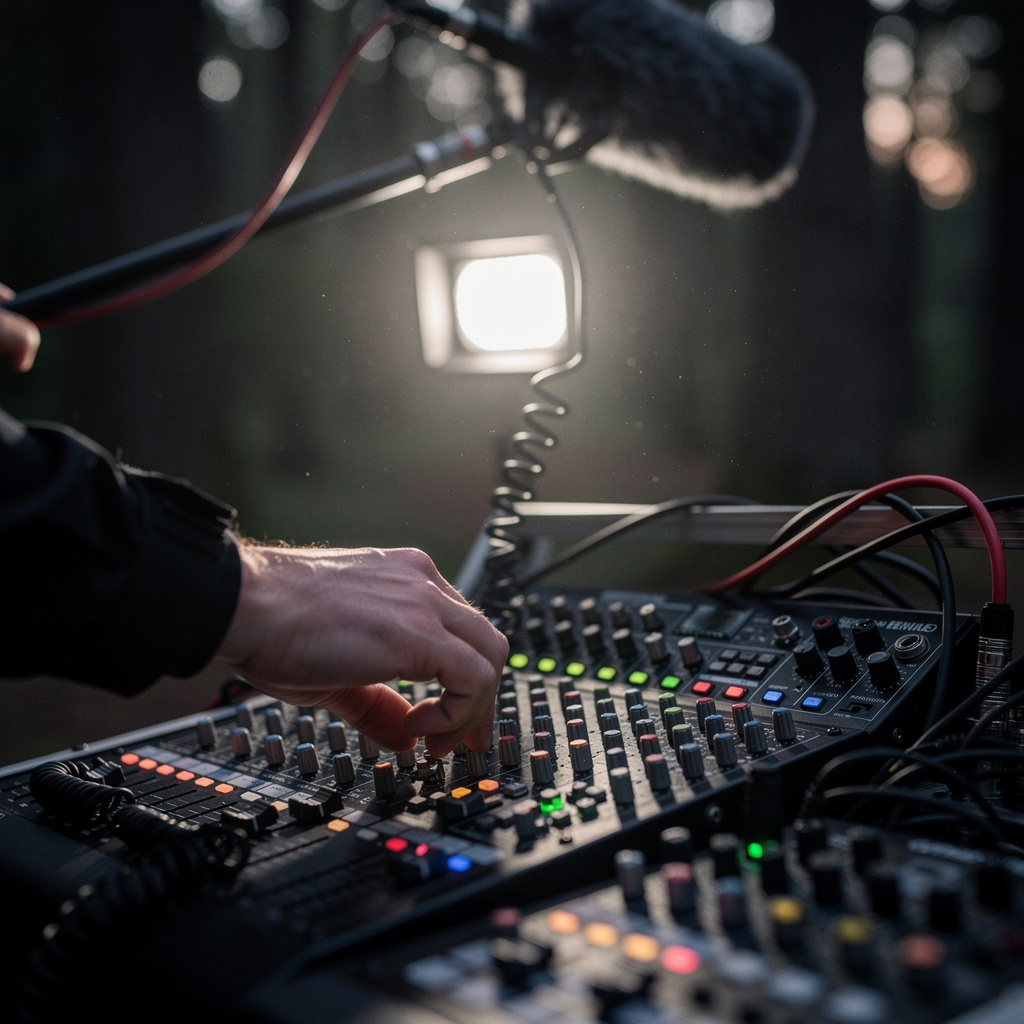
What is Location Sound Recording?
Location Sound Recording Training
The Location Sound Recording certificate program is a comprehensive, hands-on course designed to transform aspiring audio enthusiasts and working media professionals into confident production sound mixers. It teaches the complete craft of capturing pristine audio on set, from understanding the physics of sound and acoustics to deploying professional boom and wireless microphone systems. This training is ideal for filmmakers, video journalists, and audio engineers who want to master the technical and creative skills required for film, TV, and commercial production. By the end of the program, participants will have the practical knowledge to execute a full on-location recording session, manage signal flow, and deliver a broadcast-ready mix to post-production.
The program is structured as a beginner-friendly progression that balances theoretical knowledge with intensive practical application, ensuring you build a solid foundation before moving to advanced techniques. You will develop core skills across five key areas: sound theory and microphone selection, boom operation and placement, wireless system management, on-set mixing and metering, and professional workflow and troubleshooting. This course is particularly relevant now, as the demand for high-quality audio in streaming content and independent film has never been greater, and productions are seeking crew members who can handle complex multi-track recording environments. Choosing this program now provides a direct pathway to mastering the art of dialogue recording and ambience capture, making you an indispensable asset on any production team.
What is Location Sound Recording?
Location sound recording is the specialized discipline of capturing high-quality audio on a film or television set, outside of a controlled studio environment. It encompasses the technical management of microphones, recording devices, and wireless systems, as well as the creative decision-making involved in microphone placement and boom operation. The core concepts of the field include understanding acoustics, managing signal flow, and ensuring that dialogue, ambience, and wild tracks are recorded with clarity and consistency. This practice is fundamentally about problem-solving in unpredictable environments, where factors like traffic, weather, and set noise constantly challenge the sound team.
In today's media landscape, location sound recording is more critical than ever, as audiences have become accustomed to impeccable audio quality in everything from blockbuster films to documentary series. The rise of high-resolution streaming platforms and the proliferation of content creation have placed a premium on clear, immersive sound, making the role of the production sound mixer a vital part of any professional crew. Recent shifts toward multi-track recording and smaller, more agile production teams have increased the demand for professionals who can manage complex audio setups efficiently. This subject is applied daily in the film industry, corporate video production, and broadcast journalism, where capturing authentic, clean audio is non-negotiable for audience engagement.
Mastering location sound recording builds a robust skill stack that combines technical aptitude with creative intuition and strong interpersonal communication. It develops your ability to listen critically, anticipate acoustic problems, and make split-second decisions that save a production from costly re-shoots. The skill set is highly transferable, benefiting professionals in filmmaking, podcasting, live event production, and even architectural acoustics. For those seeking a career in the entertainment industry, this subject provides the foundational expertise needed to collaborate effectively with directors and editors, ensuring that the final product has the sonic integrity to match its visual excellence.
Common Questions About Location Sound Recording
Does the Location Sound Recording certificate boost my film set job chances?
Can a beginner with no audio experience start this course?
Why is boom microphone placement the industry standard for dialogue?
What are the most common gain staging mistakes in location recording?
- Setting input gain too low, which pushes the signal into the noise floor and adds hiss.
- Setting it too high, causing clipping on transients like loud dialogue or sudden sounds.
- Failing to leave headroom for unexpected peaks, especially during emotional scenes.
- Not adjusting gain as the actor moves, leading to inconsistent levels between lines.
- Trusting your ears over your meters—your perception of loudness is not linear, so a signal that sounds safe may be dangerously close to clipping.
How does a shotgun mic's pickup pattern reject off-axis noise?
What is the proper way to capture room tone for post-production?
Is it true that expensive microphones always give better location sound?
What Will This Course Bring You?
- Analyze acoustic environments to identify and mitigate reflections, reverberation, and background noise for optimal location sound capture.
- Select appropriate microphones and pickup patterns based on scene requirements and environmental factors.
- Apply proper boom operation techniques to achieve consistent microphone placement and minimize handling noise.
- Design a signal flow chain from microphone to recorder, ensuring proper gain staging and connectivity.
- Evaluate wireless microphone systems for frequency coordination and interference avoidance in dynamic shooting conditions.
- Implement monitoring and metering strategies to maintain optimal audio levels and detect clipping or distortion in real time.
- Conduct location scouting and preparation to identify potential audio challenges and plan mitigation strategies.
- Execute dialogue recording techniques for film and TV to capture clean, intelligible speech on set.
Curriculum
12 Units1. Sound and Acoustics Fundamentals
1 hour
2. Microphone Types and Pickup Patterns
1 hour
3. Boom Operation and Microphone Placement
1 hour
4. Recording Devices and Signal Flow
1 hour
5. Wireless Microphone Systems
1 hour
6. Monitoring and Metering
1 hour
7. Location Scouting and Preparation
1 hour
8. Dialogue Recording for Film and TV
1 hour
9. Ambience and Wild Tracks
1 hour
10. On-Set Mixing and Multi-Track Recording
1 hour
11. Troubleshooting and Problem Solving
1 hour
12. Workflow and Post-Production Handoff
1 hour
Exam – Location Sound Recording
20 Questions • 70% Pass • 30 min
Unlock All Units for Free
Create an account, enroll in the course, and start with the first unit right away.
Exam – Location Sound Recording
20 Questions • Pass: 70% • 30 min
Course Duration
720
Total Minutes
12
Unit
1
Final Exam
~60
Min / Unit
Location Sound Recording Certificate Program
Document Your Skill
Those who pass the 20-question, 30-minute exam with 70% receive the Location Sound Recording Certificate.
Stand Out on Your CV
By adding your certificate to your CV, gain a professional reference in job applications and stand out from the crowd.
Career Advantage
Catch Wisdom certificates are recognized by HR departments and increase career opportunities.
CERTIFICATE FEE
At the end of the course, an online exam consisting of 20 questions with a 30-minute time limit is given. The exam appears automatically after you complete the topics. Anyone who scores at least 70 out of 100 on the certificate exam is awarded the Location Sound Recording Document (certificate of attendance). You can add the certificate you earn to your CV for job applications in the many sectors listed above, and use it as a reference proving that you took this interactive course.
The Certificate of Achievement you receive with the Location Sound Recording course program holds value that proves your personal and professional development in the business world. By adding it to your CV, it can serve as an important reference in your job applications. Moreover, compared with certificates from other private training institutions, Catch Wisdom certificates are offered to our participants at a much more affordable price.
Because HR departments recognize Catch Wisdom as a reputable institution in this field, they value these certificates and may evaluate your job applications favorably. For this reason, a Location Sound Recording course certificate from Catch Wisdom can make your applications more attractive and place you in an advantageous position in the business world.
For more information, we recommend visiting the Support page.
Certificate in 7 Languages
Earning success certificates from our courses is now more meaningful and global. With certificates available in Turkish, English, German, French, Spanish, Arabic, and Russian, we fully unlock the potential of students worldwide.
Why Certificate in 7 Languages?
-
01
Global Skill Development
Receiving your certificates in 7 different languages strengthens your communication skills as you engage with more people worldwide. It lets you operate more confidently and capably on the international stage.
-
02
International Job Opportunities
Employers may see your certificates in multiple languages as a sign of your ability to seize global opportunities. You can open more doors to new jobs and projects.
-
03
Cultural Richness
The chance to earn certificates in different languages helps you build closer ties with various cultures and broadens your worldview. It enriches your global perspective and deepens cultural understanding.
-
04
Ability to Participate in International Projects
Multilingual certificates give you an edge to work more effectively on international projects. They boost your chances of leadership and participation in diverse projects in the business world.
-
05
Prove Yourself on the Global Stage
Certificates in multiple languages let you showcase your skills and knowledge worldwide. You can become an internationally recognized professional.
Language diversity opens worldwide opportunities. If you want to prove yourself in the international arena, join our online Location Sound Recording course program and begin this journey with us.
Frequently Asked Questions (FAQ)
Is this course paid?
How do I join the course?
Can I take the course at my own pace?
How can I get my certificate?
What are the advantages of the Certified Certificate?
Boost Your Career
Take a new career step with the Location Sound Recording course. Add your certificate to your CV, stand out in job applications, and open the door to new opportunities in the industry.
StartStudent Reviews
No reviews yet
Enroll in this course and be the first to leave a review about your experience with Location Sound Recording.
Start